Gold, silver emerge as top choices for first-time investors at OCBC amid economic uncertainties
The bank’s precious metals investor base grew 2.5 times year-on-year in 2025, reflecting demand for gold and silver paper bullion, it said in a press release on Thursday (Feb 19).
An OCBC Bank signage is pictured at the bank's office in Singapore in 2023. (File photo: Reuters/Edgar Su)

This audio is generated by an AI tool.




SINGAPORE: Record-breaking gold and silver prices drew a surge of first-time investors to OCBC last year, with two in three choosing precious metals as their entry into investing instead of equities or unit trust funds.
Singapore’s second-largest lender said in a press release on Thursday (Feb 19) that its precious metals investor base grew 2.5 times year-on-year in 2025, reflecting demand for gold and silver paper bullion.
The number of OCBC investors under 40 also doubled from a year earlier, making up half of all precious metals investors, said the bank. Investors in their 20s saw the fastest growth in gold and silver holdings, outpacing all other age groups.
BORING SAFE HAVENS?
Precious metals emerged as the standout performers among commodities last year, driven by economic uncertainty and geopolitical risks. Silver outpaced most major equity indices and currencies, while gold climbed to record highs.
But OCBC and other wealth platforms cautioned against chasing the hype, noting that gold and silver are best used as diversification tools rather than core portfolio holdings.
Gold and silver are no longer seen as boring safe havens or assets associated mainly with older investors seeking stability, said industry players.
Part of the appeal lies in their low barrier to entry.
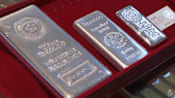
Customers can buy paper gold or silver in real time, starting from as little as 0.01 ounce, with silver priced at around S$1 (US$0.79).
First-time investor Lee Yong En said investing in precious metals is “a lot more accessible”.
The 24-year-old began late last year with S$100 in paper silver, before adding around S$1,000 more.
Within a few months, she sold part of her holdings for more than double her initial purchase price.
“This was actually my first investment, because I've only started working maybe about six months ago,” said the community engagement coordinator.
“So this is when I really started to look into investments. Before this, I hadn't invested in any other equities.”
OCBC’s head of group wealth management Tan Siew Lee said it is encouraging to see more young people taking the first step in their investment journeys, adding that precious metals will remain important as a source of diversification in portfolios.
However, she warned that volatility can trigger sharp price swings.
“Young investors may feel tempted to chase quick gains, but true investing is about building long-term wealth, not speculation,” added Ms Tan.
“While precious metals can play a stabilising role in a portfolio, allocations should stay measured.”
Gold should sit alongside a well-balanced mix of investments, in line with one’s risk tolerance and preferences, she noted.
“Those with little or no exposure may consider building positions gradually – taking advantage of dips and staying focused on their long-term goals rather than reacting to short-term market noise.”

BALANCING MIX OF INVESTMENTS
At digital wealth platform Endowus, interest in gold-related funds also picked up last year.
Assets under advisory in gold-focused funds grew about 10 times last year, though they still form a small slice of the platform’s overall assets, according to Endowus.
“It’s okay – and sometimes even good – to have gold and precious metals in your portfolio as a diversifier,” said its chief investment officer Hugh Chung.
“But if you mistake a diversifier as a main core holding, oftentimes you have too much of an asset class that you don’t understand very well, and then you can’t really deal with the volatility.”
He added that investors should ensure their level of exposure is aligned with their financial goals and risk appetite.
Platforms expect interest in precious metals to persist amid geopolitical uncertainty, inflation concerns and shifting expectations around global interest rates, but stress that the key is to keep allocations measured and stay focused on long-term goals.