

Move over, tourists. Young Singaporeans have claimed Bugis as their weekend hotspot
Once known mainly for Bugis Street, the district has found new life as a youth hangout – driven by thrift culture, experiential retail and a spillover into once-overlooked corridors.
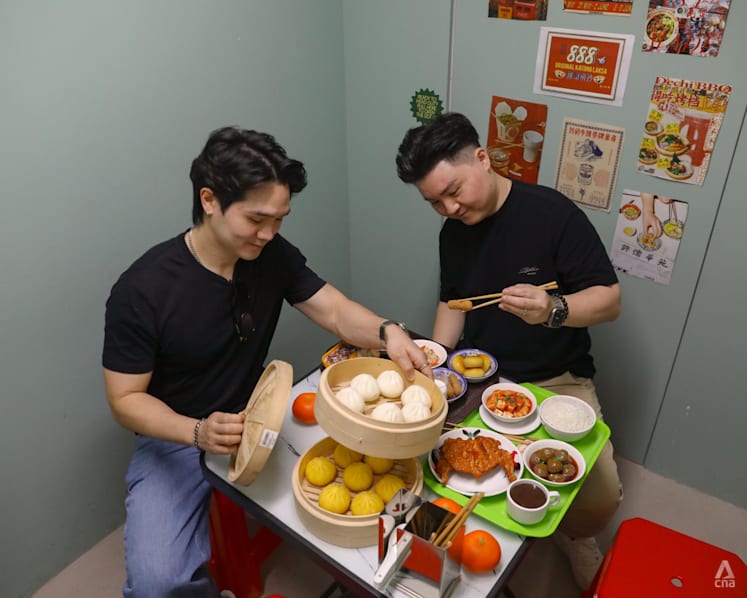
Mr Brian Sukri (left) and Mr Vincent Sukri at one of the themed room settings within their photo studio along Bugis Street on Feb 13, 2026. (Photo: CNA/Mak Jia Kee)

This audio is generated by an AI tool.


When marketing executive Crystal Yong went to Bugis recently, she had to remind herself to follow through with her objective of buying a Chinese New Year dress.
The 23-year-old knows first-hand how easy it is to get distracted while in the area.
Most weekends, she and her friends spend hours weaving through racks of thrift items or squeezing into one of the many photo booths.
From Haji Lane, they tend to drift towards the stretch near Bugis MRT station for a bite, browse the Resurrack vintage market sprawled across the Art Lane on Bugis Street, stop at a cafe, then wander into Golden Landmark Shopping Complex's maze-like corridors before calling it a day.
"We might have one or two things in mind, and then we just let the day flow in the area," she said.
For many young Singaporeans, this open-ended itinerary in Bugis has become the norm.
Just a few years ago, Ms Yong would not have imagined spending so much time in this precinct. As a teenager, she used to spend her weekends in the Somerset Road stretch of the Orchard Road shopping belt or at one of the museums.
"It feels like Bugis is becoming more alive again. There's so much going on around the area."
For students Thean Xuyi, 22, and Ying Xi, 21, Bugis has also become a regular haunt – most recently for an appointment to pierce their ears along Bugis Street.
They said the area's appeal lies in its "fun atmosphere" and Gen Z-oriented mix of thrift stores, photo booths and craft retailers.
Previously, their weekends were usually spent along Orchard Road, at VivoCity mall or at Marina Barrage for a picnic, but in the last two to three years, they have shifted their attention to the Bugis district instead.
Today, Bugis and the surrounding area are no longer just a quick stop for bargain buys, nail salons or traditional Malay clothing. Though Haji Lane has been a draw since the early 2000s, the district's revival now extends beyond its mural-lined shophouses.
From Golden Landmark's once-sleepy corridors to the periphery of Bugis Street and even Waterloo Centre, a cluster of independent businesses has quietly redrawn the map of where young people linger.

BUGIS' PAST
Professor TC Chang, a social-cultural geographer at the National University of Singapore (NUS), said that places, including the Bugis district, often move through cycles of popularity and renewal, and the decline or revival of districts is never linear.
Over the years, the Bugis district, with Victoria Street running through it and bordered by Middle Road and Ophir Road, has undergone several such iterations.
The original Bugis Street, once infamous for its seedy activities, was cleared in the late 1980s, but not before it had cemented its place in Singapore's cultural memory.
Its reputation was later immortalised in the 1995 film Bugis Street, which depicted the lives of transgender women in the former red-light district.
That same year, Bugis Junction opened as the first glass-covered, air-conditioned mall with a shopping street, alongside a reconstructed Bugis Street across the road.
The area quickly became a hit with tourists, given its connection to an MRT station and being a place where they may wander around shophouses filled with trinkets, cheap clothes and street food. It also served as an access point to famous temples along Waterloo Street.
Over the years, however, interest in the area waned even with the opening of Iluma mall in 2009 next to Bugis Street, which was rebranded three years later to Bugis+.
Tenant profiles gradually shifted over the years, with parts of the precinct seeing an influx of souvenir and food stalls operated by mainland Chinese brands.

In the meantime, Golden Landmark Shopping Complex, which is about 500m from Bugis Junction and close to the Arab Street district, opened in 1988.
It became known for its traditional clothing shops, tailors and textile retailers.
Over the years, however, it lost its customers to shops at the nearby pedestrianised Bussorah Street and Arab Street, though older members in the Malay-Muslim community who are regulars at some of the shops in Golden Landmark do still visit the place.
The current revival is now being driven largely by independent businesses experimenting within older buildings.
WHAT'S FUELLING THE REVIVAL
When vintage thrift store Two Worlds opened its first outlet at Golden Landmark in 2023, its founder Jesselynn Ni, 23, considered other thrift-store enclaves such as Queensway Shopping Centre.
However, she ultimately decided on Golden Landmark because it offered both accessibility and affordable rent.
She said that Golden Landmark initially struck her as an ageing mall with relatively low foot traffic and a tenant profile that seemed geared towards established community retailers rather than youth-driven concepts.
Ms Ni also did not expect young people to spend an entire day in the area, but that has since changed as more complementary businesses have moved in, helping to sustain footfall.
"Some people might think, 'Do I really want to go to Bugis just to visit one thrift store?'. That's where these other stores help collectively as a community. It becomes, 'Maybe we can go thrifting, then walk through the Resurrack lane and then hit a cafe in the area'," Ms Ni said. She has since opened a second thrift store at nearby Jalan Pisang.

Concept store Catalog has also found its footing in the shopping complex.
Its founders, Ms Diana Yeo, 32, and Ms Lee Wenxin, 29, said that most of their customers are Gen Zers and younger millennials, people in their late teens to late 30s who are often creatives drawn to art, design and quirky items.
Social media visibility has been key to building their following and getting youngsters into the mall, once visited only by older shoppers looking for ethnic clothing or similar items.
"Youngsters nowadays ... embrace art, good design and sustainable living ... I see Bugis evolving to keep up with these trends," Ms Yeo said.
The shift is evident to long-standing tenants.
Mr Adny Alhadad, who has run traditional perfumery The Alchemist at Golden Landmark since 2004, recalled that the atmosphere in the early years of his business felt different.
"I think back then, the atmosphere was a lot more exciting," he said, describing a mix of overseas visitors and Singaporeans drawn to the area's cultural landmarks, including the Sultan Mosque.
Customers in earlier years also tended to have stronger spending power, but with the rise of online shopping, many opt to buy their products online, he said.
He also said that while the rise of Haji Lane in the 2010s brought renewed foot traffic to the wider Bugis precinct, many visitors appeared drawn more by the murals and street vibe than by retail purchases.
Related:
From Tamagotchi to cassette players, Gen Zers and millennials can't get enough of these retro gadgets
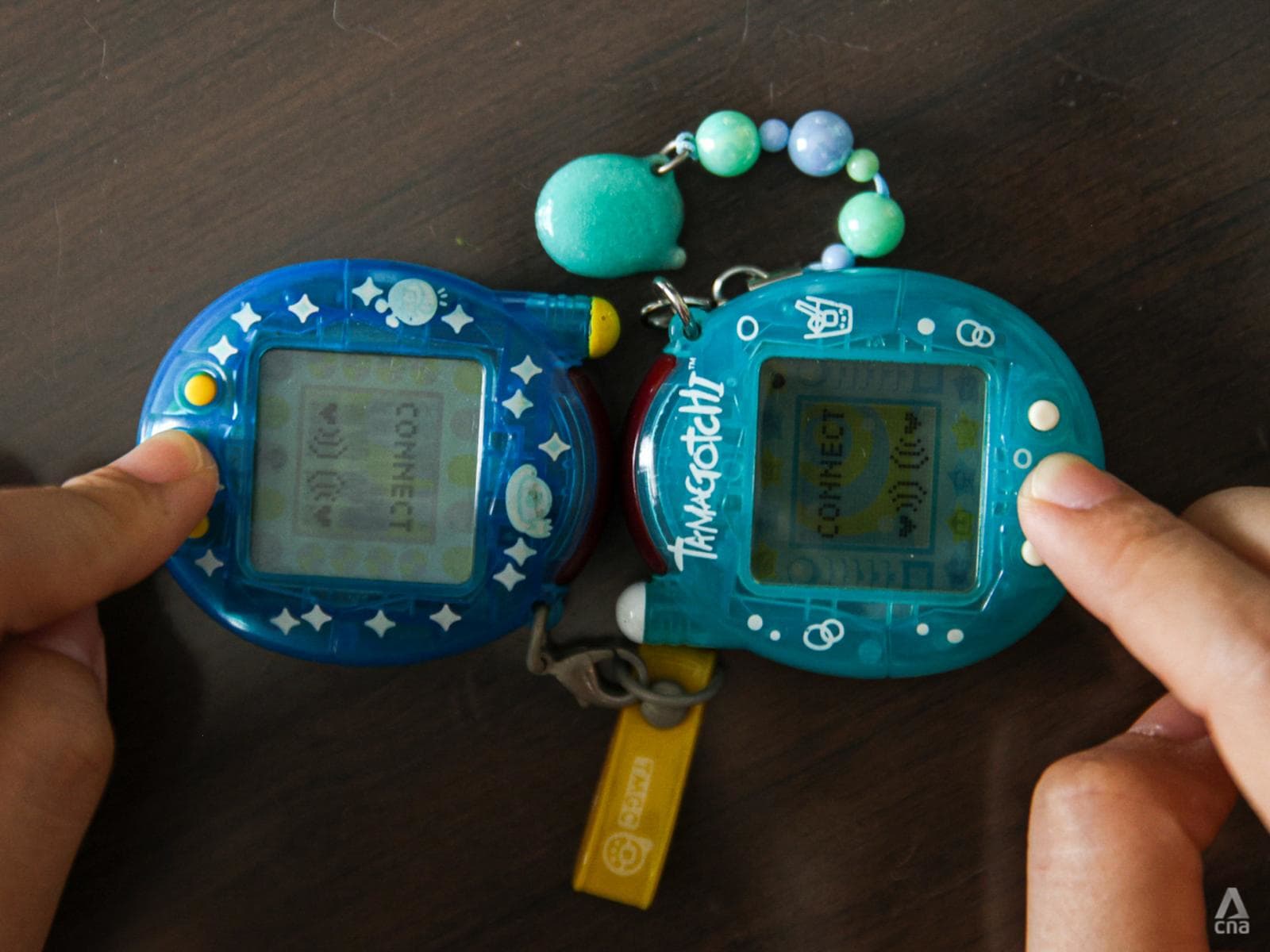
Ms Rachel Liew connecting two vintage Tamagotchi Connection Version 3 devices via infrared technology. (Photo: CNA/Nuria Ling)
It was a game from Japan that became a rage in the 1990s, with people glued to a round-shaped gadget where they had to feed, clean and give some tender loving care to a virtual pet they "hatched" or else it will die.
Tamagotchi, the game and "handheld toy", also created a stir because it was deemed disruptive, with players obsessed with minding and tending to a cyber creature at every beep and notification from the bright and colourful device, to the detriment of their studies and other real-life activities.
Most of the children and adults who had played Tamagotchi may have outgrown it by now, but the game is not dead.
It has launched a comeback, captivating the interest of a new generation of digital natives and reviving the interest of some hardcore fans who had grown up with the game.





Ms Rachel Liew, 34, a human resource trainer, was one of those who had played with a Tamagotchi pet as a child. She said: “To me, Tamagotchi is not a toy. It’s more like a companion."
“It’s like a friend or a pet that is constantly sticking by your side and giving you that emotional support.”
Ms Liew started collecting the toy in 2013 and now has 180 of them in her possession.
Some of her rare Tamagotchi devices are even on loan to the National Museum of Singapore for an ongoing exhibition.
This weekend, In Pixels looks at some retro gadgets from the 1990s owned by three collectors, to find out why some millennials (also known as Generation Y, born between 1981 and 1996) and Gen Zers (born from 1997 onwards) are keeping them humming.
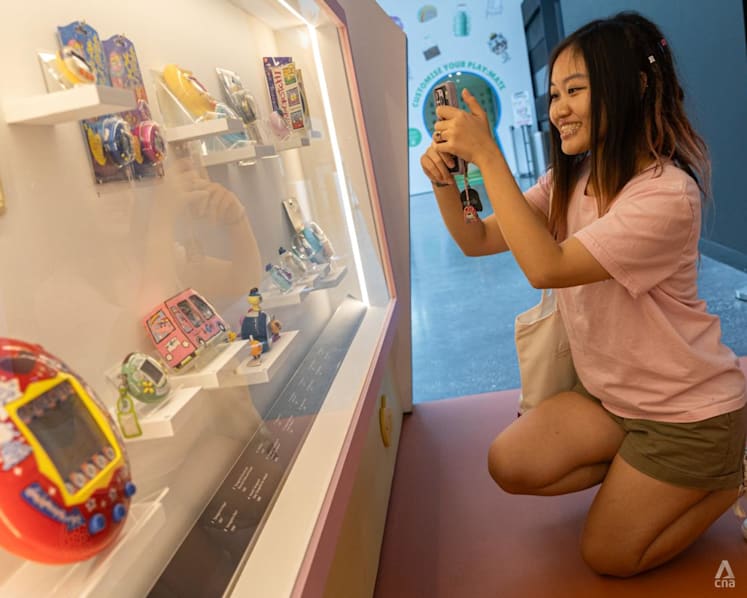
THE ORIGINAL DIGITAL PET
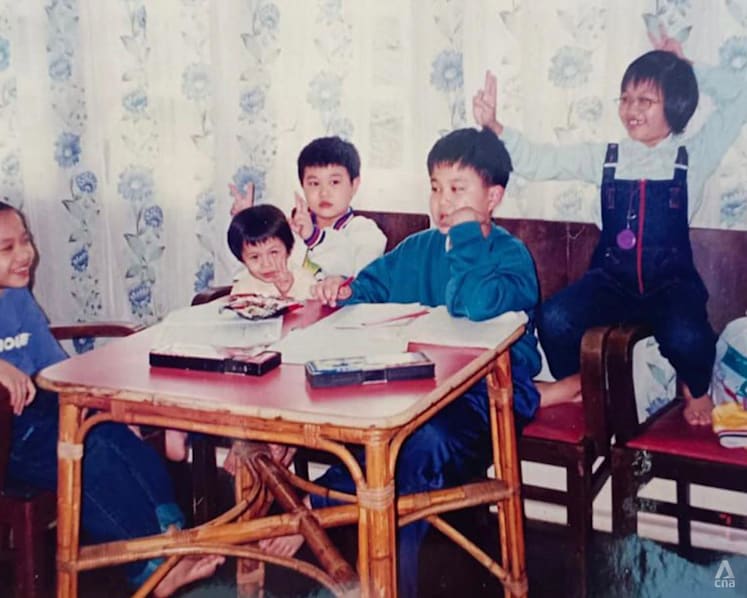
Like many millennials who wanted a Tamagotchi toy as a child, Ms Liew got her first virtual pet at seven years old because a real pet would be, in her parents’ words, “too much responsibility”.
“I still remember carrying it everywhere, even to church,” she said.
“My mum would take it with her and help me take care of it during school hours and return it to me after school.”
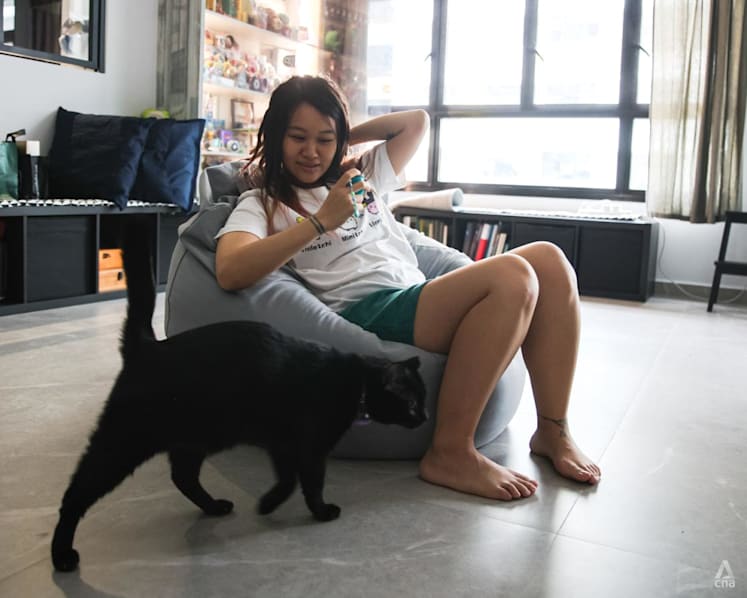
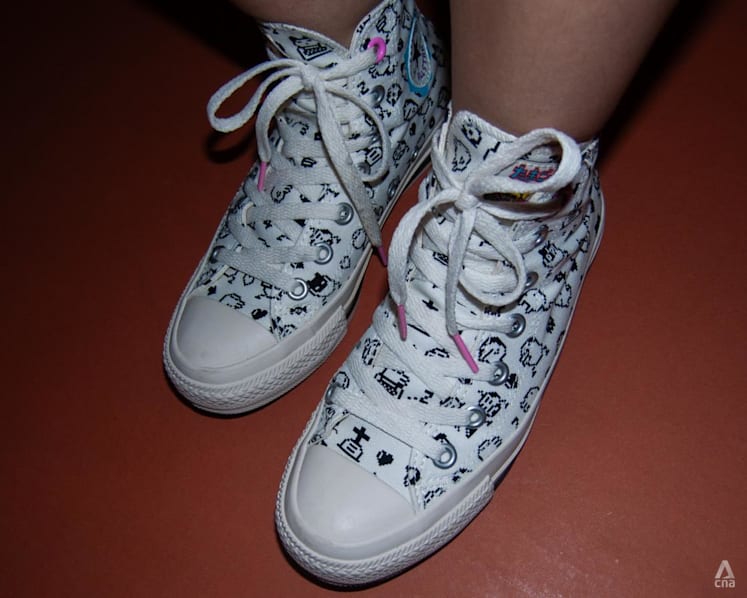
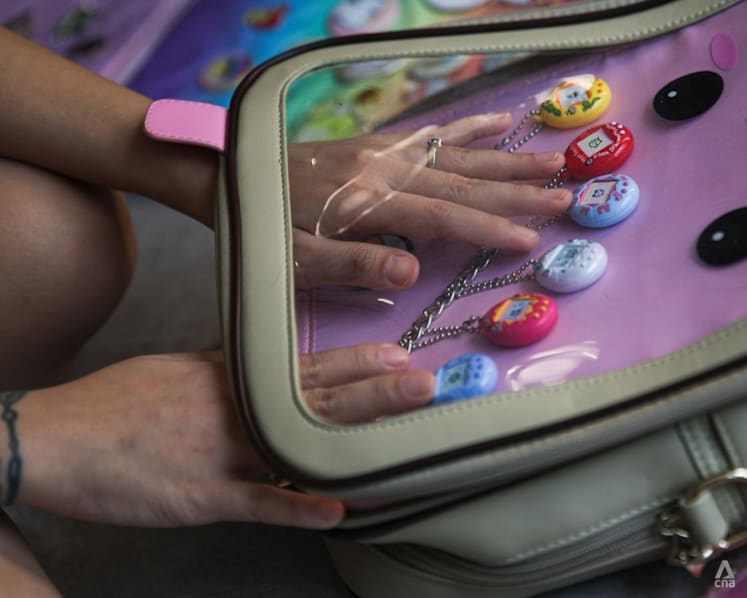
Ms Liew's love for Tamagotchi was rekindled when she started working and could afford to buy her own toys.
Over the years, she has spent around S$6,000 to S$7,000 on her collection but she estimates that it is now worth three times more.
For instance, a S$50 Tamagotchi she bought in a toy store in Singapore in 2011 comes with a full-colour screen and is now selling for as much as S$400 online.
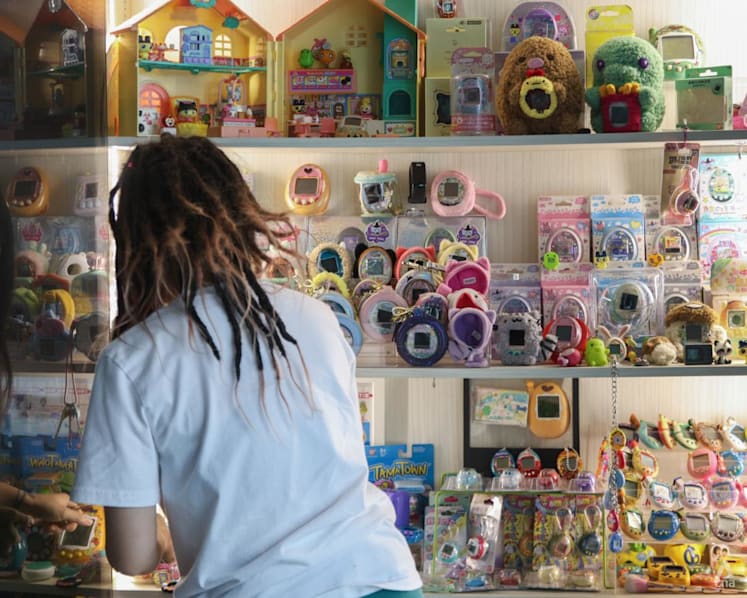
The game, first launched in 1996, is not just for collectors.
British news channel BBC reported that global sales of Tamagotchi more than doubled between 2022 and 2023.
The gadget is sold at several of the major toy stores in Singapore.
Bandai Namco, the company behind the toy, released exact replicas of the first generation of Tamagotchi in 2017, as well as other vintage models over the years.
Rare versions that are out of production have become collectors' items that can fetch hundreds of dollars. They are sold online on auction sites such as eBay, Tamagotchi trading groups on Facebook or on platforms trading secondhand goods.
The newest versions of the Tamagotchi have extra features such as a full-colour screen, Wi-Fi connection and the option to “purchase furniture” to design your Tamagotchi’s room.
Related:
Snakes and marine life you don’t always see at Sentosa
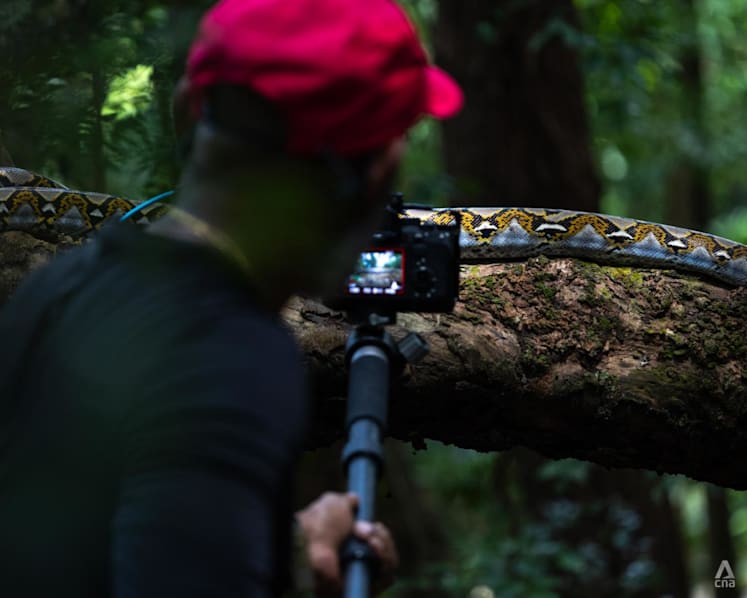
A 2-metre juvenile reticulated python slithering across a tree branch in front of filmmaker Jayaprakash Bojan. The snake was found near Palawan Green on Sentosa Island and was rehomed in a forested area nearby. (Photo: CNA/Raj Nadarajan)
There was palpable tension in the air as a black bag was taken to the forest.
Inside was a 2-metre juvenile reticulated python.
The snake with diamond-patterned skin was being relocated to a forested area on Sentosa Island by the wildlife management team of the Sentosa Development Corporation (SDC), after it was spotted in a high foot-traffic area.
Standing very still just a few metres away were two professional filmmakers and a photographer, patiently waiting for the snake to emerge.
They did not have to wait long.
In just a couple of minutes, the python slithered out of the bag and gradually made its way up a tree.
The team then waited another four hours for the snake to make its way down from the tree as they observed its movements on camera.
In Pixels takes you this weekend on a visual trip with wildlife filmmakers Jayaprakash “JP” Bojan and Ian Mun, as they document Sentosa’s biodiversity and conservation efforts for Earth in Focus, a nature film festival set to take place in November on the resort island south of mainland Singapore.
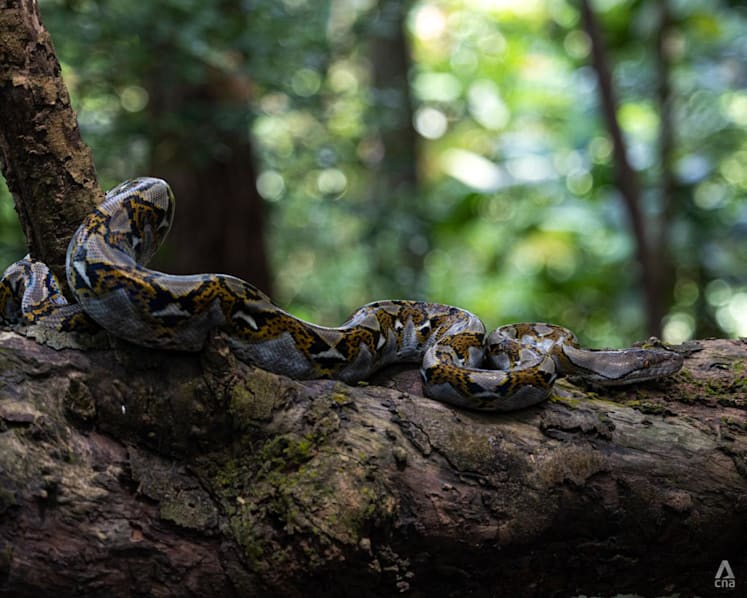
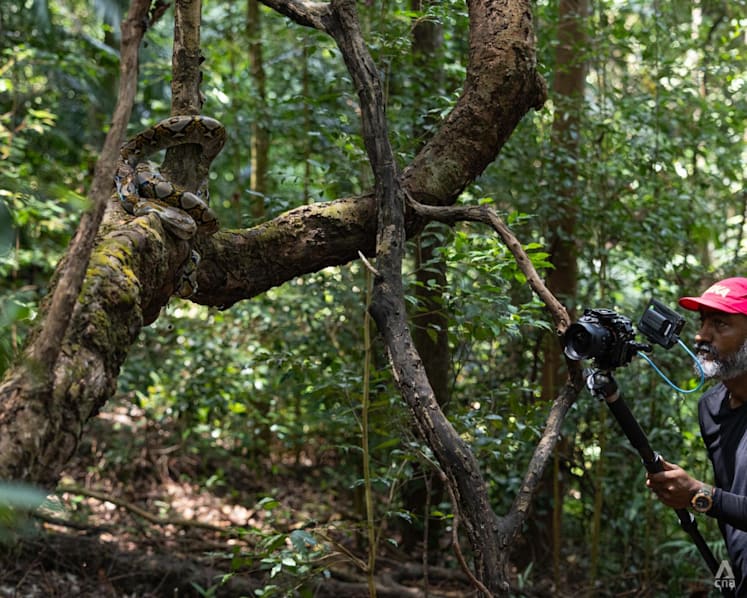
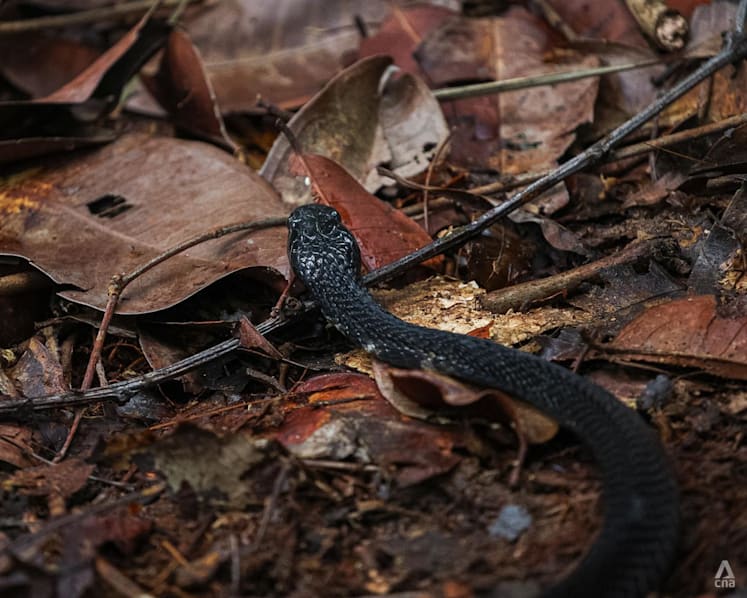
Sentosa is a tourist destination known for its themed parks and sandy beaches. The island’s free-roaming peacocks are probably its most well-known wildlife.
Off the beaten tracks, though, in the forested areas or along the rocky shores, there is a rich biodiversity of flora and fauna unknown to many visitors.
One rare species found in the coastal forests is the Xylocarpus rumphii, a critically endangered plant that has not been discovered elsewhere on mainland Singapore.
There is also the elusive lesser bamboo bat, one of the smallest mammals on earth.
This vulnerable bat species, which weighs just a few grams, has a flattened skull that allows it to squeeze in a hollow bamboo shoot to roost, through narrow slits created by beetles.
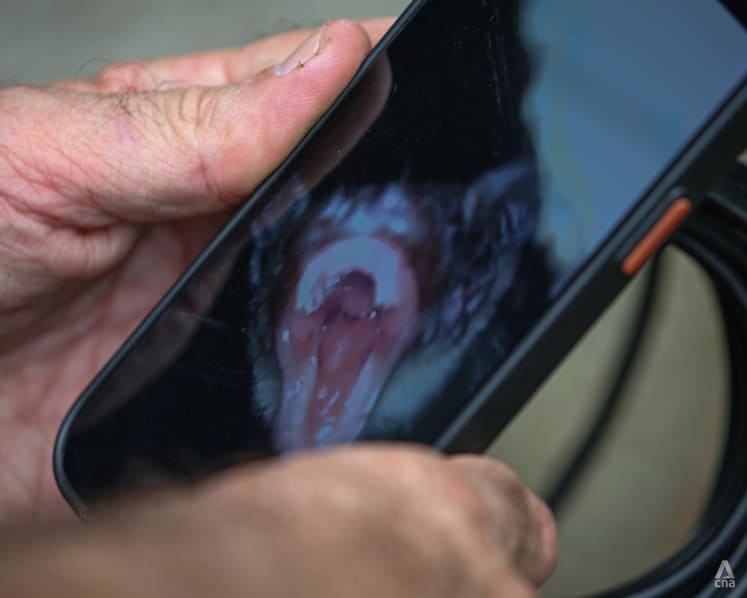
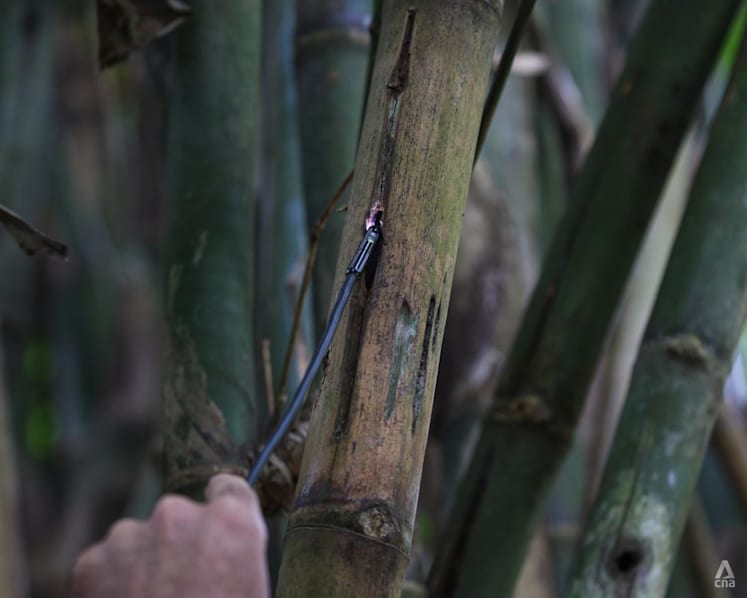
Sentosa is home to 850 flora and fauna species.
Setting up camera traps is one way that the conservation team is able to track and protect the wildlife on the island.
Unlike what it sounds, camera traps do not trap animals. They are cameras with sensors put up in animal habitats for a duration to record images of wildlife and collect data on them.
The team has deployed eight such cameras in biodiversity-sensitive habitats around the island and the cameras are checked every alternate month.
Related:
Inside a dragon kiln where temperatures go up to 1,300°C
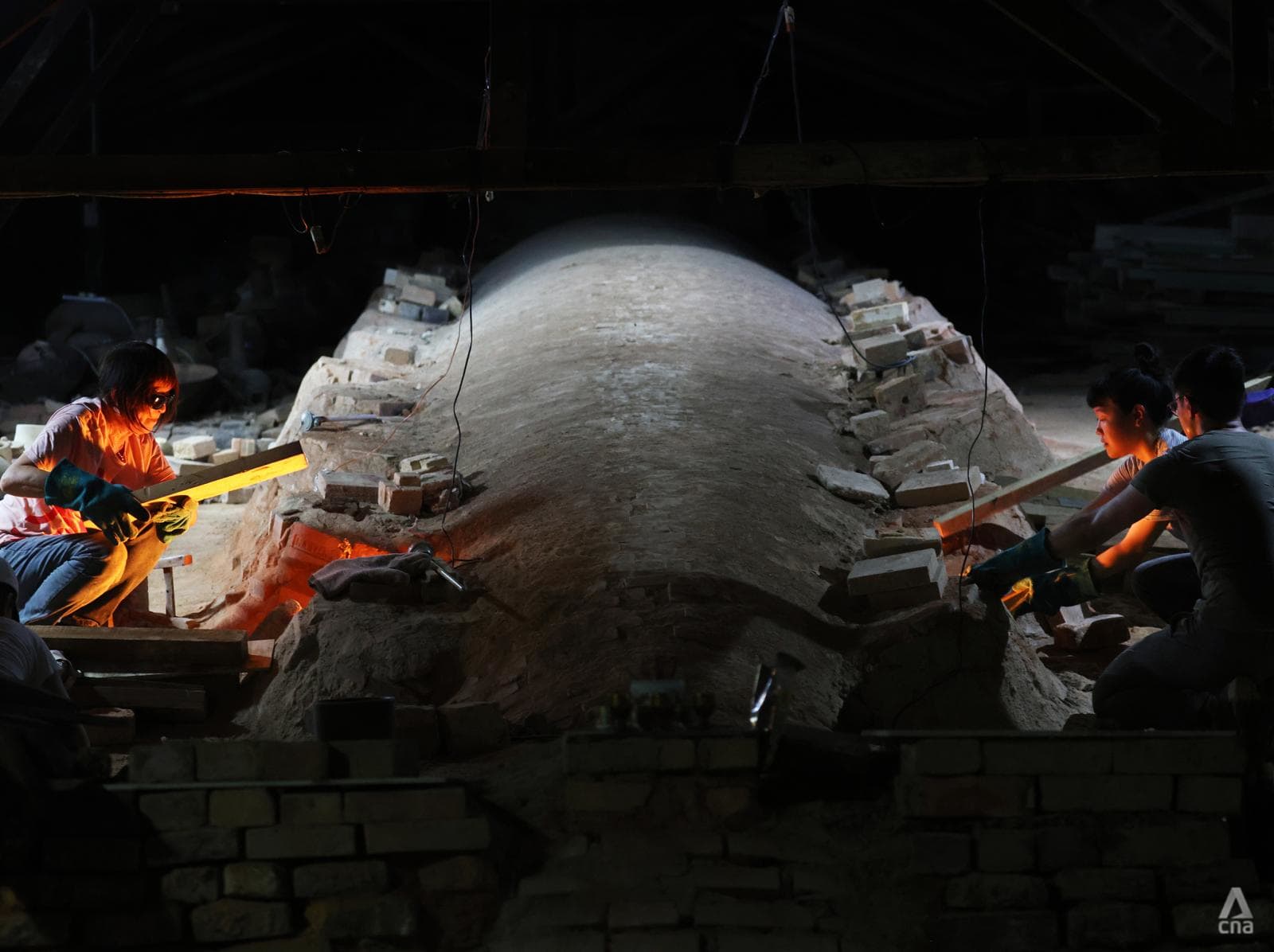


Nestled in an industrial estate in the western part of Singapore is an 84-year-old dragon kiln, the oldest and the only operational dragon kiln in the country.
Built in 1940, the kiln at Thow Kwang Pottery Jungle was originally used for the mass production of household and industrial items such as cups and flower pots.
Over the decades, the place has evolved into a community space, now offering classes and events for potters to hone their craft.
CNA TODAY joined the potter community for a wood-firing session that happens only two or three times a year.
In Pixels takes you through the experience, as new and seasoned potters bond over fire and perspiration, creating unique works of art.
PRAYERS TO THE "KILN GOD"
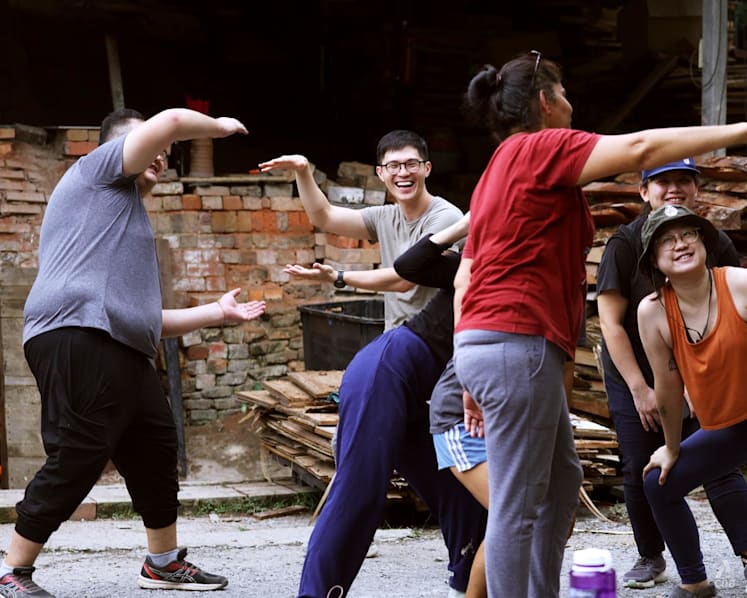
At Thow Kwang Pottery Jungle, which is located a short distance from Nanyang Technological University, a group of around 30 people gathered on a Friday last month in front of the kiln.
This was at the request of the owners, Mr Tan Teck Yoke, 68, and his wife Yulianti Tan, 66.
A prayer ceremony to the "kiln god" was about to begin.
“We are praying to the ‘kiln god’ for a successful firing, for the pieces to achieve the desired effects,” Mr Tan explained to the enthusiastic participants.
To this, the crowd responded by shouting, “Heng, ong, huat, ah,” a phrase in the Chinese dialect of Hokkien that collectively means wishing for good fortune.
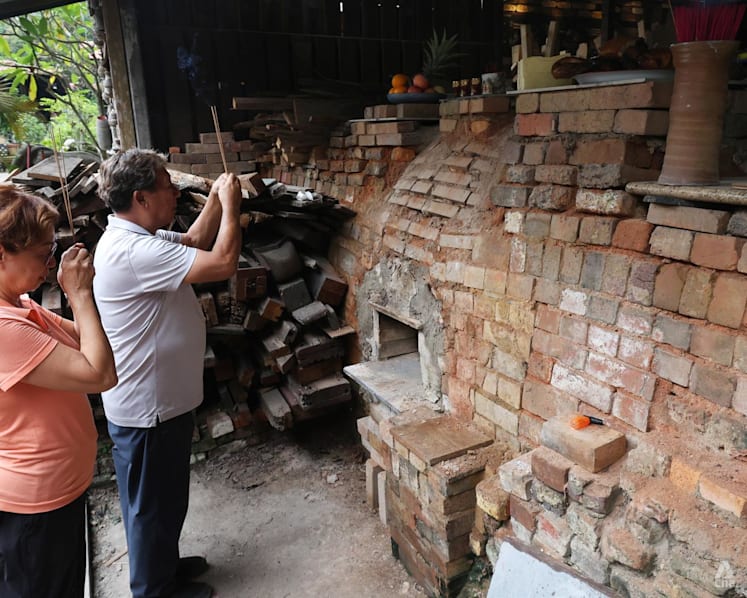
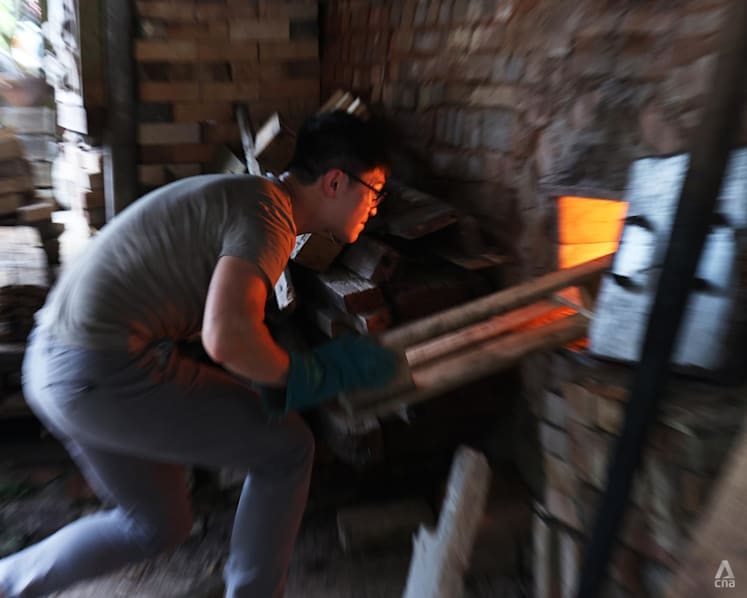
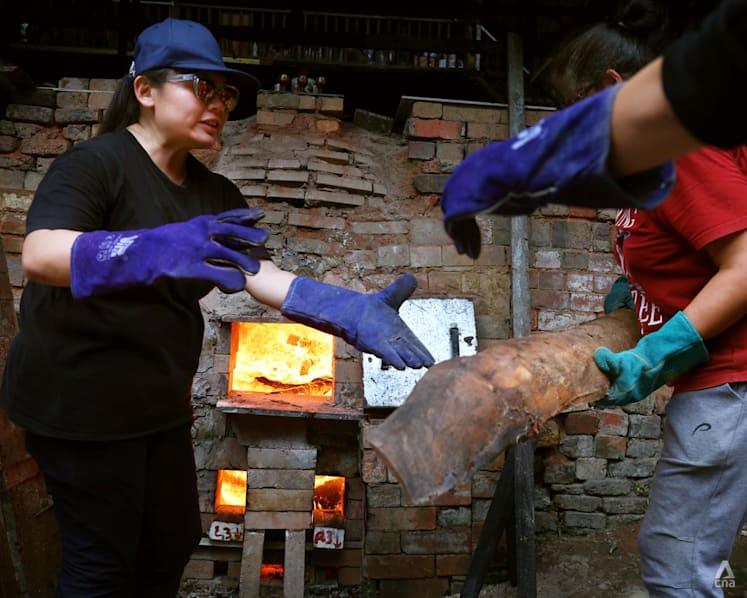
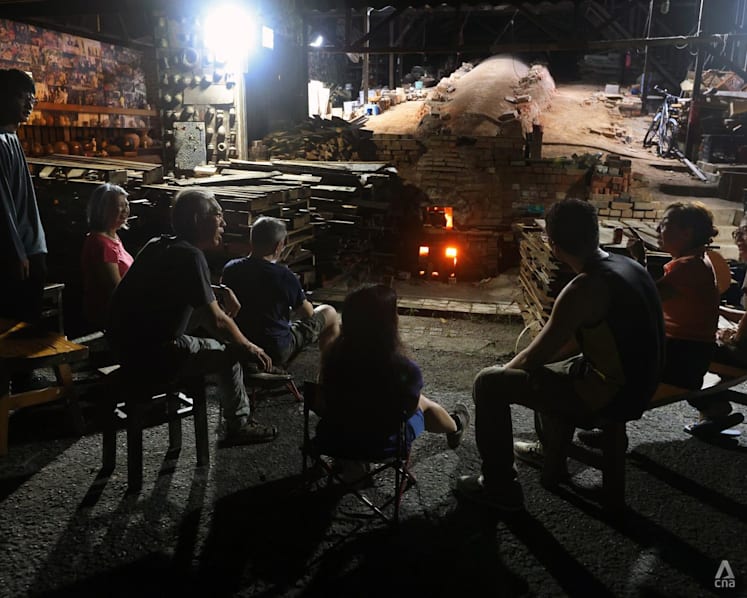
After the prayers were done, the fire box, which is a small opening at the front of the kiln, was lit.
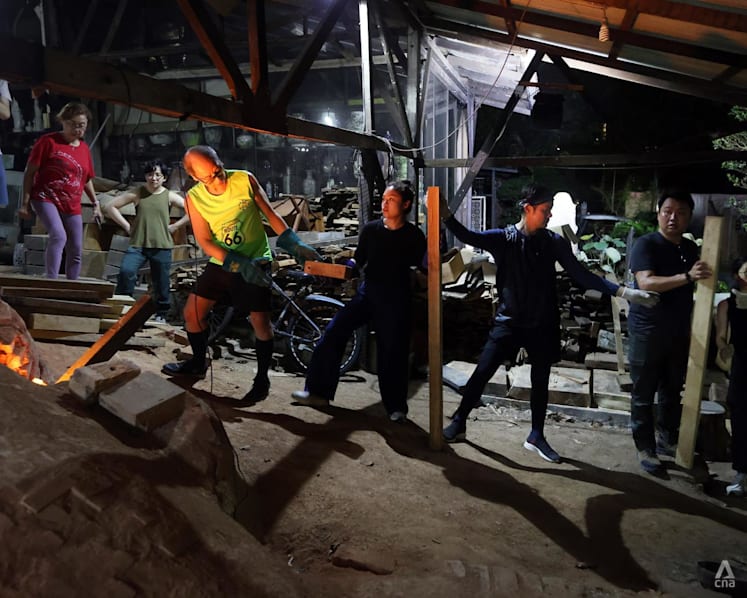
The participants each picked up a piece of wood to throw into the fire, hoping to add more "luck" to the process.

The dragon kiln was bought by Mr Tan’s father in 1965 and has been owned by the family since then.
It sits on a slope, is 27-metres long, 2-metres wide and curves around the side, resembling the body of a dragon in Chinese mythology.
Its lengthy chambers are made out of bricks and there is a chimney at the end, located at the top of the slope.
The kiln can fit thousands of pieces of ceramic items, depending on the size of the pots.
For this firing session, around 400 to 500 pieces were loaded in the kiln.
NEW WAYS TO IMPROVE PROCESS
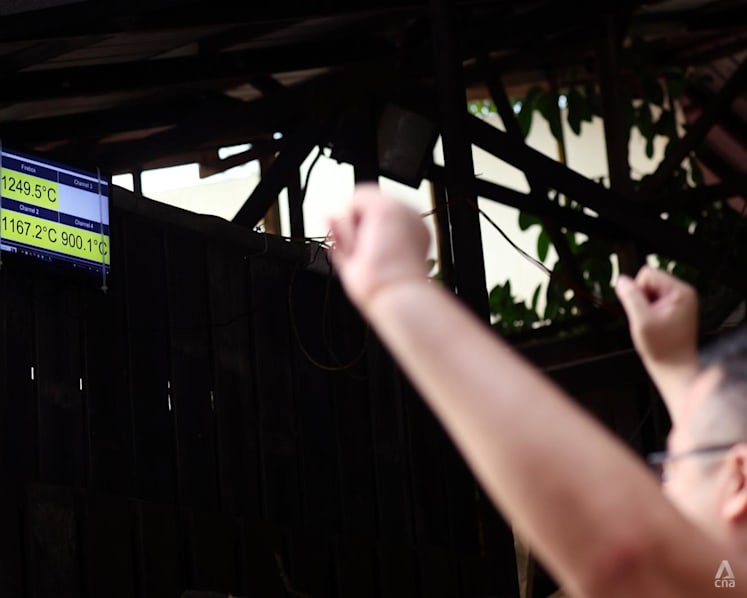
Temperatures in the dragon kiln can reach up to 1,300°C.
They can fluctuate significantly due to the shape of the furnace and the use of wood as a fuel.
That is why one of the most crucial parts of the process is to monitor the temperature for all three days of the firing session.
Mr Chua Hee Lai, who is in his 50s and a hobbyist-turned-kiln master, helped to plan and lead each firing session.
In 2019, Mr Chua, with the help of another potter, introduced a digital monitoring system that allowed them to track the temperatures remotely and give instructions to the potters doing shift work on site.
Previously, they had to monitor the temperature by looking at the colour of the flame or record temperatures manually and then draw up prediction charts – a process that requires them to be on site for longer periods of time.

THE "KAMPUNG SPIRIT"
Advertising executive Vanessa Low and product manager Goh Wei Ting, both 31, have been practising pottery at another pottery studio for around five years and this was their first time taking part in the wood-firing process.
Compared to a regular firing in an electric or gas kiln, wood-firing is "tiring and physically demanding", Mr Goh said.
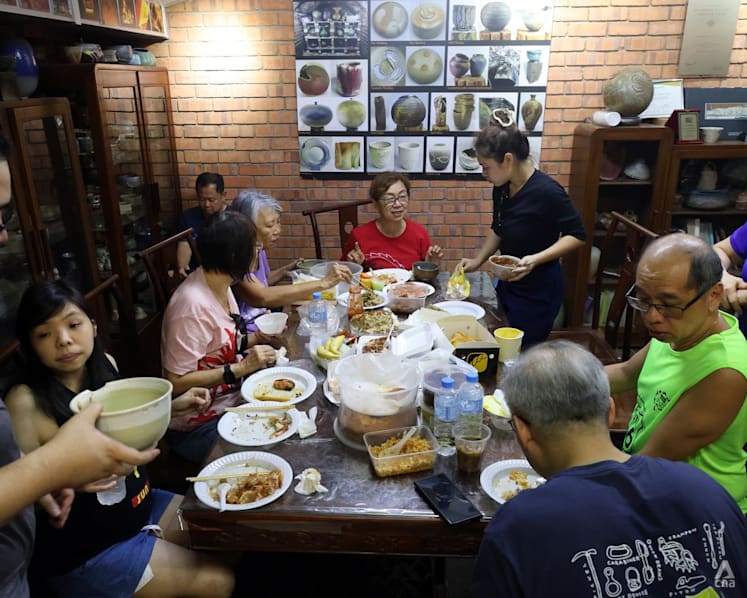
However, they were buoyed by the “kampung spirit” or the sense of camaraderie that came about as participants laboured together.
“You just don’t feel tired, you just do (the work),” Mr Goh added.
OPENING OF THE KILN
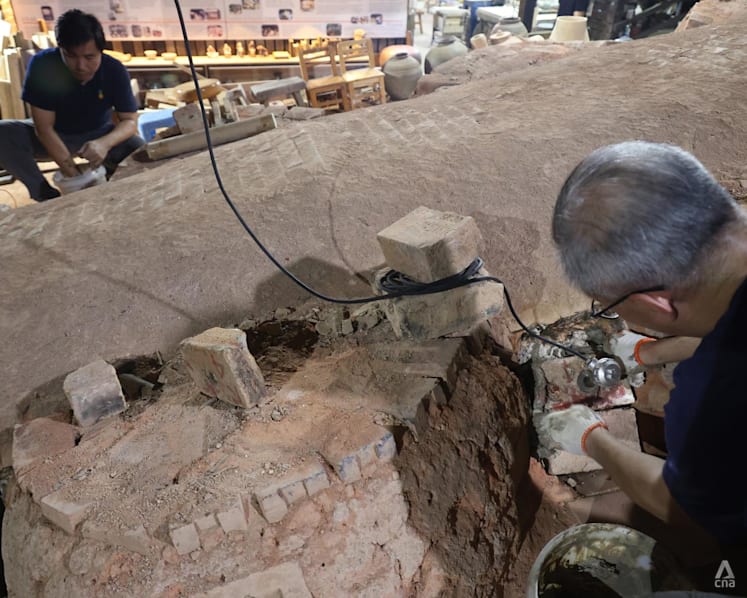
Six days after the firing at the dragon kiln, the participants returned to open the kiln and check on their art pieces.
“Shall we form a chain?” someone suggested to facilitate the removal of the brick walls.
Without hesitation, a human chain quickly formed as the potters unsealed the kiln, one brick at a time.

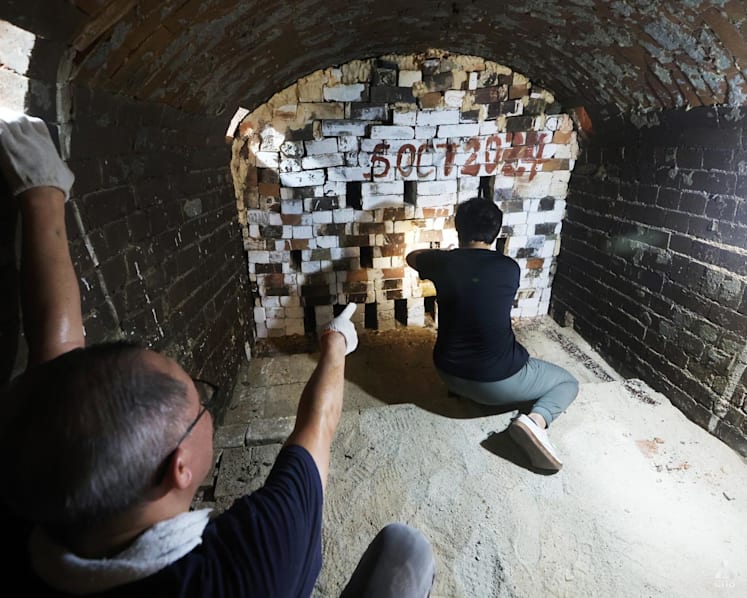
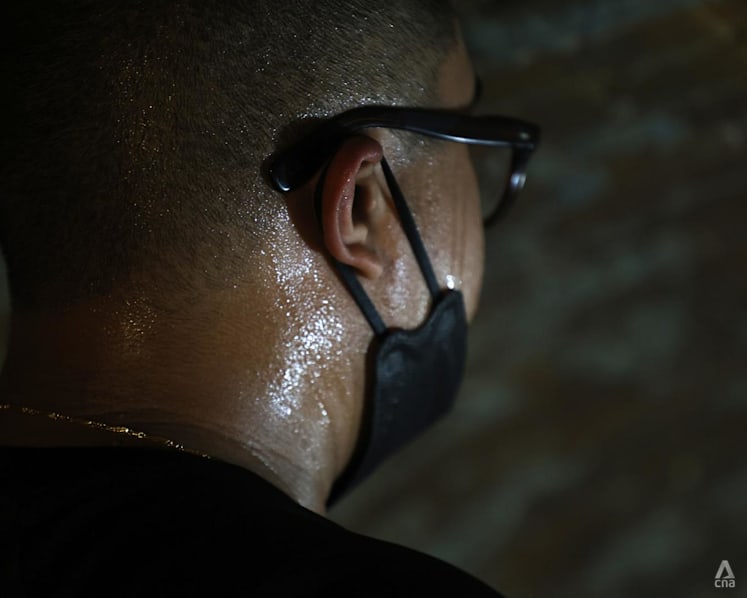
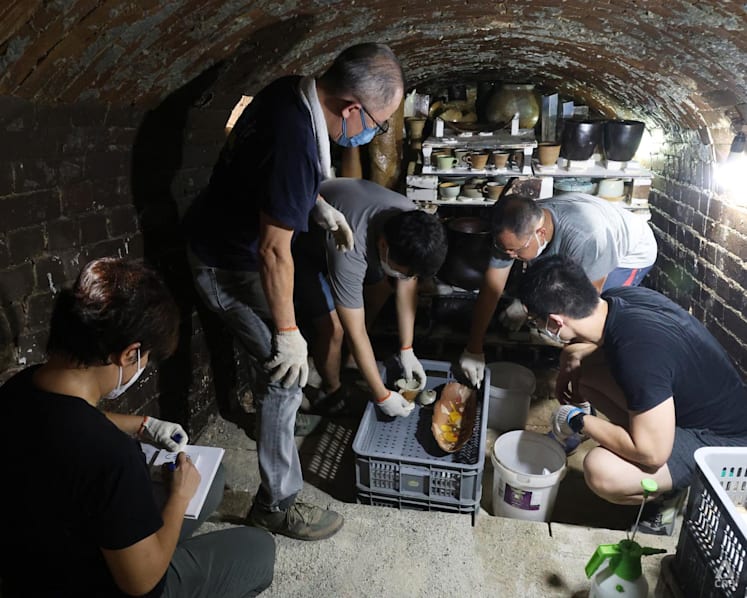
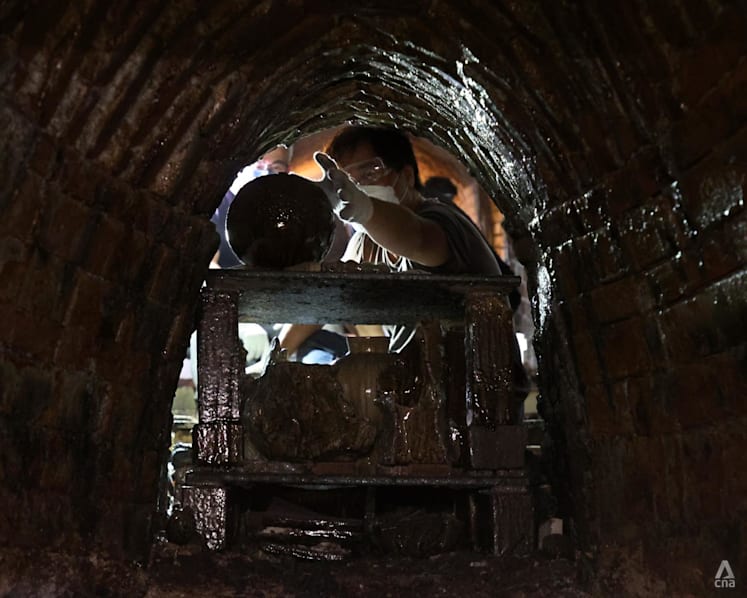
A collective “wow” sounded as the final bricks were removed, revealing the final outcome of the nine-day process that comprised three days of firing and six days of cooling.
The potters carefully removed the art pieces from the shelves, while admiring the effects that the fire had on their work.
Related:
Meet the 70-year-old lorry driver who is also a 'kite doctor'


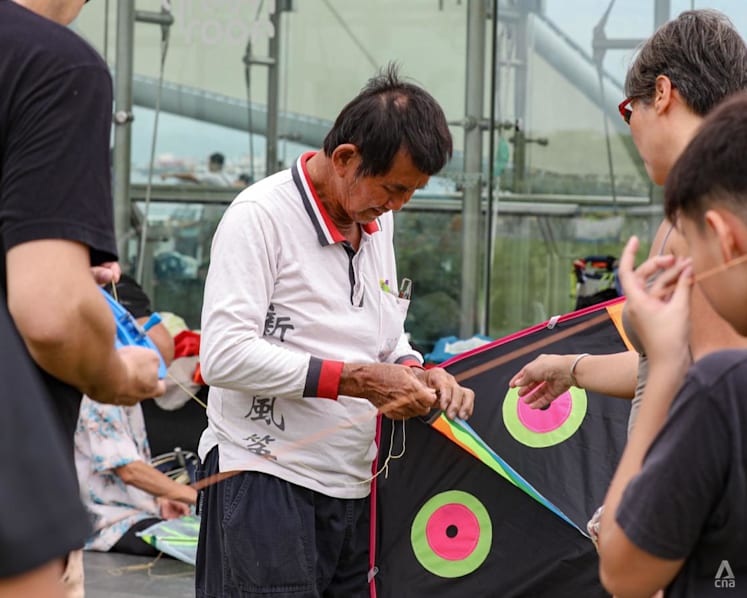
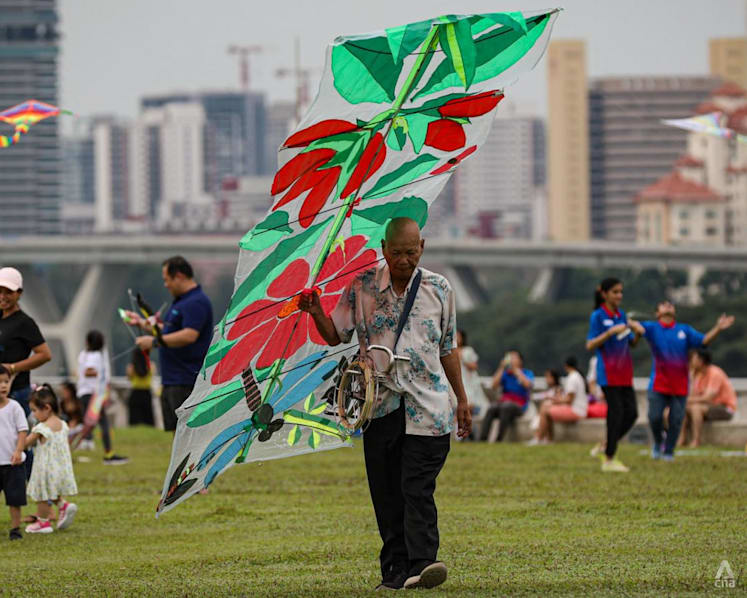
Rolling up to Marina Barrage with a trolley bag full of handmade kites and repair tools, Mr Tan Poh Wah had one clear mission for the day: To share his love of kite-flying with others.
Known informally as the “kite doctor” among the regular visitors there, the 70-year-old spends most Sundays repairing kites or offering his handmade ones – mostly for free – to people at the open-air space that is the venue of Singapore's largest reservoir.
“Watching people fly my kites makes me really happy,” Mr Tan said.
This weekend, In Pixels speaks to four enthusiasts to find out what excites them about kite-flying.
A FAMILIAR FIGURE
Shortly after Mr Tan turned up at Marina Barrage in the Marina Bay area, a handful of people who wanted their kites repaired immediately made a beeline towards him.
They offered him drinks and snacks to thank him for his service.
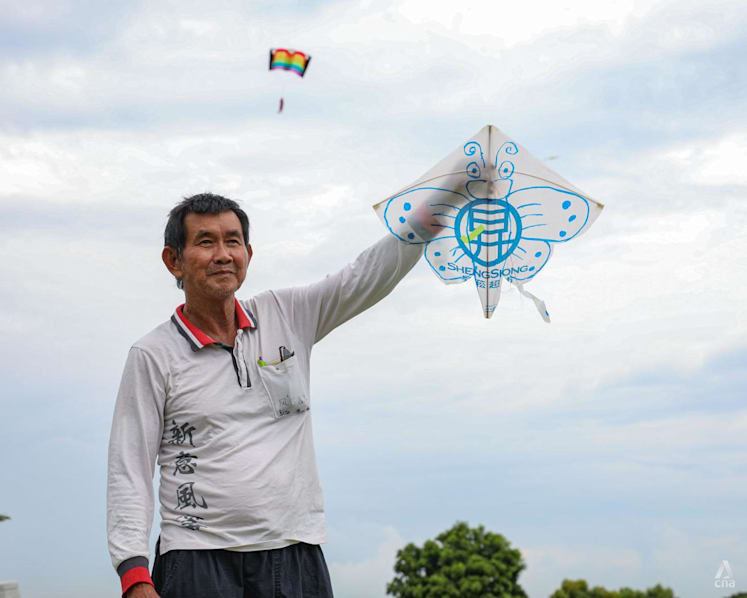
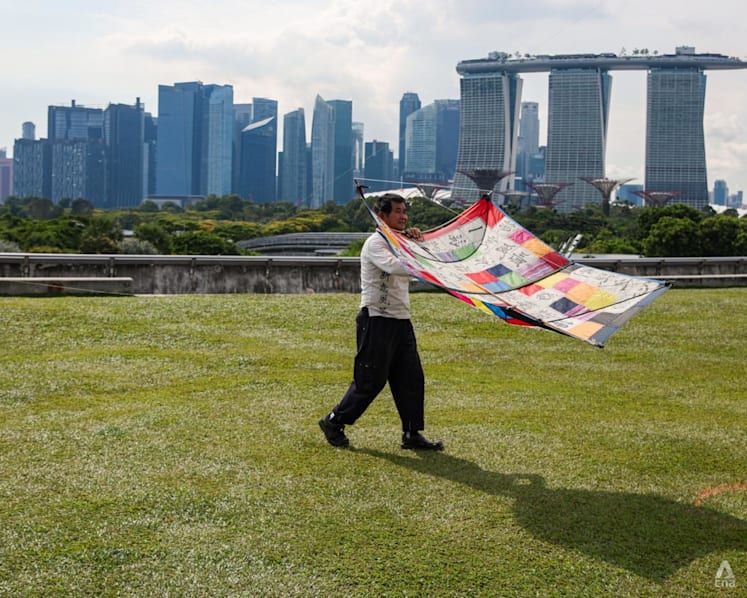
When he was done with the repairs, Mr Tan pulled a kite from his bag and launched it to the sky.
He flew it with ease, strolling around the field, eager to find someone who will take the kite as a gift.
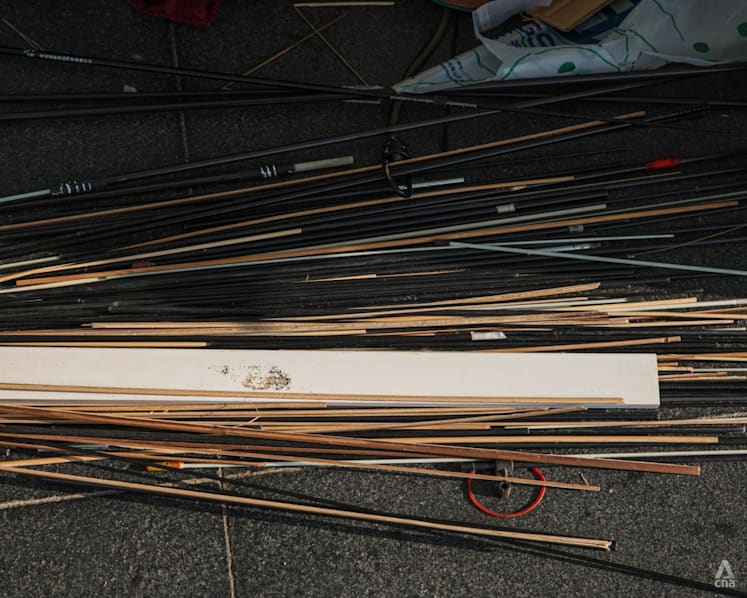
His masterpieces are made mostly from recycled materials including plastic bags, discarded blinds, banners and umbrellas.
Mr Tan is part of a group known as Singapore Original Kites, an informal gathering of adults in their 60s and 70s who share the same interest in making and flying kites.
A semi-retired Chinese physician Ong Cheng Her, 75, is the founder of the group.
He said that the only prerequisite to join the group is one’s ability to make a kite from scratch.
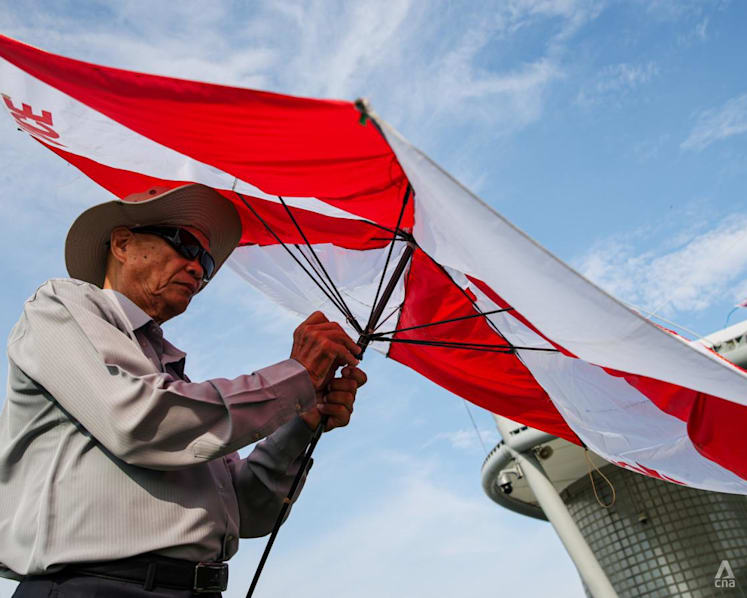
He proudly showed CNA TODAY one of his creations, a red and white "umbrella kite".
“Umbrellas are used for shade and rain protection, so why hasn’t anyone flown an umbrella kite? I decided to take on the challenge,” Mr Ong added.
HIS WORKSPACE AT HOME
As for Mr Tan, he is not retired, so flying and making kites is what he does only on Sundays.
He works six days a week as a lorry driver.
“I work to live, to fill my stomach so I can make kites.”
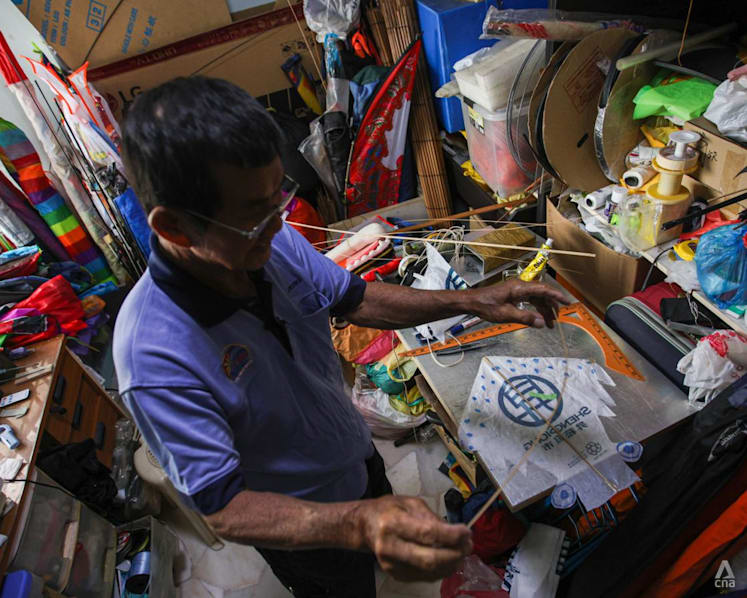
Stepping into his flat, Mr Tan led us to his "studio", which is a room filled with a bountiful supply of kites and raw materials.
He described his workspace as a “chaotic but organised mess”.
“My wife sometimes asks why I collect so many umbrellas, but she doesn’t interfere much because she knows I enjoy making these things.”
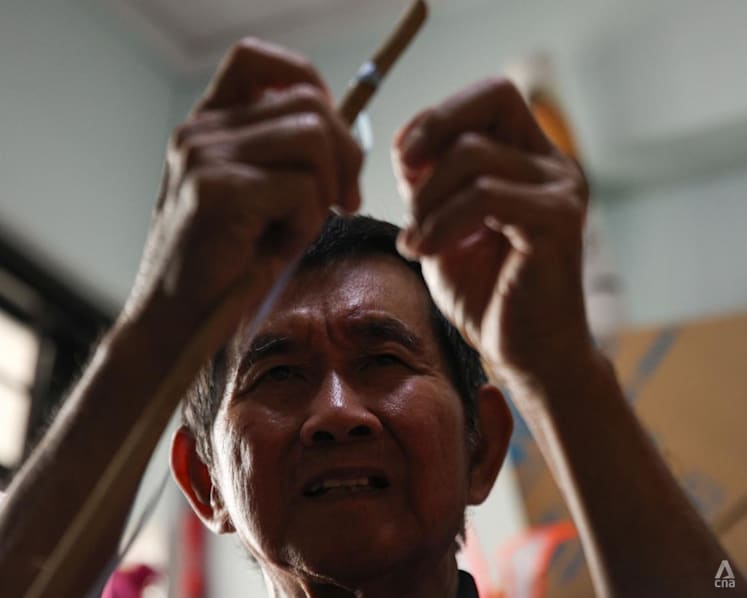
Mr Tan has loved kite flying since he was a child, but it was not until he was in his 30s that he took to making kites himself.
A self-taught craftsman, he said that he learnt how to make kites by observing other kite-makers whenever an opportunity comes along.
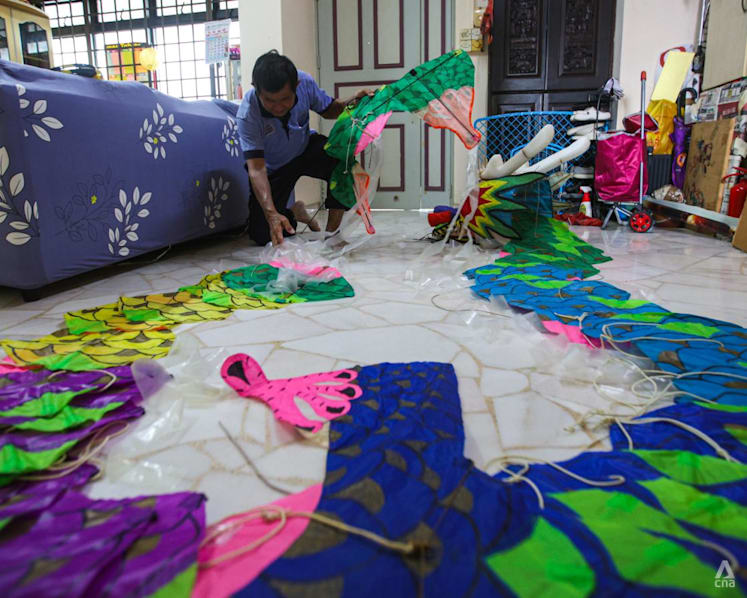
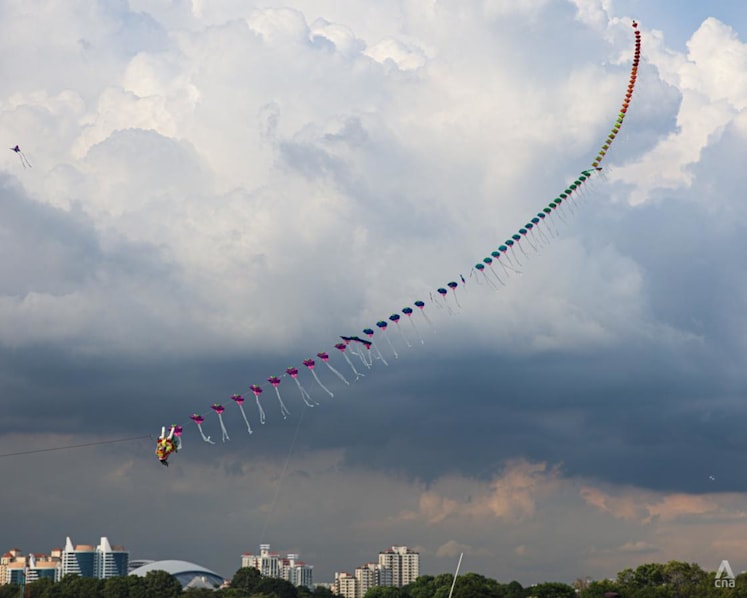
Recently, Mr Tan finished repairing a 70m-long "dragon kite" that he first constructed in 2000. It broke at a kite festival in Taiwan in 2019 and required extensive repairs.
After CNA TODAY approached him for an interview, Mr Tan said that he found new inspiration to repair the kite, which took him four Sundays to complete.
It was obvious that he is most proud of this kite among the many in his collection.
“Anyone who hasn't made a dragon or a phoenix kite isn't truly considered a kite maker,” he said, adding that these long kites are made up of many different sections and each needed to be crafted with great precision before they are finally stitched together.
"GIANTS" IN THE SKY
Over at East Coast Park, another group of kite enthusiasts have gathered and their presence could be spotted from afar.
The kites they have taken out, called "inflatable show kites", are gigantic balloon-like kites that are typically several metres in length when inflated.
Traditional kites rely on rigid frames for support, but inflatable show kites have no hard structures. They inflate as they catch on the wind and have to be anchored to the ground.

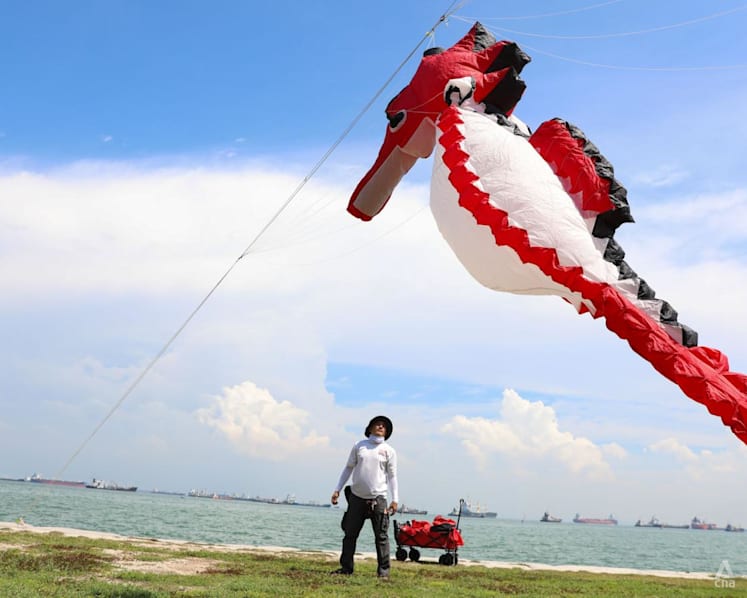
Project coordinator Johnny Yap and his wife Maggie Mok, a homemaker, both 51, are the founders of Show Kites Singapore, a group of people who are into these inflatable show kites.
The duo's interest in this started nearly 20 years ago when they took their children kite-flying.
In the end, it was the couple themselves who got hooked on the activity.
“We started flying bigger and bigger kites and before long, we realised that stick kites have a limit,” Mr Yap said.
This led them to explore inflatable ones in 2009 and they came across these kites online before buying their first. The sky is the limit when it comes to the sizes of such kites.
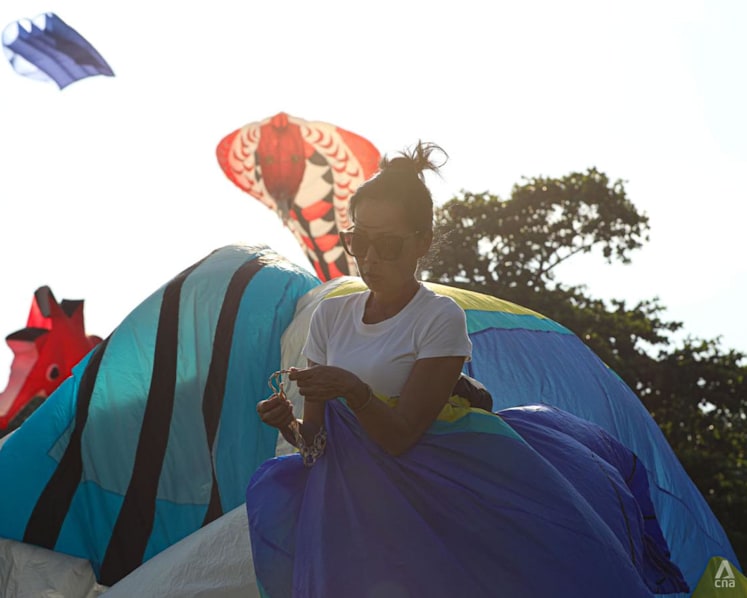


As their interests grew, Mr Yap and Ms Mok started travelling overseas to take part in international kite festivals.
In September, they were at the International Kite Festival in Melaka, Malaysia, where they flew an inflatable show kite in the form of Singapore's tourism icon, the Merlion.
Related:
Inside a dragon kiln where temperatures go up to 1,300°C
Nestled in an industrial estate in the western part of Singapore is an 84-year-old dragon kiln, the oldest and the only operational dragon kiln in the country.
Built in 1940, the kiln at Thow Kwang Pottery Jungle was originally used for the mass production of household and industrial items such as cups and flower pots.
Over the decades, the place has evolved into a community space, now offering classes and events for potters to hone their craft.
CNA TODAY joined the potter community for a wood-firing session that happens only two or three times a year.
In Pixels takes you through the experience, as new and seasoned potters bond over fire and perspiration, creating unique works of art.
PRAYERS TO THE "KILN GOD"
At Thow Kwang Pottery Jungle, which is located a short distance from Nanyang Technological University, a group of around 30 people gathered on a Friday last month in front of the kiln.
This was at the request of the owners, Mr Tan Teck Yoke, 68, and his wife Yulianti Tan, 66.
A prayer ceremony to the "kiln god" was about to begin.
“We are praying to the ‘kiln god’ for a successful firing, for the pieces to achieve the desired effects,” Mr Tan explained to the enthusiastic participants.
To this, the crowd responded by shouting, “Heng, ong, huat, ah,” a phrase in the Chinese dialect of Hokkien that collectively means wishing for good fortune.
After the prayers were done, the fire box, which is a small opening at the front of the kiln, was lit.
The participants each picked up a piece of wood to throw into the fire, hoping to add more "luck" to the process.
The dragon kiln was bought by Mr Tan’s father in 1965 and has been owned by the family since then.
It sits on a slope, is 27-metres long, 2-metres wide and curves around the side, resembling the body of a dragon in Chinese mythology.
Its lengthy chambers are made out of bricks and there is a chimney at the end, located at the top of the slope.
The kiln can fit thousands of pieces of ceramic items, depending on the size of the pots.
For this firing session, around 400 to 500 pieces were loaded in the kiln.
NEW WAYS TO IMPROVE PROCESS
Temperatures in the dragon kiln can reach up to 1,300°C.
They can fluctuate significantly due to the shape of the furnace and the use of wood as a fuel.
That is why one of the most crucial parts of the process is to monitor the temperature for all three days of the firing session.
Mr Chua Hee Lai, who is in his 50s and a hobbyist-turned-kiln master, helped to plan and lead each firing session.
In 2019, Mr Chua, with the help of another potter, introduced a digital monitoring system that allowed them to track the temperatures remotely and give instructions to the potters doing shift work on site.
Previously, they had to monitor the temperature by looking at the colour of the flame or record temperatures manually and then draw up prediction charts – a process that requires them to be on site for longer periods of time.
THE "KAMPUNG SPIRIT"
Advertising executive Vanessa Low and product manager Goh Wei Ting, both 31, have been practising pottery at another pottery studio for around five years and this was their first time taking part in the wood-firing process.
Compared to a regular firing in an electric or gas kiln, wood-firing is "tiring and physically demanding", Mr Goh said.
However, they were buoyed by the “kampung spirit” or the sense of camaraderie that came about as participants laboured together.
“You just don’t feel tired, you just do (the work),” Mr Goh added.
OPENING OF THE KILN
Six days after the firing at the dragon kiln, the participants returned to open the kiln and check on their art pieces.
“Shall we form a chain?” someone suggested to facilitate the removal of the brick walls.
Without hesitation, a human chain quickly formed as the potters unsealed the kiln, one brick at a time.
A collective “wow” sounded as the final bricks were removed, revealing the final outcome of the nine-day process that comprised three days of firing and six days of cooling.
The potters carefully removed the art pieces from the shelves, while admiring the effects that the fire had on their work.
Related:
Meet the 70-year-old lorry driver who is also a 'kite doctor'
Rolling up to Marina Barrage with a trolley bag full of handmade kites and repair tools, Mr Tan Poh Wah had one clear mission for the day: To share his love of kite-flying with others.
Known informally as the “kite doctor” among the regular visitors there, the 70-year-old spends most Sundays repairing kites or offering his handmade ones – mostly for free – to people at the open-air space that is the venue of Singapore's largest reservoir.
“Watching people fly my kites makes me really happy,” Mr Tan said.
This weekend, In Pixels speaks to four enthusiasts to find out what excites them about kite-flying.
A FAMILIAR FIGURE
Shortly after Mr Tan turned up at Marina Barrage in the Marina Bay area, a handful of people who wanted their kites repaired immediately made a beeline towards him.
They offered him drinks and snacks to thank him for his service.
When he was done with the repairs, Mr Tan pulled a kite from his bag and launched it to the sky.
He flew it with ease, strolling around the field, eager to find someone who will take the kite as a gift.
His masterpieces are made mostly from recycled materials including plastic bags, discarded blinds, banners and umbrellas.
Mr Tan is part of a group known as Singapore Original Kites, an informal gathering of adults in their 60s and 70s who share the same interest in making and flying kites.
A semi-retired Chinese physician Ong Cheng Her, 75, is the founder of the group.
He said that the only prerequisite to join the group is one’s ability to make a kite from scratch.
He proudly showed CNA TODAY one of his creations, a red and white "umbrella kite".
“Umbrellas are used for shade and rain protection, so why hasn’t anyone flown an umbrella kite? I decided to take on the challenge,” Mr Ong added.
HIS WORKSPACE AT HOME
As for Mr Tan, he is not retired, so flying and making kites is what he does only on Sundays.
He works six days a week as a lorry driver.
“I work to live, to fill my stomach so I can make kites.”
Stepping into his flat, Mr Tan led us to his "studio", which is a room filled with a bountiful supply of kites and raw materials.
He described his workspace as a “chaotic but organised mess”.
“My wife sometimes asks why I collect so many umbrellas, but she doesn’t interfere much because she knows I enjoy making these things.”
Mr Tan has loved kite flying since he was a child, but it was not until he was in his 30s that he took to making kites himself.
A self-taught craftsman, he said that he learnt how to make kites by observing other kite-makers whenever an opportunity comes along.
Recently, Mr Tan finished repairing a 70m-long "dragon kite" that he first constructed in 2000. It broke at a kite festival in Taiwan in 2019 and required extensive repairs.
After CNA TODAY approached him for an interview, Mr Tan said that he found new inspiration to repair the kite, which took him four Sundays to complete.
It was obvious that he is most proud of this kite among the many in his collection.
“Anyone who hasn't made a dragon or a phoenix kite isn't truly considered a kite maker,” he said, adding that these long kites are made up of many different sections and each needed to be crafted with great precision before they are finally stitched together.
"GIANTS" IN THE SKY
Over at East Coast Park, another group of kite enthusiasts have gathered and their presence could be spotted from afar.
The kites they have taken out, called "inflatable show kites", are gigantic balloon-like kites that are typically several metres in length when inflated.
Traditional kites rely on rigid frames for support, but inflatable show kites have no hard structures. They inflate as they catch on the wind and have to be anchored to the ground.
Project coordinator Johnny Yap and his wife Maggie Mok, a homemaker, both 51, are the founders of Show Kites Singapore, a group of people who are into these inflatable show kites.
The duo's interest in this started nearly 20 years ago when they took their children kite-flying.
In the end, it was the couple themselves who got hooked on the activity.
“We started flying bigger and bigger kites and before long, we realised that stick kites have a limit,” Mr Yap said.
This led them to explore inflatable ones in 2009 and they came across these kites online before buying their first. The sky is the limit when it comes to the sizes of such kites.
As their interests grew, Mr Yap and Ms Mok started travelling overseas to take part in international kite festivals.
In September, they were at the International Kite Festival in Melaka, Malaysia, where they flew an inflatable show kite in the form of Singapore's tourism icon, the Merlion.
Related:
Inside a dragon kiln where temperatures go up to 1,300°C
Nestled in an industrial estate in the western part of Singapore is an 84-year-old dragon kiln, the oldest and the only operational dragon kiln in the country.
Built in 1940, the kiln at Thow Kwang Pottery Jungle was originally used for the mass production of household and industrial items such as cups and flower pots.
Over the decades, the place has evolved into a community space, now offering classes and events for potters to hone their craft.
CNA TODAY joined the potter community for a wood-firing session that happens only two or three times a year.
In Pixels takes you through the experience, as new and seasoned potters bond over fire and perspiration, creating unique works of art.
PRAYERS TO THE "KILN GOD"
At Thow Kwang Pottery Jungle, which is located a short distance from Nanyang Technological University, a group of around 30 people gathered on a Friday last month in front of the kiln.
This was at the request of the owners, Mr Tan Teck Yoke, 68, and his wife Yulianti Tan, 66.
A prayer ceremony to the "kiln god" was about to begin.
“We are praying to the ‘kiln god’ for a successful firing, for the pieces to achieve the desired effects,” Mr Tan explained to the enthusiastic participants.
To this, the crowd responded by shouting, “Heng, ong, huat, ah,” a phrase in the Chinese dialect of Hokkien that collectively means wishing for good fortune.
After the prayers were done, the fire box, which is a small opening at the front of the kiln, was lit.
The participants each picked up a piece of wood to throw into the fire, hoping to add more "luck" to the process.
The dragon kiln was bought by Mr Tan’s father in 1965 and has been owned by the family since then.
It sits on a slope, is 27-metres long, 2-metres wide and curves around the side, resembling the body of a dragon in Chinese mythology.
Its lengthy chambers are made out of bricks and there is a chimney at the end, located at the top of the slope.
The kiln can fit thousands of pieces of ceramic items, depending on the size of the pots.
For this firing session, around 400 to 500 pieces were loaded in the kiln.
NEW WAYS TO IMPROVE PROCESS
Temperatures in the dragon kiln can reach up to 1,300°C.
They can fluctuate significantly due to the shape of the furnace and the use of wood as a fuel.
That is why one of the most crucial parts of the process is to monitor the temperature for all three days of the firing session.
Mr Chua Hee Lai, who is in his 50s and a hobbyist-turned-kiln master, helped to plan and lead each firing session.
In 2019, Mr Chua, with the help of another potter, introduced a digital monitoring system that allowed them to track the temperatures remotely and give instructions to the potters doing shift work on site.
Previously, they had to monitor the temperature by looking at the colour of the flame or record temperatures manually and then draw up prediction charts – a process that requires them to be on site for longer periods of time.
THE "KAMPUNG SPIRIT"
Advertising executive Vanessa Low and product manager Goh Wei Ting, both 31, have been practising pottery at another pottery studio for around five years and this was their first time taking part in the wood-firing process.
Compared to a regular firing in an electric or gas kiln, wood-firing is "tiring and physically demanding", Mr Goh said.
However, they were buoyed by the “kampung spirit” or the sense of camaraderie that came about as participants laboured together.
“You just don’t feel tired, you just do (the work),” Mr Goh added.
OPENING OF THE KILN
Six days after the firing at the dragon kiln, the participants returned to open the kiln and check on their art pieces.
“Shall we form a chain?” someone suggested to facilitate the removal of the brick walls.
Without hesitation, a human chain quickly formed as the potters unsealed the kiln, one brick at a time.
A collective “wow” sounded as the final bricks were removed, revealing the final outcome of the nine-day process that comprised three days of firing and six days of cooling.
The potters carefully removed the art pieces from the shelves, while admiring the effects that the fire had on their work.
Related:
Meet the 70-year-old lorry driver who is also a 'kite doctor'
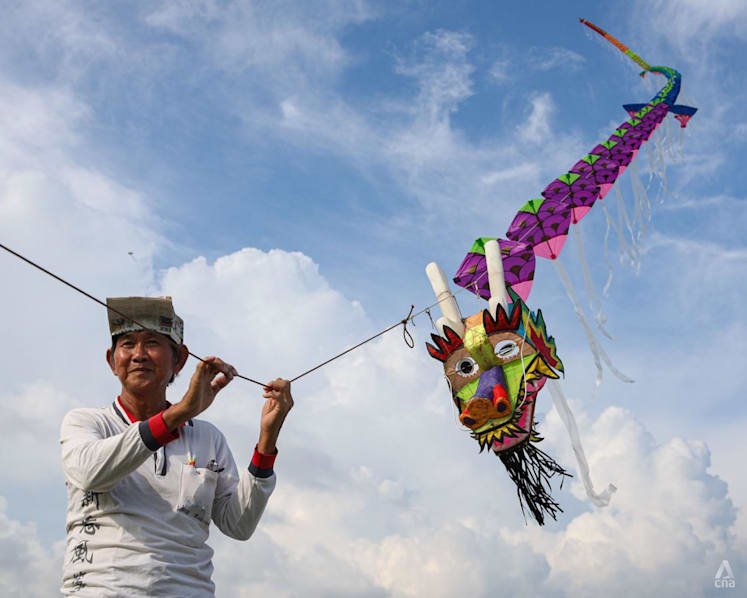
Kite maker Tan Poh Wah flying his handmade dragon kite at the Marina Barrage. (Photo: CNA/Nuria Ling)