Commentary: Japan needs to treat matcha more like champagne
Japan’s tea industry needs to be far more assertive about what makes it special, says David Fickling for Bloomberg Opinion.
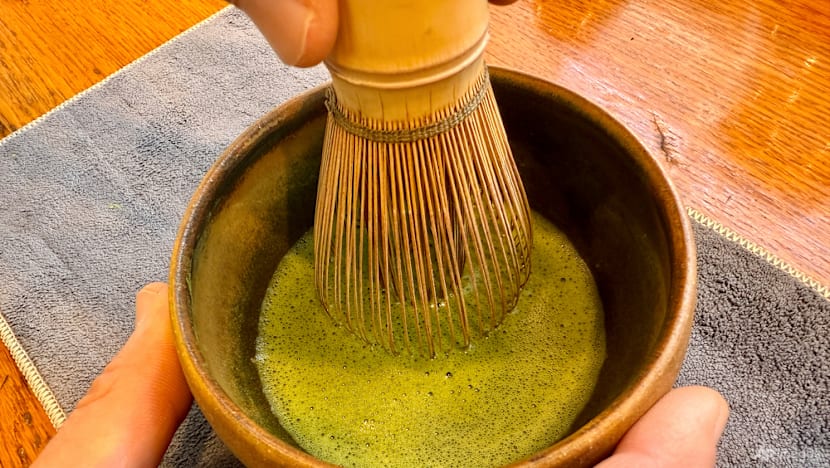
SYDNEY: If you think it’s hard work selling coal to Newcastle or ice to an Inuit, how about selling matcha to Japan?
That’s what China is hoping to achieve, as the biggest tea producer spots an opportunity in the worldwide craze for putting Japan’s richly-flavored green tea powder into everything from lattes and cookies to cheesecake and KitKats.
Japanese public broadcaster NHK last month visited a factory in China’s Guizhou province that’s producing 2,000 tonnes of matcha a year, almost half of Japan’s annual output. China is already by some measures the bigger grower: Some 3,966 tonnes were processed in 2020, accounting for more than half of the tea sold in a market valued at US$4.53 billion.
With China dominating electric vehicles, smartphones, furniture and solar panels, it might feel inevitable that matcha will go the same way.
LEAVE MASS MARKET GREEN TEA TO CHINA
Still, Japan could do more to defend itself against the onslaught. Adopting the more aggressive techniques used in Europe would be a good place to start.
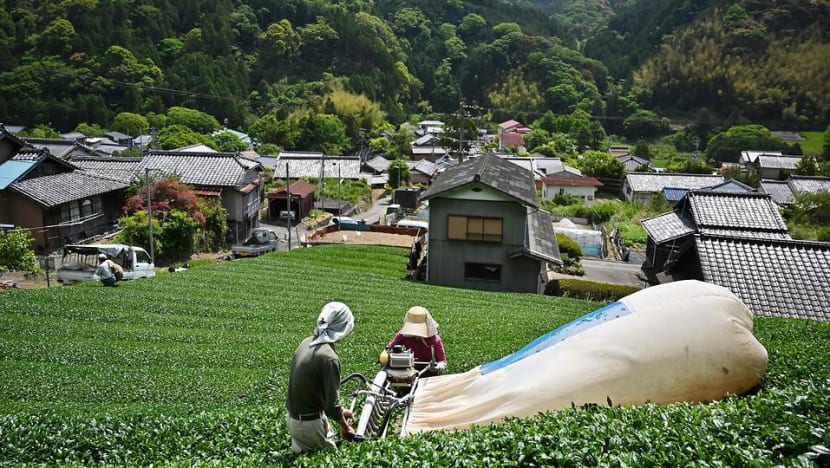
In terms of mass market production, the game has surely already been lost. China has 30 times as much farmland as Japan and produces about 50 times more green tea.
Matcha production can be labour-intensive: It has to be grown in the shade, and in Japan is often harvested with hand-held machine cutters and processed in small-scale facilities that are struggling to keep up with the explosion in demand.
Judging by current trends, the vast majority of matcha in future is going to end up in soft serve ice cream, chiffon cakes, mochi and macarons. It would be a waste if Japan tried to chase that low-end business, when the opportunities at the top of the market are so much more alluring.
.jpg?itok=mO9f_7i3)

DIFFERENCE BETWEEN CHAMPAGNE AND KOBE BEEF
To take advantage, however, Japan’s tea industry needs to be far more assertive about what makes it special.
Geographical indications, or GI, the trademark-style laws that prevent Californian wine producers from calling their sparkling cuvees “Champagne,” are still a relative novelty there. Europe has been protecting its unique agricultural products for more than a century, with early regulations even turning up in the 1919 Treaty of Versailles that ended World War I.
Japan didn’t pass its first GI law until 2015, and still seems in two minds about it.
Kobe beef, the super expensive, marbled meat farmed exclusively from the tajima wagyu strain of cattle in Hyogo prefecture northwest of Osaka, was one of the first products to be registered under the rules. Every kilogramme exported is tracked by a local marketing association, but it’s still common to find locally-raised “Kobe beef” and “Kobe-style beef” on the shelves of US supermarkets, because the trademark isn’t recognised there.
You can’t sign a major trade agreement with the European Union without recognising its GI system, but Japan has progressively lowered its tariffs on US beef imports in recent years, without winning any concessions on this point. The estate of basketballer Kobe Bryant enjoys better intellectual property protection in the US than the meat he was named after.

PROTECTING JAPAN’S CULTURAL CAPITAL
Matcha, to be sure, has a fundamental problem here. The term – literally, “ground tea” as opposed to the infused sencha – just describes a routine processing method, like the “cheddaring” of dairy curds which gives cheddar cheese its un-trademark-able name.
That’s not insurmountable, though: There are numerous local varieties, such as Uji matcha and Fukuoka matcha, that could trade on their reputations, the way Bordeaux wine estates do.
It’s not clear that Japan has an appetite for the fight. The EU has nearly 2,000 protected wines and spirits, according to its eAmbrosia register.
Japan has designated just two types of tea, both of them sencha. In Nishio, one of the most renowned matcha growing regions, the local growers’ cooperative got itself removed from the register in 2020, after finding that domestic drinkers weren’t prepared to pay prices to compensate for the laborious methods required by the geographical indication.
That’s a defeatist approach. Matcha is a global craze and needn’t be limited by local appetites. Champagne is a case in point: It owes its origins as much to English glass-blowers, chemists and consumers as to French farmers.
Japan has as much cultural capital now as it has had for decades. The stellar reputation of its food products isn’t being matched by commensurate efforts to protect and market them to international buyers.
Taking advantage of this isn’t an easy process, especially as a warming climate alters the unique local conditions that GI designations depend on (a record heatwave is one reason that matcha supplies are struggling to keep up with demand this year). In a world that will soon be buried under a drift of Chinese tea powder, though, it will be necessary.
Some of the world’s great fortunes were built on the decades of efforts that turned champagne from a local oddity into a worldwide luxury good. In the matcha game, Japan has to be in it to win it.