As China’s Two Sessions close, Beijing’s strategy for a more turbulent world becomes clearer
From diplomatic signalling to efforts to revive domestic demand and “invest in people”, China’s Two Sessions that closed on Thursday (Mar 12) offered clues to Beijing’s priorities for the year ahead and beyond.

This audio is generated by an AI tool.






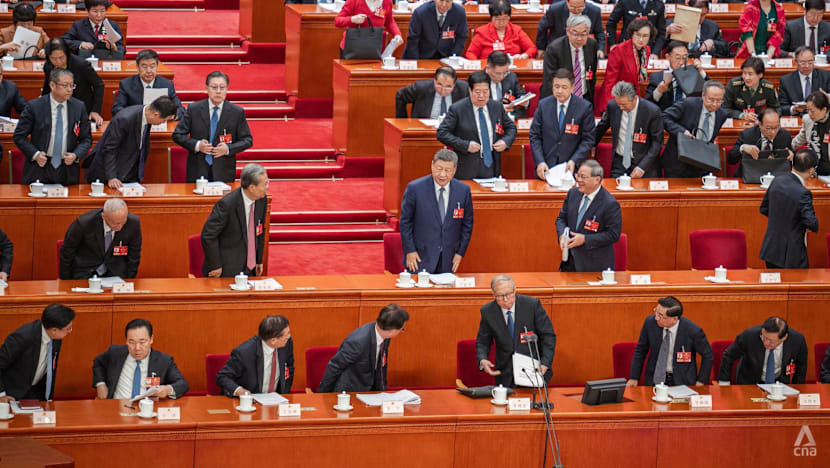
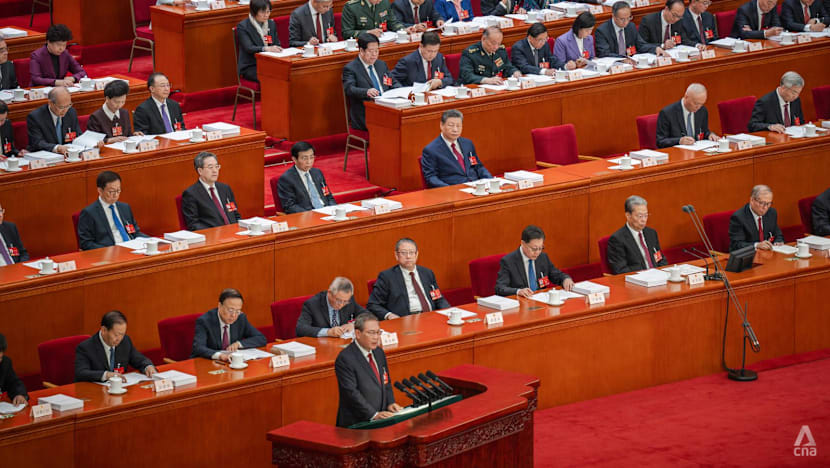
BEIJING: China’s leadership has offered a clearer picture of how it plans to steer the country through a more turbulent period, as its biggest annual political meetings drew to a close on Thursday (Mar 12).
Both the government work report and the 15th Five-Year Plan outline passed as expected, with 2,759 and 2,758 votes in favour respectively, one against, and two abstentions each.
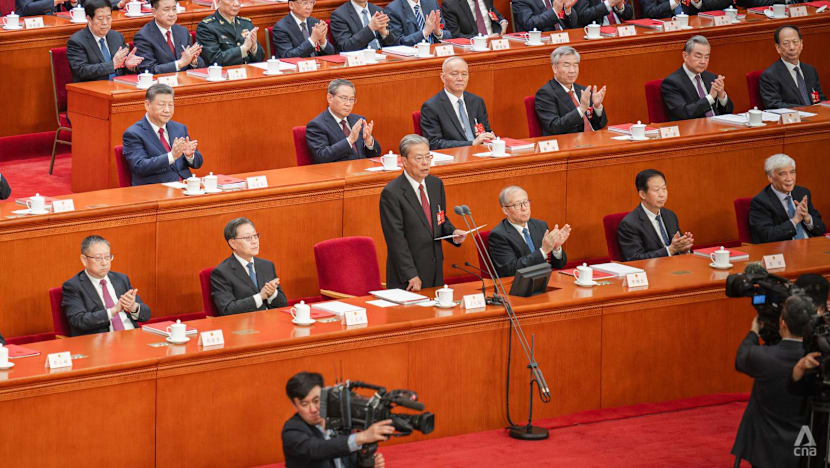
Zhao Leji, chairman of the Standing Committee of the National People’s Congress (NPC), said the sessions “united efforts, emphasised practical work, and promoted solidarity and progress”.
He described it as “a crucial stage for basically realising socialist modernisation, consolidating the foundations and making comprehensive progress”.
From foreign policy messaging to economic recalibration and social support, the Two Sessions revealed key signals about Beijing’s priorities for the year ahead - and over the longer term under its new development blueprint, the 15th Five-Year Plan.
The Two Sessions, or lianghui in Chinese, are the concurrent meetings of the country’s top political advisory body and national legislature in Beijing. This year’s meetings lasted for nine days, one day longer than the past two editions.





Here are the key signals from the political gatherings.
FOREIGN POLICY
In the foreign policy arena, Beijing’s messaging at the Two Sessions sought to balance reassurance with resolve against the backdrop of intensifying strategic competition and a shifting global order, said analysts.
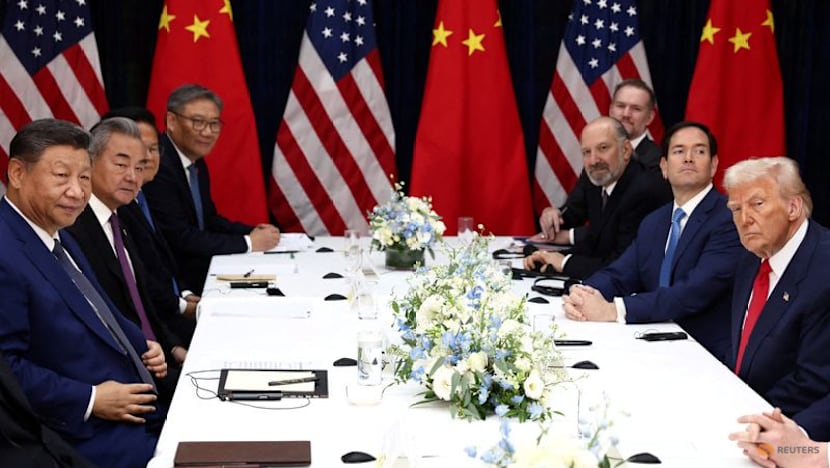
Weighing particularly heavily on Beijing’s calculations and shaping its diplomatic signalling is the hotly anticipated summit between US President Donald Trump and Chinese President Xi Jinping at the end of March, they noted.
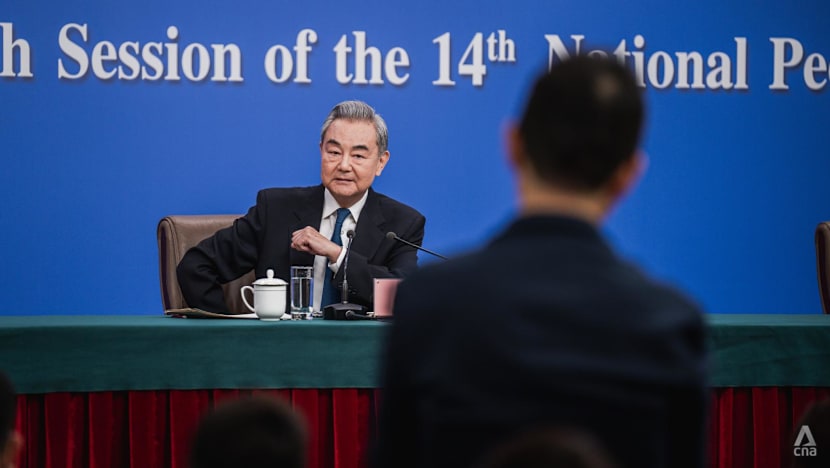
In his meet-the-press session this year laying out China’s foreign policy priorities, Chinese Foreign Minister Wang Yi said that exchanges between the two heads of state have provided “important strategic guidance” and helped stabilise ties despite past turbulence.
The veteran diplomat expressed hope that 2026 could become a “landmark year” for healthy, stable and sustainable development.
China is placing “a lot of premium” on the Trump-Xi summit, said Chong Ja Ian, an associate professor of political science at the National University of Singapore (NUS) and a non-resident scholar at Carnegie China.
“Because in many ways, the PRC (People’s Republic of China) is as dependent on the US as the US is on them," he said, pointing to the deep economic links binding the two powers despite their strategic rivalry.
Furthermore, the meeting carries domestic political importance for Xi, considering that he is “probably” looking to continue his leadership of China, Chong added.
“He wants to be in a strong position to claim that he has addressed the most important and consequential relationship for the PRC,” Chong said. "He needs a big win. He wants a big win.”
Sun Chenghao, a fellow at Tsinghua University’s Center for International Security and Strategy, said Wang’s description of China as “the most valuable source of stability and certainty in a turbulent world” during his press conference stood out most to him.
It reflects Beijing’s effort to cast itself as a provider of long-term, predictable and non-confrontational diplomacy at a time of wavering Western policies and frequent geopolitical tensions, he told CNA.
That message, Sun said, is reinforced by Beijing’s rejection of major power co-governance and a so-called G2 - the idea that the US and China jointly manage global affairs, which was previously surfaced by Trump - as Wang explicitly made clear in his Mar 8 press conference.
Sun added that the statement also strengthens China’s self-identification with the Global South, alongside its advocacy for “equal and orderly multipolarity”.
During his press conference, Wang underlined China’s firm backing for the United Nations (UN), which he described as the central pillar of global governance, although he also acknowledged it has to “keep pace with the times”.
Jonathan Ping, an associate professor at Bond University in Australia, said the Chinese leadership is now projecting itself more assertively as a defender of multilateralism, set against what he characterised as an idealised narrative of US retreat.
At the same time, he noted a noticeably softer tone on US-China ties ahead of the anticipated Xi-Trump summit, suggesting Beijing is cautious about how Washington may approach the long-running “China issue”.
“China issue” is shorthand often used in US policy circles to describe Washington’s overarching strategy for managing China’s rise.
For Ping, the significance lies in that dual track - China presenting itself as a champion of global governance while carefully calibrating its stance towards the US in a year expected to see intensive high-level engagement.

NUS’ Chong, meanwhile, said credibility will ultimately depend on whether Beijing matches rhetoric with action.
He noted that while Washington has faced its own challenges with UN funding, China has also frequently paid its assessed contributions later in the year rather than at the start.
Although there is no formal rule, the UN expects payments to be made in full and on time, typically within 30 days of assessment letters issued in January, according to its official budget guidelines.
In practice, only a minority of countries meet this timeframe. UN officials have repeatedly warned that delayed contributions by major members contribute to liquidity strains.
“There was little mention at the press conference of stepping up timely payments or expanding support for the UN at a time when the organisation faces financial strain,” said Chong, arguing that China will need to "walk the talk" if it wants to be seen as a leading pillar of the multilateral system.
ECONOMY
While Beijing projected confidence on the global stage, the Two Sessions meetings also laid bare the pressing task at home - recalibrating the economy and reviving domestic demand.
One clear message is that Beijing is increasingly focused not just on managing growth, but on navigating a broader economic transition, said analysts.
Policymakers set a 2026 gross domestic product (GDP) goal of 4.5 to 5 per cent - the lowest in decades - as the government work report acknowledged sizeable domestic and external headwinds, including persistent deflationary pressure and US tariffs.
"(China) is really trying to rebalance (its) growth model … and in doing so, the government has shown it is willing to accept a more moderate pace of expansion,” Sheana Yue, a senior economist at global economic advisory firm Oxford Economics, told CNA.
"The policy stance is relatively measured, which suggests the government is aiming for gradual stabilisation rather than any kind of large stimulus-driven rebound,” she added.
Economists estimate that China needs to sustain roughly 4.5 to 5 per cent annual growth through 2035 to achieve its long-term goal of doubling real GDP per capita from 2020 levels - a target that leaves little room for inefficiency.
And the country is acutely aware of the demographic headwinds as its population of 1.4 billion ages, said Brian Wong, a fellow at the University of Hong Kong's (HKU) Centre on Contemporary China and the World.
"If Beijing doesn't improve the returns on investment by raising … productivity, then purely banking on capital-led growth is not going to get China very far," he told CNA.
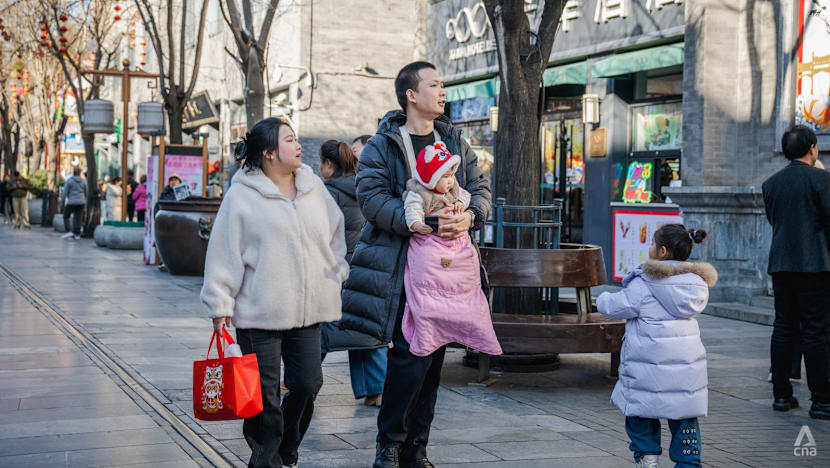
At the heart of that transition lies a consumer demand problem Beijing has struggled to solve for years.
Previous efforts, from trade-in vouchers to spending incentives, delivered short-term boosts but failed to durably shift household behaviour. Analysts said that is because they misdiagnosed the root cause.
"How many TVs and EVs does a household really need?" Wong said. "All these schemes ignore a very fundamental facet of human psychology - we don't really spend unless we believe we can afford to spend."
The deeper constraint, analysts said, is confidence - and its structural underpinning: the collapse in housing wealth. The beleaguered property sector is unlikely to recover as a reliable anchor of household spending, they noted.
The question hanging over Beijing's strategy, according to analysts, is whether it can run two engines simultaneously - advanced manufacturing and domestic consumption - without one undermining the other.
"The main gamble really is the gradual structural adjustment - boosting household consumption and expanding services without the need for large-scale stimulus," said Yue from Oxford Economics.
Amid these pressures, a notably different toolkit surfaced during this year’s Two Sessions.
The latest government work report pivoted toward income support, expanded social welfare and what it called "investing in people" - a longer-term attempt to rebuild consumer confidence from the ground up.


LIVELIHOODS
“In the past, the government invested more in things. Now it is placing greater emphasis on investing in people,” Chen Bo, a senior research fellow at the National University of Singapore’s East Asian Institute (EAI), told CNA.
To this end, Beijing is placing greater emphasis on jobs, skills and welfare support as it tries to steady households through economic and technological transition, analysts said.
The calibration comes as China expects a record 12.7 million university graduates to enter the labour market this year, adding pressure to an already strained landscape.
“What’s clear is that policymakers recognise … the labour market is a deep problem,” said Yue from Oxford Economics, adding that they also appear increasingly aware of temporary mismatches between graduates’ skills and the jobs being created.
Analysts said this growing recognition also extends to how automation and broader economic restructuring could reshape the labour market, pointing to job support measures, training and stronger welfare protections.
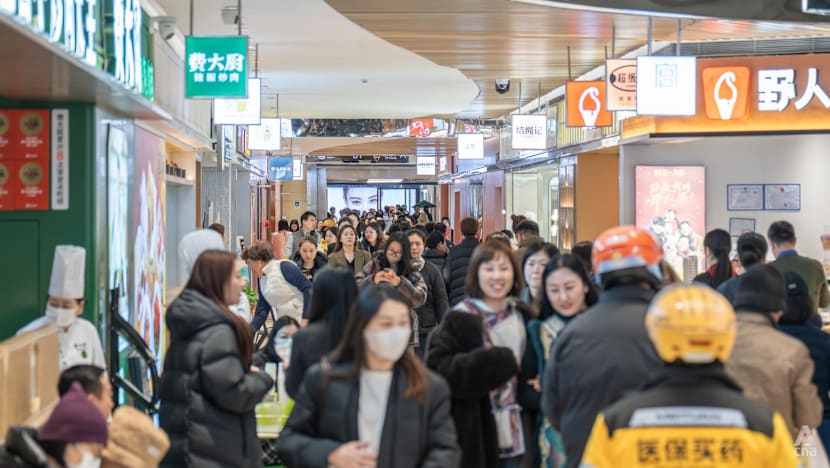
“That’s very important, because this is a sign that the leadership is recognising the sort of deleterious effects of not just automation and substitution with robots and AI, but also … broader economic shifts,” said HKU’s Wong.
Beyond employment measures, the Two Sessions also highlighted continued expansion of welfare and care services, from pensions and medical insurance subsidies to eldercare and child-related support.
For Wong, these measures reflect China’s attempt to strengthen social stability and household confidence over the long term - and in turn support a more durable recovery in consumption.
“The only viable solution and alternative to (reviving consumption via property) is to look at improving the safety net, making lives better for the ordinary, creating the room for them to see hope and confidence in the economic prospects,” he said.