







More are becoming allied health professionals, but what do they really do?
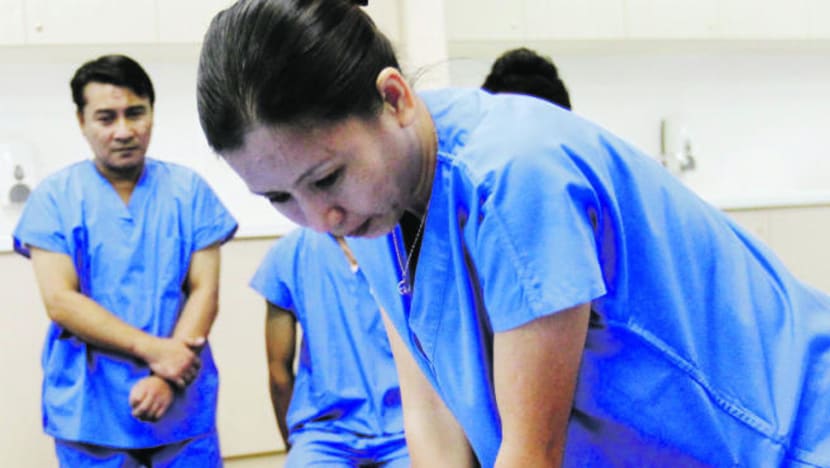
SINGAPORE — More higher qualified and younger individuals are becoming allied health professionals (AHPs) today compared to five years ago. They are part of the care team who manage patients, but what do AHPs really do? Here’s a low-down on a few of the professions in public healthcare:
Dietitian
Dietitians maintain and promote the health of individuals, groups, and the community by applying the art and science of food and human nutrition. Their responsibilities include:
- Perform nutritional assessment to determine the nutritional status and diagnosis





- Develop and provide customised medical nutrition therapy and individualised nutrition care plan
- Provide dietary counselling and nutrition support to individuals
- Plan and implement nutrition programmes and policies
- Communicate evidence-based information on nutrition and disease to the community
- Provide consultation to food service providers
Radiographer
Diagnostic radiographers work with sophisticated medical imaging equipment to produce radiographic images of the body that are essential to the healthcare team in the diagnosis of illnesses and injuries.
Apart from using X-ray equipment, diagnostic radiographers also utilise a wide range of cutting-edge technologies, matched with advanced computer hardware and software to process data and perform complex multi-planar and three-dimensional reconstructions. These radiological examinations include:
- Computerised Tomography (CT)
- Magnetic Resonance Imaging (MRI)
- Ultrasound
Medical Social Worker
Medical social workers attend to patients and families who experience challenges in coping with and managing emotional, psychological, social, environmental and practical issues arising from illness or the sudden onset of traumatic injuries.
Together with the multidisciplinary team, community partners and organisations, medical social workers aim to facilitate the recovery and healing process; optimise the well-being of individuals; and enhance family functioning and community reintegration.
Occupational Therapist
Occupational therapists develop and maintain a person’s capacity to perform day-to-day tasks and roles essential to productive living. This requires them to design treatment programmes for those with physical disabilities, mental or social problems either from birth or as the result of accident, illness or ageing. Their work involves:
- Enhancing physical and psychological functions
- Preventing illnesses
- Facilitating independent living.
- Improving quality of life of people with disabilities or special needs
- Promoting reintegration into home, work and society
Physiotherapist
Physiotherapists help individuals to develop, maintain and restore maximum movement and functional ability throughout their lifetime. Their range of expertise includes providing services in cases where human movement and function are threatened by ageing, injury, diseases, disorders, conditions or environmental factors.
To achieve agreed goals, intervention and treatment may be in the areas of:
- Therapeutic exercise
- Functional training in self-care
- Manual therapy techniques (including mobilisation/manipulation)
- Prescription and application of assistive devices and equipment
- Airway clearance techniques
- Electrotherapeutic modalities
- Patient-related instruction
- Home management
- Work, community and leisure
- Promotion and maintenance of health and fitness
Speech Therapist
Speech Therapists facilitate the rehabilitation of patients suffering from communication disorders that can arise as a result of trauma, stroke and other degenerative ailments. Through the treatment process, they enable patients to regain independence with daily activities and improve their quality of life.
Speech Therapists diagnose and provide treatments for children and adults suffering from conditions such as:
- Speech and language autism
- Swallowing difficulties
- Feeding difficulties
- Hearing impairment
Podiatrist
Podiatrists improve the overall health and well-being of patients through the prevention, diagnosis and treatment of conditions associated with the feet and lower limbs, such as:
- Ingrown toenails
- Skin and nail disorders
- Foot injuries and deformities
- Diabetic foot conditions
- Corns and calluses
They also work with the healthcare team to diagnose, monitor and treat foot conditions of patients with bone and joint disorders such as arthritis, neurological and circulatory diseases and diabetes.
Respiratory Therapist
Respiratory Therapists work with patients suffering from either acute or chronic respiratory problems. They engage closely with doctors to plan, integrate and evaluate cardiac and pulmonary care in order to provide relief to patients, from premature infants with underdeveloped lungs to elderly folks.
Some of the intervention and therapeutic methods provided by Respiratory Therapists may include:
- Administration of oxygen and CPR
- Management of mechanical ventilators
- Monitoring of cardiopulmonary systems
- Measuring lung function of patients
Medical Technologist
Medical technologists receive and process patient specimens, and use various techniques and laboratory analysers to perform a wide variety of diagnostic tests on patient specimens to help clinicians diagnose and treat diseases, and monitor therapy. The results of these diagnostic tests are checked for accuracy and any unusual results are investigated by the medical technologists before being released to the clinicians. Medical technologists participate in quality assurance and quality control programmes to ensure accurate laboratory testing necessary for quality patient care.
Prosthetist
A Prosthetist is clinically responsible for assessing, manufacturing and fitting various types of upper and lower limb prostheses (artificial limbs). Prosthetists also provide education and training regarding the use, care and function of prostheses.
All limb prostheses are made to precision and individually designed to restore the function and appearance of the lost limb as much as possible. Prosthetists assist individuals such as children born with congenital limb deficiency, those who have had an amputation following an accident or the elderly who have lost a limb as a result of vascular disease.
Psychologist
Trained to observe and understand human behaviour, psychologists focus on helping people rebuild their emotional well-being. Psychologists use psychotherapy to help people with a wide array of psychological conditions, which can range from depression and anxiety disorders to chronic medical conditions that interfere with their lives. Psychologists guide individuals in learning to cope with major life stresses such as a new job, or the death of loved ones, and are also trained to conduct psychological tests and assessments that can help diagnose a condition or discover more about the way a person thinks, feels, and behaves.
Optometrist
Optometrists are eye care practitioners who provide a wide range of primary eye care services, including visual examinations and prescription of optical appliances to correct
vision problems. Optometrists also diagnose vision problems and eye diseases and will refer patients to an ophthalmologist for further treatment where necessary.
Source: National Healthcare Group




