







Why Trump is threatening to blockade a strait he wants reopened
The US military said it would block shipping traffic in and out of Iran's ports, a move that would prevent roughly two million barrels of Iranian oil a day from entering the world's markets.
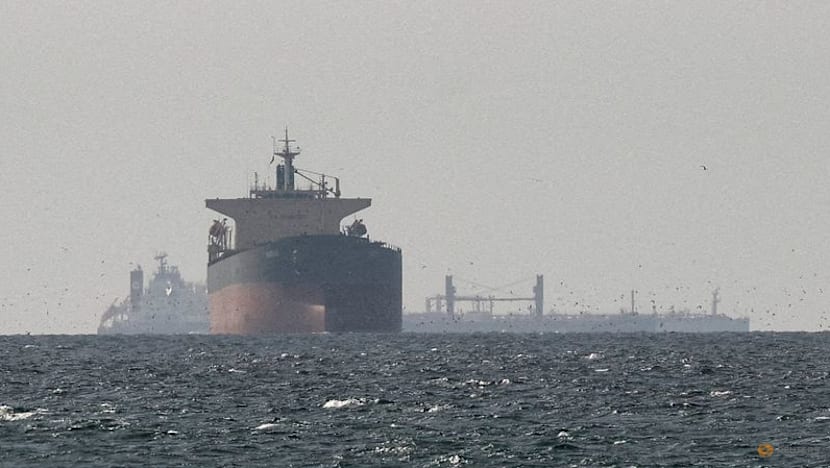
Cargo ships in the Gulf, near the Strait of Hormuz, as seen from northern Ras al-Khaimah, near the border with Oman’s Musandam governance, amid the US-Israeli conflict with Iran, in United Arab Emirates, on Mar 11, 2026. (File photo: Reuters)
The US military said it would block shipping traffic in and out of Iran's ports starting at 10am ET (10pm, Singapore time) on Monday (Apr 13), a move that would prevent roughly two million barrels of Iranian oil a day from entering the world's markets, further tightening global supply.
Here's how it would work, what it means for oil markets and why US President Donald Trump is threatening to restrict access to a strait that he wants Iran to reopen.
WHAT WAS ANNOUNCED?
After weekend peace talks in Islamabad between negotiators from the US and Iran ended without a deal, Trump said the US Navy "will begin the process of blockading any and all ships trying to enter, or leave, the Strait of Hormuz".
The US military's Central Command later said the blockade would apply only to ships going to or from Iran, including all Iranian ports on the Gulf and Gulf of Oman.
US forces would not impede freedom of navigation for vessels transiting the Strait of Hormuz to and from non-Iranian ports, and additional information would be provided, it said.
Iran's Revolutionary Guards responded to Trump by warning that military vessels approaching the strait would be considered a ceasefire breach and dealt with harshly and decisively.
Retired Admiral Gary Roughead, a former chief of US naval operations, cautioned that Iran could fire on ships in the Gulf or attack the infrastructure of Gulf states that host US forces.
WHAT IS THE IMPLICATION FOR IRANIAN OIL FLOWS?
Blocking Iranian shipments would disconnect a significant source of oil from the world's markets.
Iran exported 1.84 million barrels per day (bpd) of crude in March. It has shipped 1.71 million bpd thus far in April, compared with a full-year average of 1.68 million bpd in 2025, according to Kpler data.
However, a surge in Iranian output before the war started on Feb 28 has led to near-record levels of Iranian oil loaded on ships, with more than 180 million barrels floating as of earlier this month, according to Kpler data.
Before the war, most Iranian oil exports were shipped to China, the top global crude importer. Last month, the US unveiled a sanctions waiver that has enabled other buyers, including India, to import Iranian oil.
India is set to receive its first crude shipment from Iran in seven years this week, ship tracking data from LSEG and Kpler showed on Wednesday.

WHY IS TRUMP THREATENING TO BLOCKADE THE STRAIT?
By targeting shipping linked to Iran, Trump is seeking to cut off a key source of revenue for Tehran’s government and military operations.
He may also be trying to pressure China into pushing Iran back to the negotiating table, said Trita Parsi, executive vice-president of the Quincy Institute for Responsible Statecraft.
"There is a logic behind this (blockade) that would say that he is moving forward with these types of pressures in order to get the Chinese to step in and pressure Iran," he said. "However, I do not see that working if the US's position simultaneously is zero enrichment. The Chinese know very well that the Iranians would never agree to that. The Chinese themselves do not agree with that objective."
Trump's move could therefore carry broader risks.
"It's important to recognise he's not just going to do it against Iran if he goes after some of the ships that are holding Iranian oil - those have already been purchased by China, by India, by other countries in Asia, who will suffer from this, but it's also their oil," said Parsi.
"He is not taking Iran's oil. He's taking the oil that these countries have bought from Iran. So that would immediately put the United States on a collision course with China, with India and other countries."
If Trump goes ahead with the blockade, the Iran-aligned Houthis may close the Red Sea as well, Parsi warned.
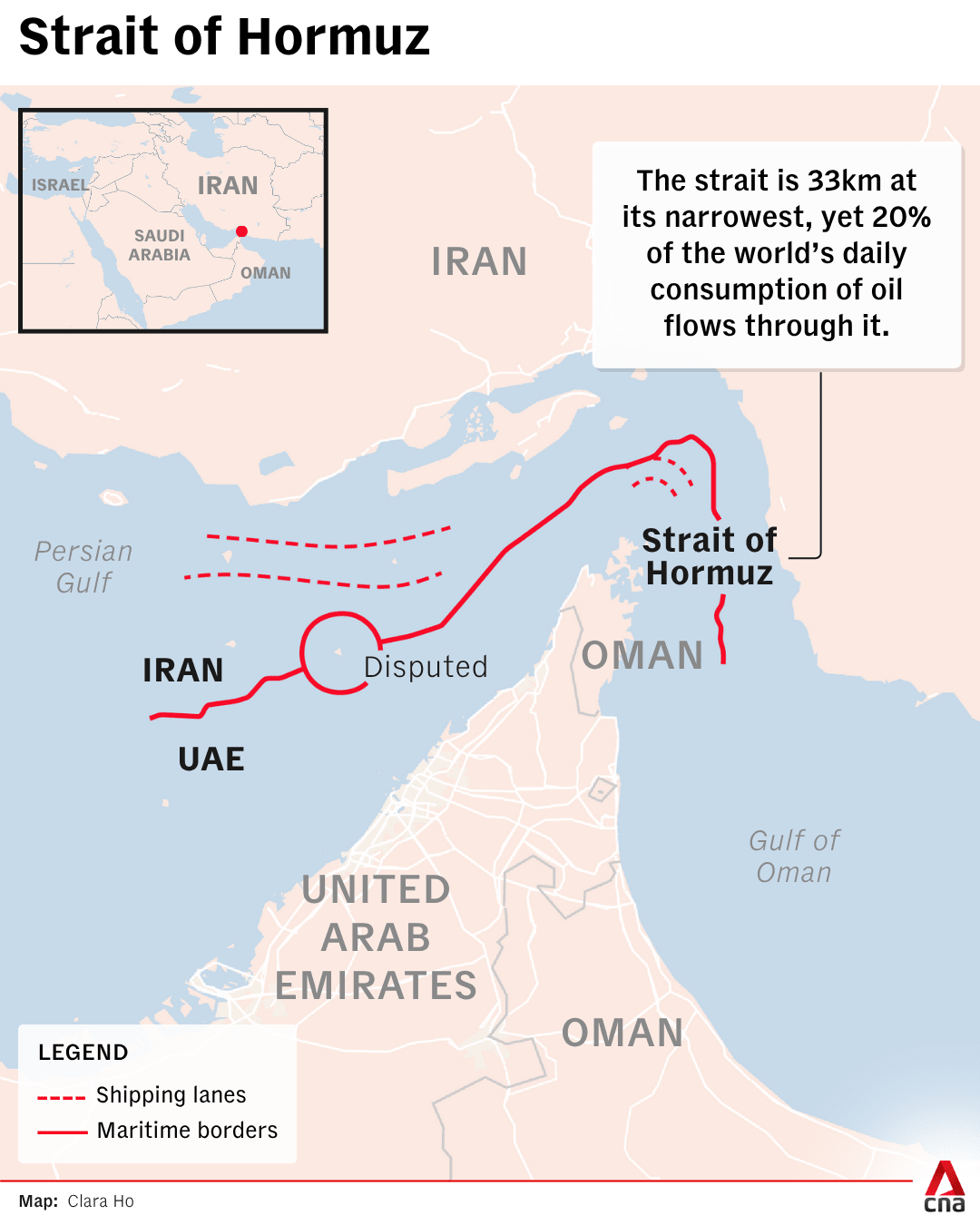
"That's another 12 per cent oil flow globally that will be lost, together with the 20 per cent that has been jeopardised by what the Iranians are doing in the Strait of Hormuz. That would shoot up oil prices, probably closer to US$200," he added.
Parsi noted, however, that the developments could still be part of a negotiating strategy rather than a definitive breakdown.
"The failure of the first phase is not in and of itself necessarily a sign that talks, if they were to continue, would fail," Parsi said.
"It may very well be that the first round was supposed to be a failure. Neither side may have wanted to give the impression that they came to an agreement too quickly," he added.
A likely scenario, said Parsi, is that both sides will reach a new "non-negotiated status quo", one in which the Iranians do not get sanctions relief while retaining control of the Strait of Hormuz.
"And at the same time, the United States does not go back into full-scale war with Iran, and the question then becomes, will the Israelis conduct that war by themselves against Iran or would they also back off?"


HOW HAVE WORLD LEADERS REACTED?
China called for "unimpeded" navigation through the Strait of Hormuz.
"The Strait of Hormuz is an important international trade route for goods and energy, and maintaining its security, stability, and unimpeded flow is in the common interest of the international community," foreign ministry spokesman Guo Jiakun told a news conference on Monday.
UK Prime Minister Keir Starmer said Britain will not join the naval blockade of the Strait of Hormuz, saying it is "not getting dragged in" to the war with Iran.
The strategic Strait of Hormuz trade route should open "as soon as possible", Türkiye's foreign minister said on Monday.
"Negotiations with Iran should be conducted, persuasion methods should be used, and the strait should be opened as soon as possible," Hakan Fidan told the official Anadolu news agency.
The Association of Southeast Asian Nations (ASEAN), which relies heavily on the Middle East for crude oil imports, called for the restoration of "safe, unimpeded and continuous transit passage of vessels and aircraft" in the Strait of Hormuz.
"We call for the full and effective implementation of the ceasefire, aimed at preventing further suffering and loss of lives, ensuring maritime security and freedom of navigation and overflight, especially for merchant, non-combatant vessels and aircraft in accordance with the 1982 United Nations Convention on the Law of the Sea (UNCLOS), minimising disruption to the flow of energy and essential goods, and mitigating its adverse impact on global economic stability," ASEAN foreign ministers said in a statement.




