‘Aggressive’ long-term plans needed to help a fast-aging workforce
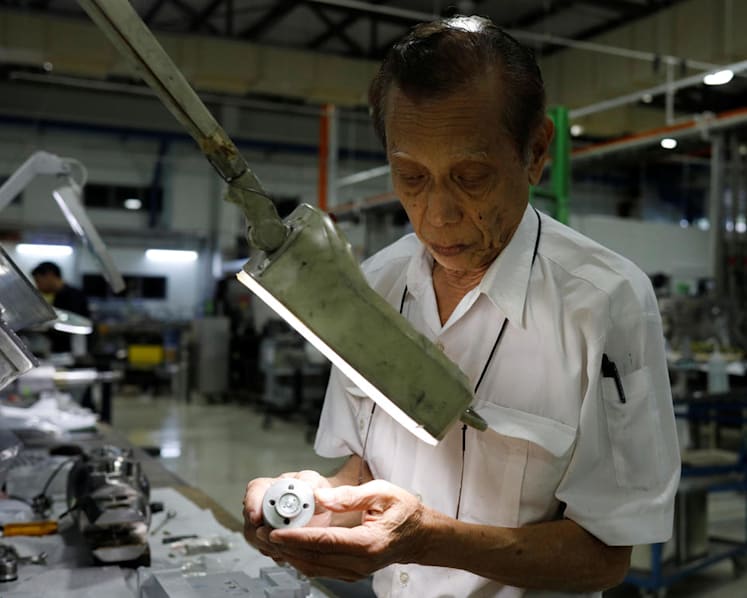
As one of the fastest-aging countries, we will be faced with a growing challenge of creating and sustaining employments for a growing pool of middle-aged and older workers, including professionals, managers, engineers and technicians (PMETs).
The challenge of looking after them is compounded by a decreasing total fertility rate, smaller family units and longer life expectancy.
What's more, as we come to grips with disruptive technology, many of the jobs held by these older workers may become devalued and disintermediated.
Budget 2019 should herald the start of an aggressive long-term programme to help a fast-aging workforce enhance their employment prospect and employability.





We will do well to resolve the challenge now and continue to fine-tune the solutions, so that we will be better prepared to resolve similar or even potentially worse problems in the future.
I trust the Ministry of Manpower's Committee of Supply will not only cover how various initiatives will be carried out by the Government, but also look into getting key stakeholders from the people, private and public sectors to collaborate and co-create solutions to tackle this critical issue.
For instance, to ensure that the older workers are gainfully employed, we need to make improvements to the supply and demand side of the employment market.
On the supply side, we should provide incentives to help these workers improve their attitude, knowledge and skills. For example, help them inculcate the discipline for lifelong learning, and improve their competence as well as fitness for gainful employment.
This can help eradicate contentions in many quarters that older workers have increasing medical and accidental problems, and absenteeism rates.
On the demand side, there should be stronger policies and regulations against age discrimination.
We need to educate employers to see the potential of older workers, and help them invest in empowering these workers to take on different or even more difficult roles and responsibilities.
The authorities can offer more targeted incentives to employers to redesign older workers’ job scopes and to help them reskill and retool themselves. They could also offer flexi-time and flexi-place arrangements so as to enhance these workers’ commitment and contributions.
More subsidies can be provided to employers to develop a senior-friendly environment and to organise health and wellness programmes for these workers.
The authorities should pro-actively look at how to engage the support of relevant grassroots organisations and volunteer welfare organisations, or even help to set up such organisations to headhunt these vulnerable workers and reach out to them.
In addition, these workers may need personal coaching to help them ascertain relevant training courses and register for these courses.
They may even need personalised guidance to help them take part in the courses and persevere to complete all the necessary training programmes.
By building a learning nation and a deep-seated culture for continuous improvements, our workers can continue to stay relevant and effective, and at the cutting edge of the new economy.