A sharp reality check on the climate challenge
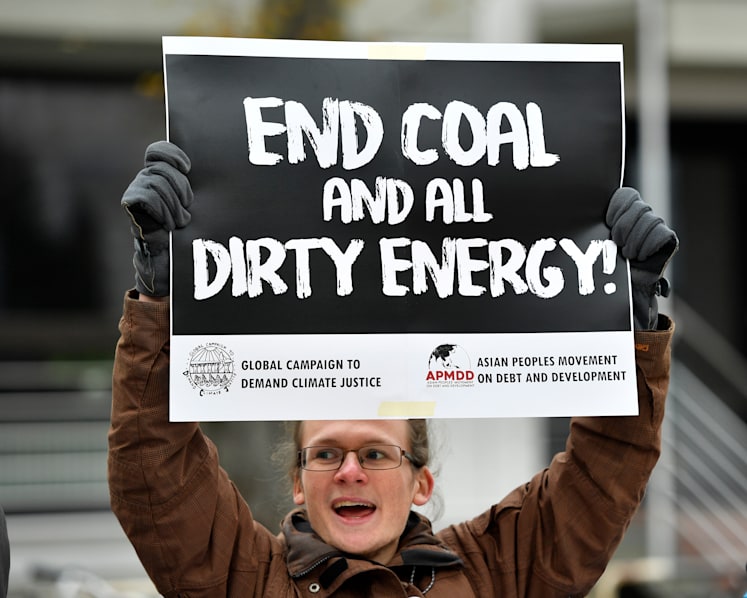
A protestor holds a sign demanding to end coal burning during the 23rd Conference of the Parties (COP) climate talks in Bonn, Germany, on Wed (Nov 15). Photo: AP
In the past few years, climate campaigners have had unaccustomed cause for celebration. The Paris accord of 2015 forged a global consensus to try to hold back temperature rises to “well below” two degrees Celsius compared with pre-industrial levels.
Rapid falls in the cost of wind and solar power accelerated the shift into renewable energy. Between 2014 and 2016, global carbon dioxide emissions from fossil fuels were almost flat despite strong global growth, raising hopes that it had finally become possible to “decouple” economic growth from carbon pollution.
The figures published this week by researchers at the Global Carbon Project should serve as a sharp reality check.
They suggest the spell of stable emissions was not a turning point but a “temporary hiatus”, with emissions from fossil fuels and industry set to rise by some 2 per cent to record levels in 2017, and further in 2018.





This is largely because Chinese emissions have begun rising again on the back of a revival in coal-intensive industries. Because carbon dioxide remains in the atmosphere for centuries, each year of rising emissions makes the task of limiting climate change more formidable.
The United Nations issued a stark warning last month on the scale of the challenge, noting that even if governments act on their plans to cut or slow emissions, national pledges so far add up to only a third of the reductions needed to meet the goals of the Paris accord. Negotiators meeting in Bonn this week are supposed to be crafting rules to ensure countries step up their efforts. They are contending with a United States administration perversely set on boosting fossil fuels and erecting barriers to the growth of renewable energy. Meanwhile, the noxious smog blanketing much of northern India is showing the immediate costs to public health of dirty fuel and polluting practices in industry and agriculture. Off-the-scale air pollution of this type has made it a political priority for China, India and other developing countries — who previously argued that rich countries should solve a problem largely of their own making — to curb their own emissions.
Action to clean up urban air should also help in fighting climate change, so long as governments do not simply shift polluting industries to less populated areas.
A great deal depends on whether China — which now accounts for more than a quarter of global emissions — can turn highly ambitious policies into reality on the ground.
Beijing, keen to see national champions emerge in high-tech growth industries, is driving a huge push into electric vehicles. Chinese companies dominate global production of solar panels and are rapidly expanding in manufacturing of wind turbines and lithium batteries. They are in large part responsible for falling global costs of renewable power. Chinese officials in Bonn suggest that the launch of a national carbon trading scheme, planned for this year, may be delayed and its scope modest at first.
And the latest emissions figures show that it remains incredibly difficult even for Beijing’s central planners to ordain such rapid change — or, indeed, to monitor exactly what is happening at provincial level.
Beijing’s ambition, however, deserves recognition. It must now be matched by more determined efforts by other national governments and, given the delinquency of the Trump administration, by states and non-governmental actors in the US.
The gap between the scale of emissions cuts needed and the commitments governments have made is, as the UN notes, alarmingly large. The longer they delay the effort needed to close that gap, the harder it will be. THE FINANCIAL TIMES