

What I learnt from Antarctica
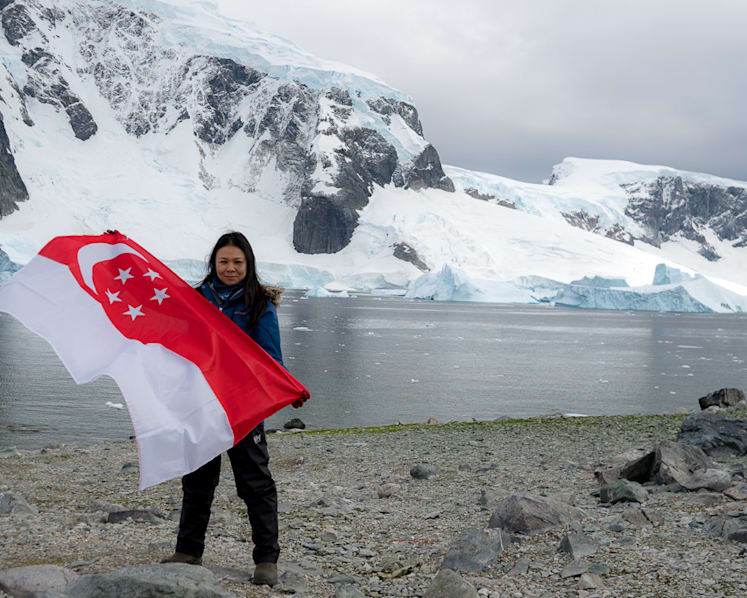
The author at the Antarctica, the only continent on Earth without a native human population.
Earlier this year, as I stood at the edge of the Ocean Endeavour’s shell doors in Antarctica watching the snow outside and contemplating the vast, icy black waters that stretched out before me, I was struck at the absurdity of what I was just about to do.
That is, jump into the minus two degree Celsius Antarctic ocean in a bathing suit.
When I took what’s known as the ‘Polar Plunge’ and leapt into the open sea, it felt like a thousand needles stabbing the entire surface of my skin. My mind froze and my body went numb.
But survival instinct soon kicked in, and I surfaced from beneath the water to escape this icy hell.





Although I didn’t know it then, that same week, a Spanish navy captain died in Antarctica after falling overboard from a research ship.
The words of our expedition leader Sir Robert Swan, a renowned British explorer who was the first man to walk to both the North and South Poles and who has led expeditions to the continent for three decades, rang in my ears:
“I never feel fully relaxed down here. This place can kill you. Three minutes in the water and you’re dead.”
It seemed like a stupid thing to do, but many of my fellow companions – about 90 of us from all over the world – also took this Plunge. On some level, I think we were all driven by a desire to feel this vast, mysterious continent in the most physical way possible — and be able to wear it as a badge of honour.
It was our attempt at leaving an imprint on Planet Earth’s most remote location, which has remained elusive to humans for hundreds of thousands of years.
We emerged exhilarated, warmed by the shot of tequila the crew gave us, all of us bonded by the experience of pushing ourselves to our physical limitations, yet fully realising our vulnerability and how much we are at the mercy of our environment.
It was one of the many lessons that Antarctica would teach us yet.
TO THE END OF THE WORLD AND BACK
Antarctica is the only continent on Earth without a native human population.
It is protected by the Antarctica Treaty – entered into force in 1961 and has 53 parties – which assigns the continent as a scientific preserve, establishes freedom of scientific investigation and forbids military activity on the continent.
Due to its isolation, the continent is among the most untouched places on Earth, making it a prime spot for scientific research highly valuable to all kinds of scientists.
Even today, it has no permanent residents, no commercial industries, no towns or cities, and people have no use for money.
This is why visiting Antarctica is the closest you’ll get to stepping back in time into a world long before men existed.
Life threw me this rare opportunity to visit the continent when in November last year, I won the E-Generation Challenge by City Developments Ltd and Global Green Economic Forum which called on youths to submit ideas for climate action.
The prize was a spot on the ClimateForce Antarctica 2018 expedition led by Swan, who in 1984 set up the 2041 foundation to protect Antarctica – 2041 being the year in which the Antarctic Treaty comes up for review.
His mission is to raise awareness of the impact of climate change on Antarctica, and also ensure it does not suffer the same fate as the Arctic, where nations are scrambling to exploit the Northern continent’s natural resources.
Unlike the Arctic which is relatively accessible, Antarctica is hard to reach.
Travellers head to Argentina’s Ushuaia, dubbed the city at the end of the world, and embark vessels that cross the mighty Drake Passage.
It is known as one of the roughest seas on Earth, as I found out over two days curled up in a fetal position in my cabin gripping onto my mattress so I wouldn’t slide off while the ship slammed repeatedly into the stormy waves.
But whatever doubts you might have about making the journey dissolves the moment you sight Antarctica’s first iceberg.
The continent’s beauty and scale defies description.
Icebergs of different sizes and shapes – a flower, a horse, grand arches – glistening in shades of white, blue and green litter the seascape like beautiful statues forgotten with time.
WINDOW INTO OUR PAST AND FUTURE
The Antarctic Peninsula is warming faster than anywhere else on Earth with temperatures rising some 3 degrees Celsius in the past 50 years.
One morning, we heard a loud crack and witnessed an iceberg the size of a building block crumbling into the sea. As someone who has been reporting on climate change for more than a decade, witnessing the ice calving really brought home its realities in a visceral manner like never before.
Antarctica is telling us beyond doubt that human activity is changing our atmosphere.
Researchers have drilled ice cores which show that carbon dioxide levels in the atmosphere today are higher than they have been for at least 800,000 years.
And last year, Antarctica shed one of the largest icebergs the world had ever seen – Larsen C was 80 times the size of Singapore.
The continent dominated headlines again last month when scientists found that its ice sheet is being threatened by ocean swells chipping away at its coastlines.
If this continues unchecked, Antarctica’s melting ice will raise sea levels by some 3.5 metres, flooding major coastal cities around the world and creating hundreds of millions of climate refugees.
Asia will bear the brunt of this, and this change could happen too quickly for the human race to adapt.
Whether it is erratic weather and atmospheric patterns changing our food, water and energy systems, or resource scarcity destabilizing societies and seeding future wars, the future is truly scary to contemplate.
This is why we desperately sought to document as much as we could on this expedition – we hoped to help people understand why our daily actions today have far-reaching implications, why Antarctica matters to us here in Asia, and how we are all interconnected.
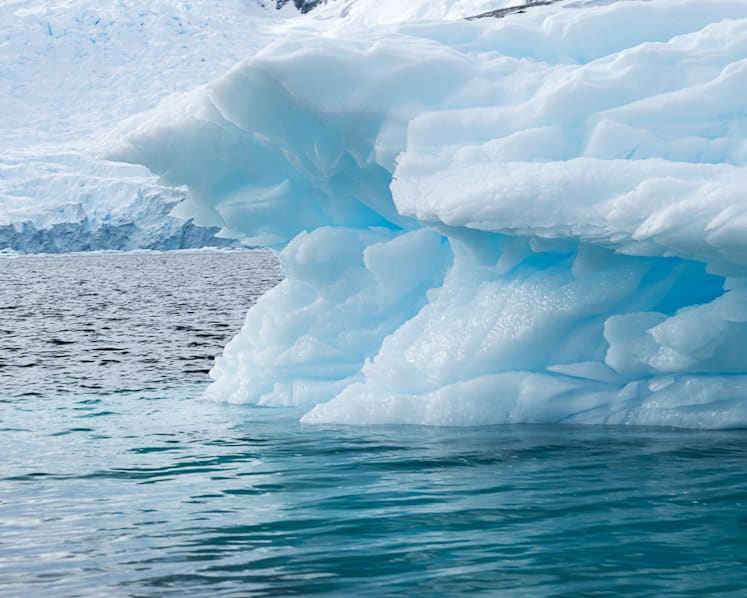
Scientists have found that the Antartica's ice sheet is being threatened by ocean swells chipping away at its coastlines. Photo: Jessica Cheam
While this Antarctic expedition began as a quest to document a climate story, it also evolved into an unexpected journey of self-discovery.
With no phone signal, no internet connection and minimal contact with the outside world, our mobile phones – the epitome of modern humanity’s addiction to technology – were rendered useless.
We were forced to confront ourselves and each other, with Antarctica’s desolate landscape providing a white canvass for our thoughts.
Slowly, like many others, I rediscovered the joy of sitting still for long periods with just my thoughts, writing, or of landscape- or people-watching.
Antarctica’s majestic terrain and its silence – a sharp contrast to Singapore’s city life – provided a comforting space, a vacuum in time, in which to ponder over questions such as what it means to be human, what is our purpose in life, and how we exist in relation to each other and to Nature.
The continent has a certain ability to remind us of man’s hubris and impermanence – that we are but a blip in the history of this universe.
Without the distraction of technology, even our mealtimes and conversations took on a different hue.
People felt more “present” in conversations, and fast but solid friendships were forged over dinners where we exchanged personal stories over wine and food.
I later realised that we had travelled to the end of the world to find two mirrors: one in which to inspect ourselves; and the other, providing a reflection – and appreciation – of the others around us.
Whatever individual lessons we learnt, none of us would be the same again. We were all bound by the same experience: We had never felt this close to the natural world.
Sir David Attenborough once observed, “the more you understand about the natural world, the more likely you are to understand why it is so important to humanity and to do something about looking after it."
It also dawned on me that while Antarctica is important to our survival, we do not carry that same significance.
It does not care what we do. All its ice can melt, and the continent of Antarctica will still be there.
The question is – will we?
ABOUT THE AUTHOR:
Jessica Cheam is the managing editor of Eco-Business. Changing Course, a film and photography exhibition chronicling her Antarctic expedition is free and open to the public until July 12 at the Singapore Botanic Gardens Green Pavilion. The Eco-Business documentary, From Asia to Antarctica can be viewed here.




