

When hacking elections is child’s play
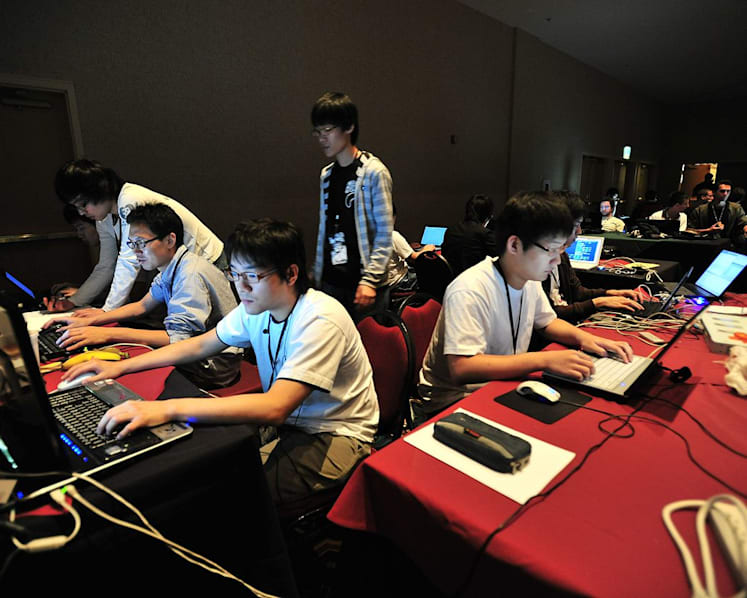
The organisers at Def Con believe that by being transparent about the problems in the election system they can push the officials — and the vendors and makers of the hardware and software — to improve security.

Bianca, an 11-year-old sporting a brown curly bob and leggings, wanted me to know that democracy is in danger. She had just hacked into a replica state election website to show how easy it could be to change the vote tallies on polling day.
“I did it for America and all of the world. If kids can hack a voting system, you need to change something,” she said. “If we don’t fix the present, the future will all be destroyed.”
Bianca was one of 50 kids aged six to 17 who attempted to attack the websites at this summer’s Def Con hacker fest in Las Vegas.
Bent over small laptops, they pored over papers instructing them how to do an SQL injection — a simple way of inserting nefarious codes into applications.





When they succeeded, their changes appeared on the website, projected on to a large screen: one candidate’s vote count jumped to 12 billion, another’s name was changed to Kim Jong-un, and another’s to Bob Da Builder.
Downstairs, full-grown hackers were probing voting machines, which are used to register votes in place of paper ballots.
When one of them succeeded, a touchscreen flashed a symbol of the Illuminati: a reference to the conspiracy theories that could gain traction if trust in the system is lost.
Nico Sell of Rootz Asylum, organisers of the kids’ hacking event at Def Con, said the children were tasked with hacking the websites because it is “way too easy.”
“Our democracy shouldn’t be in a place where you can teach eight-year-olds to hack websites in half an hour,” she told me.
Importantly, the organisers cannot be sure that the real websites will have these same flaws.
But Jake Braun, co-founder of this section of the conference, said he would challenge election officials who are confident their sites cannot be hacked to allow adult hackers to test their defences.
Hacking websites could be one of the most important ways to sow distrust in an election result. Any suspicious activity on an official website could make people think the whole election has been hacked.
Combined with disinformation on social media, of the kind spread by the Russian Internet Research Agency, even a small cyber attack could shake an election.
Once trust in any single vote is lost, faith in the many other counts — and democracy itself — could evaporate.
The organisers at Def Con believe that by being transparent about the problems in the election system they can push the officials — and the vendors and makers of the hardware and software — to improve security.
They have already done this in other areas, such as carmaking and medical devices. But others believe such transparency could cross the line into fearmongering.
The National Association of Secretaries of State, the officials who oversee elections in the United States, criticised Def Con for creating “unrealistic” scenarios.
“While websites are vulnerable to hackers, election-night reporting websites are only used to publish preliminary, unofficial results for the public and the media. The sites are not connected to vote-counting equipment and could never change the actual election results,” it said.
There is certainly a risk that headlines shouting about kids hacking websites stir unnecessary discontent among citizens. But the warnings should have been heeded earlier.
Many of the vulnerabilities in the election system are older than the children hacking the sites. Cyber security experts have been finding these flaws since shortly after the machines were introduced in the early 2000s.
Over a decade later, the US government still does not require any specific security measures from election equipment vendors.
Many state and local government election departments do not have enough money to hire the best cyber security defenders.
Five states still have no paper back-ups to count if the machines go wrong. It should not take hyperbole about 11-year-old hackers to get people to pay attention to this crucial problem.
But now we have that attention, it’s time to invest in fixing the system fast — long before Bianca casts her first vote. THE FINANCIAL TIMES
ABOUT THE AUTHOR:
Hannah Kuchler is the Financial Times’ San Francisco correspondent.




