

The Big Read in Short: Why Budget 2019 matters
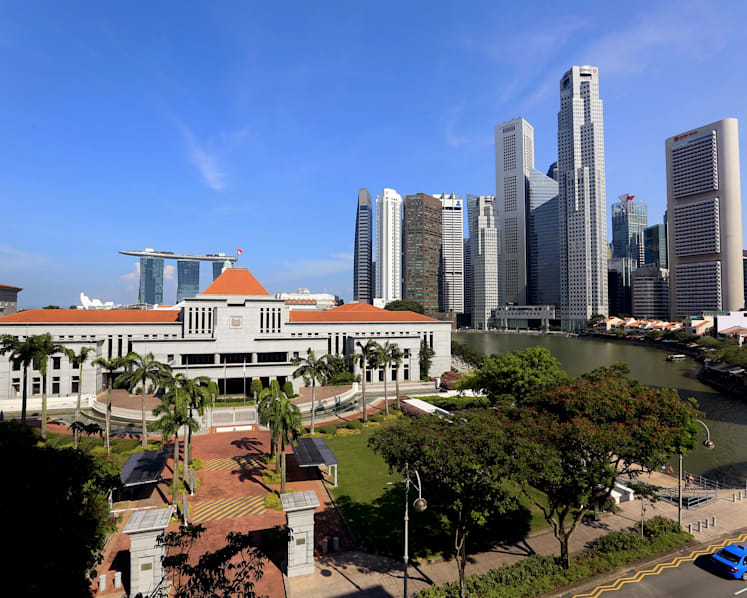
The Singapore Budget has, over the decades, become one of the key events of the political calendar. The analysts interviewed noted that the Budget is used as a means to introduce new policies.


Each week, TODAY’s long-running Big Read series delves into trends and issues that matter. This week, we look at why Singaporeans should take note of the Budget — not just because of what it has to offer for individuals but as the Government's roadmap for the country. This is a shortened version of the full feature, which can be found here.
SINGAPORE — Every year, around February or March, many Singaporeans will be glued to their television and phone screens to find out what hongbaos the Government will be handing out during its Budget statement, which will be delivered on Monday (Feb 18).
But viewing the Budget through a “what’s in it for me” lens would be missing the forest for the trees, analysts said.
Finance Minister Heng Swee Keat had previously stressed that the Budget is “not about giving out goodies”.





Instead, the Budget statement is “a fairly serious set of plans for us to think about what is it that we as a country, as a people, want to do together and going forward”, he added.
A MAJOR NATIONAL EVENT
The Singapore Budget has, over the decades, become one of the key events of the political calendar.
The analysts interviewed noted that the Budget is used as a means to introduce new policies.
And while it sets out the Government’s resource allocation and priorities for the fiscal year, government leaders have often stressed that each Budget rides on the preceding one.
Following the General Election in 2015, three Budgets have been unveiled so far under this term of Government.
Analysts highlighted some key themes that have emerged over last three Budgets:
Economic transformation
Closing the inequality gap
Fiscal and environmental sustainability
ECONOMIC TRANSFORMATION: AN URGENT TASK
Observers said that economic imperatives — particularly economic restructuring — are probably still the first order of business for the Government, even though there are other challenges — social and environmental — that it needs to address.
Assistant Professor Woo Jun Jie from the Education University of Hong Kong said that this is especially so given the “increasingly complex and competitive external economic environment”.
This is partly brought on by challenges that have emerged as a result of the fourth Industrial Revolution, which essentially refers to the disruption brought about by technological breakthroughs.
Since there is no way to prevent such technologies from significantly altering the global economy, sociology professor Paulin Straughan from the Singapore Management University (SMU) said that Singapore, being at “the nexus of global trends”, would have to “ride the trend or get left behind”.
“So there is such urgency there,” she added.
ADDRESSING SOCIAL NEEDS: TIGHT-FISTED NO MORE
While the Government has been perceived as tight-fisted when it came to social spending, the overriding concern today is how to find the revenue to sustain greater social needs.
Based on statistics by the Ministry of Finance (MOF), the Government had been spending more on education and healthcare, but analysts said that this was not the norm decades ago.
Social policies have become more important in Singapore because there is greater recognition that economic-focused policies have not helped certain segments of the population and have widened inequality, the analysts said.
While some said that economic imperatives will take priority, others said that both economic and social programmes are not mutually exclusive.
Law professor Eugene Tan from SMU said that the authorities have tried to “delicately balance” economic imperatives and social challenges, and attaining an equilibrium between the two is always a “work in progress”.
FISCAL SUSTAINABILITY: BEING PRUDENT
Government spending has risen at a faster pace than its revenue and Mr Heng said that more money is needed for future social spending.
MOF said that its revenue base is diversified, with significant contributions from Singapore’s reserves.
Singapore’s revenue is derived from:
Tax schemes
Investment returns from sovereign wealth fund GIC, central bank Monetary Authority of Singapore, and state investment firm Temasek Holdings
Investment returns from reserves
Experts previously told TODAY that it may not be tenable for the Government to be heavily dependent on the reserves due to uncertainties brought about by market volatility.
Emphasising the importance of balancing the books in the last few Budgets is “fundamentally about managing people's expectations”, said SMU’s Prof Tan.
ENVIRONMENTAL SUSTAINABILITY: A NEW AREA OF FOCUS
Analysts said that environmental sustainability is a key focus area which has emerged in the last few Budgets, a signal to the public on the importance of environmental sustainability and also the Government’s commitment to its international obligations.
Economics professor Walter Theseira from the Singapore University of Social Sciences said that environmental policies also give Singapore “moral weight” in the international arena on climate change policies.
While the Budget has been used to nudge Singaporeans to change their behaviour, NUS Energy Studies Institute researcher Melissa Low said that the Budget is not the only avenue where important matters are being discussed or addressed.
Over the last few years, environmental policies have been tightened through the Carbon Pricing Act and Energy Conservation Act.
COST OF LIVING: A MAJOR BREAD-AND-BUTTER CONCERN
Analysts are watching out for:
Details on the Merdeka Generation package
Measures to alleviate cost of living pressure, ahead of possible snap General Election
“To the man-in-the-street, (the price of) everything seems to be going up. Maybe it’s just an impression but certainly it’s an impression that matters politically,” said National University of Singapore’s sociology professor Tan Ern Ser.
“Cost of living has been a hot-button issue since the 2011 election and it continues to matter to people,” he added. “The ground hasn’t been very sweet for the Government. They need to address something close to the people’s hearts.”




