

EU’s vision for strategic ties with ASEAN
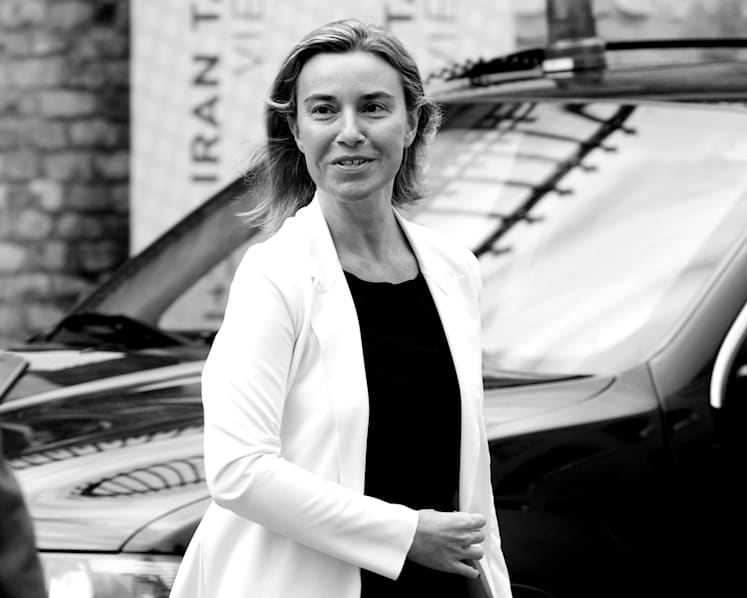
To increase the EU’s presence in the region, High Representative of the EU for Foreign Affairs and Security Policy Federica Mogherini (picture) has appointed a dedicated resident EU Ambassador to ASEAN, who will take up his post in Jakarta shortly. Photo: Reuters
When the High Representative of the European Union (EU) for Foreign Affairs and Security Policy Federica Mogherini visited Singapore for the Shangri-La Dialogue recently, she carried in her briefcase a policy paper titled The EU And ASEAN: A Partnership With A Strategic Purpose that laid down a concrete vision for this important relationship. Last Monday, the 28 foreign ministers of the EU member states unanimously endorsed this timely initiative.
This is good news for the Association of South-east Asian Nations (ASEAN) and, in particular, Singapore. This is clear evidence that Europe wants to build on strong ties spanning four decades, with the aim of gradually elevating relations to a strategic level.
So, what is in it for Singapore and ASEAN? In short: More trade and investment links, better connectivity, smarter and greener growth, increased collaboration in the political and security sphere and, ultimately, a closer partnership at the highest level.
A key aspect will be to intensify EU-ASEAN cooperation on security issues, as both regions share common challenges. The EU’s accession to ASEAN’s Treaty of Amity and Cooperation three years ago has provided a good basis. The new policy paper sets out how joint activities and new capacities on both sides will address security threats such as global terrorism in a more comprehensive way. The EU and ASEAN have worked together successfully to enhance crisis response and disaster management, maritime security and the tackling of transnational crime. For instance, Europol has detached personnel to the new global Interpol centre in Singapore. Another useful initiative, especially in light of the recent migrant boat crisis, is the EU-ASEAN Migration and Border Management Programme, a technical assistance project that has the objective to increase the border control efficiency of ASEAN immigration and border police services.





WHAT’S GOOD FOR ASEAN IS GOOD FOR the EU
Economic ties are important. As is the case for Singapore, the EU is already the top foreign investor in ASEAN, as well as ASEAN’s second-largest trading partner with trade flows growing by 7 per cent annually on average over the last 20 years. Moreover, the EU has concluded negotiations on a Free Trade Agreement (FTA) with Singapore and aims to finalise FTAs with other ASEAN countries such as Vietnam, Thailand and Malaysia.
These agreements are stepping stones. The policy paper paves the way to a joint assessment on the prospects for a future EU-ASEAN region-to-region FTA negotiation.
Other new initiatives, such as a business support programme for small and medium-sized companies, will bring 1,000 European SMEs to Singapore and other ASEAN countries in the next five years to foster commercial links. The EU-ASEAN Business Council, a network of European chambers of commerce in ASEAN countries established last year in Singapore, will bring business leaders together at an EU-ASEAN Business Summit in Kuala Lumpur next month.
As the association establishes the ASEAN Economic Community by the end of this year, the EU will set aside S$235 million for regional integration projects by the ASEAN Secretariat to facilitate the free movement of goods across South-east Asia and help build an ASEAN “single market and production base”. The guiding approach here is that what is good for ASEAN’s own economic development will also benefit ASEAN’s most important economic partner, the EU.
For ties between both sides to flourish, better connectivity will be critical. There are encouraging signs so far.
Air traffic between the EU and ASEAN has doubled over the past 15 years to reach more than 10 million passengers, and is expected to grow by another 65 per cent in the next 20 years. This is not surprising given rising income levels and a combined consumer market of 1.1 billion people.
Singapore as the main aviation hub will play a central role here.
Singapore hosted the inaugural EU-ASEAN Aviation Summit last year. The event was a clear signal of the EU’s interest to increase cooperation with ASEAN on transport and civil aviation, including an eventual negotiation of an EU-ASEAN open skies agreement.
As people-to-people links between Europe and ASEAN intensify, we are seeing a growing exchange of students and scholars. Each year, more than 4,000 ASEAN students benefit from scholarships granted by the EU or its member states. More than 200 research organisations in the association are linked up with partners in Europe thanks to EU research grants. The union supports the creation of an ASEAN Inter-University Network to improve the comparability of university qualifications and make it easier to transfer credits obtained at one ASEAN university to another.
Another important area of cooperation is in climate change. The EU will provide enhanced support for tackling climate change, protecting the environment and promoting green growth. Some S$90 million has been earmarked for these policy areas. European Climate Diplomacy Day, which we just marked on June 17, showed how much climate change is of concern, especially for Singapore.
Finally, I should highlight that Ms Mogherini’s visit to Singapore was not a one-off event. She has also announced her intention to attend the ASEAN Regional Forum in Kuala Lumpur next month. Moreover, to increase EU’s presence, she has appointed a dedicated resident EU Ambassador to ASEAN, who will take up his post in Jakarta shortly.
These are tangible examples of the EU’s wish to strengthen relations with one of the world’s most dynamic regions, and to play our part in fostering political stability and economic development. Participation in regional groupings, which in the EU’s view should include the East Asia Summit in the future, will support this endeavour.
A stronger EU-ASEAN relationship will be more beneficial than ever to European and ASEAN citizens, and in particular to cosmopolitan Singapore.
ABOUT THE AUTHOR:
Dr Michael Pulch is the European Union’s Ambassador to Singapore.




