The paradoxical usefulness of ‘useless’ higher education
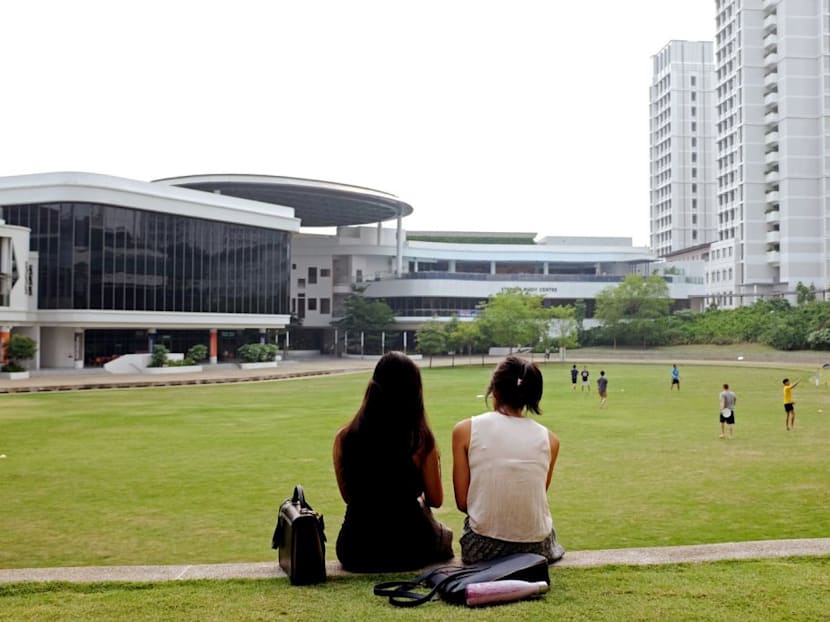
The Town Green at the National University of Singapore’s University Town.


Two bits of news related to higher education caught my attention recently. The first was the release of the 2017 Joint Graduate Employment Survey in September, in which the stars turned out to be the Singapore Institute of Technology and the Singapore University of Technology and Design.
This led to a commentary asking if Singapore’s more traditional universities – the National University of Singapore, Nanyang Technological University and Singapore Management University – were “losing their shine as higher education institutions”?
The commentary lauded the newcomers, rightfully so, for providing real-world “industry-centric and practice-oriented education”. And well they should, given that universities perform a civic duty to prepare its graduates for working life.
Then I read the second bit of news.





The British moral philosopher Mary Midgley passed away on October 10 aged 99, after a lifetime of asking inconvenient questions. This instantly recalled an essay that she wrote in 1990 titled, “The Use and Uselessness of Learning”.
So I now risk the ire of pragmatists and practitioners by posing the questions that Midgley first asked in her article, “How useless are we scholars? How useless ought we to be?”
When Midgley asked how “useless” academic research and scholarship should be, she is making the crucial point that knowledge creation is an inherently messy business, one in which what started out being denigrated as useless could turn out to be useful and transformative. The search for knowledge is one in which we only know retrospectively what we were looking for once we have found it.
And the research funding agencies typically do not know any better: they tend to continue whatever lines of investigation that are established and, increasingly so, immediately practical.
Of course, researchers, particularly when funded by public monies, have an obligation to solve immediate real-world problems. But the purpose of higher education should not be confined to addressing these already known and well-articulated problems.
Instead, higher education should also be concerned with what new questions need to be asked. It should go beyond a reactive mindset to creating the proverbial “solution in search of a problem”.
Such daydreaming, curious tinkering, and the restless modifications to accepted ways of doing things might come across as intellectual hubris or extravagance. But Nassim Taleb, of “Black Swan” theory fame, believes that these have been the primary drivers of progress.
In his book “Antifragile”, Taleb argues that innovations come about from freedom and boredom: freedom especially from the publish-or-perish system that tends to foment conservatism, and boredom that leads to flights of fancy. He points out that in the 19th century the key agents of innovation were the serious hobbyist and the English rector, often the same person.
The two Thomases come to mind: the Reverend Thomas Bayes who developed Bayesian probability, and the Reverend Thomas Malthus who gave us Malthusian economics. Needless to say, Taleb is being facetious, although I suspect not overly so.
Another case in point: our understanding of electromagnetism came about from the curiosity and work of Faraday and Clerk Maxwell in the 19th century.
They certainly did not have practical applications in mind. They could not imagine the modern appliances that we now enjoy.
This was basic research for its own sake, which in turn led to happy albeit unplanned practical outcomes.
And yet our research enterprise tends to overlook the role of luck in discovery, and is instead conducted in a highly-directed, instrumentalist, linear, and teleological manner, and under constant pressure to culminate in a gadget or an app.
Universities, in their traditional forms, have come under criticism for being “ivory towers” disconnected from the real world. I would argue that, far from being embarrassed about that label, we should embrace it.
By all means, let us have some universities that are responsive to the needs of commerce and industry, both in terms of producing work-ready graduates and research that is immediately useful to corporations.
But let us also create and maintain the space to ruminate and contrive solutions to yet-to-exist problems or to invent problems to solve. Universities can and should provide the deliberate un-directedness for serendipitous discoveries to emerge.
This is no mere romanticisation of the past, or a naive attempt at valorising Mr Taleb’s clergy-scientist-hobbyist. There is a practical concern here. If we cannot tell what areas of study will ultimately pay off, then what we need to do is place a wider and more unusual range of bets.
Diversity in thought and approaches is not a luxury but indispensable to knowledge creation in this age of uncertainty and complexity. More than ever, different approaches will be needed, and such approaches can only result from the time and space to try apparently useless and irrelevant things.
If simply because we cannot tell ahead of time if they might not turn out to be useful and highly relevant.
So, while it is important for universities to produce, say, a new generation of engineers fit for industry and ready to do the job today, they also have a responsibility to push the boundaries of knowledge and shape the field of engineering for the future.
We need a balanced higher education system in which we have our feet on the ground and our heads in the clouds.
ABOUT THE AUTHOR:
Adrian W J Kuah is Director of the Futures Office, Office of the President, National University of Singapore. This is his personal comment.