

The art of finding joy in a hobby that I'm awful at
Everyone's a beginner when starting out in a new hobby. But is it okay to be mediocre at it?

(Illustration: CNA/Samuel Woo)

This audio is generated by an AI tool.
Adulthood is not just one phase of life but comes in stages. Its many facets can be overwhelming, from managing finances and buying a home to achieving work-life balance and maintaining healthy relationships. In this series, CNA TODAY's journalists help readers deal with the many challenges of being an adult and learn something themselves in the process.


The other day, I felt a pang of guilt when I looked at my pair of climbing shoes gathering dust in the corner of my room, untouched for months.
For a time, I had fallen in love with the sport of bouldering, which is a form of rock climbing, after my friends introduced me to it four years ago.
I was hooked to the adrenaline rush of reaching the top, after deciphering the best route to get there, and doing so in the company of like-minded friends.
But for some reason, I felt myself plateauing in the sport because I could not get past a certain “climbing grade”, a marker that indicates the technical difficulty of a particular route on the climbing wall.
No one starts out as a professional, my friends would tell me, adding that I will get better over time with practice.
So I did. I invested in my own gear, purchased passes to climbing gyms and tried to climb weekly to better myself.
But I just never felt good enough at the sport. There was always a wall too high and too steep for me to climb.
As soon as I accepted my own mediocrity in bouldering, my motivation to continue disappeared.
I don’t think I was being too harsh on myself and beating myself up over failures. Rather, the mere knowledge that I wasn’t a natural talent sucked my enjoyment in the sport and I gradually stopped climbing.
Some time later, this all happened to me again after another friend asked if I wanted to pick up skateboarding with her. I readily agreed because it seemed like a fun way to keep active.
Yet again, I was unable to progress to a level I was happy to be skating at and soon, I found myself prioritising the hobby less.
My skateboard now occupies a different corner of my home, also gathering dust.
Looking back at my pathetic attempts to maintain my hobbies over the past year, I wondered if my head was wired to peg enjoyment to accomplishment.
It’s not as though karaoke enthusiasts are necessarily good singers, gardeners never kill any plants, and home cooks always whip up delicious meals. Why couldn’t I just have fun while being awful at it?
To find out, I spoke to experts to find out where this pressure was coming from and how I can rediscover that spark of joy that got me into the hobby in the first place.
TO EXCEL OR TO HAVE FUN
Several psychologists I interviewed said that it is natural for people to seek excellence in something that they enjoy and have spent some time doing.
Ms Sara-Ann Lee, a clinical psychologist at The Psychology Practice, said that people might get into hobbies for the sake of leisure at first, but this might change when these pursuits become a more major part of their lives.
For instance, they might develop social ties or connections with others while picking up the hobby. This adds an element of social support, group pressure and recognition into the mix, so it is not just about their own needs and desires any more.
Related:
Meet the 70-year-old lorry driver who is also a 'kite doctor'
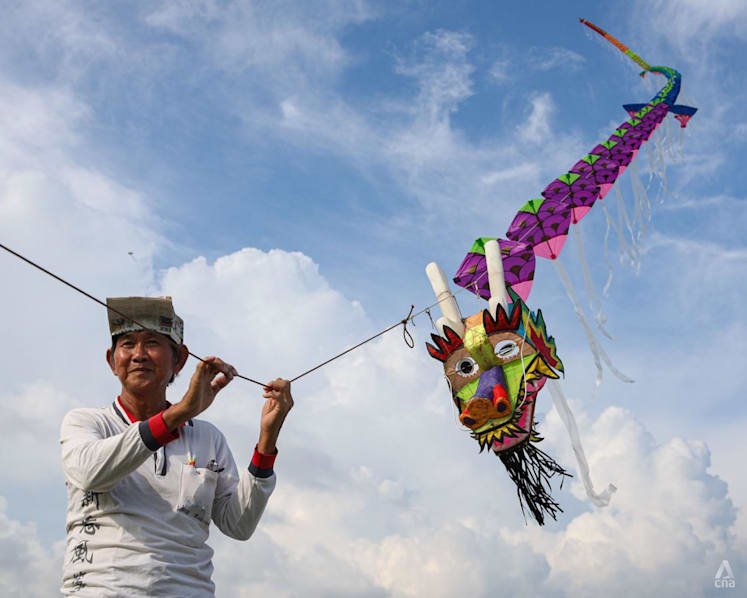


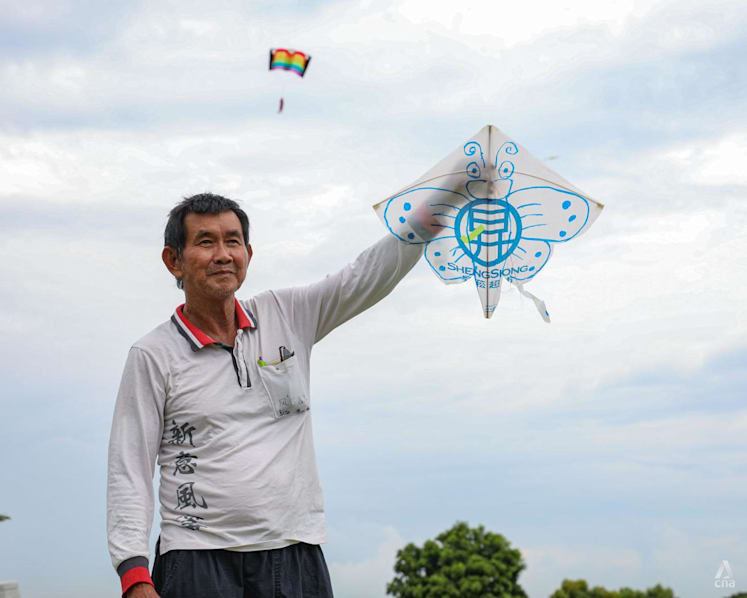
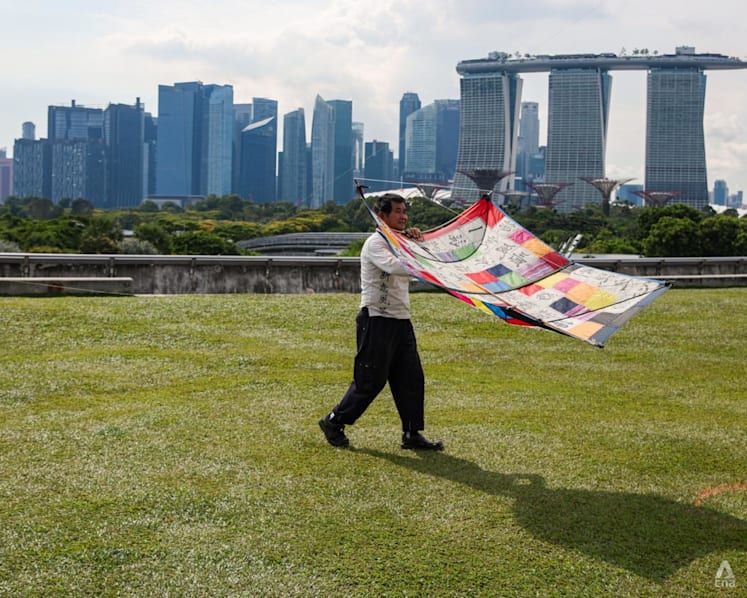
Rolling up to Marina Barrage with a trolley bag full of handmade kites and repair tools, Mr Tan Poh Wah had one clear mission for the day: To share his love of kite-flying with others.
Known informally as the “kite doctor” among the regular visitors there, the 70-year-old spends most Sundays repairing kites or offering his handmade ones – mostly for free – to people at the open-air space that is the venue of Singapore's largest reservoir.
“Watching people fly my kites makes me really happy,” Mr Tan said.
This weekend, In Pixels speaks to four enthusiasts to find out what excites them about kite-flying.
A FAMILIAR FIGURE





Shortly after Mr Tan turned up at Marina Barrage in the Marina Bay area, a handful of people who wanted their kites repaired immediately made a beeline towards him.
They offered him drinks and snacks to thank him for his service.
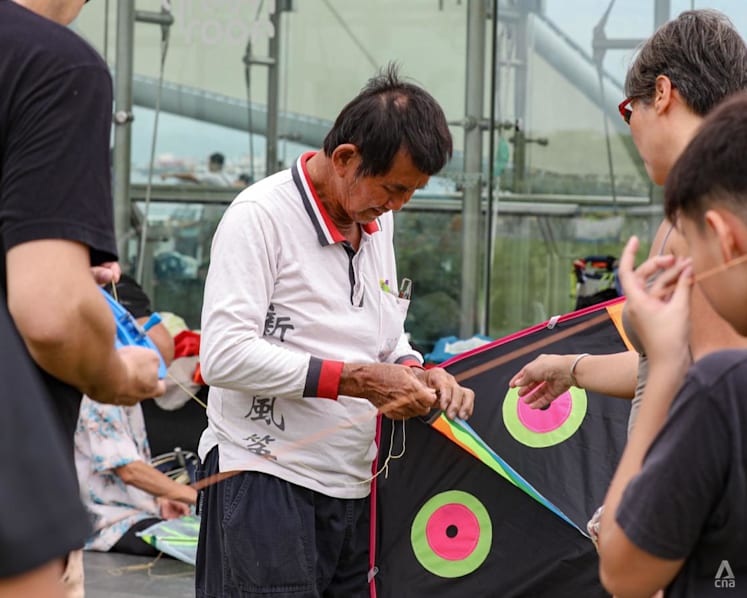
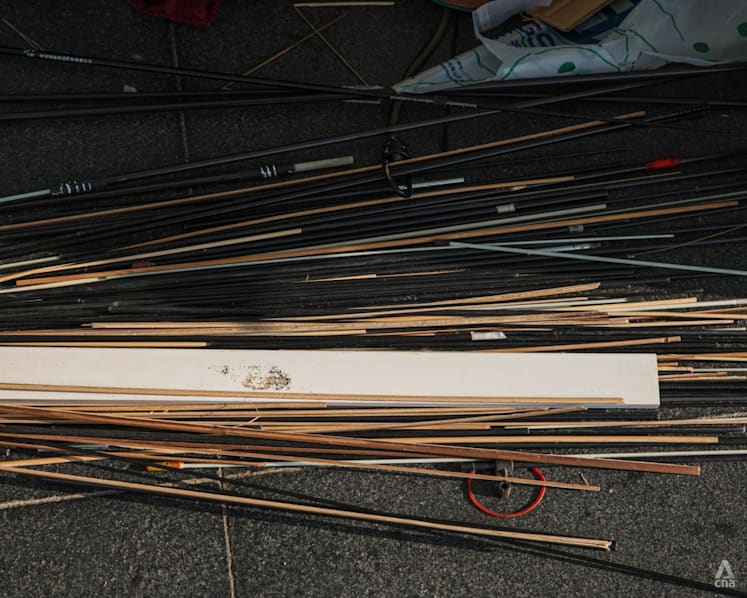
When he was done with the repairs, Mr Tan pulled a kite from his bag and launched it to the sky.
He flew it with ease, strolling around the field, eager to find someone who will take the kite as a gift.
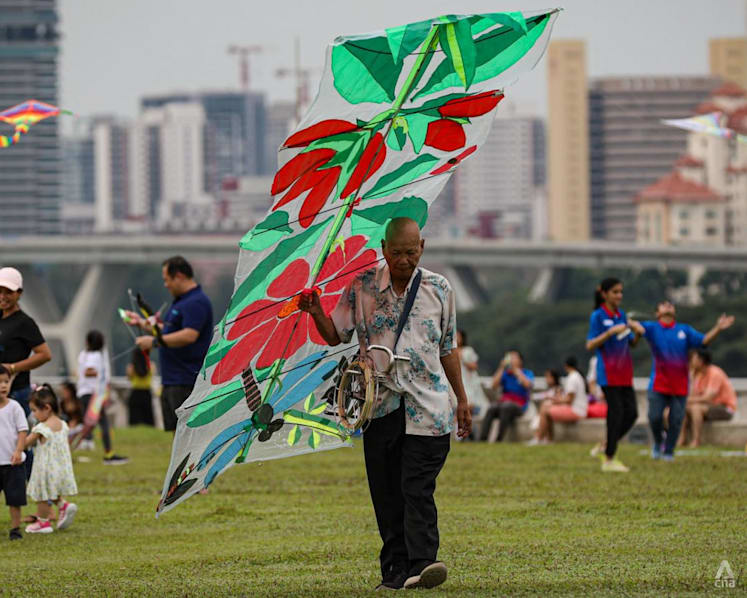
His masterpieces are made mostly from recycled materials including plastic bags, discarded blinds, banners and umbrellas.
Mr Tan is part of a group known as Singapore Original Kites, an informal gathering of adults in their 60s and 70s who share the same interest in making and flying kites.
A semi-retired Chinese physician Ong Cheng Her, 75, is the founder of the group.
He said that the only prerequisite to join the group is one’s ability to make a kite from scratch.
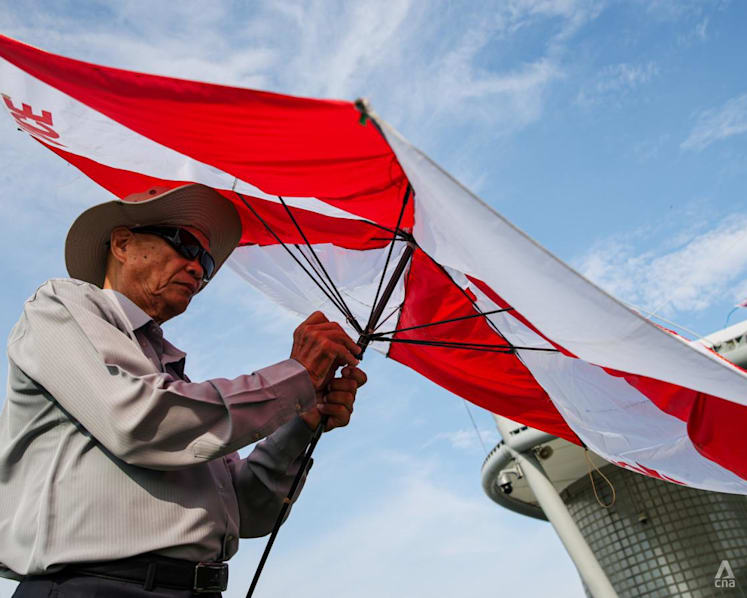
He proudly showed CNA TODAY one of his creations, a red and white "umbrella kite".
“Umbrellas are used for shade and rain protection, so why hasn’t anyone flown an umbrella kite? I decided to take on the challenge,” Mr Ong added.
HIS WORKSPACE AT HOME
As for Mr Tan, he is not retired, so flying and making kites is what he does only on Sundays.
He works six days a week as a lorry driver.
“I work to live, to fill my stomach so I can make kites.”
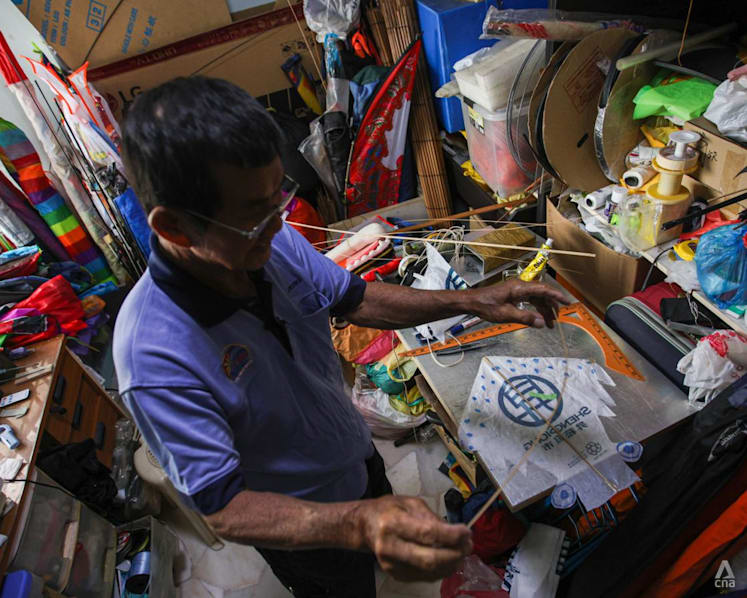
Stepping into his flat, Mr Tan led us to his "studio", which is a room filled with a bountiful supply of kites and raw materials.
He described his workspace as a “chaotic but organised mess”.
“My wife sometimes asks why I collect so many umbrellas, but she doesn’t interfere much because she knows I enjoy making these things.”
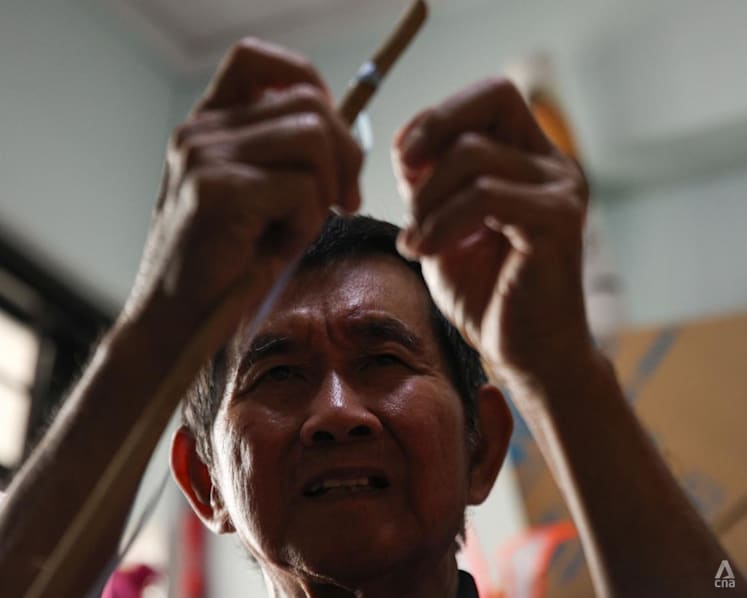
Mr Tan has loved kite flying since he was a child, but it was not until he was in his 30s that he took to making kites himself.
A self-taught craftsman, he said that he learnt how to make kites by observing other kite-makers whenever an opportunity comes along.
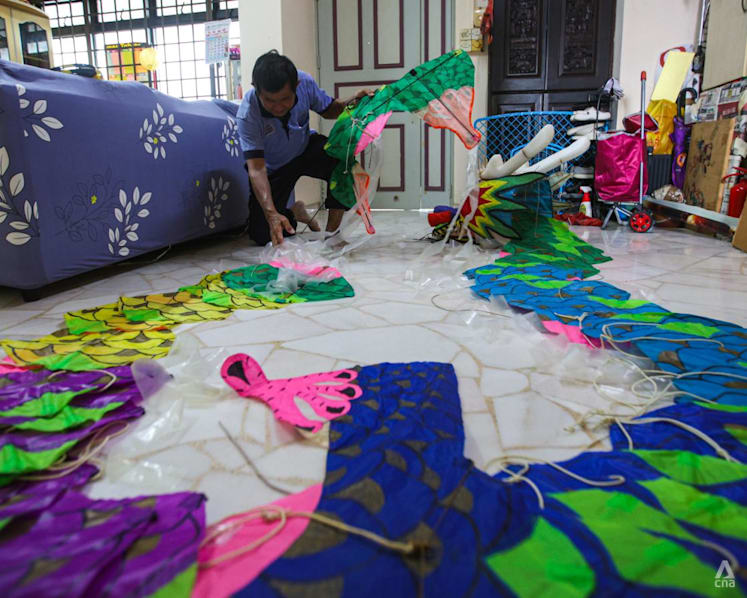
Recently, Mr Tan finished repairing a 70m-long "dragon kite" that he first constructed in 2000. It broke at a kite festival in Taiwan in 2019 and required extensive repairs.
After CNA TODAY approached him for an interview, Mr Tan said that he found new inspiration to repair the kite, which took him four Sundays to complete.
It was obvious that he is most proud of this kite among the many in his collection.
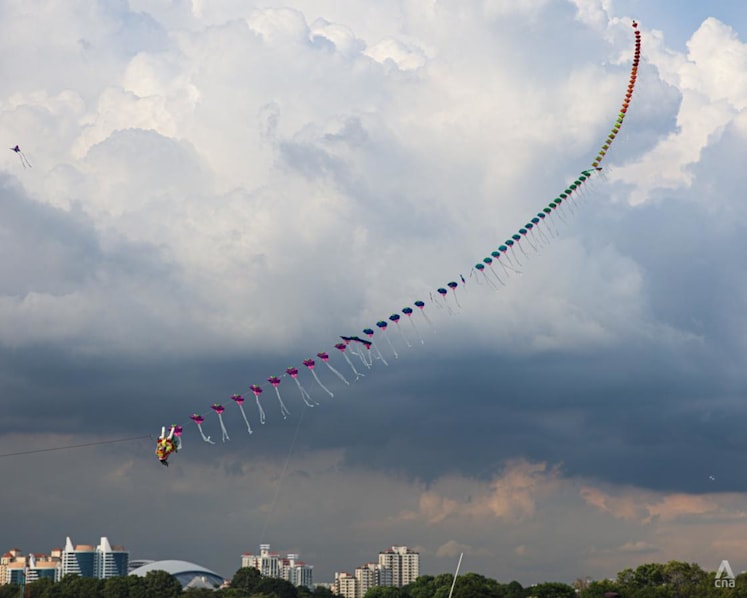
“Anyone who hasn't made a dragon or a phoenix kite isn't truly considered a kite maker,” he said, adding that these long kites are made up of many different sections and each needed to be crafted with great precision before they are finally stitched together.
"GIANTS" IN THE SKY
Over at East Coast Park, another group of kite enthusiasts have gathered and their presence could be spotted from afar.
The kites they have taken out, called "inflatable show kites", are gigantic balloon-like kites that are typically several metres in length when inflated.
Traditional kites rely on rigid frames for support, but inflatable show kites have no hard structures. They inflate as they catch on the wind and have to be anchored to the ground.
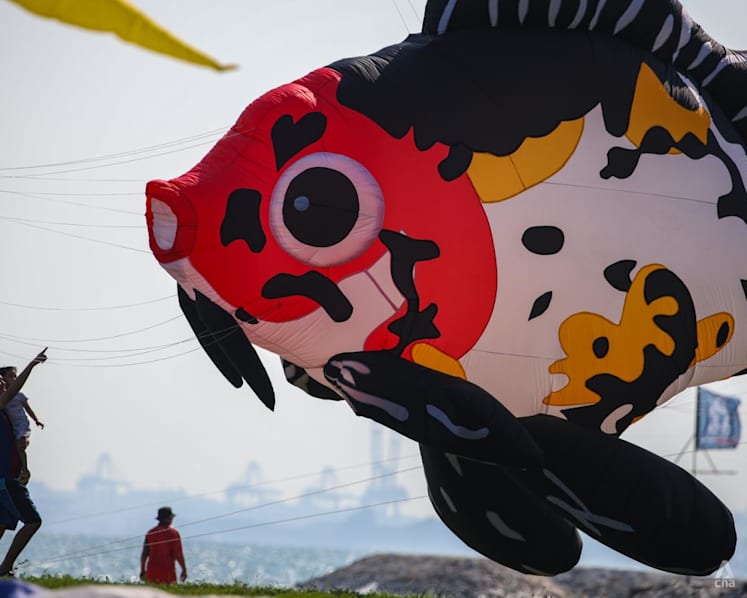
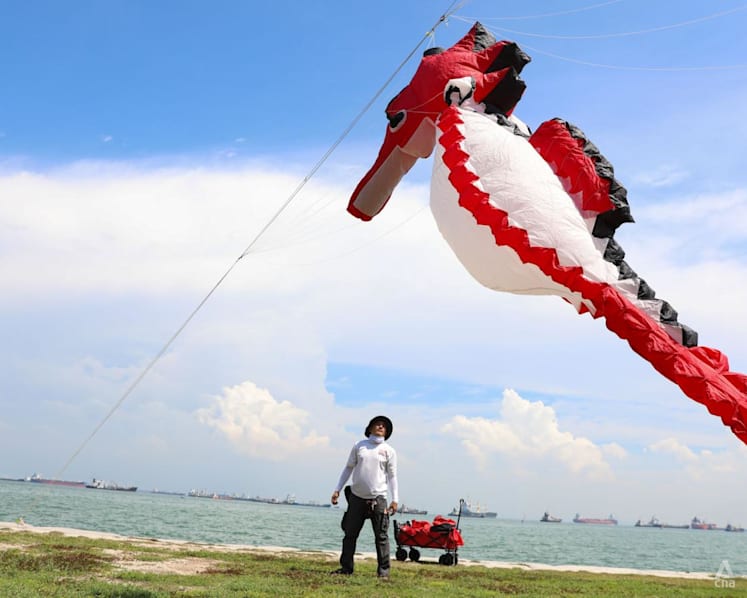
Project coordinator Johnny Yap and his wife Maggie Mok, a homemaker, both 51, are the founders of Show Kites Singapore, a group of people who are into these inflatable show kites.
The duo's interest in this started nearly 20 years ago when they took their children kite-flying.
In the end, it was the couple themselves who got hooked on the activity.
“We started flying bigger and bigger kites and before long, we realised that stick kites have a limit,” Mr Yap said.
This led them to explore inflatable ones in 2009 and they came across these kites online before buying their first. The sky is the limit when it comes to the sizes of such kites.
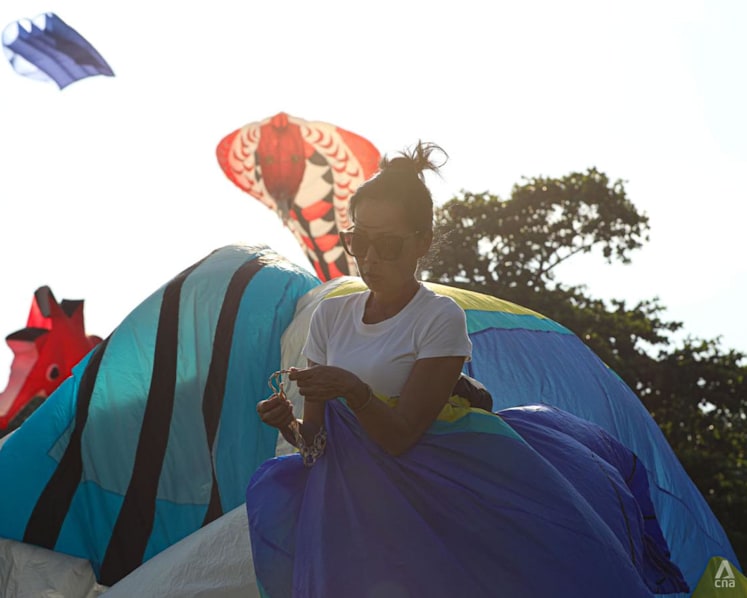
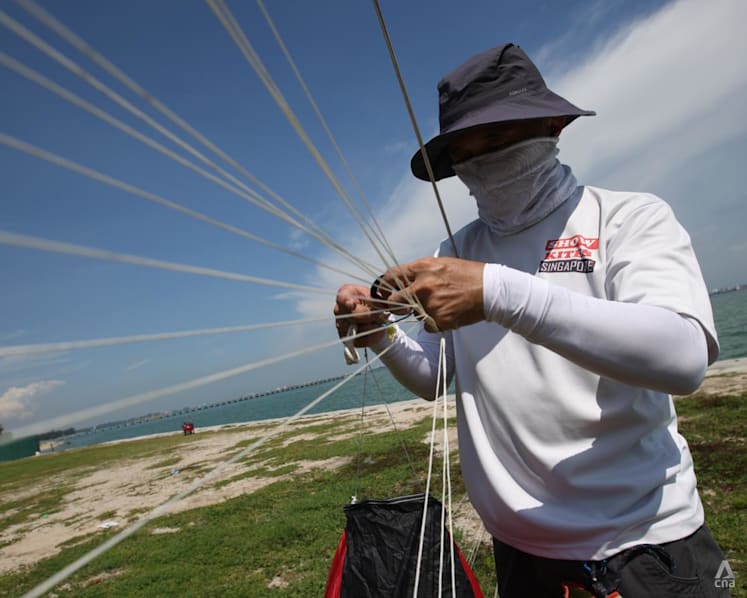
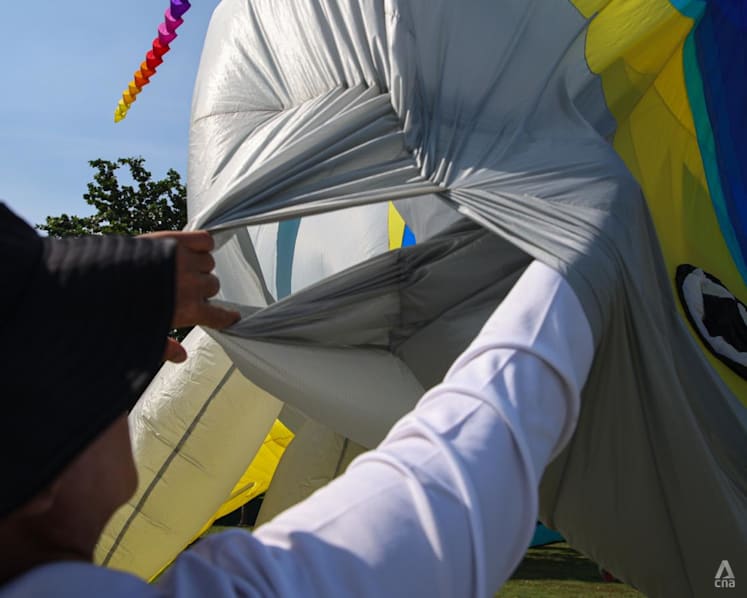
As their interests grew, Mr Yap and Ms Mok started travelling overseas to take part in international kite festivals.
In September, they were at the International Kite Festival in Melaka, Malaysia, where they flew an inflatable show kite in the form of Singapore's tourism icon, the Merlion.
Related:
Inside a dragon kiln where temperatures go up to 1,300°C


Nestled in an industrial estate in the western part of Singapore is an 84-year-old dragon kiln, the oldest and the only operational dragon kiln in the country.
Built in 1940, the kiln at Thow Kwang Pottery Jungle was originally used for the mass production of household and industrial items such as cups and flower pots.
Over the decades, the place has evolved into a community space, now offering classes and events for potters to hone their craft.
CNA TODAY joined the potter community for a wood-firing session that happens only two or three times a year.
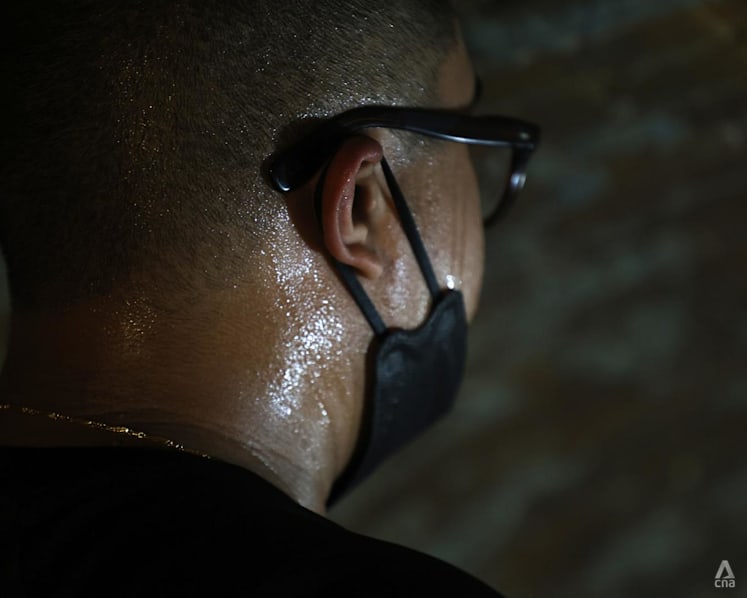
In Pixels takes you through the experience, as new and seasoned potters bond over fire and perspiration, creating unique works of art.
PRAYERS TO THE "KILN GOD"
At Thow Kwang Pottery Jungle, which is located a short distance from Nanyang Technological University, a group of around 30 people gathered on a Friday last month in front of the kiln.
This was at the request of the owners, Mr Tan Teck Yoke, 68, and his wife Yulianti Tan, 66.
A prayer ceremony to the "kiln god" was about to begin.
“We are praying to the ‘kiln god’ for a successful firing, for the pieces to achieve the desired effects,” Mr Tan explained to the enthusiastic participants.
To this, the crowd responded by shouting, “Heng, ong, huat, ah,” a phrase in the Chinese dialect of Hokkien that collectively means wishing for good fortune.
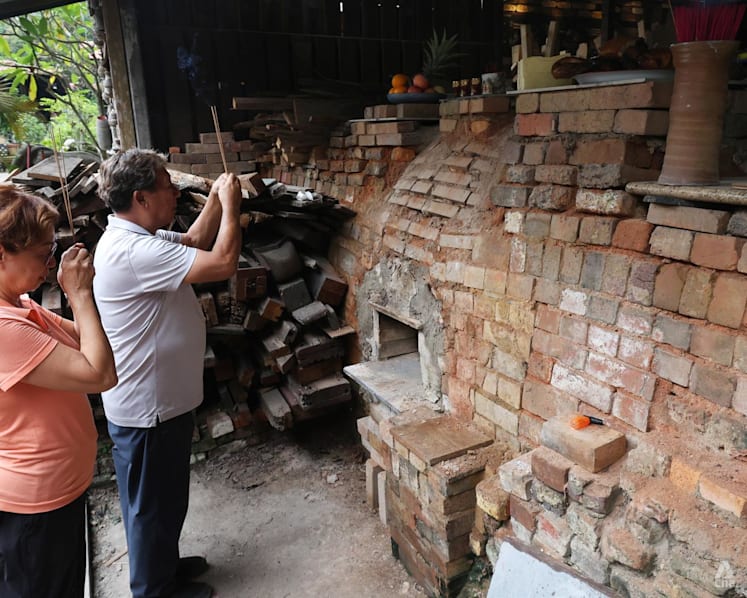
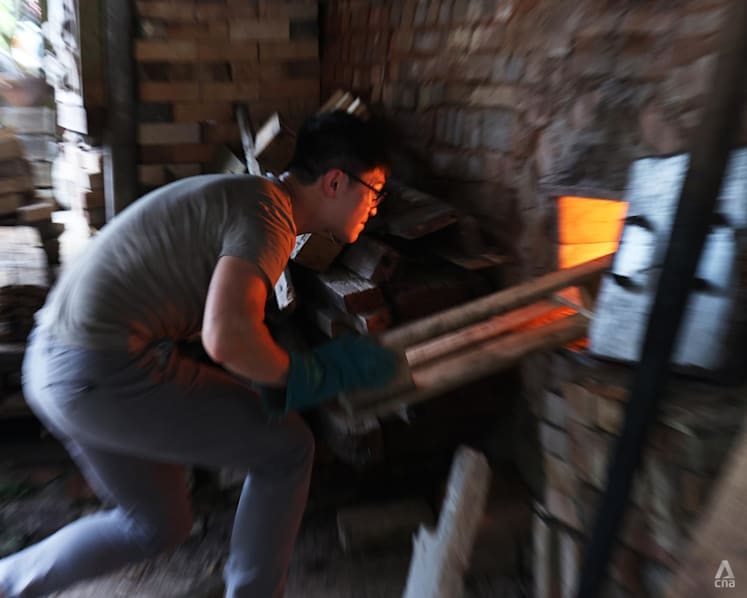
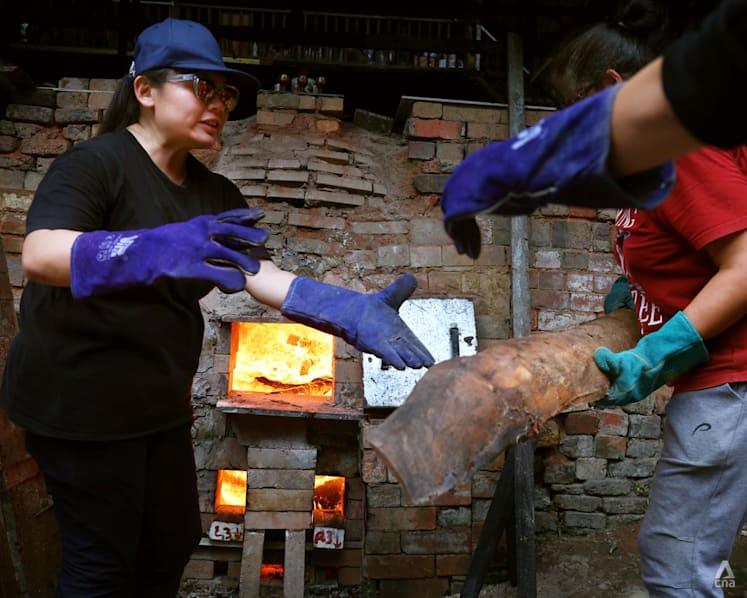
After the prayers were done, the fire box, which is a small opening at the front of the kiln, was lit.
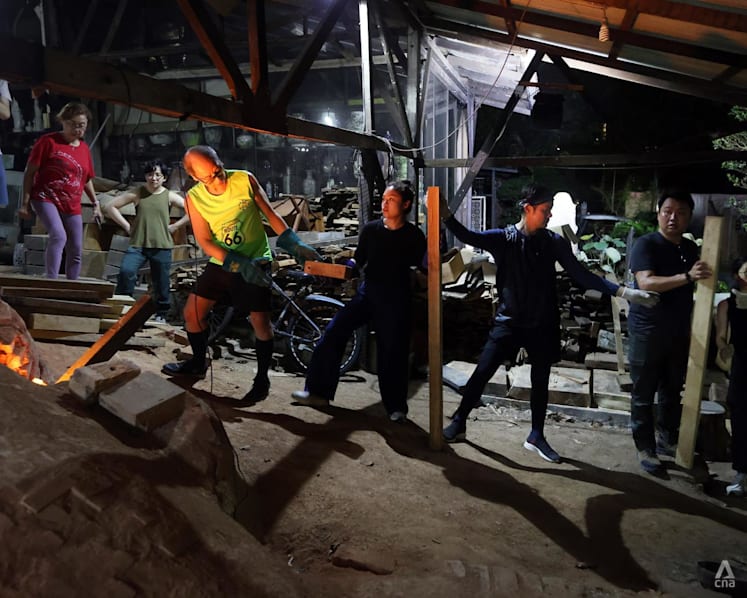
The participants each picked up a piece of wood to throw into the fire, hoping to add more "luck" to the process.
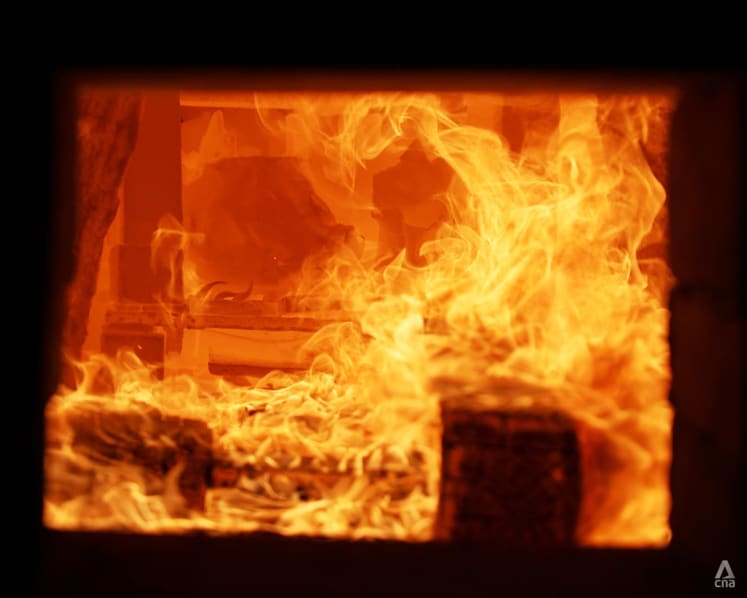
The dragon kiln was bought by Mr Tan’s father in 1965 and has been owned by the family since then.
It sits on a slope, is 27-metres long, 2-metres wide and curves around the side, resembling the body of a dragon in Chinese mythology.
Its lengthy chambers are made out of bricks and there is a chimney at the end, located at the top of the slope.
The kiln can fit thousands of pieces of ceramic items, depending on the size of the pots.
For this firing session, around 400 to 500 pieces were loaded in the kiln.
NEW WAYS TO IMPROVE PROCESS
Temperatures in the dragon kiln can reach up to 1,300°C.
They can fluctuate significantly due to the shape of the furnace and the use of wood as a fuel.
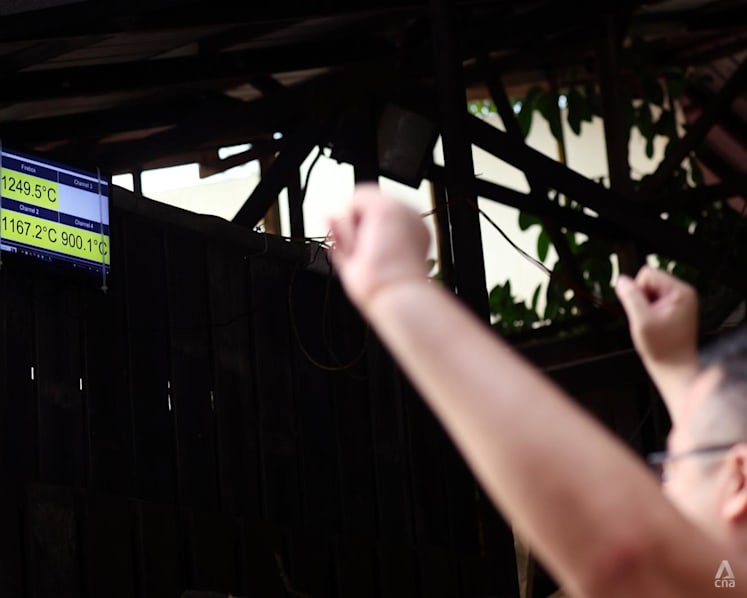
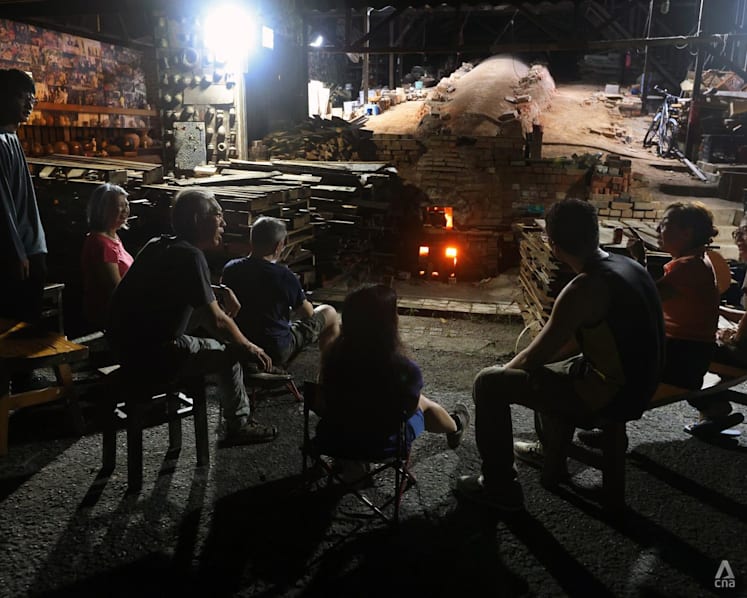
That is why one of the most crucial parts of the process is to monitor the temperature for all three days of the firing session.
Mr Chua Hee Lai, who is in his 50s and a hobbyist-turned-kiln master, helped to plan and lead each firing session.
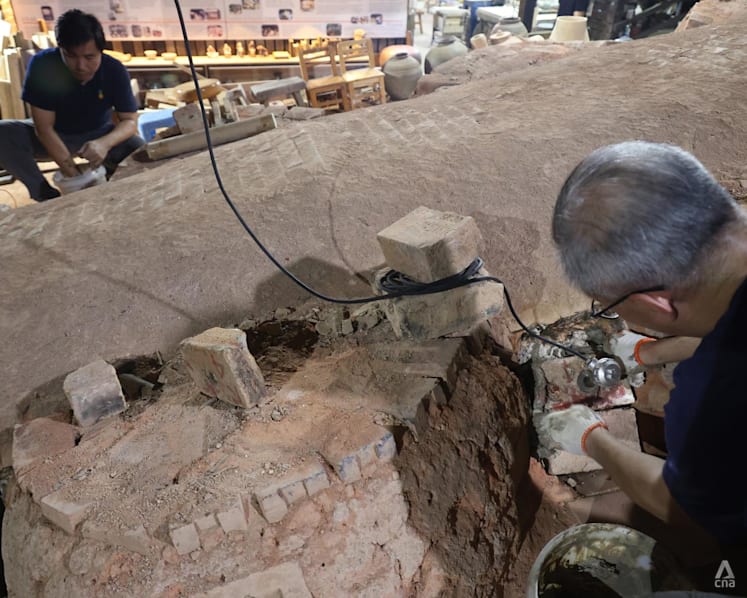
In 2019, Mr Chua, with the help of another potter, introduced a digital monitoring system that allowed them to track the temperatures remotely and give instructions to the potters doing shift work on site.
Previously, they had to monitor the temperature by looking at the colour of the flame or record temperatures manually and then draw up prediction charts – a process that requires them to be on site for longer periods of time.

THE "KAMPUNG SPIRIT"
Advertising executive Vanessa Low and product manager Goh Wei Ting, both 31, have been practising pottery at another pottery studio for around five years and this was their first time taking part in the wood-firing process.
Compared to a regular firing in an electric or gas kiln, wood-firing is "tiring and physically demanding", Mr Goh said.
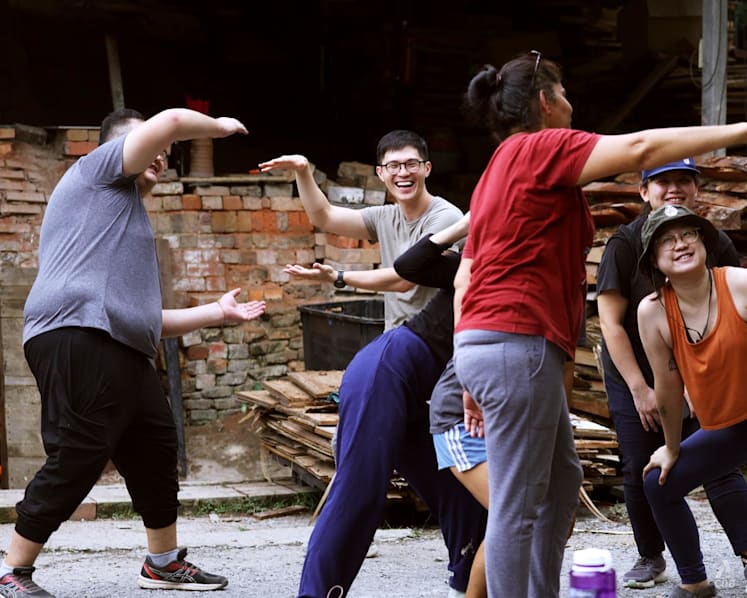
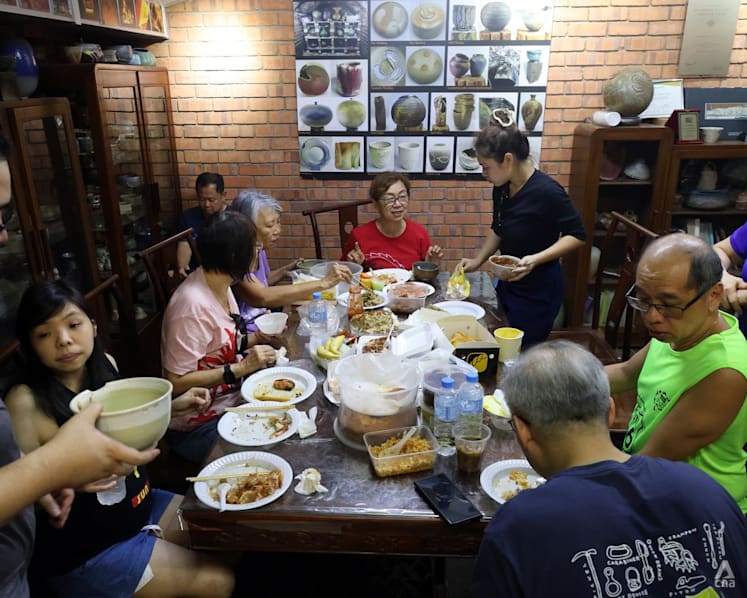
However, they were buoyed by the “kampung spirit” or the sense of camaraderie that came about as participants laboured together.
“You just don’t feel tired, you just do (the work),” Mr Goh added.
OPENING OF THE KILN
Six days after the firing at the dragon kiln, the participants returned to open the kiln and check on their art pieces.
“Shall we form a chain?” someone suggested to facilitate the removal of the brick walls.
Without hesitation, a human chain quickly formed as the potters unsealed the kiln, one brick at a time.
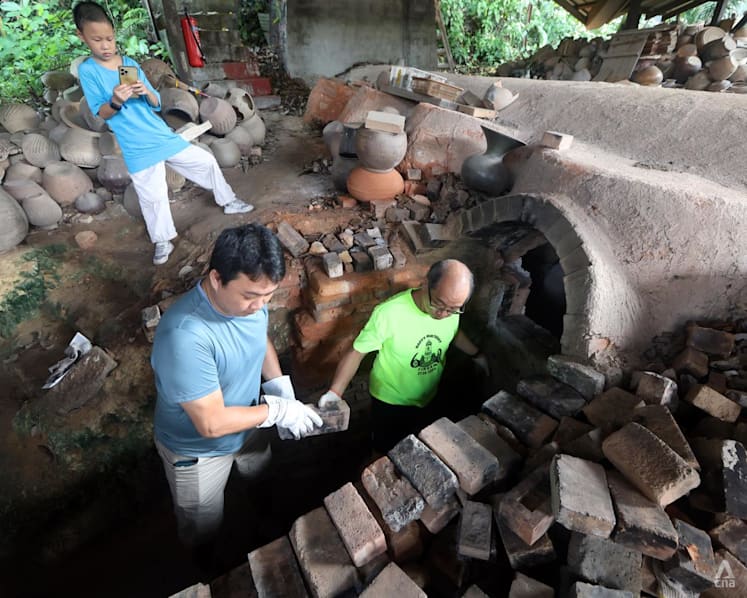
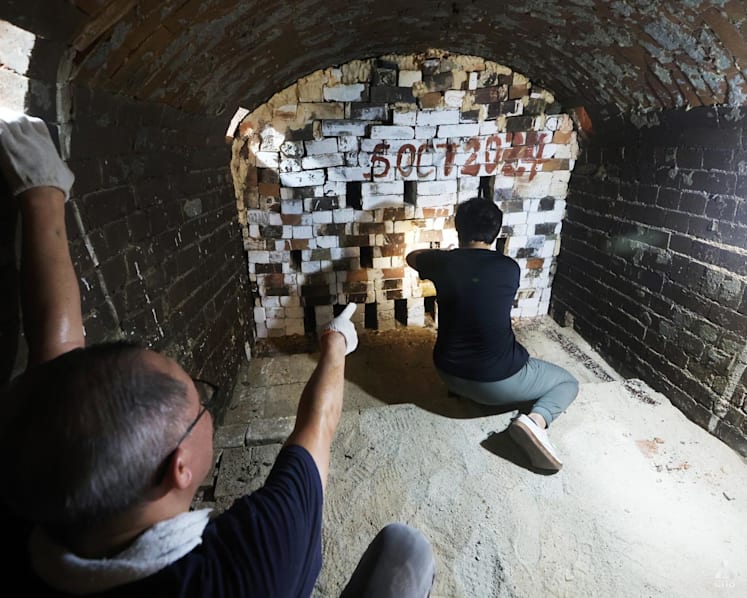
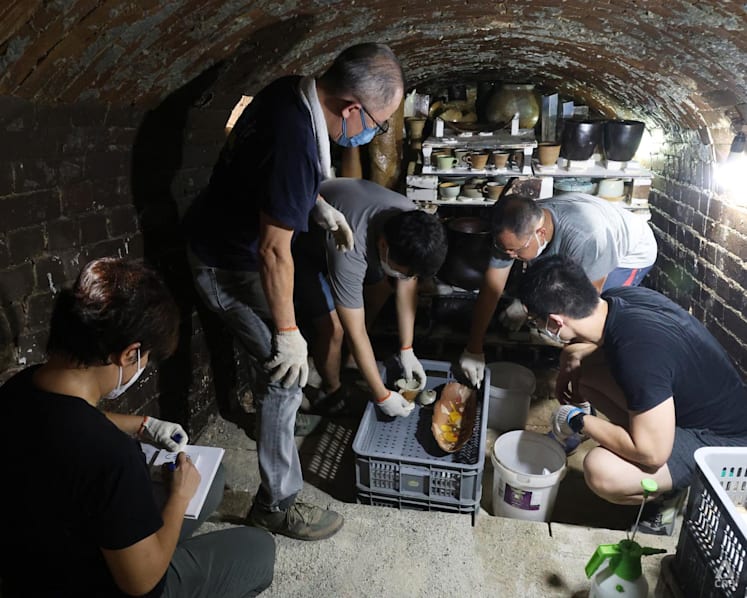
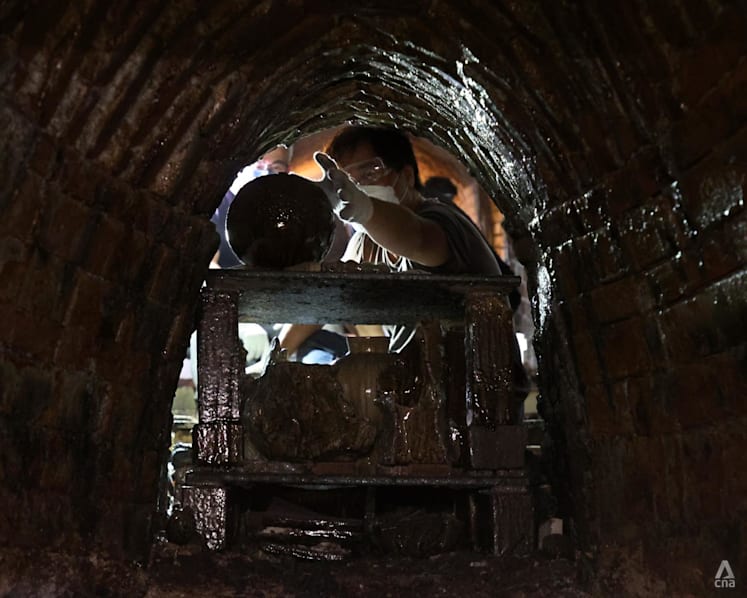
A collective “wow” sounded as the final bricks were removed, revealing the final outcome of the nine-day process that comprised three days of firing and six days of cooling.
The potters carefully removed the art pieces from the shelves, while admiring the effects that the fire had on their work.
Related:
Meet the 70-year-old lorry driver who is also a 'kite doctor'
Rolling up to Marina Barrage with a trolley bag full of handmade kites and repair tools, Mr Tan Poh Wah had one clear mission for the day: To share his love of kite-flying with others.
Known informally as the “kite doctor” among the regular visitors there, the 70-year-old spends most Sundays repairing kites or offering his handmade ones – mostly for free – to people at the open-air space that is the venue of Singapore's largest reservoir.
“Watching people fly my kites makes me really happy,” Mr Tan said.
This weekend, In Pixels speaks to four enthusiasts to find out what excites them about kite-flying.
A FAMILIAR FIGURE
Shortly after Mr Tan turned up at Marina Barrage in the Marina Bay area, a handful of people who wanted their kites repaired immediately made a beeline towards him.
They offered him drinks and snacks to thank him for his service.
When he was done with the repairs, Mr Tan pulled a kite from his bag and launched it to the sky.
He flew it with ease, strolling around the field, eager to find someone who will take the kite as a gift.
His masterpieces are made mostly from recycled materials including plastic bags, discarded blinds, banners and umbrellas.
Mr Tan is part of a group known as Singapore Original Kites, an informal gathering of adults in their 60s and 70s who share the same interest in making and flying kites.
A semi-retired Chinese physician Ong Cheng Her, 75, is the founder of the group.
He said that the only prerequisite to join the group is one’s ability to make a kite from scratch.
He proudly showed CNA TODAY one of his creations, a red and white "umbrella kite".
“Umbrellas are used for shade and rain protection, so why hasn’t anyone flown an umbrella kite? I decided to take on the challenge,” Mr Ong added.
HIS WORKSPACE AT HOME
As for Mr Tan, he is not retired, so flying and making kites is what he does only on Sundays.
He works six days a week as a lorry driver.
“I work to live, to fill my stomach so I can make kites.”
Stepping into his flat, Mr Tan led us to his "studio", which is a room filled with a bountiful supply of kites and raw materials.
He described his workspace as a “chaotic but organised mess”.
“My wife sometimes asks why I collect so many umbrellas, but she doesn’t interfere much because she knows I enjoy making these things.”
Mr Tan has loved kite flying since he was a child, but it was not until he was in his 30s that he took to making kites himself.
A self-taught craftsman, he said that he learnt how to make kites by observing other kite-makers whenever an opportunity comes along.
Recently, Mr Tan finished repairing a 70m-long "dragon kite" that he first constructed in 2000. It broke at a kite festival in Taiwan in 2019 and required extensive repairs.
After CNA TODAY approached him for an interview, Mr Tan said that he found new inspiration to repair the kite, which took him four Sundays to complete.
It was obvious that he is most proud of this kite among the many in his collection.
“Anyone who hasn't made a dragon or a phoenix kite isn't truly considered a kite maker,” he said, adding that these long kites are made up of many different sections and each needed to be crafted with great precision before they are finally stitched together.
"GIANTS" IN THE SKY
Over at East Coast Park, another group of kite enthusiasts have gathered and their presence could be spotted from afar.
The kites they have taken out, called "inflatable show kites", are gigantic balloon-like kites that are typically several metres in length when inflated.
Traditional kites rely on rigid frames for support, but inflatable show kites have no hard structures. They inflate as they catch on the wind and have to be anchored to the ground.
Project coordinator Johnny Yap and his wife Maggie Mok, a homemaker, both 51, are the founders of Show Kites Singapore, a group of people who are into these inflatable show kites.
The duo's interest in this started nearly 20 years ago when they took their children kite-flying.
In the end, it was the couple themselves who got hooked on the activity.
“We started flying bigger and bigger kites and before long, we realised that stick kites have a limit,” Mr Yap said.
This led them to explore inflatable ones in 2009 and they came across these kites online before buying their first. The sky is the limit when it comes to the sizes of such kites.
As their interests grew, Mr Yap and Ms Mok started travelling overseas to take part in international kite festivals.
In September, they were at the International Kite Festival in Melaka, Malaysia, where they flew an inflatable show kite in the form of Singapore's tourism icon, the Merlion.
Related:
Inside a dragon kiln where temperatures go up to 1,300°C
Nestled in an industrial estate in the western part of Singapore is an 84-year-old dragon kiln, the oldest and the only operational dragon kiln in the country.
Built in 1940, the kiln at Thow Kwang Pottery Jungle was originally used for the mass production of household and industrial items such as cups and flower pots.
Over the decades, the place has evolved into a community space, now offering classes and events for potters to hone their craft.
CNA TODAY joined the potter community for a wood-firing session that happens only two or three times a year.
In Pixels takes you through the experience, as new and seasoned potters bond over fire and perspiration, creating unique works of art.
PRAYERS TO THE "KILN GOD"
At Thow Kwang Pottery Jungle, which is located a short distance from Nanyang Technological University, a group of around 30 people gathered on a Friday last month in front of the kiln.
This was at the request of the owners, Mr Tan Teck Yoke, 68, and his wife Yulianti Tan, 66.
A prayer ceremony to the "kiln god" was about to begin.
“We are praying to the ‘kiln god’ for a successful firing, for the pieces to achieve the desired effects,” Mr Tan explained to the enthusiastic participants.
To this, the crowd responded by shouting, “Heng, ong, huat, ah,” a phrase in the Chinese dialect of Hokkien that collectively means wishing for good fortune.
After the prayers were done, the fire box, which is a small opening at the front of the kiln, was lit.
The participants each picked up a piece of wood to throw into the fire, hoping to add more "luck" to the process.
The dragon kiln was bought by Mr Tan’s father in 1965 and has been owned by the family since then.
It sits on a slope, is 27-metres long, 2-metres wide and curves around the side, resembling the body of a dragon in Chinese mythology.
Its lengthy chambers are made out of bricks and there is a chimney at the end, located at the top of the slope.
The kiln can fit thousands of pieces of ceramic items, depending on the size of the pots.
For this firing session, around 400 to 500 pieces were loaded in the kiln.
NEW WAYS TO IMPROVE PROCESS
Temperatures in the dragon kiln can reach up to 1,300°C.
They can fluctuate significantly due to the shape of the furnace and the use of wood as a fuel.
That is why one of the most crucial parts of the process is to monitor the temperature for all three days of the firing session.
Mr Chua Hee Lai, who is in his 50s and a hobbyist-turned-kiln master, helped to plan and lead each firing session.
In 2019, Mr Chua, with the help of another potter, introduced a digital monitoring system that allowed them to track the temperatures remotely and give instructions to the potters doing shift work on site.
Previously, they had to monitor the temperature by looking at the colour of the flame or record temperatures manually and then draw up prediction charts – a process that requires them to be on site for longer periods of time.
THE "KAMPUNG SPIRIT"
Advertising executive Vanessa Low and product manager Goh Wei Ting, both 31, have been practising pottery at another pottery studio for around five years and this was their first time taking part in the wood-firing process.
Compared to a regular firing in an electric or gas kiln, wood-firing is "tiring and physically demanding", Mr Goh said.
However, they were buoyed by the “kampung spirit” or the sense of camaraderie that came about as participants laboured together.
“You just don’t feel tired, you just do (the work),” Mr Goh added.
OPENING OF THE KILN
Six days after the firing at the dragon kiln, the participants returned to open the kiln and check on their art pieces.
“Shall we form a chain?” someone suggested to facilitate the removal of the brick walls.
Without hesitation, a human chain quickly formed as the potters unsealed the kiln, one brick at a time.
A collective “wow” sounded as the final bricks were removed, revealing the final outcome of the nine-day process that comprised three days of firing and six days of cooling.
The potters carefully removed the art pieces from the shelves, while admiring the effects that the fire had on their work.
Related:
Meet the 70-year-old lorry driver who is also a 'kite doctor'
Rolling up to Marina Barrage with a trolley bag full of handmade kites and repair tools, Mr Tan Poh Wah had one clear mission for the day: To share his love of kite-flying with others.
Known informally as the “kite doctor” among the regular visitors there, the 70-year-old spends most Sundays repairing kites or offering his handmade ones – mostly for free – to people at the open-air space that is the venue of Singapore's largest reservoir.
“Watching people fly my kites makes me really happy,” Mr Tan said.
This weekend, In Pixels speaks to four enthusiasts to find out what excites them about kite-flying.
A FAMILIAR FIGURE
Shortly after Mr Tan turned up at Marina Barrage in the Marina Bay area, a handful of people who wanted their kites repaired immediately made a beeline towards him.
They offered him drinks and snacks to thank him for his service.
When he was done with the repairs, Mr Tan pulled a kite from his bag and launched it to the sky.
He flew it with ease, strolling around the field, eager to find someone who will take the kite as a gift.
His masterpieces are made mostly from recycled materials including plastic bags, discarded blinds, banners and umbrellas.
Mr Tan is part of a group known as Singapore Original Kites, an informal gathering of adults in their 60s and 70s who share the same interest in making and flying kites.
A semi-retired Chinese physician Ong Cheng Her, 75, is the founder of the group.
He said that the only prerequisite to join the group is one’s ability to make a kite from scratch.
He proudly showed CNA TODAY one of his creations, a red and white "umbrella kite".
“Umbrellas are used for shade and rain protection, so why hasn’t anyone flown an umbrella kite? I decided to take on the challenge,” Mr Ong added.
HIS WORKSPACE AT HOME
As for Mr Tan, he is not retired, so flying and making kites is what he does only on Sundays.
He works six days a week as a lorry driver.
“I work to live, to fill my stomach so I can make kites.”
Stepping into his flat, Mr Tan led us to his "studio", which is a room filled with a bountiful supply of kites and raw materials.
He described his workspace as a “chaotic but organised mess”.
“My wife sometimes asks why I collect so many umbrellas, but she doesn’t interfere much because she knows I enjoy making these things.”
Mr Tan has loved kite flying since he was a child, but it was not until he was in his 30s that he took to making kites himself.
A self-taught craftsman, he said that he learnt how to make kites by observing other kite-makers whenever an opportunity comes along.
Recently, Mr Tan finished repairing a 70m-long "dragon kite" that he first constructed in 2000. It broke at a kite festival in Taiwan in 2019 and required extensive repairs.
After CNA TODAY approached him for an interview, Mr Tan said that he found new inspiration to repair the kite, which took him four Sundays to complete.
It was obvious that he is most proud of this kite among the many in his collection.
“Anyone who hasn't made a dragon or a phoenix kite isn't truly considered a kite maker,” he said, adding that these long kites are made up of many different sections and each needed to be crafted with great precision before they are finally stitched together.
"GIANTS" IN THE SKY
Over at East Coast Park, another group of kite enthusiasts have gathered and their presence could be spotted from afar.
The kites they have taken out, called "inflatable show kites", are gigantic balloon-like kites that are typically several metres in length when inflated.
Traditional kites rely on rigid frames for support, but inflatable show kites have no hard structures. They inflate as they catch on the wind and have to be anchored to the ground.
Project coordinator Johnny Yap and his wife Maggie Mok, a homemaker, both 51, are the founders of Show Kites Singapore, a group of people who are into these inflatable show kites.
The duo's interest in this started nearly 20 years ago when they took their children kite-flying.
In the end, it was the couple themselves who got hooked on the activity.
“We started flying bigger and bigger kites and before long, we realised that stick kites have a limit,” Mr Yap said.
This led them to explore inflatable ones in 2009 and they came across these kites online before buying their first. The sky is the limit when it comes to the sizes of such kites.
As their interests grew, Mr Yap and Ms Mok started travelling overseas to take part in international kite festivals.
In September, they were at the International Kite Festival in Melaka, Malaysia, where they flew an inflatable show kite in the form of Singapore's tourism icon, the Merlion.
Related:
Inside a dragon kiln where temperatures go up to 1,300°C
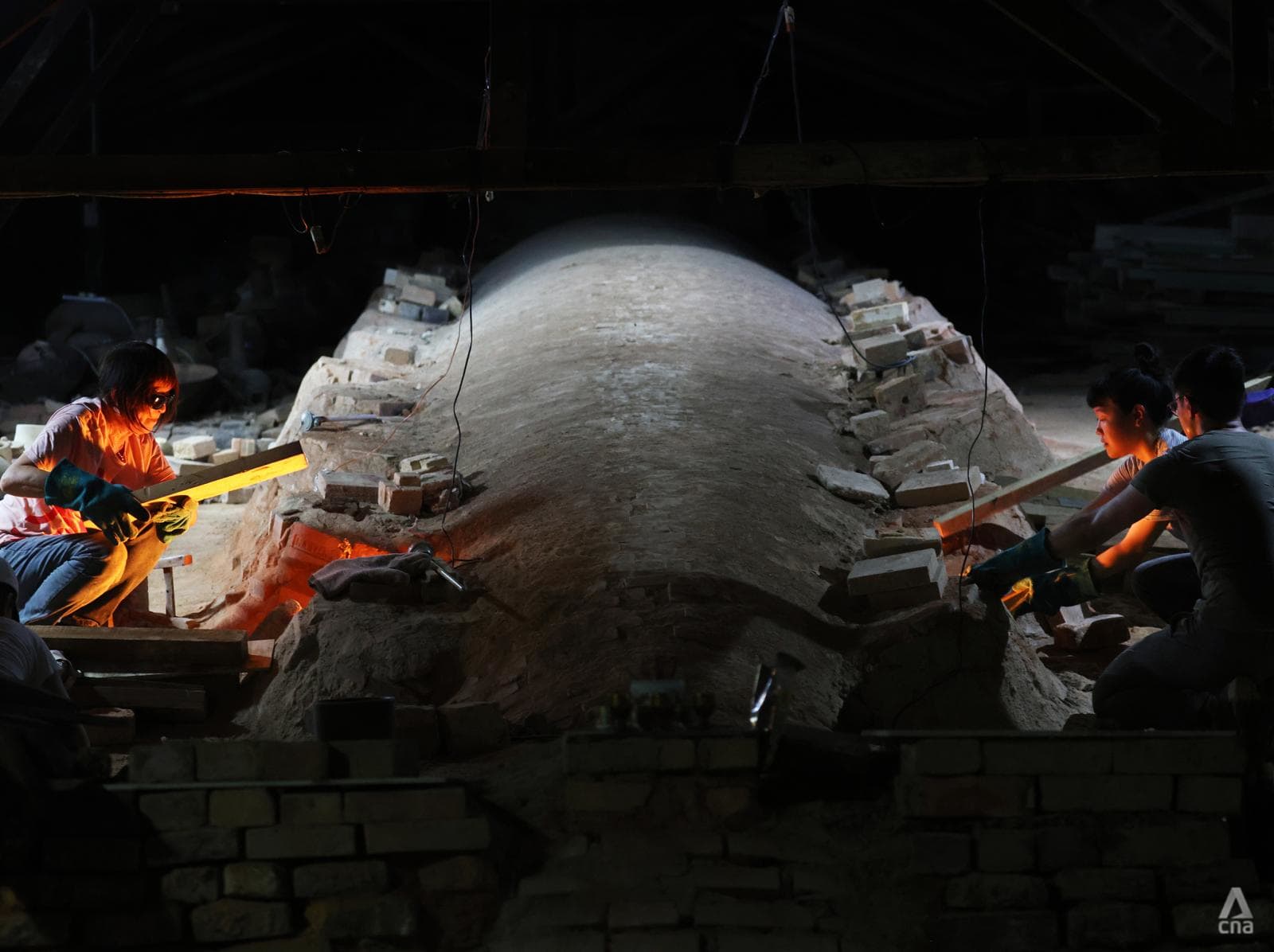
Wood-firing at a dragon kiln is a community effort that requires round-the-clock monitoring. (Photo: CNA/Ooi Boon Keong)