

Never too old to have new experiences, as seniors find stable companions outside of home
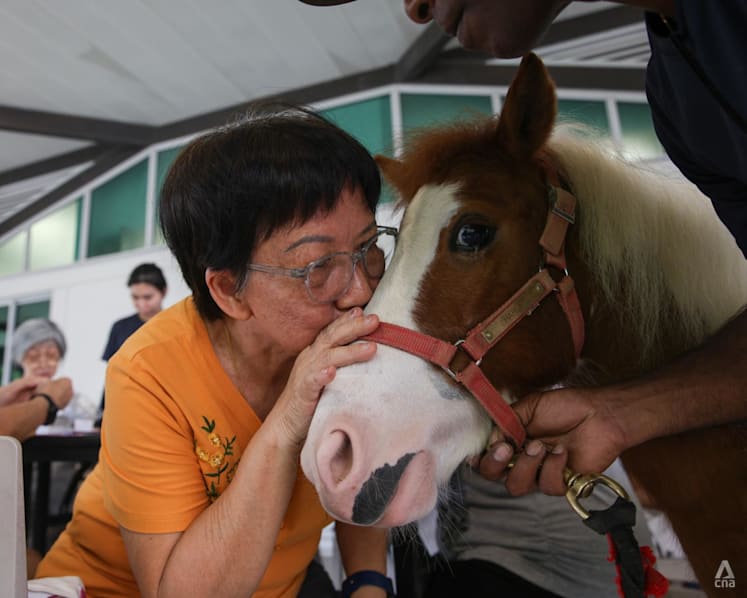
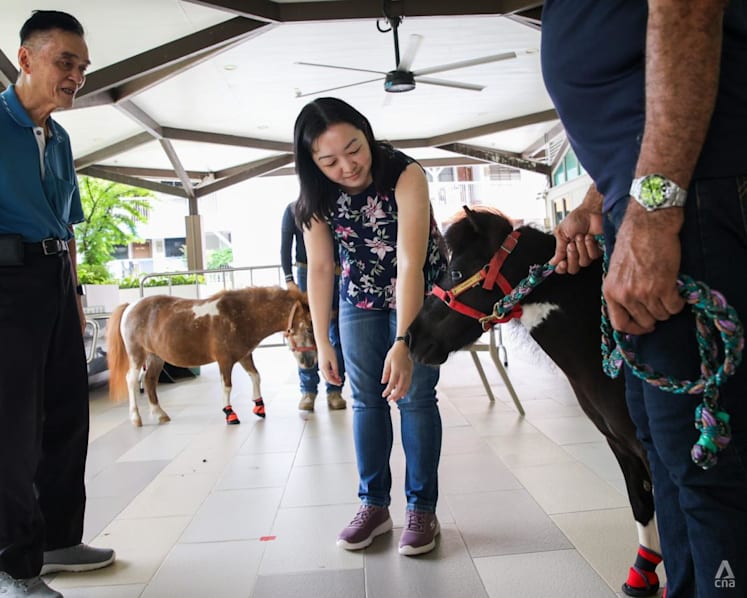
Madam Chow May Ho giving Harley, a miniature horse, a peck on its cheek. She said it was the first time she kissed an animal and that her heart was pounding. (Photo: CNA/Nuria Ling)
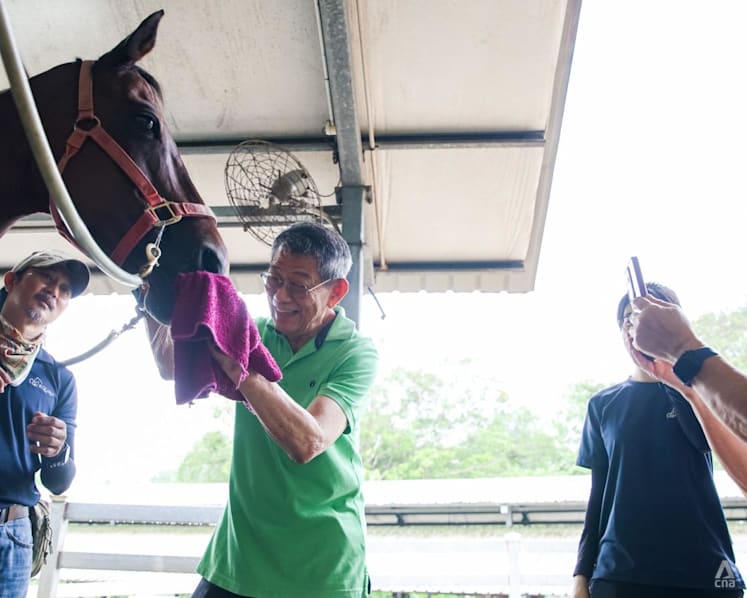
Placing one hand gently on the forehead of Matahari, a dark-chocolate brown mare, Mr Ang Tee Hiom read a short letter that he had prepared the week before.
“Hi, Matahari. You look very healthy and strong. You look friendly. It’s a great day to meet up with you,” the retired police officer said.
Matahari tilted its head towards Mr Ang as if sensing he was saying goodbye, for now.
At 25 years old, the former polo horse would be equivalent in human age to Mr Ang who is 75.





Mr Ang was one of 10 seniors who took part in a 10-week-long equine-assisted programme for elders and it was the last session.
In this week’s In Pixels, CNA TODAY takes a look at how the equine programme has benefited the retiree and the unexpected bonds that had formed along the way.
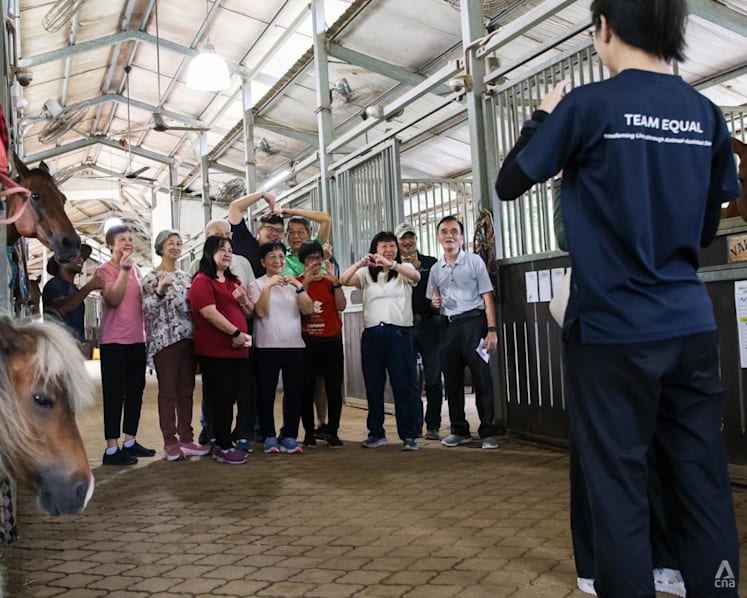
The Temasek Foundation-EQUAL Haydays with Horses programme is a two-year pilot that connects seniors – including those who may be socially isolated – with horses.
Through activities such as feeding, grooming and interacting with horses, the equine-assisted programme seeks to enhance elders' physical and psychological well-being, cognitive functioning and social connectedness with the horses and other people.
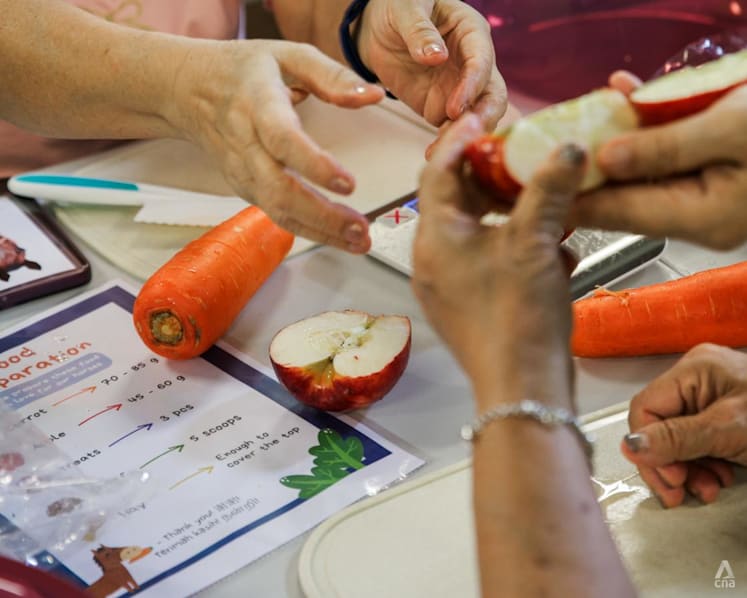
The sessions are conducted at selected NTUC Health nursing homes and active ageing centres, or at the stables run by the charity group EQUAL.
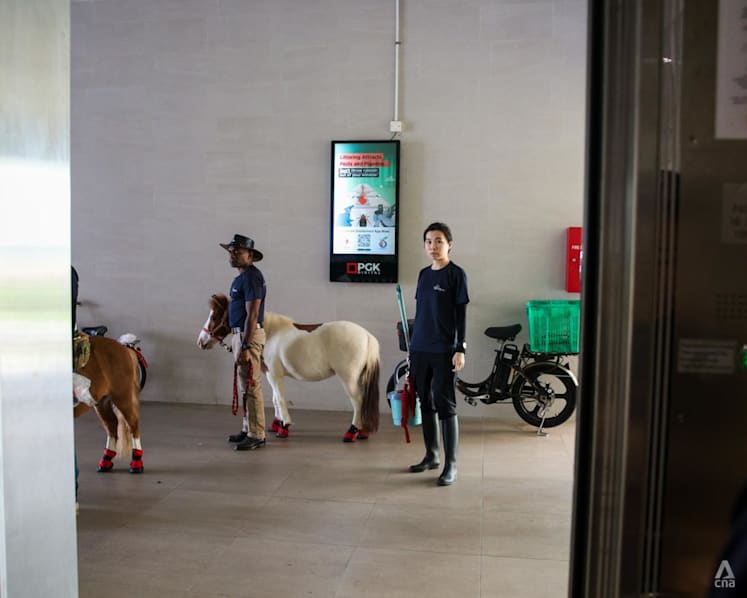
The seniors get to interact with nine retired horses that were previously racehorses, polo horses or riding school horses, as well as six miniature horses.
The programme, which was first introduced in October 2024, will be gradually rolled out to some 800 seniors in NTUC Health nursing homes and active ageing centres by 2026.
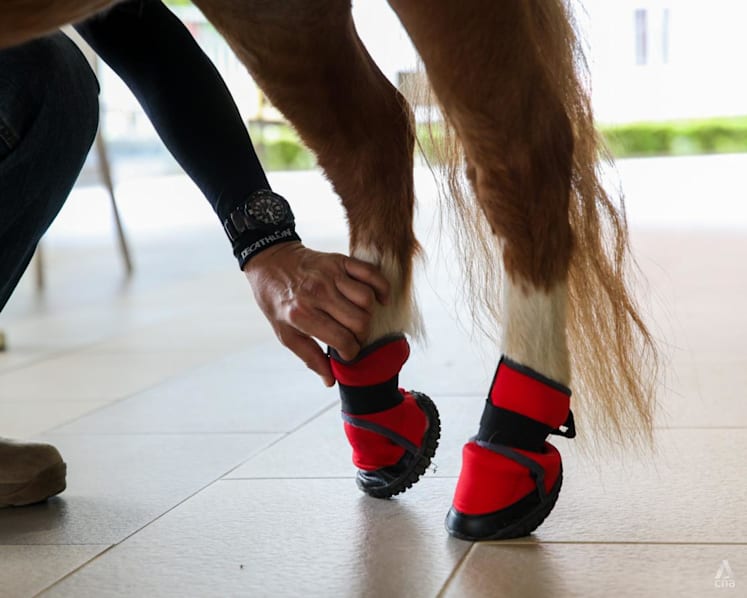
Madam Chow May Ho, 77 is one of the seniors participating in the programme.
Together with her husband, the couple signed up for the equine programme with much enthusiasm, but had cold feet the day before the first session began.
“We were very excited, but after signing up, I was a bit scared. That night, I couldn’t sleep. Are the horses aggressive? Will they kick us?," Mdm Chow recalled.
Their fear was probably compounded by their friends' concerns, who had told them that the stable would be “smelly and infested with mosquitoes” and that they had to be under the sun for hours, even though these friends have not interacted with horses or taken part in the programme.
Mdm Chow's husband Tan Choon How said he wore a long-sleeved T-shirt and a wide-brimmed hat and doused himself with mosquito repellent on his first visit to the stable.
Eventually, their fears dissipated and their confidence grew as they learnt how to interact with the horses.
In the end, even their most sceptical friends signed up for the sessions.
A NERVOUS KISS FOR "SAYANG"
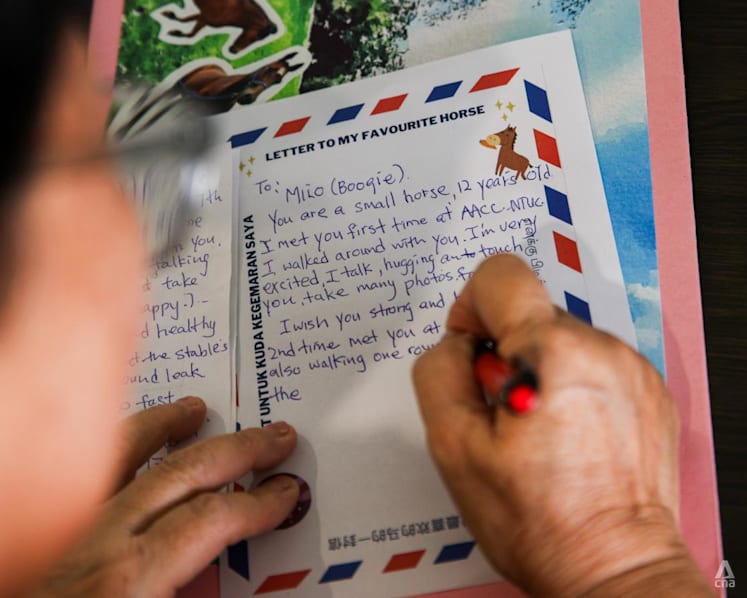
At the active ageing centre in Jurong West where one of the sessions was being conducted, Mdm Chow was tasked to write a letter to one of the miniature horses named Boogie that was brought there that day.
Halfway through penning her thoughts, she was distracted by Harley, another miniature male horse that was there.
Unable to resist petting him, she stopped her work and placed her hand near its nose for it to sniff, a technique she was taught as a way to introduce oneself to a horse.
The trainer then asked if she would like to give Harley a kiss.
With much trepidation, she leaned forward and gave the horse a small peck and stroked its mane, while gently whispering “sayang” to it, a term of endearment in Malay.
The retired preschool teacher said her heart was racing because it was her first time kissing an animal.
As Mdm Chow’s confidence grew, so did her husband’s.
Programme instructor Clarabelle Sih, 29, said she saw the “biggest change in attitude” in Mr Tan among the seniors.
“At the beginning when you talked to him, he could not focus. His hands were shaking, even while leading the horse,” Ms Sih recalled.
The former taxi driver said he had never been so close to such a large animal before, let alone touched one.
However, his fear gradually went away and before long, he was looking forward to the interactions.
“Even though each session is two hours, it passes by very quickly, like there’s not enough time."
During the last session at the stable, Mr Tan waved goodbye to each of the horses in their stalls and patted them on their heads, bidding them a fond farewell.
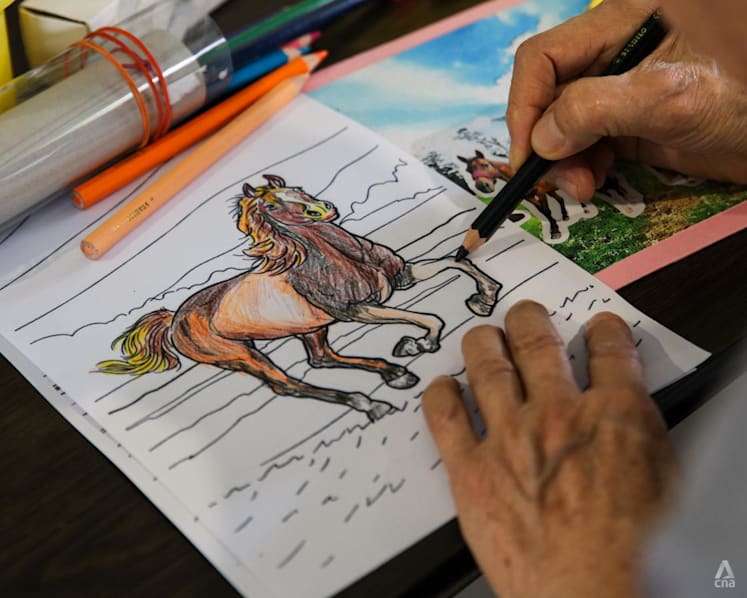
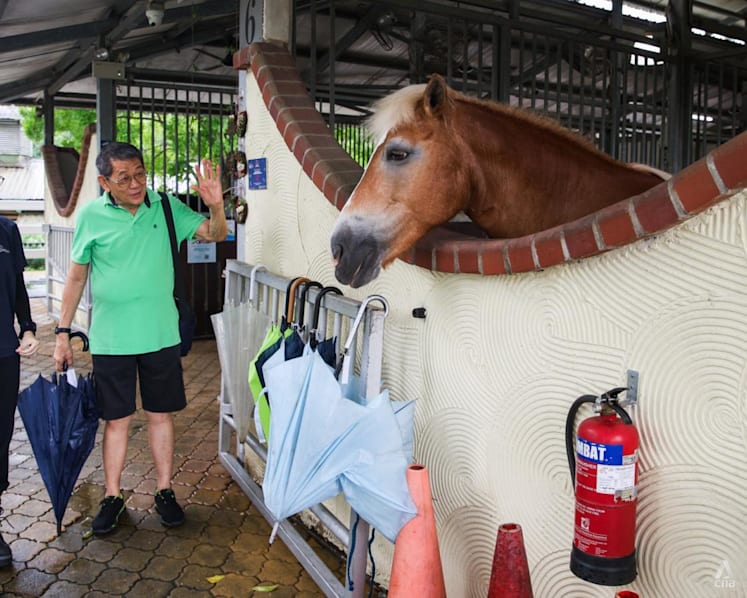
Fear and anxiety were common feelings among the seniors at the start of the programme.
Mr Ang, for instance, said he was “a little scared” as well when he first approached a horse.
The 75-year-old, who bears a stoic exterior, is not someone who is easily intimidated, having worked in the police force, the prison service and the Singapore Boys’ Home, a shelter for youth in rehabilitation.
Still, he said it was "different" when it came to animals.
“For human beings, if we don’t like them, we can scold them, we can react to the way they treated us. But for animals, we have to understand their feelings, so it’s a different type of interaction,” he added.
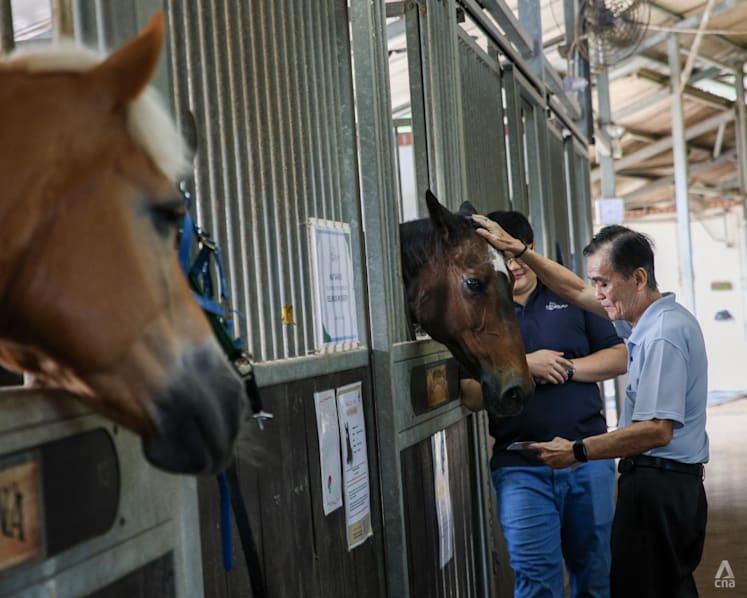
Ms Sih noticed that Mr Ang had “come out of his shell” since the first few sessions of the programme when he preferred to sit by himself away from the rest of the group.
Unlike most of the other participants who came with either their partners or friends, Mr Ang signed up for the programme alone, out of curiosity.
He lives with his wife, who is still working, and two adult children.
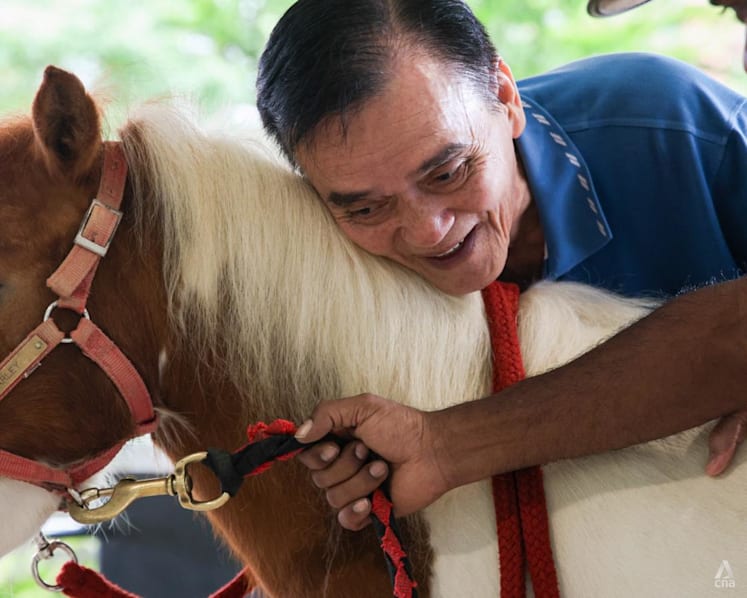
During the last session at the stable, he got emotional when he spoke about Matahari, having built a connection with it.
“Feels sad that I won’t be able to see her again,” he said with a trembling voice.
GRANDMA "KNOWS WHAT SHE IS DOING"
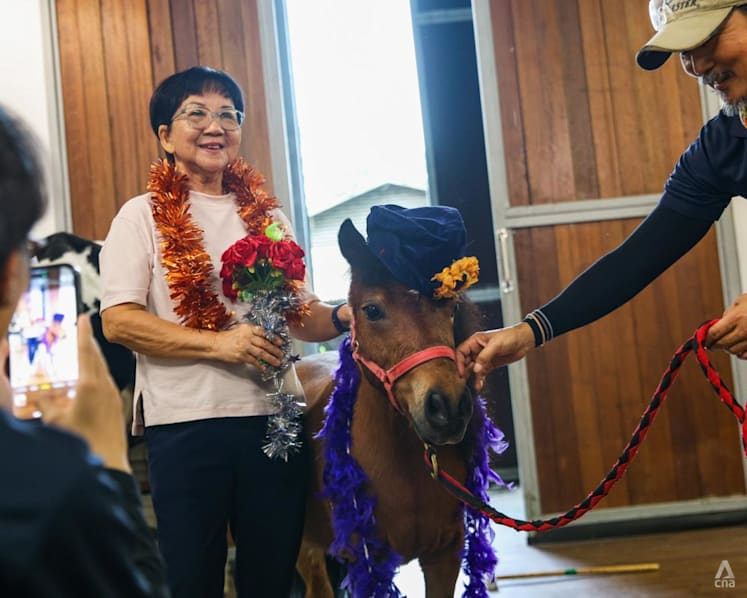
On the last day of the programme, the participants were allowed to invite a guest to the active ageing centre in Jurong West to interact with two miniature horses.
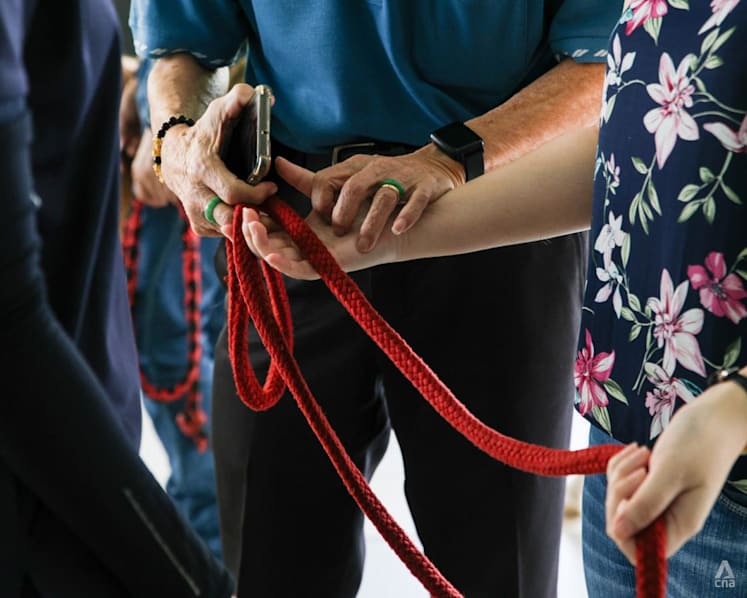
Mr Ang invited his daughter, Ms Doreen Ang, 38, a human resource executive who took leave from work to see firsthand what her father has been preoccupied with for the past 10 weeks.
He showed her how to adopt a relaxed posture while holding the lead rope as well as where to stand when introducing herself to the horses.
Ms Ang said that her father looked forward to the sessions every week and would share photos of himself with the horses in the family chat group on the phone.
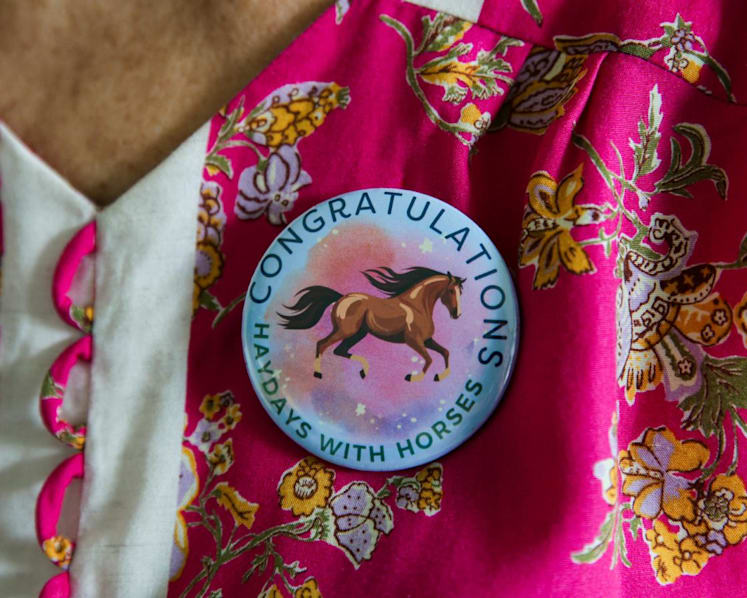
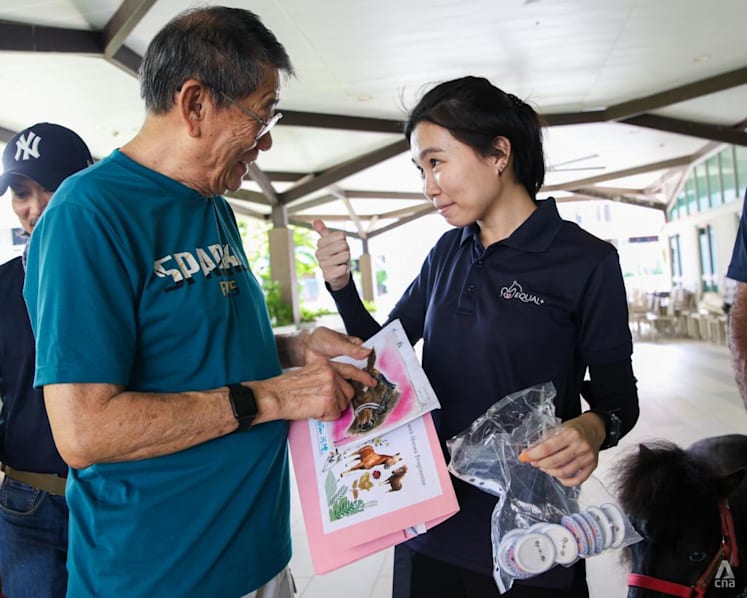
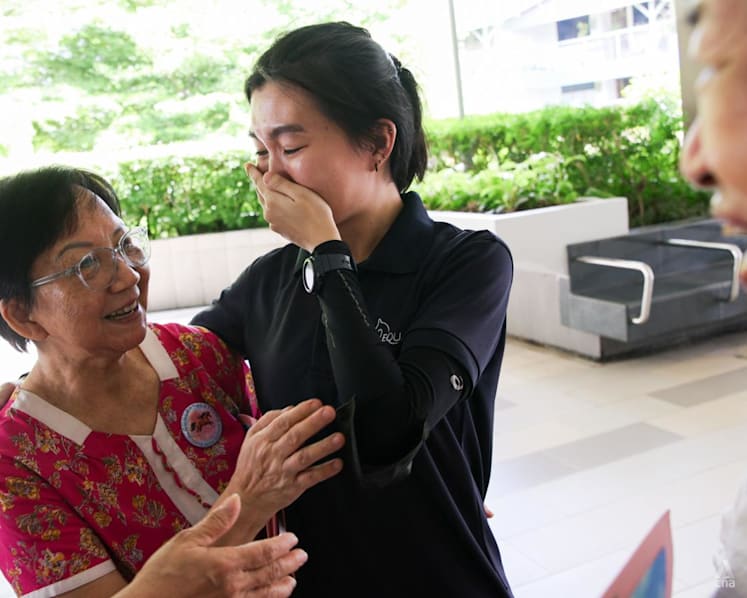
Mdm Chow took along her 16-year-old grandson Brandon Sim, who got to see his grandmother move with ease around the horses.
She instructed him to say the horse’s name when approaching it and introduce himself.
“She knows what she’s doing,” he said proudly.
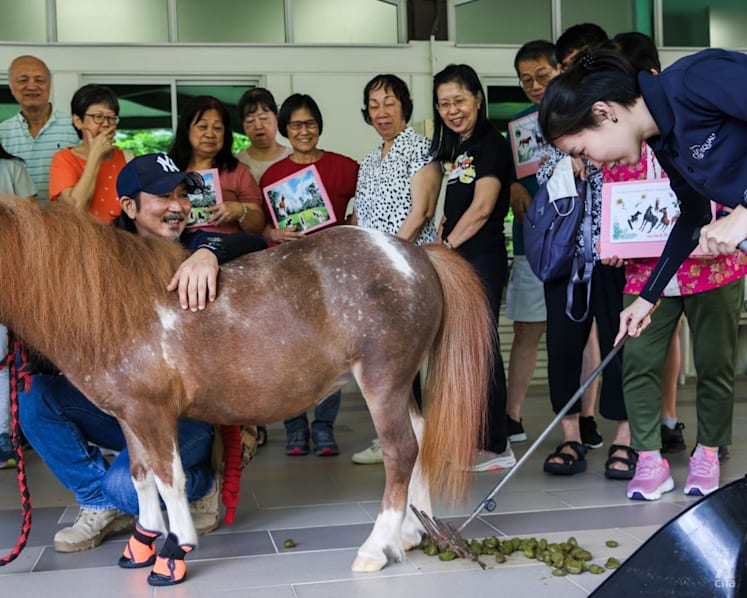
When it was time for a final group photo, the trainers positioned the horses in front of the seniors and their guests.
And as if right on cue, Ginger the miniature horse delivered its parting gift – a sizeable poop drop, just as the photo was being taken.
Laughter broke out all around and someone in the group quipped that everyone received some “good luck” to end the day.
Related:
Inside a dragon kiln where temperatures go up to 1,300°C
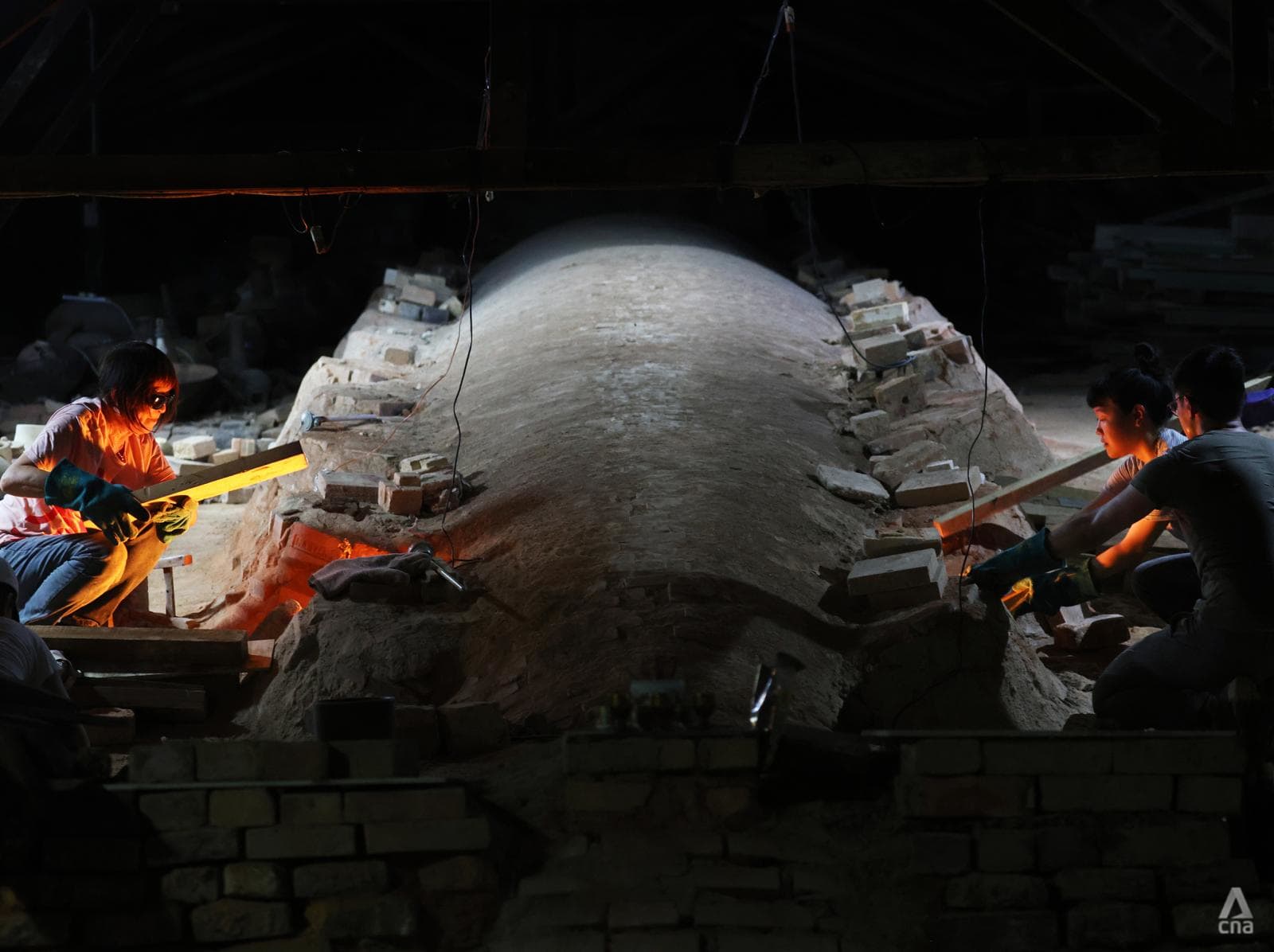


Nestled in an industrial estate in the western part of Singapore is an 84-year-old dragon kiln, the oldest and the only operational dragon kiln in the country.
Built in 1940, the kiln at Thow Kwang Pottery Jungle was originally used for the mass production of household and industrial items such as cups and flower pots.
Over the decades, the place has evolved into a community space, now offering classes and events for potters to hone their craft.
CNA TODAY joined the potter community for a wood-firing session that happens only two or three times a year.
In Pixels takes you through the experience, as new and seasoned potters bond over fire and perspiration, creating unique works of art.
PRAYERS TO THE "KILN GOD"
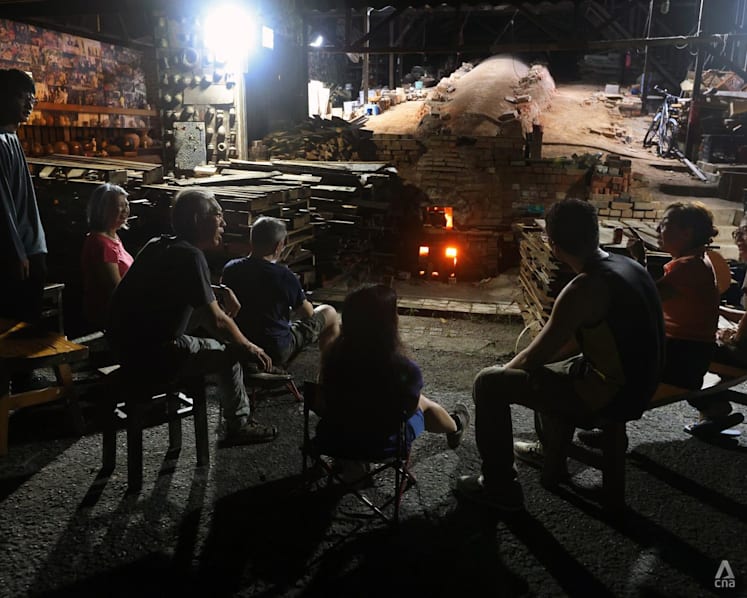
At Thow Kwang Pottery Jungle, which is located a short distance from Nanyang Technological University, a group of around 30 people gathered on a Friday last month in front of the kiln.
This was at the request of the owners, Mr Tan Teck Yoke, 68, and his wife Yulianti Tan, 66.
A prayer ceremony to the "kiln god" was about to begin.
“We are praying to the ‘kiln god’ for a successful firing, for the pieces to achieve the desired effects,” Mr Tan explained to the enthusiastic participants.
To this, the crowd responded by shouting, “Heng, ong, huat, ah,” a phrase in the Chinese dialect of Hokkien that collectively means wishing for good fortune.
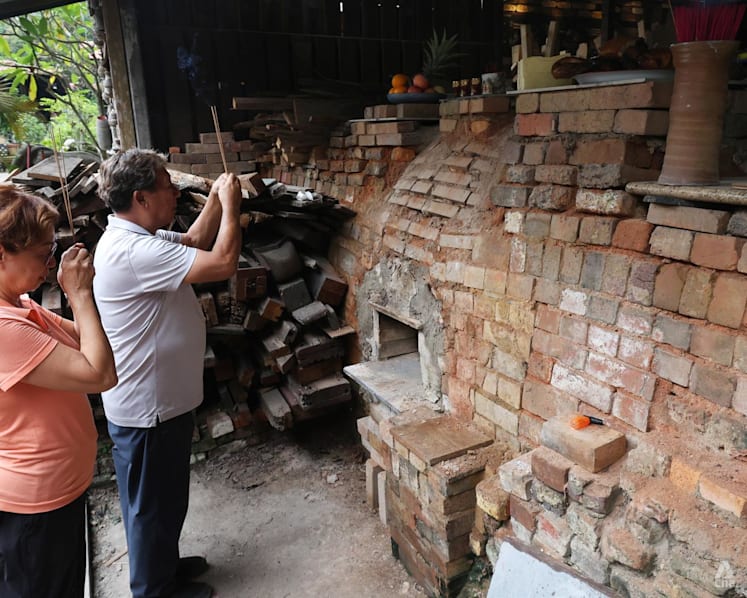
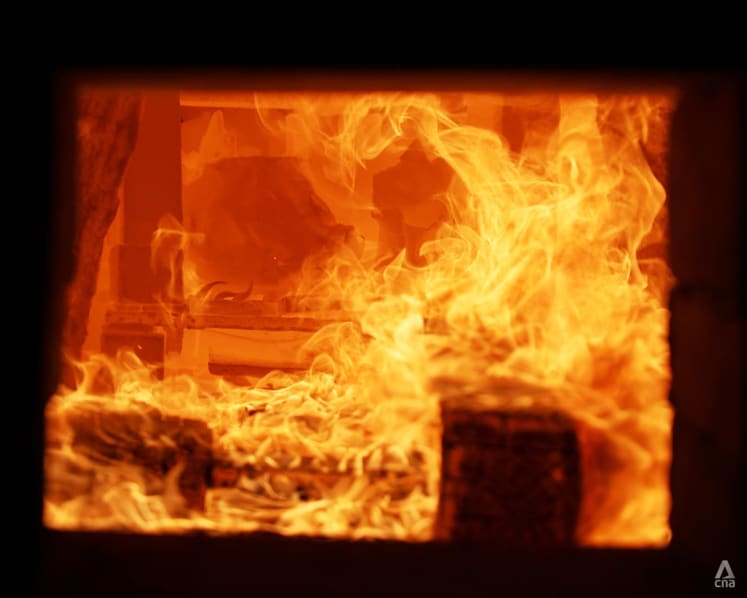
After the prayers were done, the fire box, which is a small opening at the front of the kiln, was lit.
The participants each picked up a piece of wood to throw into the fire, hoping to add more "luck" to the process.
The dragon kiln was bought by Mr Tan’s father in 1965 and has been owned by the family since then.
It sits on a slope, is 27-metres long, 2-metres wide and curves around the side, resembling the body of a dragon in Chinese mythology.
Its lengthy chambers are made out of bricks and there is a chimney at the end, located at the top of the slope.
The kiln can fit thousands of pieces of ceramic items, depending on the size of the pots.
For this firing session, around 400 to 500 pieces were loaded in the kiln.
NEW WAYS TO IMPROVE PROCESS
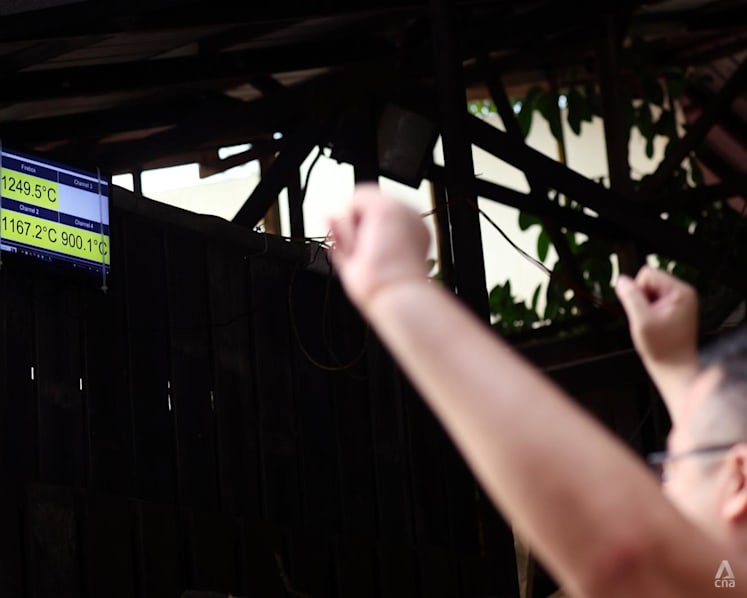
Temperatures in the dragon kiln can reach up to 1,300°C.
They can fluctuate significantly due to the shape of the furnace and the use of wood as a fuel.
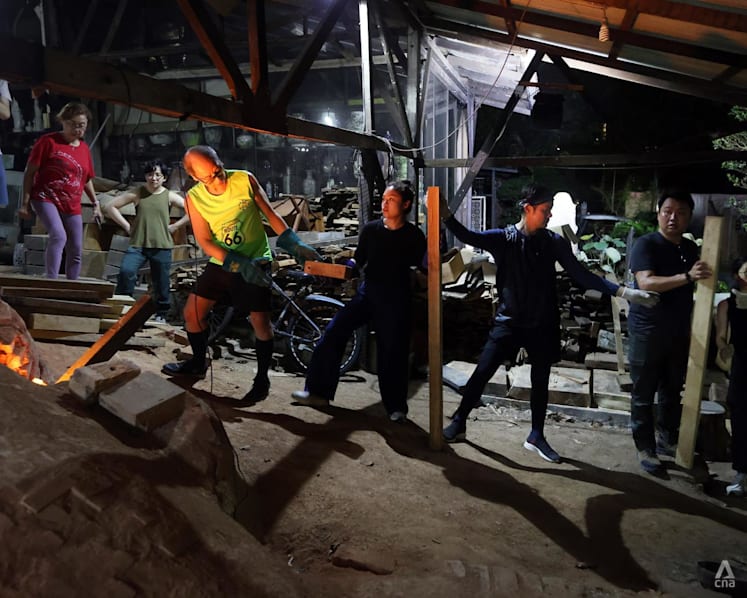
That is why one of the most crucial parts of the process is to monitor the temperature for all three days of the firing session.
Mr Chua Hee Lai, who is in his 50s and a hobbyist-turned-kiln master, helped to plan and lead each firing session.
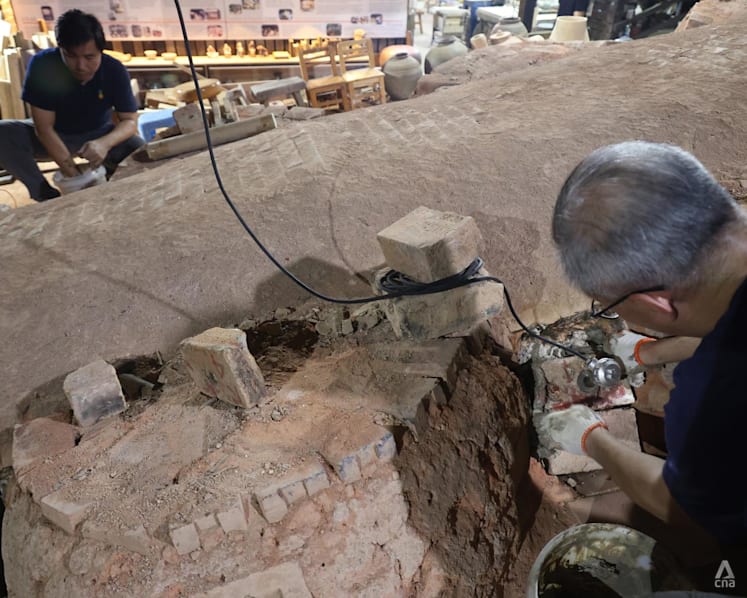
In 2019, Mr Chua, with the help of another potter, introduced a digital monitoring system that allowed them to track the temperatures remotely and give instructions to the potters doing shift work on site.
Previously, they had to monitor the temperature by looking at the colour of the flame or record temperatures manually and then draw up prediction charts – a process that requires them to be on site for longer periods of time.
THE "KAMPUNG SPIRIT"
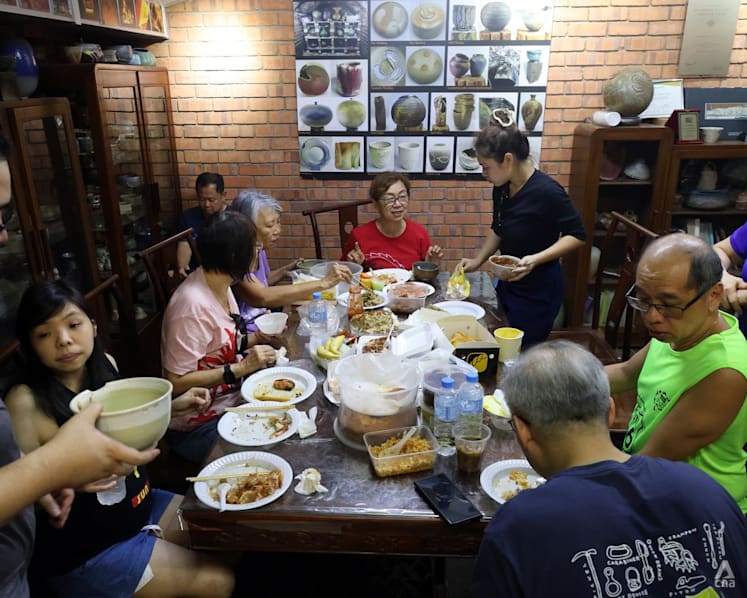
Advertising executive Vanessa Low and product manager Goh Wei Ting, both 31, have been practising pottery at another pottery studio for around five years and this was their first time taking part in the wood-firing process.
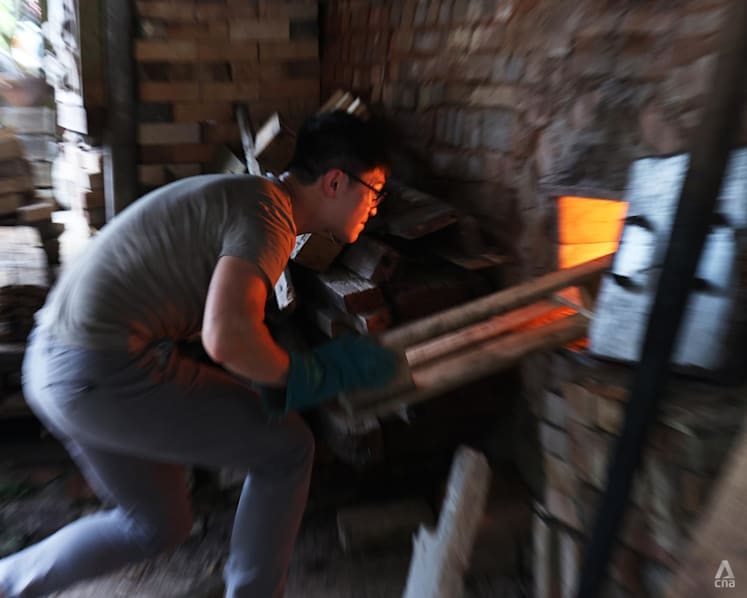
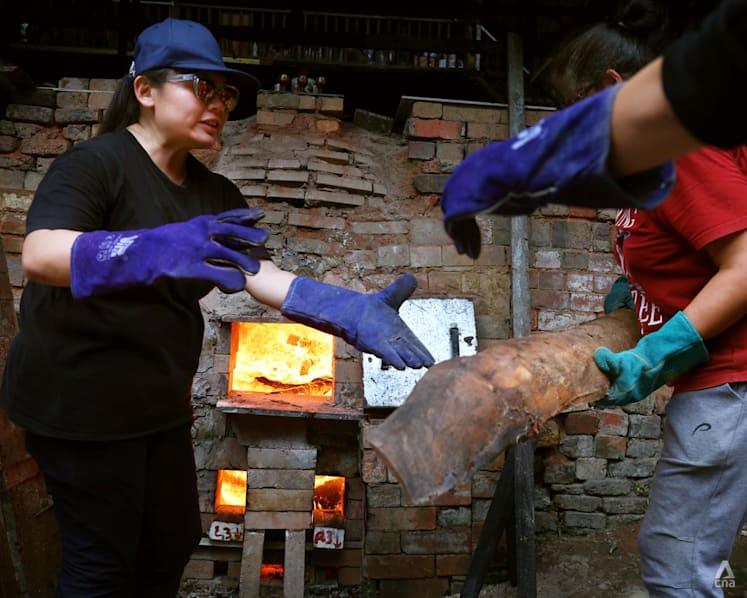
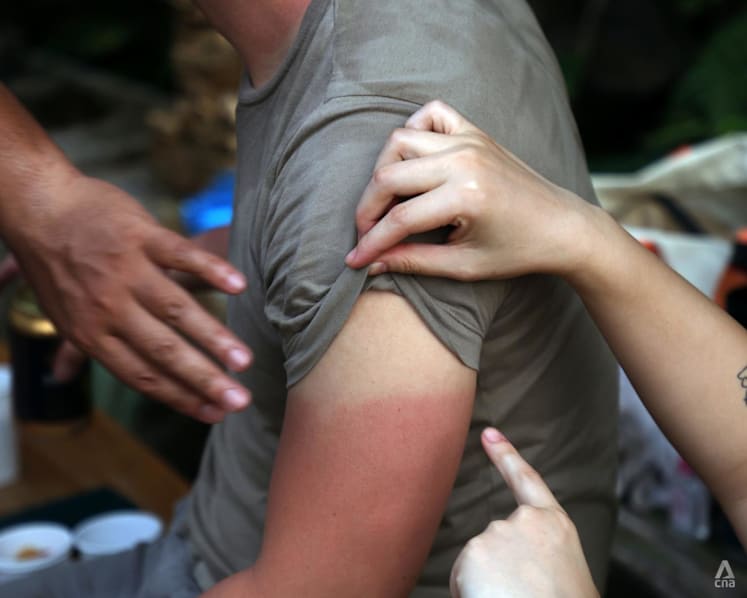
Compared to a regular firing in an electric or gas kiln, wood-firing is "tiring and physically demanding", Mr Goh said.
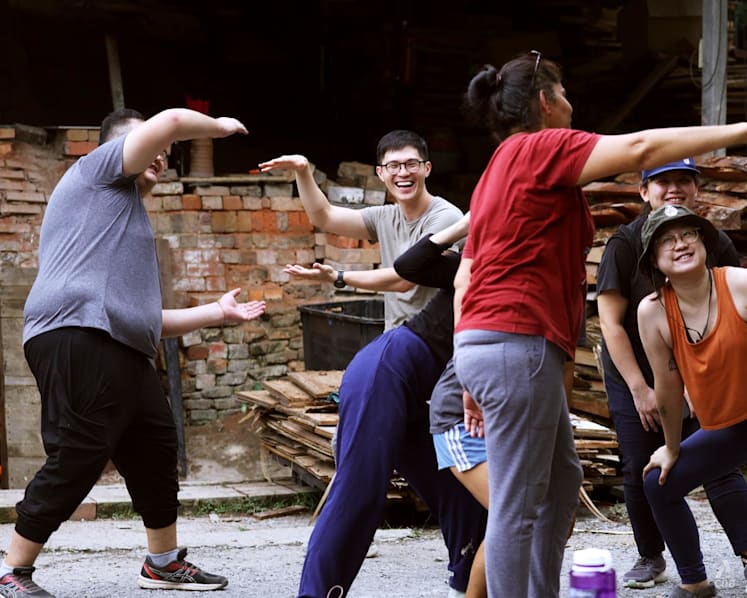
However, they were buoyed by the “kampung spirit” or the sense of camaraderie that came about as participants laboured together.
“You just don’t feel tired, you just do (the work),” Mr Goh added.
OPENING OF THE KILN
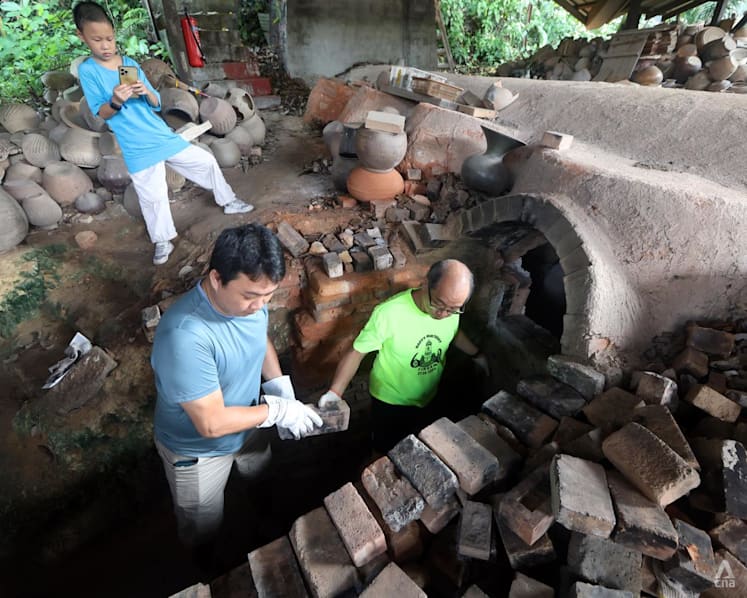
Six days after the firing at the dragon kiln, the participants returned to open the kiln and check on their art pieces.
“Shall we form a chain?” someone suggested to facilitate the removal of the brick walls.
Without hesitation, a human chain quickly formed as the potters unsealed the kiln, one brick at a time.
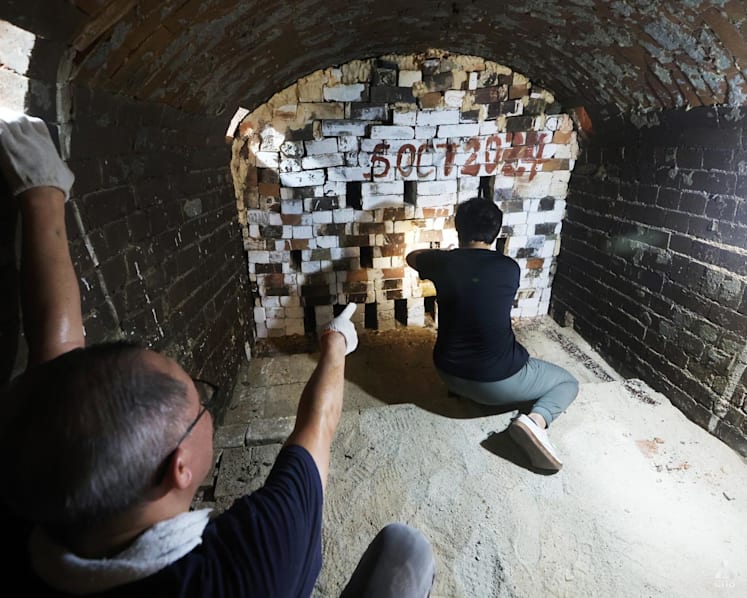
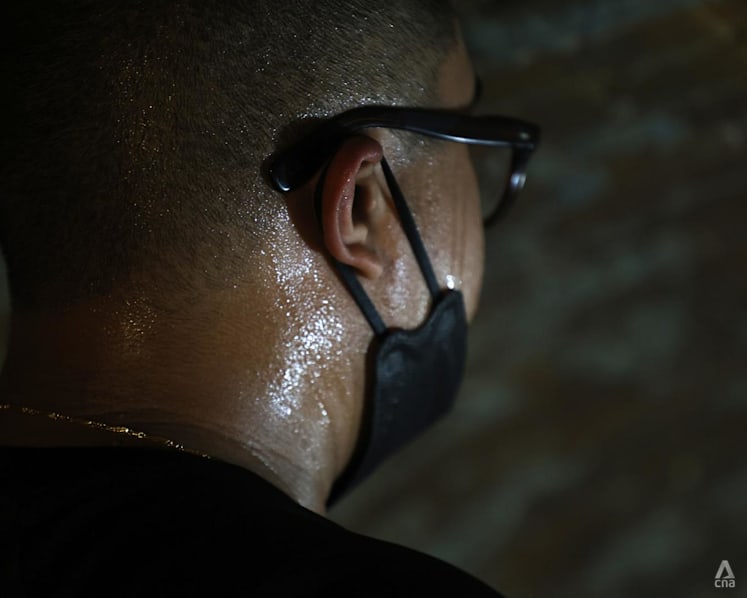
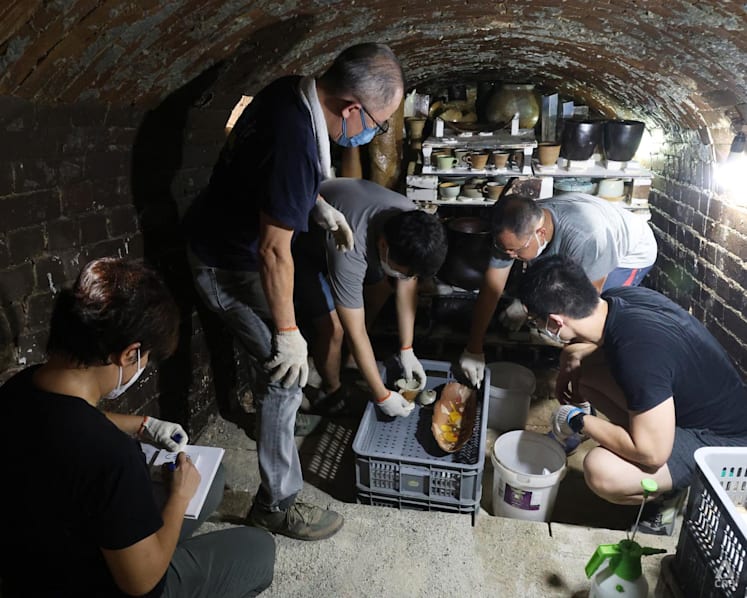
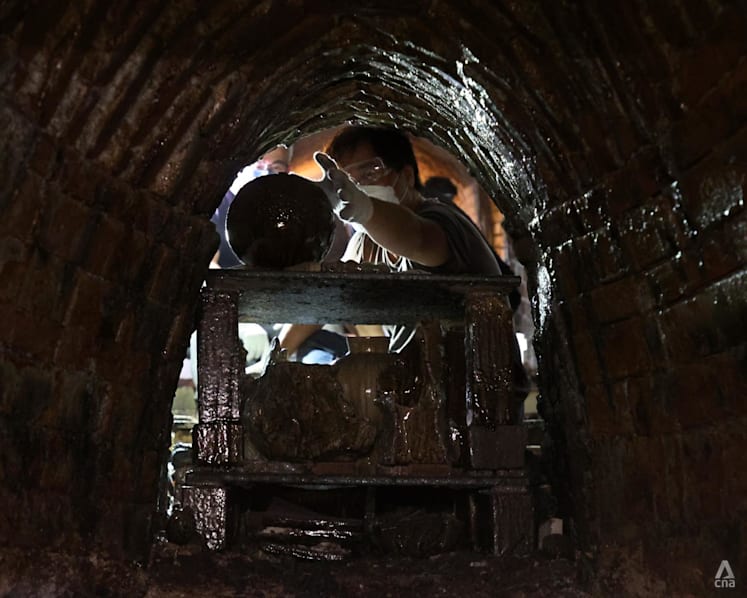
A collective “wow” sounded as the final bricks were removed, revealing the final outcome of the nine-day process that comprised three days of firing and six days of cooling.
The potters carefully removed the art pieces from the shelves, while admiring the effects that the fire had on their work.
Related:
Meet the 70-year-old lorry driver who is also a 'kite doctor'


Rolling up to Marina Barrage with a trolley bag full of handmade kites and repair tools, Mr Tan Poh Wah had one clear mission for the day: To share his love of kite-flying with others.
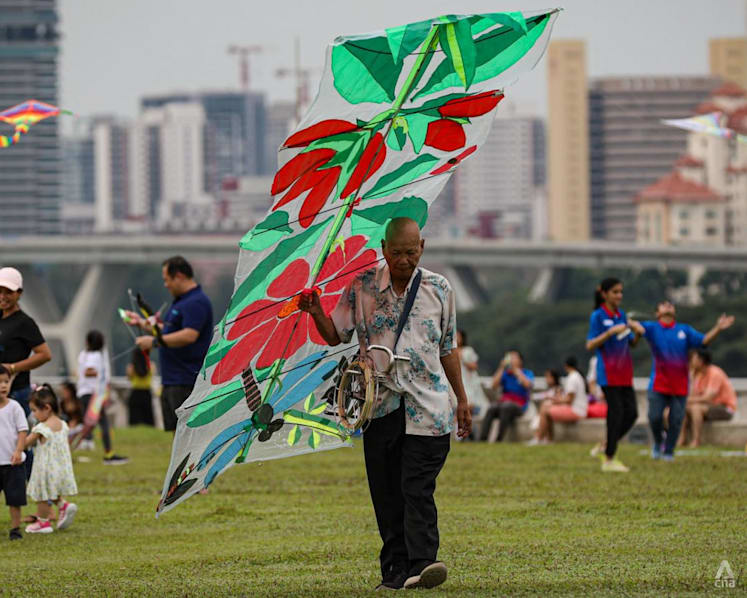
Known informally as the “kite doctor” among the regular visitors there, the 70-year-old spends most Sundays repairing kites or offering his handmade ones – mostly for free – to people at the open-air space that is the venue of Singapore's largest reservoir.
“Watching people fly my kites makes me really happy,” Mr Tan said.
This weekend, In Pixels speaks to four enthusiasts to find out what excites them about kite-flying.
A FAMILIAR FIGURE
Shortly after Mr Tan turned up at Marina Barrage in the Marina Bay area, a handful of people who wanted their kites repaired immediately made a beeline towards him.
They offered him drinks and snacks to thank him for his service.
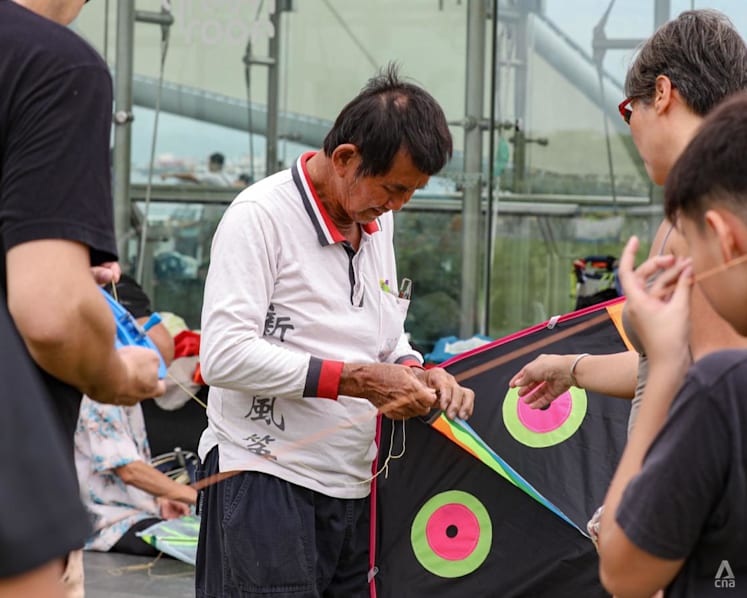
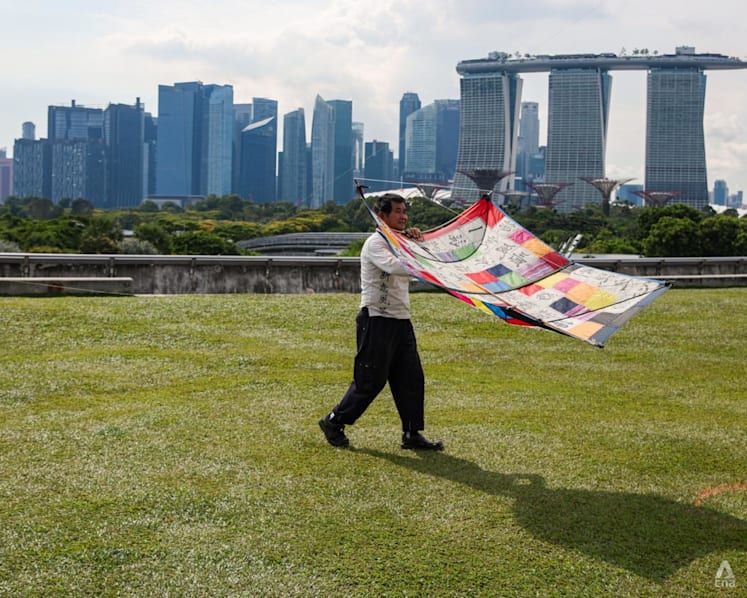
When he was done with the repairs, Mr Tan pulled a kite from his bag and launched it to the sky.
He flew it with ease, strolling around the field, eager to find someone who will take the kite as a gift.
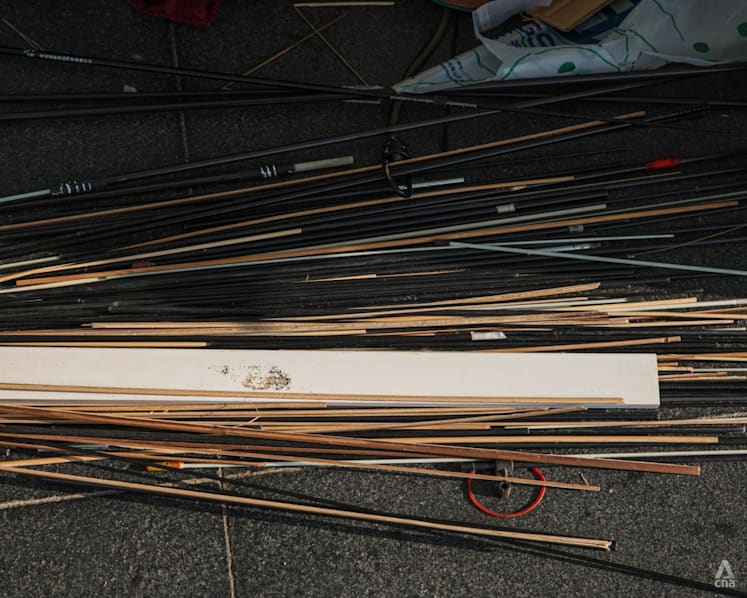
His masterpieces are made mostly from recycled materials including plastic bags, discarded blinds, banners and umbrellas.
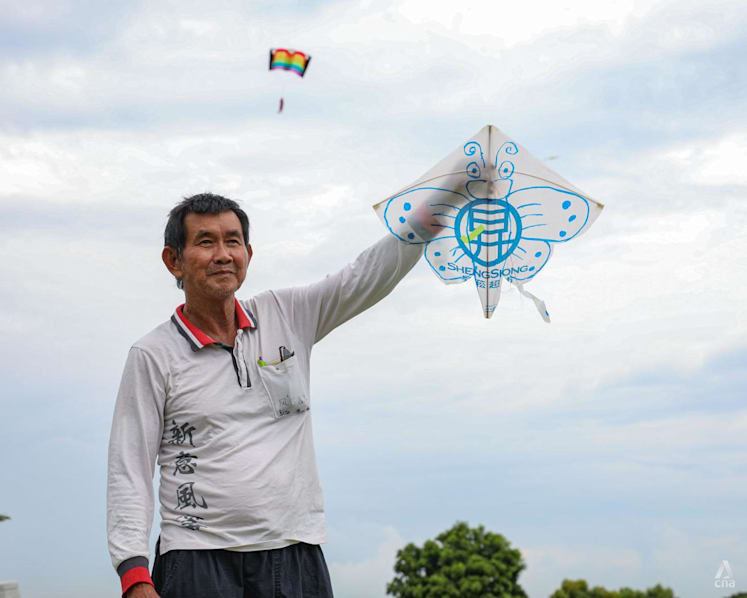
Mr Tan is part of a group known as Singapore Original Kites, an informal gathering of adults in their 60s and 70s who share the same interest in making and flying kites.
A semi-retired Chinese physician Ong Cheng Her, 75, is the founder of the group.
He said that the only prerequisite to join the group is one’s ability to make a kite from scratch.
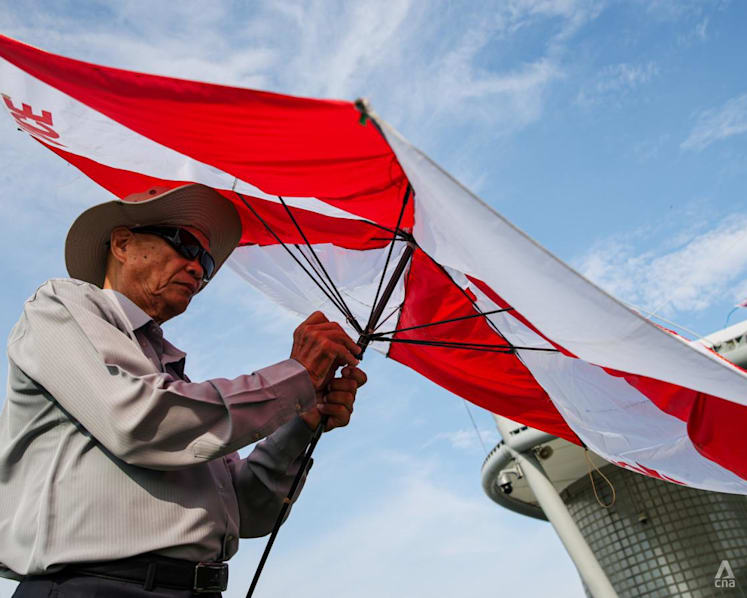
He proudly showed CNA TODAY one of his creations, a red and white "umbrella kite".
“Umbrellas are used for shade and rain protection, so why hasn’t anyone flown an umbrella kite? I decided to take on the challenge,” Mr Ong added.
HIS WORKSPACE AT HOME
As for Mr Tan, he is not retired, so flying and making kites is what he does only on Sundays.
He works six days a week as a lorry driver.
“I work to live, to fill my stomach so I can make kites.”
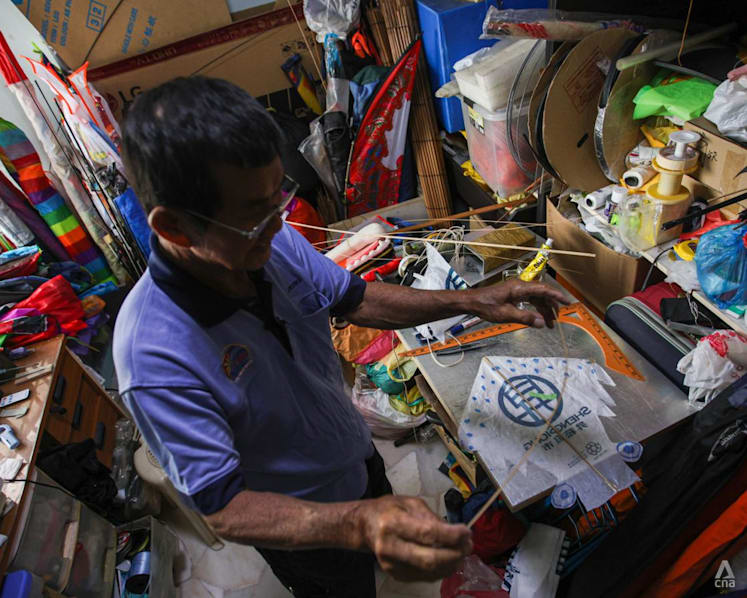
Stepping into his flat, Mr Tan led us to his "studio", which is a room filled with a bountiful supply of kites and raw materials.
He described his workspace as a “chaotic but organised mess”.
“My wife sometimes asks why I collect so many umbrellas, but she doesn’t interfere much because she knows I enjoy making these things.”
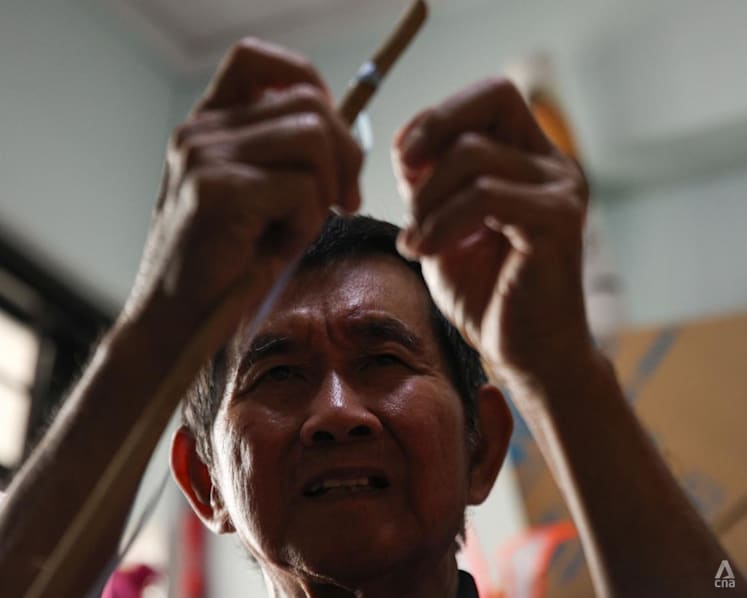
Mr Tan has loved kite flying since he was a child, but it was not until he was in his 30s that he took to making kites himself.
A self-taught craftsman, he said that he learnt how to make kites by observing other kite-makers whenever an opportunity comes along.
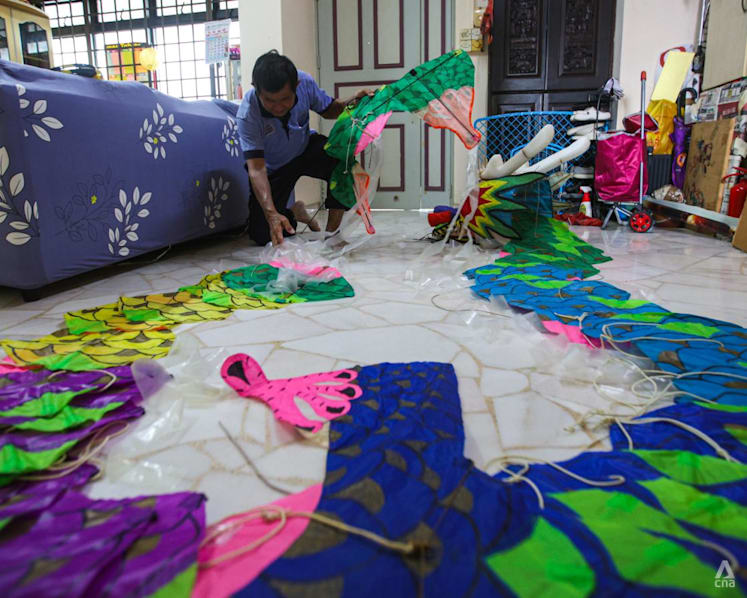
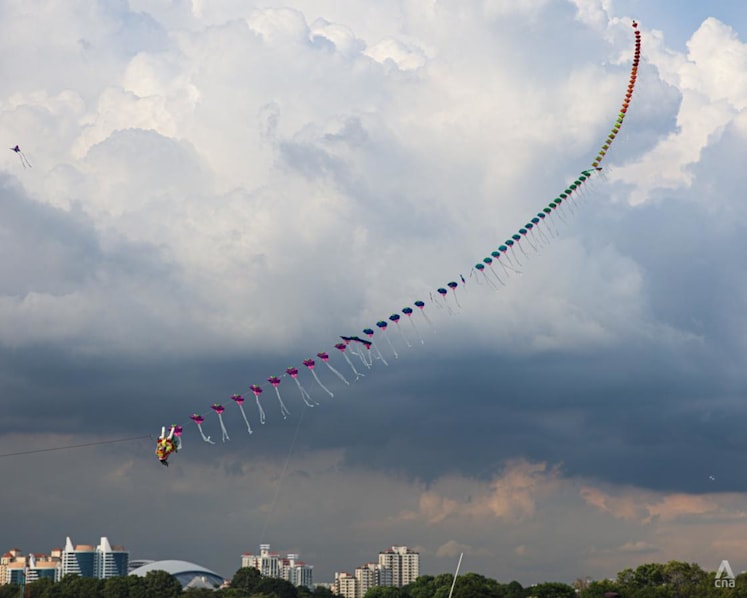
Recently, Mr Tan finished repairing a 70m-long "dragon kite" that he first constructed in 2000. It broke at a kite festival in Taiwan in 2019 and required extensive repairs.
After CNA TODAY approached him for an interview, Mr Tan said that he found new inspiration to repair the kite, which took him four Sundays to complete.
It was obvious that he is most proud of this kite among the many in his collection.
“Anyone who hasn't made a dragon or a phoenix kite isn't truly considered a kite maker,” he said, adding that these long kites are made up of many different sections and each needed to be crafted with great precision before they are finally stitched together.
"GIANTS" IN THE SKY
Over at East Coast Park, another group of kite enthusiasts have gathered and their presence could be spotted from afar.
The kites they have taken out, called "inflatable show kites", are gigantic balloon-like kites that are typically several metres in length when inflated.
Traditional kites rely on rigid frames for support, but inflatable show kites have no hard structures. They inflate as they catch on the wind and have to be anchored to the ground.
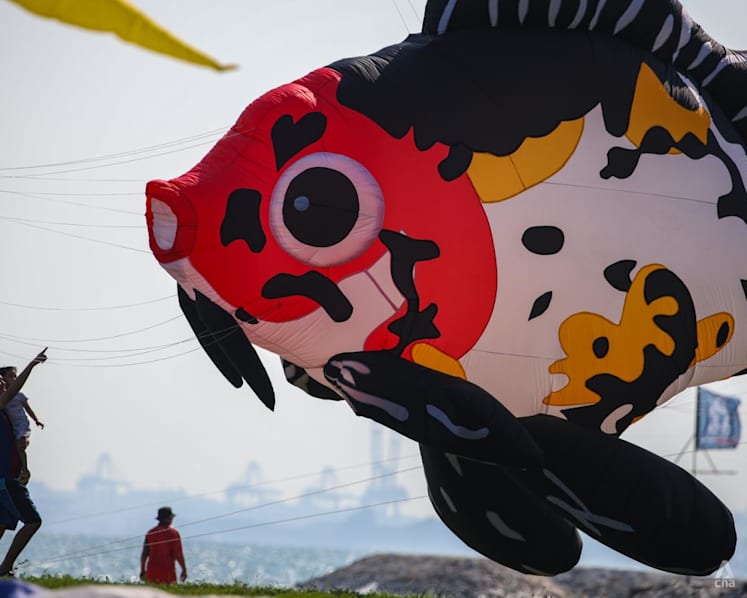
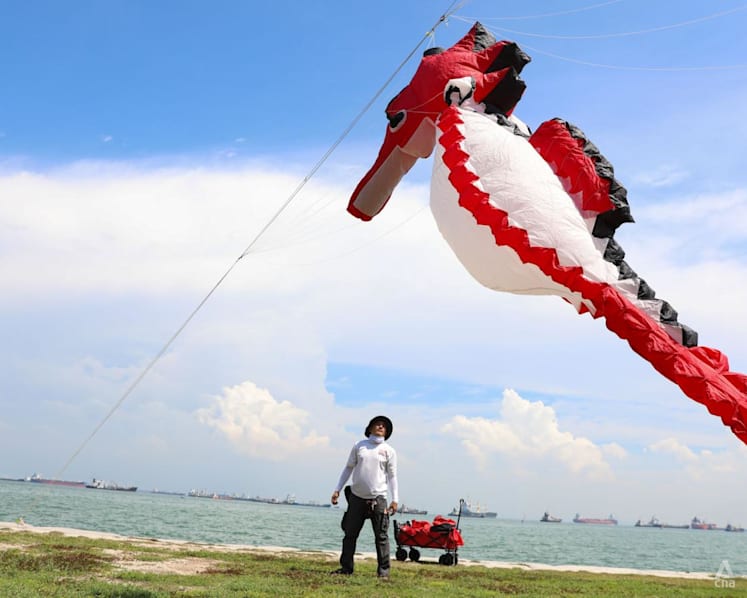
Project coordinator Johnny Yap and his wife Maggie Mok, a homemaker, both 51, are the founders of Show Kites Singapore, a group of people who are into these inflatable show kites.
The duo's interest in this started nearly 20 years ago when they took their children kite-flying.
In the end, it was the couple themselves who got hooked on the activity.
“We started flying bigger and bigger kites and before long, we realised that stick kites have a limit,” Mr Yap said.
This led them to explore inflatable ones in 2009 and they came across these kites online before buying their first. The sky is the limit when it comes to the sizes of such kites.
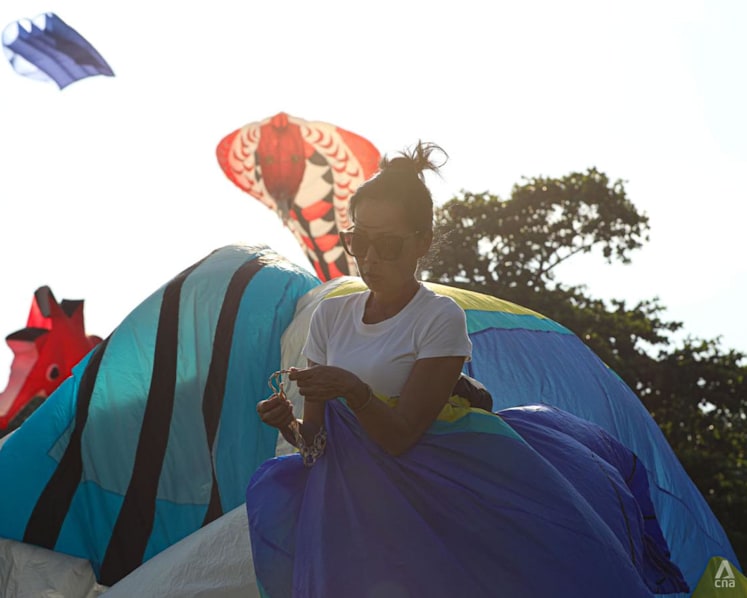
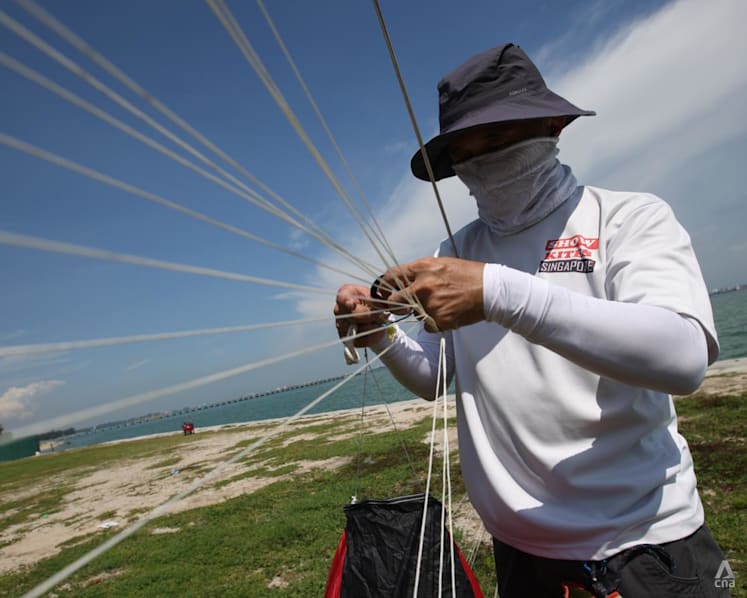
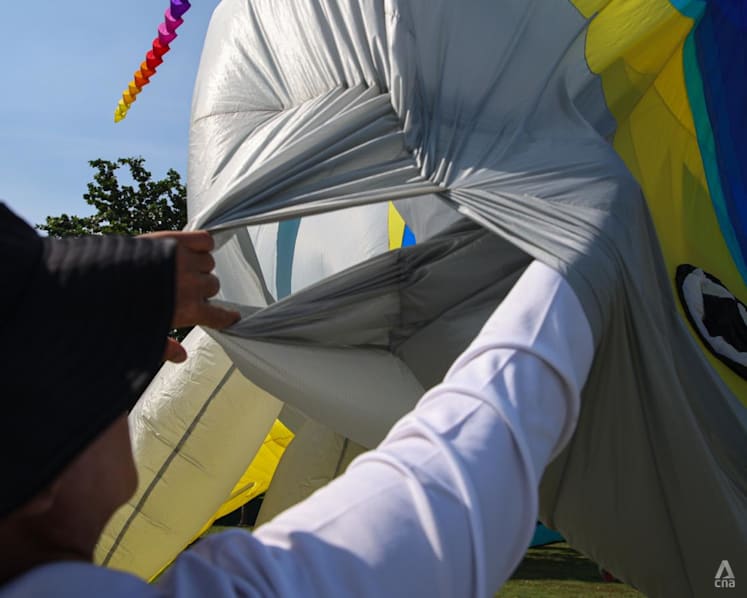
As their interests grew, Mr Yap and Ms Mok started travelling overseas to take part in international kite festivals.
In September, they were at the International Kite Festival in Melaka, Malaysia, where they flew an inflatable show kite in the form of Singapore's tourism icon, the Merlion.
Related:
Inside a dragon kiln where temperatures go up to 1,300°C
Nestled in an industrial estate in the western part of Singapore is an 84-year-old dragon kiln, the oldest and the only operational dragon kiln in the country.
Built in 1940, the kiln at Thow Kwang Pottery Jungle was originally used for the mass production of household and industrial items such as cups and flower pots.
Over the decades, the place has evolved into a community space, now offering classes and events for potters to hone their craft.
CNA TODAY joined the potter community for a wood-firing session that happens only two or three times a year.
In Pixels takes you through the experience, as new and seasoned potters bond over fire and perspiration, creating unique works of art.
PRAYERS TO THE "KILN GOD"
At Thow Kwang Pottery Jungle, which is located a short distance from Nanyang Technological University, a group of around 30 people gathered on a Friday last month in front of the kiln.
This was at the request of the owners, Mr Tan Teck Yoke, 68, and his wife Yulianti Tan, 66.
A prayer ceremony to the "kiln god" was about to begin.
“We are praying to the ‘kiln god’ for a successful firing, for the pieces to achieve the desired effects,” Mr Tan explained to the enthusiastic participants.
To this, the crowd responded by shouting, “Heng, ong, huat, ah,” a phrase in the Chinese dialect of Hokkien that collectively means wishing for good fortune.
After the prayers were done, the fire box, which is a small opening at the front of the kiln, was lit.
The participants each picked up a piece of wood to throw into the fire, hoping to add more "luck" to the process.
The dragon kiln was bought by Mr Tan’s father in 1965 and has been owned by the family since then.
It sits on a slope, is 27-metres long, 2-metres wide and curves around the side, resembling the body of a dragon in Chinese mythology.
Its lengthy chambers are made out of bricks and there is a chimney at the end, located at the top of the slope.
The kiln can fit thousands of pieces of ceramic items, depending on the size of the pots.
For this firing session, around 400 to 500 pieces were loaded in the kiln.
NEW WAYS TO IMPROVE PROCESS
Temperatures in the dragon kiln can reach up to 1,300°C.
They can fluctuate significantly due to the shape of the furnace and the use of wood as a fuel.
That is why one of the most crucial parts of the process is to monitor the temperature for all three days of the firing session.
Mr Chua Hee Lai, who is in his 50s and a hobbyist-turned-kiln master, helped to plan and lead each firing session.
In 2019, Mr Chua, with the help of another potter, introduced a digital monitoring system that allowed them to track the temperatures remotely and give instructions to the potters doing shift work on site.
Previously, they had to monitor the temperature by looking at the colour of the flame or record temperatures manually and then draw up prediction charts – a process that requires them to be on site for longer periods of time.
THE "KAMPUNG SPIRIT"
Advertising executive Vanessa Low and product manager Goh Wei Ting, both 31, have been practising pottery at another pottery studio for around five years and this was their first time taking part in the wood-firing process.
Compared to a regular firing in an electric or gas kiln, wood-firing is "tiring and physically demanding", Mr Goh said.
However, they were buoyed by the “kampung spirit” or the sense of camaraderie that came about as participants laboured together.
“You just don’t feel tired, you just do (the work),” Mr Goh added.
OPENING OF THE KILN
Six days after the firing at the dragon kiln, the participants returned to open the kiln and check on their art pieces.
“Shall we form a chain?” someone suggested to facilitate the removal of the brick walls.
Without hesitation, a human chain quickly formed as the potters unsealed the kiln, one brick at a time.
A collective “wow” sounded as the final bricks were removed, revealing the final outcome of the nine-day process that comprised three days of firing and six days of cooling.
The potters carefully removed the art pieces from the shelves, while admiring the effects that the fire had on their work.
Related:
Meet the 70-year-old lorry driver who is also a 'kite doctor'
Rolling up to Marina Barrage with a trolley bag full of handmade kites and repair tools, Mr Tan Poh Wah had one clear mission for the day: To share his love of kite-flying with others.
Known informally as the “kite doctor” among the regular visitors there, the 70-year-old spends most Sundays repairing kites or offering his handmade ones – mostly for free – to people at the open-air space that is the venue of Singapore's largest reservoir.
“Watching people fly my kites makes me really happy,” Mr Tan said.
This weekend, In Pixels speaks to four enthusiasts to find out what excites them about kite-flying.
A FAMILIAR FIGURE
Shortly after Mr Tan turned up at Marina Barrage in the Marina Bay area, a handful of people who wanted their kites repaired immediately made a beeline towards him.
They offered him drinks and snacks to thank him for his service.
When he was done with the repairs, Mr Tan pulled a kite from his bag and launched it to the sky.
He flew it with ease, strolling around the field, eager to find someone who will take the kite as a gift.
His masterpieces are made mostly from recycled materials including plastic bags, discarded blinds, banners and umbrellas.
Mr Tan is part of a group known as Singapore Original Kites, an informal gathering of adults in their 60s and 70s who share the same interest in making and flying kites.
A semi-retired Chinese physician Ong Cheng Her, 75, is the founder of the group.
He said that the only prerequisite to join the group is one’s ability to make a kite from scratch.
He proudly showed CNA TODAY one of his creations, a red and white "umbrella kite".
“Umbrellas are used for shade and rain protection, so why hasn’t anyone flown an umbrella kite? I decided to take on the challenge,” Mr Ong added.
HIS WORKSPACE AT HOME
As for Mr Tan, he is not retired, so flying and making kites is what he does only on Sundays.
He works six days a week as a lorry driver.
“I work to live, to fill my stomach so I can make kites.”
Stepping into his flat, Mr Tan led us to his "studio", which is a room filled with a bountiful supply of kites and raw materials.
He described his workspace as a “chaotic but organised mess”.
“My wife sometimes asks why I collect so many umbrellas, but she doesn’t interfere much because she knows I enjoy making these things.”
Mr Tan has loved kite flying since he was a child, but it was not until he was in his 30s that he took to making kites himself.
A self-taught craftsman, he said that he learnt how to make kites by observing other kite-makers whenever an opportunity comes along.
Recently, Mr Tan finished repairing a 70m-long "dragon kite" that he first constructed in 2000. It broke at a kite festival in Taiwan in 2019 and required extensive repairs.
After CNA TODAY approached him for an interview, Mr Tan said that he found new inspiration to repair the kite, which took him four Sundays to complete.
It was obvious that he is most proud of this kite among the many in his collection.
“Anyone who hasn't made a dragon or a phoenix kite isn't truly considered a kite maker,” he said, adding that these long kites are made up of many different sections and each needed to be crafted with great precision before they are finally stitched together.
"GIANTS" IN THE SKY
Over at East Coast Park, another group of kite enthusiasts have gathered and their presence could be spotted from afar.
The kites they have taken out, called "inflatable show kites", are gigantic balloon-like kites that are typically several metres in length when inflated.
Traditional kites rely on rigid frames for support, but inflatable show kites have no hard structures. They inflate as they catch on the wind and have to be anchored to the ground.
Project coordinator Johnny Yap and his wife Maggie Mok, a homemaker, both 51, are the founders of Show Kites Singapore, a group of people who are into these inflatable show kites.
The duo's interest in this started nearly 20 years ago when they took their children kite-flying.
In the end, it was the couple themselves who got hooked on the activity.
“We started flying bigger and bigger kites and before long, we realised that stick kites have a limit,” Mr Yap said.
This led them to explore inflatable ones in 2009 and they came across these kites online before buying their first. The sky is the limit when it comes to the sizes of such kites.
As their interests grew, Mr Yap and Ms Mok started travelling overseas to take part in international kite festivals.
In September, they were at the International Kite Festival in Melaka, Malaysia, where they flew an inflatable show kite in the form of Singapore's tourism icon, the Merlion.
Related:
Inside a dragon kiln where temperatures go up to 1,300°C
Nestled in an industrial estate in the western part of Singapore is an 84-year-old dragon kiln, the oldest and the only operational dragon kiln in the country.
Built in 1940, the kiln at Thow Kwang Pottery Jungle was originally used for the mass production of household and industrial items such as cups and flower pots.
Over the decades, the place has evolved into a community space, now offering classes and events for potters to hone their craft.
CNA TODAY joined the potter community for a wood-firing session that happens only two or three times a year.
In Pixels takes you through the experience, as new and seasoned potters bond over fire and perspiration, creating unique works of art.
PRAYERS TO THE "KILN GOD"
At Thow Kwang Pottery Jungle, which is located a short distance from Nanyang Technological University, a group of around 30 people gathered on a Friday last month in front of the kiln.
This was at the request of the owners, Mr Tan Teck Yoke, 68, and his wife Yulianti Tan, 66.
A prayer ceremony to the "kiln god" was about to begin.
“We are praying to the ‘kiln god’ for a successful firing, for the pieces to achieve the desired effects,” Mr Tan explained to the enthusiastic participants.
To this, the crowd responded by shouting, “Heng, ong, huat, ah,” a phrase in the Chinese dialect of Hokkien that collectively means wishing for good fortune.
After the prayers were done, the fire box, which is a small opening at the front of the kiln, was lit.
The participants each picked up a piece of wood to throw into the fire, hoping to add more "luck" to the process.
The dragon kiln was bought by Mr Tan’s father in 1965 and has been owned by the family since then.
It sits on a slope, is 27-metres long, 2-metres wide and curves around the side, resembling the body of a dragon in Chinese mythology.
Its lengthy chambers are made out of bricks and there is a chimney at the end, located at the top of the slope.
The kiln can fit thousands of pieces of ceramic items, depending on the size of the pots.
For this firing session, around 400 to 500 pieces were loaded in the kiln.
NEW WAYS TO IMPROVE PROCESS
Temperatures in the dragon kiln can reach up to 1,300°C.
They can fluctuate significantly due to the shape of the furnace and the use of wood as a fuel.
That is why one of the most crucial parts of the process is to monitor the temperature for all three days of the firing session.
Mr Chua Hee Lai, who is in his 50s and a hobbyist-turned-kiln master, helped to plan and lead each firing session.
In 2019, Mr Chua, with the help of another potter, introduced a digital monitoring system that allowed them to track the temperatures remotely and give instructions to the potters doing shift work on site.
Previously, they had to monitor the temperature by looking at the colour of the flame or record temperatures manually and then draw up prediction charts – a process that requires them to be on site for longer periods of time.
THE "KAMPUNG SPIRIT"
Advertising executive Vanessa Low and product manager Goh Wei Ting, both 31, have been practising pottery at another pottery studio for around five years and this was their first time taking part in the wood-firing process.
Compared to a regular firing in an electric or gas kiln, wood-firing is "tiring and physically demanding", Mr Goh said.
However, they were buoyed by the “kampung spirit” or the sense of camaraderie that came about as participants laboured together.
“You just don’t feel tired, you just do (the work),” Mr Goh added.
OPENING OF THE KILN
Six days after the firing at the dragon kiln, the participants returned to open the kiln and check on their art pieces.
“Shall we form a chain?” someone suggested to facilitate the removal of the brick walls.
Without hesitation, a human chain quickly formed as the potters unsealed the kiln, one brick at a time.
A collective “wow” sounded as the final bricks were removed, revealing the final outcome of the nine-day process that comprised three days of firing and six days of cooling.
The potters carefully removed the art pieces from the shelves, while admiring the effects that the fire had on their work.
Related:
Meet the 70-year-old lorry driver who is also a 'kite doctor'
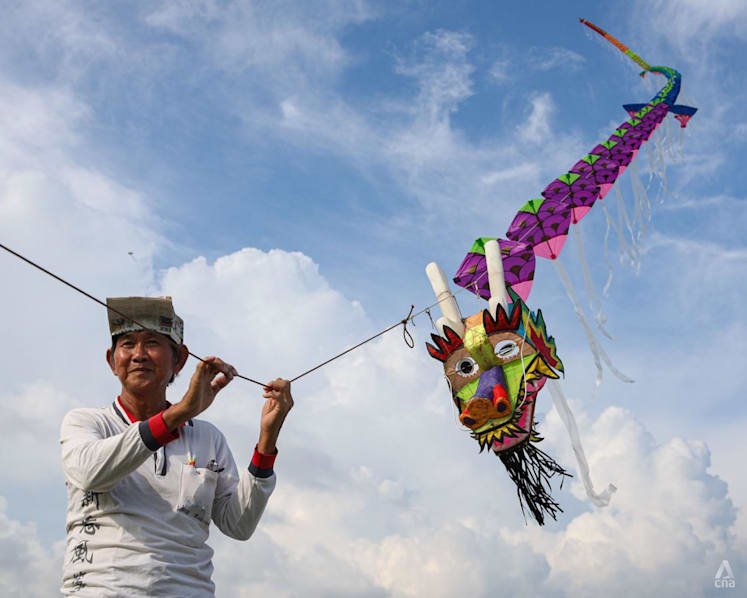
Kite maker Tan Poh Wah flying his handmade dragon kite at the Marina Barrage. (Photo: CNA/Nuria Ling)