

Developing the bonds that build bridges
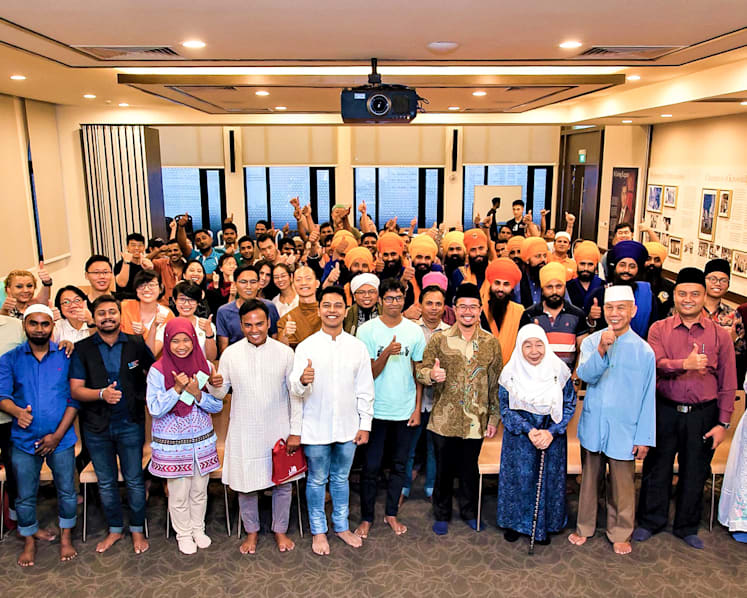
Muslims break fast with migrant workers and people of different faiths. Such efforts help forge cross-cultural ties and promote better interfaith understanding. Photo: Liyana Rosli Asmara


Brought to you by

When Ms Liyana Rosli Asmara was growing up, she saw how her parents built good relationships with their neighbours from different cultural backgrounds.
Today, she is following in their footsteps, making friends with her Indian and Chinese neighbours using that tried-and-trusted Singapore ice-breaker – food.
“We developed a mutual trust to the extent that I know I could trust my neighbour to check some ongoing renovation work at my house when my parents had to attend to other matters,” she said.
MAKING PERSONAL CONNECTIONS





While it may seem par for the course in Singapore, maintaining harmony in an open, multicultural society like ours requires constant attention and consistent effort, like what Ms Liyana is doing. She also works as an ustazah at the Islamic Religious Council of Singapore (MUIS)’s Harmony Centre and participates in interfaith dialogues and seminars.
According to a 2014 study by the Pew Research Centre, Singapore is the most religiously diverse country in the world. While our religious and cultural diversity is an undeniable strength, for it to continue in a challenging and complex global environment, open communication between groups is necessary to address misconceptions and find common ground.
The effort, however, is worthwhile in the long run. As Ms Liyana puts it: “It is critical to build friendship in times of peace, so we can stand together in times of crises.”
EMPHASISING COMMON GROUND
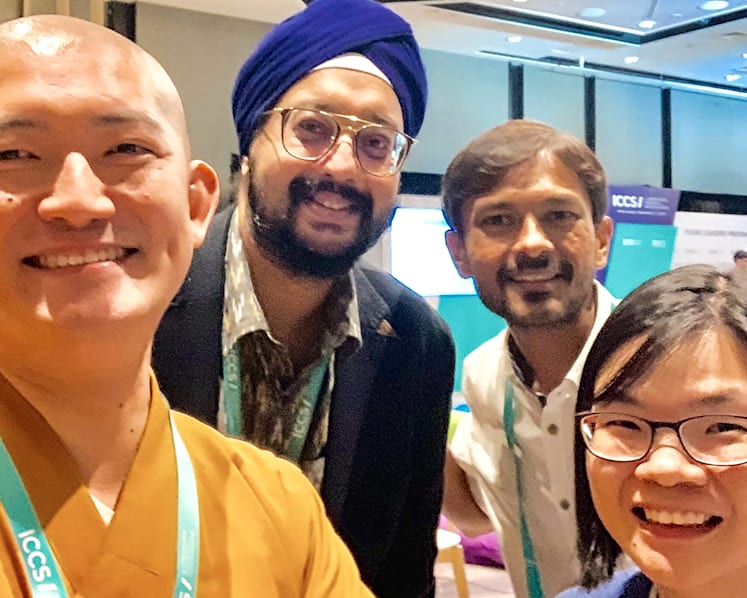
Mr Malminderjit Singh and participants of the Young Leaders Programme held during the sidelines of the International Conference on Cohesive Societies in June 2019 in Singapore. Photo: Malminderjit Singh
Other young Singaporeans like Mr Malminderjit Singh and Mr Ow Yeong Wai Kit are also doing their part to promote intercultural harmony, participating in – and initiating – a wide variety of programmes that help strengthen intercultural understanding and friendships.
Secretary of the Sikh Advisory Board and an active participant in various inter-cultural dialogues and activities, Mr Malminderjit came up with the idea of a social media campaign – OneHumanity SG.
Recalling the recent Christchurch mosque shootings and the Easter Day bombings in Sri Lanka, he saw these tragedies as examples of how divisive forces are driving societies apart. Hence, it is more important than ever to focus on our commonalities than our differences.
As a Sikh, Mr Malminderjit is keenly aware of how appearances can be misinterpreted. “Because Sikhs generally have an imposing physical presence, aided by our martial history and appearance of a grand turban and beard, you often hear examples of people mistakenly assuming that we have an aggressive stance,” he said.
In Singapore, this mistaken belief tends to manifest as a simple misunderstanding. However, Sikhs have been attacked overseas after being wrongly associated with terror groups.
Through his social media campaign, he hopes to highlight the similarities among Singaporeans of different racial and religious backgrounds.
“By encouraging people to post about a person from a different race or religion who has inspired them or made a positive difference in their lives, we want Singaporeans to constantly remember that they have more in common with people who may look different from them,” he added.
DIFFERENT PEOPLE, SIMILAR VALUES
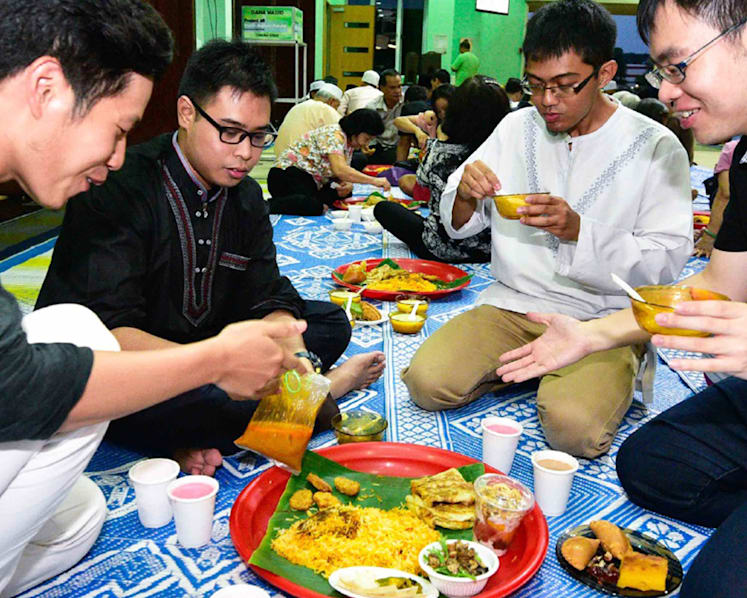
Mr Ow Yeong Wai Kit (right) breaking fast during Iftar. Photo: Ow Yeong Wai Kit
Mr Ow Yeong values the importance of promoting understanding among people from different religions and cultures, something he’s been passionate about from his younger days.
“As a Buddhist, I’m proud that some of my closest friends include Muslims, Christians, Hindus, as well as atheists and agnostics. Simply taking the time to talk about others’ faith (or why they don’t subscribe to one) can go a long way in preventing misunderstandings.”
In 2015, he compiled a poetry collection titled “From Walden to Woodlands” that saw people from different faiths contributing their work.
His partner for the project, Mr Muzakkir Samat, is a civil engineer and the former vice-president of NUS’ Muslim Society. Said Mr Ow Yeong: “We share common interests in poetry and nature, and more importantly, we are united by the same values, like respect and empathy.”
“This project has showed us the sheer range and diversity of perspectives about faith and nature in Singapore. The varied racial and religious backgrounds of our contributors ensured that voices from all walks of life in Singapore were represented—including migrant workers.”
The book has taken on even greater significance for its many contributors, by helping to promote inter-cultural understanding.
“It was especially apt that for quite a number of poets attending our launch, which was held at the Harmony Centre @ Masjid An-Nahdhah, it was the first time they had ever stepped into a mosque,” he said.
Like Mr Malminderjit, Mr Ow Yeong has attended the Young Leaders’ Programme (YLP) at the International Conference on Cohesive Societies (ICCS) that was held in Singapore recently. He was encouraged by the event which focused on “timely and urgent topics”, including inter-religious dialogue, social media and community discourse as well as community initiatives towards social cohesion.
SAFEGUARDING OUR SHARED FUTURE
Significant progress has been made over the years, but given the rapidly evolving nature of threats to social and cultural cohesion, sustained – and arguably increased efforts – are needed.
While government efforts do much to encourage social cohesion, Ms Liyana feels that the success of these initiatives ultimately depends on the collective will of Singaporeans.
“Social cohesion cannot be effectively built because we are told to do so, it has to be built because we strongly believe in doing so,” she said.
The continued success of these efforts – for generations to come – lies in the hands of young Singaporeans. According to Mr Malminderjit, current initiatives like the YLP will pay off down the road.
“Imagine a scenario in the future, where many of these young leaders – who would by then be leaders of their respective communities – could work together to resolve inter-community issues and collaborate because of the bonds formed during the YLP. Such an investment in safeguarding the future is priceless.”
Singapore’s religious leaders have come together to affirm our shared Commitment to Safeguard Religious Harmony, which articulates the shared values and actions Singaporeans can take to help foster a cohesive society. Visit the ircc.sg/commitment to find out more.




