Despite little financial reward, Singapore's criminal aid lawyers aren't giving up yet on access to justice for all
The Criminal Legal Aid Scheme started 40 years ago, supported by donations and lawyers' goodwill. Today, efforts to help the most vulnerable get better access to justice are expanding beyond the courtroom.
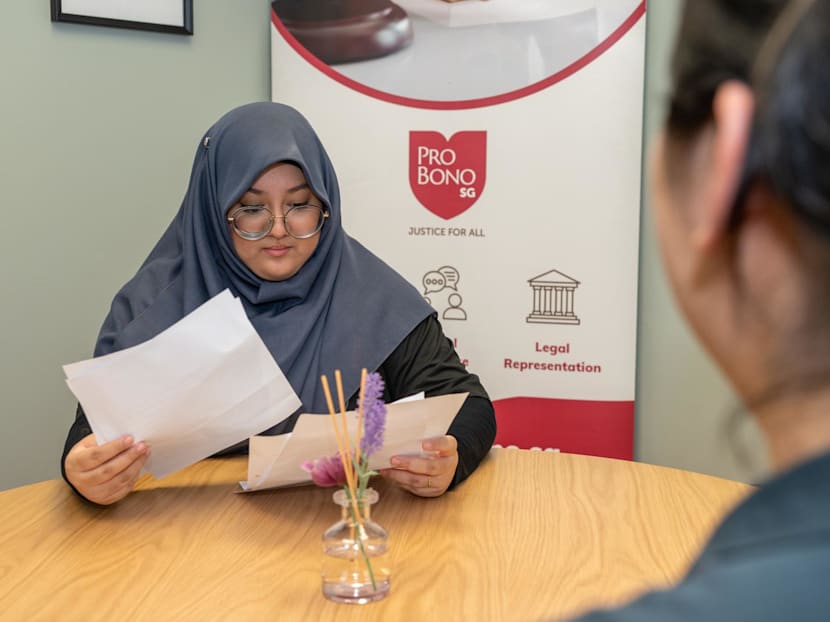
Pro Bono SG community lawyer Nur Shukrina at the charity organisation's Migrant Workers’ Law Centre @ MWC in Serangoon. (Photo: Pro Bono SG)

This audio is generated by an AI tool.


If one would like to serve vulnerable individuals and yet receive brickbats from the public for it, try being a defence lawyer for a pro bono criminal case.
At least that's the experience Mr Josephus Tan had when he handled a high-profile case in 2017, defending a couple who had abused their mentally disabled tenant. The victim, Annie Ee, later died.
The 46-year-old criminal defence lawyer told CNA TODAY that he remembered being verbally "slammed left, right and centre openly" for defending individuals perceived as so morally reprehensible. The couple was jailed after they pleaded guilty to charges of causing grievous hurt and causing grievous hurt with a weapon.
"Even (some of) my own family members and relatives stopped talking to me for a few months," said Mr Tan, who is managing director of Invictus Law.





"I was taken aback, because I thought they always knew what I've been doing for a living and have accepted it. But the Annie Ee case was really very different," he said, referring to the harrowing details of the treatment the victim had suffered at her abusers' hands.
While their reaction shook him "for the first time in my career", it also fortified his resolve to do pro bono work that ensures any accused person has access to justice via legal representation in court, regardless of their financial background and the charges they face.
Today, attitudes towards criminal defence and pro bono lawyers have shifted for the better, said Mr Tan.
This was most apparent to him earlier this year when he handled defence in the case of Megan Khung, the four-year-old child who was abused to death by her mother and her mother's boyfriend.
"I don't get that kind of vitriol or hatred as much (anymore), both on the ground and online."


In tandem with society's shifting attitude, the whole ecosystem surrounding the Criminal Legal Aid Scheme (CLAS) has also come a long way since it was first initiated by the Law Society of Singapore (LawSoc) 40 years ago.
When the scheme began in 1985, many lawyers in Singapore were generally reluctant to take up cases on a voluntary basis. This was just one of the many challenges prevalent in the scheme's formative years, highlighted by anecdotes from lawyers and pro bono pioneers in a book to commemorate CLAS' 40th anniversary.
The book was published earlier this year by Pro Bono SG – LawSoc's charity arm which, among other things, administers CLAS cases.
For instance, the team administering CLAS was so under-resourced in the past that they had to conduct interviews with legal aid applicants in waiting areas outside courtrooms because their office was not big enough.
Over the years, more resources were set aside to help the underprivileged get access to justice, and more lawyers became keen and willing to use their professional capability to help those in need.
Today, Pro Bono SG doesn't just represent the needy in courtrooms. The non-profit also organises legal clinics, provides legal advisory to charity organisations and does outreach work to vulnerable groups.
Ms Sadhana Rai, Pro Bono SG's chief representation officer, recalled that as a law student, despite feeling strongly about helping others, pro bono work was not on her radar as a means to do so.
"Now, you see this being so critical and core to school curriculums," she said. "We get a lot of students who write to us (Pro Bono SG) to ask: 'Can I do an internship with you?'"

SEEKING MEANING IN A RIGOROUS PROFESSION
Legal aid representation for the underprivileged segments of the community is administered mainly through the Public Defender's Office (PDO) and Pro Bono SG.
The PDO, set up in 2022, is a department under the Ministry of Law and staffed by full-time officers. It offers free or subsidised legal aid for Singapore citizens and permanent residents who are charged with non-capital criminal offences but are unable to afford legal representation.
It handles about 60 per cent of such CLAS cases.
The remainder of such cases, as well as other cases involving foreigners, are handled by Pro Bono SG via their small team of in-house lawyers or volunteer lawyers from private practice.
LEGAL AID SCHEME THROUGH THE YEARS
- 1985: The Criminal Legal Aid Scheme (CLAS) was piloted by the Law Society of Singapore (LawSoc) to assist underprivileged persons who needed legal services for criminal cases in Singapore
- 2007: LawSoc established the Pro Bono Services Office as a dedicated department coordinating and administering CLAS and other initiatives
- 2015: Government started to directly fund criminal defence aid through CLAS
- 2017: Pro Bono Services Office was corporatised (later rebranded as Pro Bono SG in 2022)
- 2022: Public Defender's Office was established, co-delivering criminal defence aid alongside Pro Bono SG
But what motivates such professionals in an industry already so notorious for unforgiving workloads as well as high burnout and turnover rates, to carve out otherwise billable hours to provide aid to the needy? Why do some, like Ms Rai and other full-time advocates, forgo more lucrative private practice altogether?
Quite simply, the answer is: meaning.
Mr Muslim Albakri, partner at Lighthouse Law, said: "(Pro bono work) helps keep me grounded and allows me to apply my legal expertise to real-world social issues in our community."
He makes it a point to take up two to three CLAS cases each year, on top of being involved in Peguam – a society of Malay-Muslim legal professionals running various initiatives to raise legal awareness and provide legal assistance to the community.
"Pro bono work (also) gives me the opportunity to improve the legal literacy of the people I have the privilege of helping," said the 38-year-old lawyer.
Private practice lawyers added that it can sometimes be challenging to find the balance between paid work and contributing to the society through CLAS cases.
Mr Tan from Invictus said that while pro bono work takes up about 30 per cent of his case load now, the ratio between pro bono cases and paid private practice ones when he first started out was about 80:20, to the extent that he spent some time teetering on bankruptcy.
"Over time I had to counterbalance the ratio to make the pro bono portion slightly lesser, but at least it's more sustainable in the long run," he said – a necessary move he made with a heavy heart.
Mr Sujesh Anandan, who was called to the bar in 2019, left private practice at the start of this year to join Pro Bono SG.
While he had "learnt a lot" from doing a wide variety of legal work in private practice, he said that he never really enjoyed them or felt passionate about it.
"I took some time off to think about what I wanted to do, what I really enjoyed in my legal career, what motivates me, what means the most to me. And Pro Bono was the answer to a lot of those things," he said.
Ms Rai too started off in private practice, until it came to a point where she "couldn't see the point", besides the financial remuneration, of the long hours that she put into her work.
She had toyed with the idea of leaving the profession altogether to work at an elephant sanctuary in Thailand, but was advised by a senior figure in the fraternity to put her professional abilities towards helping the needy.
"Some of my friends (in private practice) are earning a lot," she acknowledged. However, she has learnt not to compare herself to others but to focus on how her role in the non-profit organisation pays her more than enough to take care of her needs.
More importantly, she does not regret the move as it allows her to feel fulfilled in what she's doing.
"I do see that life is a bit different if you stay in private practice, but that's not something that moves me in any way."
UPS AND DOWNS OF A CRIMINAL LEGAL AID LAWYER
Taking on criminal defence cases can be mentally and emotionally challenging for any lawyer, but the burden can be heavier in pro bono cases as some clients are in more precarious positions.
Ms Rai said that her work can feel like being in the trenches, but it helps to be surrounded by like-minded individuals who can support one another as they fight for the same cause of helping the underprivileged.
"It's okay to be affected sometimes as long as you talk about it and you address it head-on," she said. "I think the problem comes when you don't express things and you internalise (them instead)."
Mr Muslim noted that beyond finding the bandwidth to juggle pro bono cases with his private practice cases, the other big challenge in doing such work is "the disparity between legal expectation and human need".
"Pro bono cases require a level of support that often goes beyond strict legal advice," he said. "We are often dealing with clients who are deeply vulnerable, unsophisticated, or struggling with language barriers."


Such clients also tend to need more than just legal advice or representation, these lawyers said.
For instance, Mr Anandan said that while he did not see pro bono cases as any different than those in private practice, he noted how some of his pro bono clients needed non-legal help such as registering their children for school while they are in remand.
Providing holistic help is something that Pro Bono SG is only able to do because it has a strong team and a network of partners ready to support their lawyers in areas outside of legal aid.
"Not all our lawyers may be aware of the (full range of) support that's available as well," said Mr Tanguy Lim, chief executive officer of Pro Bono SG.
"Our lawyers are … carving out very precious time from the paid work to do pro bono, so for them to take on the role of a social worker or counsellor is way beyond. That's where we (Pro Bono SG) can come in and provide value."
While pro bono cases can often be more emotionally taxing and complex, lawyers said that their extra efforts are more than worth it because they know that such work can have a deep impact on their clients – even if they are not always able to achieve the outcome clients are hoping for.
Mr Muslim remembers one case involving an individual who was assessed to have sub-normal intelligence. The individual repeatedly got in trouble with the law for selling tissue packets without a licence and lashing out when reprimanded by security or police officers called to the scene.
For him, the most difficult part of the case was when his team's attempts to secure mandatory treatment in lieu of imprisonment were denied because their client's specific mental condition was deemed to be "untreatable".
"This showed me that more can be done in caring for and rehabilitating our most vulnerable members."


Despite the many struggles of pro bono work, the victories can be extra sweet, too.
Pro Bono SG shared about a case involving a Bangladeshi migrant worker in his 40s charged with the alleged unlawful disposal of waste at a location that was not a prescribed disposal facility.
Volunteer lawyers who took up the case through CLAS eventually managed to get him a discharge not amounting to an acquittal.
The migrant worker told CLAS through an interpreter that he had been concerned that undergoing a trial could adversely affect his employment and prolong the stress arising from the proceedings. As such, the outcome brought him great relief.
Mr Tan from Invictus said one of his recent cases that he felt demonstrated the impact of pro bono work was the appeal for Zin Mar Nwe, a Myanmarese domestic helper who was initially convicted of murder and sentenced to life imprisonment after stabbing an elderly woman 26 times.
After Mr Tan took on the case and appealed on her behalf, the Court of Appeal set aside the murder conviction and replaced it with a lesser one of culpable homicide, reducing the life sentence to 17 years.
"We literally succeeded in saving a person's life at the highest level."
CHANGES THROUGH THE YEARS
While the nature of pro bono work may have changed, broader attitudes towards it have shifted as well, both from within the fraternity and the wider public.
Mr Tan from Invictus recalled how unsupportive his bosses were at the start of his career.
"I was told by one of the partners: 'Please ah, you want to do pro bono? Do it only on the weekends, at your own free time'." This was just one of several "very discouraging" comments he'd received as a young lawyer about pro bono work.
As a young lawyer, Mr Josephus Tan recalls being told by one of his bosses: "Please ah, you want to do pro bono? Do it only on the weekends, at your own free time."
On the other hand, Mr Anandan acknowledged the practical struggles of juggling between pro bono cases and doing paid work for one's employer.
"I was very lucky because I had bosses and seniors who were very supportive of me doing pro bono work," he added.
Ms Rai said that in her interaction with law firms, she has seen more of such private firms designating coordinators to look specifically into issues related to pro bono work, indicating a broader trend of such firms paying more attention to legal aid.
Mr Lim, Pro Bono SG's CEO, left private practice back in 2007 to join the Law Society of Singapore to set up and run its Pro Bono Services Office – the precursor of Pro Bono SG.
One of the first orders of business for him back then, aside from funding, was to engage with the managing partners of big law firms to commit their organisations to supporting Pro Bono.
"If you have the firm's commitment – especially a large law firm – it signals that the firm sees (pro bono work) as core to what they're doing in terms of their social impact," he said.
"That (has) really allowed us to scale up some of our key programmes very fast."
Beyond adding volunteer headcounts, it also expanded Pro Bono SG's capabilities for helping their clients.
While CLAS had started off focusing on representing underprivileged accused in court for criminal cases, gaining the broader support of law firms meant that lawyers with other specialisations would now be able to chip in with their expertise as well.
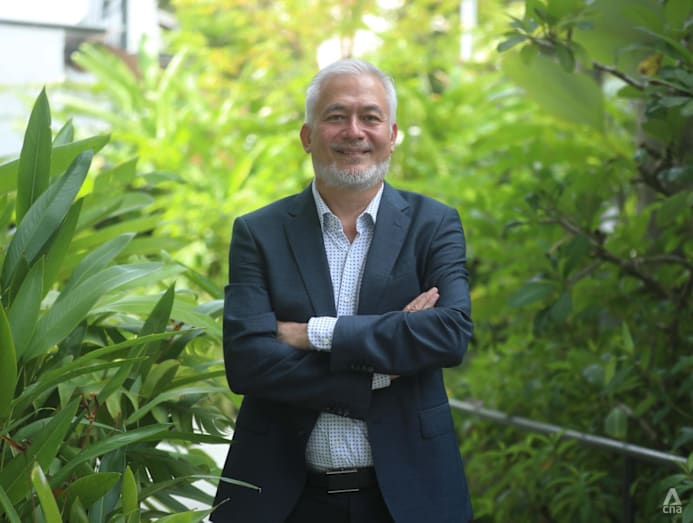
One key way Pro Bono SG taps this is through its Non-Profit Legal Clinic, designed to help non-profits such as charities and social enterprises get clarity on legal issues so that they can focus on their core mission of helping beneficiaries.
In the last financial year, for instance, this initiative has helped 19 organisations.
Asked how he envisions CLAS and Pro Bono SG evolving in the next 40 years, Mr Lim said they are "just scratching the surface" in their efforts to provide multidisciplinary support for their clients.
He compared his hopes for a stronger pro bono ecosystem to the current healthcare system, where a patient who goes to a hospital would be tended to by a host of medical experts to look at their health issues holistically.
Similarly, Mr Lim hopes that Singapore's lawyers can work together with other experts such as case workers and psychiatrists to provide timely help to the most vulnerable.
It's an ambitious dream, Mr Lim acknowledged – one that will be worth all the effort and investment in the long term.
"Of course, resources are needed for this vision," he said. "But what will happen as a result is that upstream, a lot more vulnerable persons will be able to get very quick intervention.
"That will mean that they actually save much more expensive interventions down the road."
This can also go a long way towards helping vulnerable individuals "lead productive lives" after their cases come to an end.
And that, he said, is a net plus for society.