

For both Xi and Trump, the trade war is a test of political will and ideology
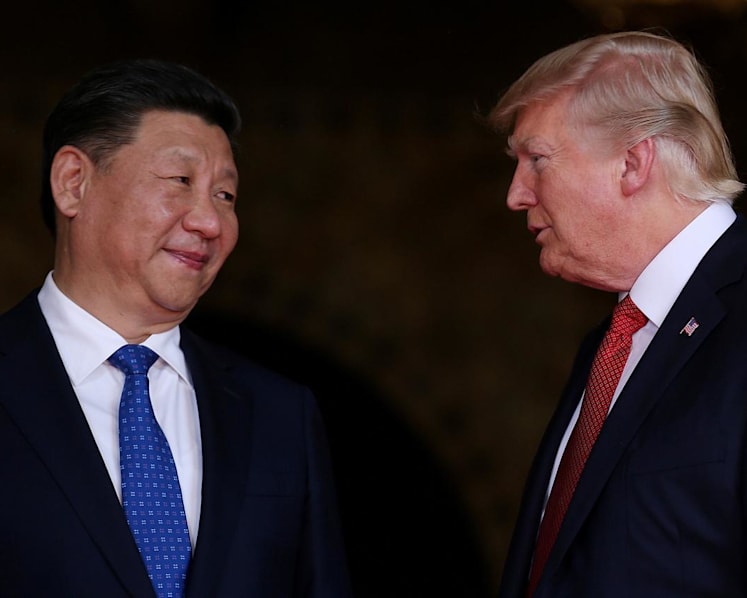
United States President Donald Trump has regularly trumpeted his good personal relationship with Chinese President Xi Jinping with warm and flattering words normally reserved for use by leaders of traditional political allies.
Yet the steady escalation of bilateral trade disputes in the past two years under their stewardship suggests not a meeting of minds, but a divergence. The US and China, the world’s two largest economies, are bound to two mutually exclusive economic models — a free market economy, and party-led state capitalism.
Indeed, there is increasing rivalry in every aspect of the US-China relationship, from economics and technology to geopolitics and strategy.
This reflects the conflicting thinking, ideologies and values between two political adversaries — one, the world’s leading free democracy; the other, the world’s last major communist-ruled state.





The cause of the year-long US-China trade war is not just the enormous US trade deficit with China — which can be solved, as Beijing has pledged to buy up to US$1 trillion of American goods over the next few years.
The Trump administration’s trade grievances centre not only on reducing tariffs, removing non-tariff barriers and strengthening intellectual property protection.
They also concern Washington’s demand for fundamental structural changes in the communist nation to reform corporate governance and end state subsidies and favouritism towards state-owned enterprises, to allow a level playing field for all.
The trade dispute has, indeed, exposed China’s own problems, and it provides a good opportunity for China’s policymakers to carry out rational reflection, as moves towards a market-based economy will also serve China’s own interests.
READ ALSO:
- Racing against China, US reveals details of S$675 million supercomputer
- The dangerous naivete of Trump and Xi
In fact, state monopolies are major obstacles to Beijing’s effort to achieve sustainable growth. The state-owned firms themselves are responsible for most of China’s current economic woes, from overcapacity and widespread corruption to the asset bubble and mounting debt.
Any effort to curtail state companies’ privileges will also help China nurture a favourable institutional environment that encourages innovation and entrepreneurship.
Beijing’s commitment to such reform will shape future relations with its major trade partners in the developed world, as all free economies share Washington’s grievances.
Credit agencies suggest that such a commitment will earn China its market-economy status, and be credit positive for China’s government and businesses operating in the country.
But since Mr Xi came to power, he has revived Stalinist economic thinking and stepped up measures to strengthen the party’s control and the state’s domination in the economy.
He has pledged to make state-owned enterprises “bigger and stronger” as he sees the public sector as an important Communist Party base, underpinning one-party rule and his personal absolute grip on power.
If Mr Trump claims to be the first American president to stand up to Beijing since Richard Nixon, then Mr Xi is the first post-Mao leader to challenge outright US leadership in global governance and its economic philosophy.
What Mr Trump now wants is out-and-out free trade relations between the two economies.
Despite the steady flow of positive news about the potential outcome of the trade talks, how far Beijing is willing to go to enact the structural changes to overhaul its state capitalism will decide the final result.
The clock is ticking.
When will Mr Trump and Mr Xi get together again at Mar-a-Lago, the president’s club and resort in Palm Beach, Florida, to finalise “the biggest deal ever made” to avoid a potentially ruinous trade war?
The most challenging sticking point might be Mr Trump’s demand to institutionalise a mechanism to ensure effective verification and enforcement of the agreements after they’re reached. This could put the government’s role under watch by a foreign institution.
So any deals on these thorny issues might not only reflect the strength between two powers, but also represent a real test of both leaders’ political will, and on how far they can compromise their own ideologies. SOUTH CHINA MORNING POST
ABOUT THE AUTHOR:
Cary Huang is a veteran China affairs columnist, having written on this topic since the early 1990s




