

Difficult to rely on 3D printing alone for Singapore buildings
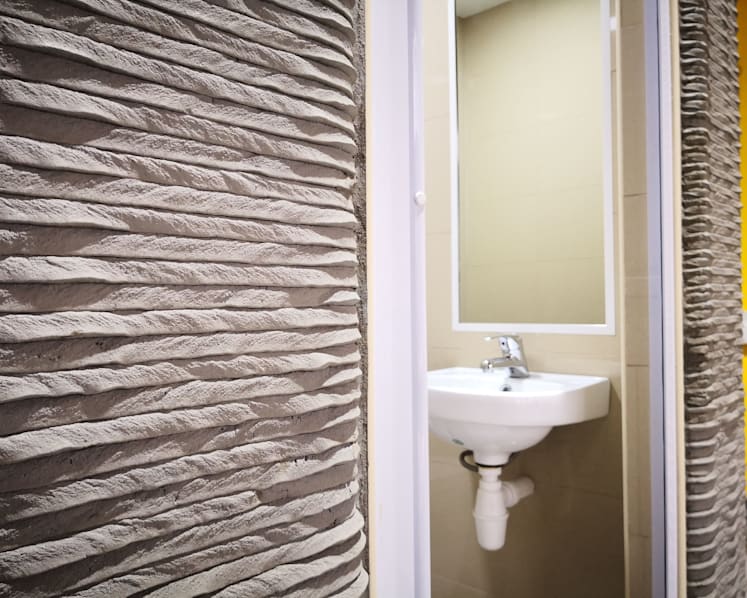
A 3D-printed bathroom unit developed by Nanyang Technological University researchers.
I commend Singapore researchers and organisations that are developing new applications for three-dimensional (3D) printing, especially in traditional construction, where material wastage and productivity present challenges (“How Singapore researchers 3D-printed a bathroom unit in 12 hours”; May 22).
Nanyang Technological University’s researchers have found a way to build prefabricated bathroom units, without fittings such as pipes, in 12 hours with a 3D printer. They eventually hope to roll out the technology for a housing project.
There are challenges, however, when it comes to putting in place 3D printing in the construction industry.
In land-scarce Singapore, most buildings are high-rise.





As such, prefabricated or precast building parts have to be hoisted during installation. At present, 3D printing for building applications is inappropriate for this.
As the technology is limited largely to short-span concrete structures, these parts are vulnerable to stresses from hoisting and being stacked above one another.
While 3D-printing a bathroom unit takes only 12 hours — almost half the time needed for conventional concrete to harden — it could cost substantially more than conventional precast bathrooms.
This is because the capital costs of commercial 3D printers for construction may be higher, since they are not used widely.
Moreover, a 3D-printed bathroom is presently unable to accommodate concealed electrical, plumbing and sanitary pipes, which are standard features of public housing projects.
This reduces the prospect of 3D-printed bathroom units being widely adopted in public apartments.
To overcome these challenges, a combination of 3D-printed and conventional building materials could be used to build units that are structurally sound, fast to construct and flexible in accommodating hidden pipes.




