

The future of Asia’s cities: mega or niche?
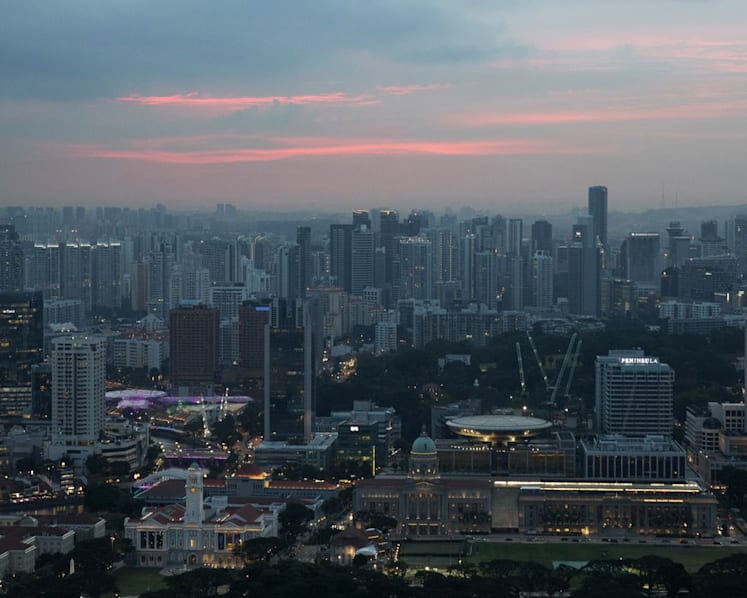
For catalyst cities such as Singapore, the challenges are whether it can continue to grow and retain its unique specialisations and leadership within morphing transboundary economic zones, given that there are already growth gains and skill transfers going primarily to its fast-growing neighbours, says the author.


Cities are outgrowing their national borders figuratively, and in some sense, literally.
This was one of the trends presented by Martin Wolf, Associate Editor and Chief Economics Commentator of the Financial Times at the World Built Environment Forum (WBEF) in London at end April 2018.
WBEF is a global conference and network of built environment professionals and their stakeholders aimed at combining knowledge, skills, technology and resources to create and manage the future of the built environment, organised by the global built environment professional body, RICS.
Mr Wolf gave the example of Seoul and Incheon, which together generate 47 per cent of South Korea’s GDP.





Further to the east, Tokyo generates 34 per cent of Japan’s GDP.
And in Europe, London produces 32 per cent of the GDP of the United Kingdom. So, as Mr Wolf put it, cities will shape our future and the shape of cities will shape our future.
And yet the growing influence of the city is certainly an Asian trend too, especially as urbanisation rates are higher here than most other parts of the world.
Chris Choa, Vice President and Global Principal for Cities and Development at AECOM, an American multinational engineering firm, said at the conference that Asia’s cities will grow in size and affluence this century, more than any other part of the world – and as such the region will be faced with the most changes.
He went on to explain that different factors, such as economic and political differences would drive the migration to cities.
Climate change, would further drive migration into the cities that are deemed best able to cope with it.
And as new people move into cities, bringing their cultures, cuisines and customs, they create change.
As well as adapting to allow for substantial growth, the key message from several speakers at the event was that cities either needed to get big or to get niche to stay relevant in the global economy.
Asia seems to have no problems with its cities getting big. It is home to 9 out of the top 10 largest megacities in the world.
The resiliency challenge for Asia will perhaps be in the sustainability of the mega-city model.
How much bigger can mega-cities get? Can they support the massive resource requirements of their citizens? And how will these cities, which are particularly vulnerable to the impact of adverse weather patterns, survive the impact of climate change?
In Asia, there seem to be three main categories of cities, each with their unique challenges.
1. Tier one, fully developed cities within nation states, such as Tokyo and Seoul
2. Cities within a transboundary economic zone
3. Large developing mega-cities
For tier one Asian cities, perhaps the core development challenge is whether they can or want to become more ‘global’ in the sense of London or New York and move beyond commerce and cultural centres into the realm of regional leadership for advancing causes, such as tackling climate change.
Perhaps this can only happen if the region becomes more integrated so that other countries can accept certain cities evolving into leadership positions.
Fully developed cities within a transboundary economic zone typically have challenges of working alongside developing and competing neighbours.
For instance, Singapore’s historical position as the only deep-water port city on the ancient shipping route from China has spurred economic growth in neighbouring Johor province in Malaysia and Indonesia’s Riau Islands.
This competition has become more intense in recent years with investment from Kuala Lumpur and Jakarta expanding the market for marine, oil and gas and construction as well as service companies in Batam and Johor.
Hence some of Singapore’s core competences in the marine, logistics and oil refining sector for instance, have been shared with its neighbours.
The neighbouring populations have also experienced fast rates of income growth in percentage terms, although salaries are still a long way off the levels of Singapore.
Although all three countries are Asean members, which is moving towards greater economic integration, they encounter frequent disagreements and compete as often as they collaborate.
Further to the North, the Chinese government is working on the infrastructure and connectivity of Hong Kong, Macau and the cities around Guangdong’s Pearl River Delta to create an economic zone called the Greater Bay Area (GBA).
With one of the highest per capita incomes in the world, Hong Kong’s specialisation in finance, intellectual property, shipping and technology, with its proximity to the manufacturing hub of South China has given rise to this huge market of 68 million people with an economy of US$1.3 trillion.
But the fastest growing part of the GBA in percentage terms are the cities in Guangdong province.
For catalyst cities such as Hong Kong and Singapore, the challenges are whether they can continue to grow and retain their unique specialisations and leadership within these morphing transboundary economic zones.
In both examples, there seems to be significant percentage growth gains and skill transfers going primarily to their fast-growing neighbours.
The large developing mega cities, such as Shanghai, Jakarta, Manila and Bangkok, have more pragmatic challenges, such as providing infrastructure and managing resources (e.g. water and power) for their ever-growing numbers of citizens.
Perhaps the other challenge is that there do not seem to be enough tier two cities with economies of scale and niches of specialisation to balance out the over-burdened mega-cities.
In the Asean region, the most famous mega-cities are the economic and administrative capitals, such as Bangkok, Jakarta, Kuala Lumpur and Manila.
Although many Asean countries have made efforts to create jobs outside the capital cities, in most instances the region has not managed to create new centres with niche specialisations at a fast-enough rate to accommodate the urbanisation trend.
As highlighted at WBEF, Asia’s future seems to favour the mega-city.
The challenge for planners will be in providing the infrastructure and resources for growth for their countries, while balancing the economic and political might of their mega-cities with investments into developing new cities with niche specialisations.
ABOUT THE AUTHOR:
Tim Hill is research director at Eco-Business, a digital media company serving Asia Pacific’s clean technology, smart cities and sustainable development community.




