

Long-term commitment needed to check human smuggling
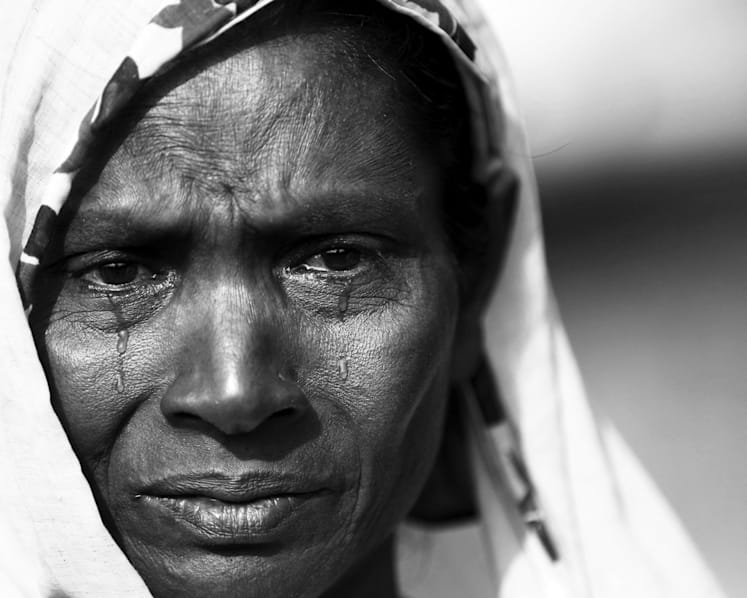
Zarli Hartu, 46, cries for her son Marmot Ismai, who she says was kidnapped into a human trafficking camp, at a refugee camp outside Sittwe May 21, 2015. Photo: Reuters
With more than two dozen human-smuggling syndicates in the coastal regions of Bangladesh and Myanmar taking boat people to other countries in South-east Asia, human smuggling will remain a key challenge for the region. In recent times, Thailand has taken a tough stance against human smuggling and trafficking in people, but the responses from Bangladesh and Myanmar remain inadequate and they do not have a long-term strategy.
Unless Bangladesh and Myanmar take an effective stance against human smuggling, such problems will persist. For a sustainable solution, both countries should consider a three-pronged strategy: First, to scale up institutional capacity to tackle human smuggling; second, to raise social awareness through the mass media; and third, to address the socio-economic problems that are marginalising a vulnerable population.
The failure to check human trafficking is a capacity issue in both Bangladesh and Myanmar. Controlling human smuggling requires a sound understanding of the local dynamics of the problem, ensuring good intelligence and teamwork across multiple agencies.
So far, in both countries the police, coast guard, border guard, navy and other agencies have been working separately, which is why there are many security gaps the smugglers are taking advantage of.





To check human smuggling, all the respective agencies in the countries must come together and work in a coordinated manner. Countering human smuggling will require a whole-of-government approach to ensure a quick response. This will eventually not only help check human smuggling, but also aid in controlling all kinds of crime and illegal activities involving coastal areas.
Both Bangladesh and Myanmar should engage all the stakeholders in the maritime sector, such as marine fisheries and the shipping industry.
Since the human-smuggling syndicates and their associates are based onshore, it is essential to investigate and take legal action against them. The two countries must have more than two dozen groups involved in human smuggling, of which 11 groups are based in Bangladesh and 13 based in Myanmar.
These groups and their agents and associates are not unknown to the law enforcement agencies in both countries. The two states must work together with the Association of South-east Asian Nations (ASEAN) countries, particularly Malaysia and Thailand, as some of the key leaders of these syndicates are based in these two countries.
The human smugglers in Bangladesh and Myanmar are exploiting an uneducated population, particularly the stateless Rohingyas, a community largely unaware of the risks of the illegal maritime voyage.
Both countries should invest in building social awareness and resilience against human smuggling. They can take advantage of the mass media, such as radio and television, for such campaigns. A well-informed community is the first line of defence against human smuggling. Both governments should consider public awareness-raising campaigns at the national and grassroots levels, particularly in those areas where human-smuggling syndicates are active.
ADDRESSING SOCIO-ECONOMIC FACTORS
One of the key causes of human smuggling from the Bangladesh-Myanmar borderland is the fragile socio-economic background of its inhabitants. For nearly four decades, Rohingyas from western Myanmar have continued to migrate by crossing the border into Bangladesh or by taking boats to South-east Asia. Since 1978, more than half a million Rohingyas have crossed over to Bangladesh to escape the communal violence and persecution in Myanmar.
Rohingyas are an ethnic minority in Myanmar, but are not recognised as citizens by the state despite the fact that they have been living there for centuries. The situation in the western Rakhine state remains volatile; residents are deeply scarred by several communal riots that took place since 2012, and left more than 200 dead and about 140,000 homeless people trapped in displacement camps.
The situation remains grim for the Rohingyas, with increasing numbers now living in the squalid camps, and many hundreds fleeing the country every day.
The United Nations High Commissioner for Refugees (UNHCR) said at least 53,000 people have undertaken maritime journeys in the Bay of Bengal towards Thailand and Malaysia, and several hundred have reportedly died during the journey.
In Bangladesh, there are only a few more than 30,000 Rohingya refugees registered with the UNHCR, while more than 470,000 are living as undocumented illegal immigrants in the coastal areas of south-eastern Bangladesh without any protection.
Disowned and rejected by Myanmar, and forgotten by the international community, many Rohingyas have ended up in drug trafficking and other illegal activities in Bangladesh, a country that considers the Rohingya refugees and illegal immigrants as an extra burden on the top of its own problems. The local Bangladeshis believe the Rohingyas take away jobs and put pressure on the limited resources of the area, such as land.
As a result, many of the Rohingyas want to migrate to South-east Asia for a better livelihood. Their crippling poverty and desperation are eventually exploited by human smugglers who promise them jobs and a better life in Malaysia, a country where there is still demand for cheap and unskilled manpower.
Even though, in most cases, these groups are involved in smuggling the stateless Rohingyas, they have also recently been able to attract some Bangladeshi citizens to take the risky maritime voyage in the Bay of Bengal, crossing around 1640 nautical miles to reach Malaysia.
While for the Rohingyas the key socio-economic push factors are persecution and statelessness, for Bangladeshis, it is the lack of employment opportunities within the country, and growing poverty. In both cases, lack of awareness about the risks of illegal maritime journeys is common.
Therefore, a sustainable solution to the human smuggling problem largely depends on how effectively these two countries address the socio-economic problem of the borderland area.
Checking human smuggling from the Bangladesh-Myanmar borderland needs a long-term commitment from both the countries. In addition, other South-east Asian countries such as Thailand and Malaysia also need to be engaged. Bangladesh and ASEAN countries may consider setting up a high-level taskforce to check human trafficking.
On top of that, all these countries should build a common database on human-smuggling issues. While capacity-building and awareness-raising programmes will certainly help, the ultimate solution to the problem depends on how effectively the socio-economic crisis of the borderland region is resolved.
ABOUT THE AUTHOR:
Iftekharul Bashar is an associate research fellow at the S Rajaratnam School of International Studies (RSIS), Nanyang Technological University, Singapore. This commentary first appeared in RSIS Commentaries.




