

Making better use of technology to monitor and improve health
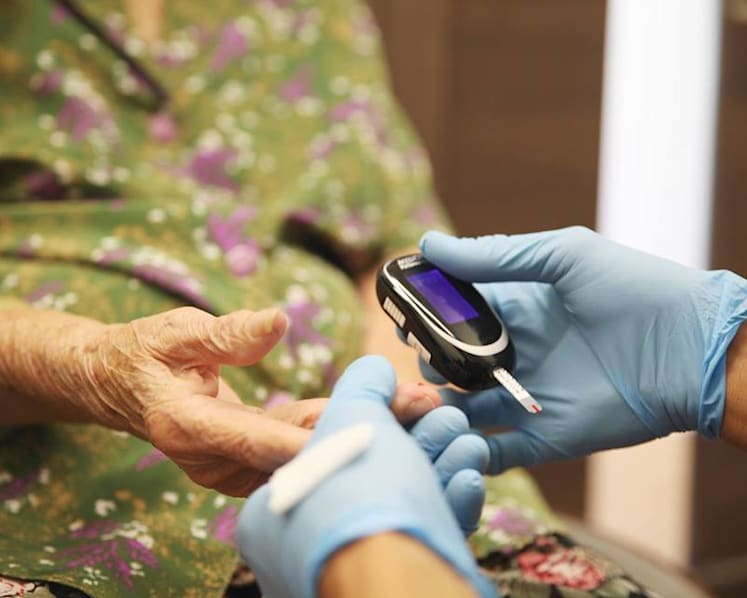
The author says that accelerating the use of connected care technology and helping Singaporeans understand their health data can help to shift habits from seeking medical treatment to prevention of illnesses.
As we marked World Heart Day on September 29, it is useful to recall that 17 people die from cardiovascular disease in Singapore every day, and in 2016 the disease accounted for one in three deaths.
Globally, it is estimated that 80 per cent of premature deaths from cardiovascular disease could be avoided if the key risk factors – including unhealthy diet, physical inactivity and harmful use of alcohol and tobacco – are controlled.
And that is just the tip of the iceberg. Diabetes, obesity and high blood pressure are all reported to be on the rise too even though, for the most part, they are also preventable through lifestyle choices.
One of the biggest obstacles to improving overall health seems to be changing a centuries old mindset.





For generations that were not able to easily diagnose the state of their health, people sought treatment only after they got sick.
Today, not only is healthcare comparatively much more accessible in developed countries, there are now also a plethora of handheld and household devices designed to help people measure, track and improve every facet of their health.
Want to lower your blood pressure? There’s an app for that. Lose weight? There are thousands.
Not to mention the advent of telehealth – making it possible to connect with a doctor or nurse from the comfort of your home, whenever you want, 24/7.
Looking further into the future, ‘connected’ technology in everyday household devices might even make it possible to pre-empt illnesses before they happen.
This should change the doctor-patient relationship and put more control of an individual’s health in his own hands.
But progress towards prioritising prevention over cure hasn’t been as quick as it could have been, compared to the pace of technology innovation.
Apart from the overwhelming benefits for our own health, there is a clear imperative for the government to accelerate this too.
Connected, mobile technologies have the ability to move parts of the healthcare system from the hospital to the home setting.
Done right, this can ease the burden on human resources and beds in hospitals that are already stretched, helping to sustain our healthcare system in the longer term.
So, what’s the hold up?
A big part of the problem in Singapore seems to be a lack of understanding, rather than a lack of willingness.
The Future Health Index, an international study commissioned by Philips to help determine the readiness of countries in addressing global health challenges and in building efficient and effective health systems, found that Singaporeans are willing to monitor several health indicators even without a doctor having told them to do so.
For example, many Singaporean respondents admitted that they monitor their weight (25 per cent), blood pressure (22 per cent), physical activity (20 per cent) and heart rate (16 per cent).
Yet only 13 per cent of those who are already using this technology completely understand how to interpret the results.
Public education and community outreach will be critical to improving Singapore’s data literacy. Younger, digital natives are easier to reach through school and university programmes and are likely to be a more receptive audience, whereas older groups will need more hand holding.
Initiatives like the Seniors for Smart Nation programme – which provides IT-related courses – are a great start.
But efforts also need to be made to reinforce what is taught in the classroom in a real-world context through community and family networks too.
In particular, equipping younger generations to help their parents and grandparents will be essential to ensure this group is not left behind.
Healthcare professionals also have a role to play in educating the public on using technology to track and manage their own health but the Future Health Index found that less than half (47 per cent) of Singapore’s healthcare practitioners felt knowledgeable about connected care technologies, which is a worry.
So education efforts clearly need to focus on healthcare providers too.
Given the current pace of technology innovation, professional education needs to be an ongoing dialogue rather than a one-off.
Our healthcare practitioners also need to agree on a ‘common language’ – a framework on how to gather, store and interpret the data – so that patients have a consistent experience regardless of which clinic or hospital they go to.
Finally, and most importantly of all, individuals need to take responsibility for prevention by changing their lifestyle. Spotting the early warning-signs of chronic conditions is redundant if people do not act on them.
The means to do this are well-known – from exercise to sleep and diet.
But if the health imperative alone is not enough to convince people, public and private collaboration may be needed to reinforce good habits through a carrot and stick model too.
Insurance is one example where healthy behaviour can be rewarded through incentives and bad health decisions, like smoking, can be penalised through higher premiums.
To ultimately improve Singapore’s health, individuals, the government, and public and private companies need to work together.
Short-term investment of time and resources will be critical to accelerate the use of connected care technology, upskill data literacy, and educate all sectors of society on shifting their habits from treatment to prevention, but the return on investment will be well worth it in the long run.
ABOUT THE AUTHOR:
Nicholas Lee is General Manager of Personal Health at Philips Asean Pacific.




