

Reckless actions of Covid-19 patient point to loopholes and irresponsible mindsets in Thailand
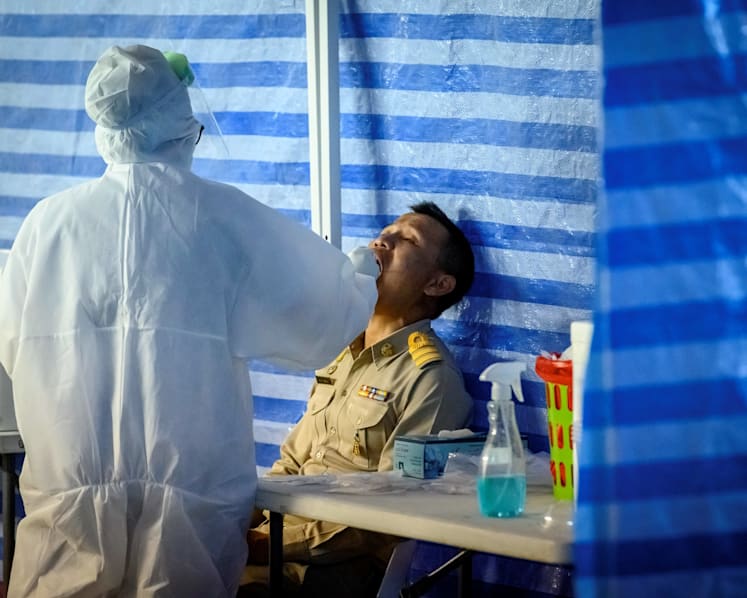
A medical staff performs a free test in a mobile Covid-19 novel coronavirus swab testing site on Khao San Road in the famous backpacker district of Bangkok on Oct 12, 2020.
As health authorities report a new infection case in Chiang Mai, the public has every reason to be terrified.
For those readers who missed the case, this is it: An unnamed Thai woman contracted Covid while in Myanmar from Oct 24 to Nov 23.
She entered Thailand illegally on Nov 24 through a natural border in Chiang Rai's Mae Sai district and took a public bus the same day to her condo in Chiang Mai and somehow was able to skip the local quarantine system.
And despite having Covid-like symptoms, a fever, coughing, and diarrhoea, she went around town via Grab taxis.





The woman was tested for the virus on Nov 26 and admitted to Nakornping Hospital, Chiang Mai. On Nov 27, the tests turned out positive.
Due to her recklessness, more than 300 people who came into contact with the 29-year-old woman have to take coronavirus tests and enter self-isolation. A shopping mall and a bar in Chiang Mai which she visited have been closed.
Central Festival Chiangmai shopping centre was closed for a major cleaning operation on Nov 28, before reopening a day later.
Health officials found at least 105 people are at high risk of contracting the virus from the woman, including friends that shared a cigarette with her, 40 bus passengers from Chiang Rai, 55 bar staff and six people from the department store.
Closed-circuit television camera footage shows she wore a face mask "at least some of the time" she was in public areas.
The case attests to the fact that loopholes in health protection against Covid risk are glaring.
Chiang Rai governor and authorities insisted they had measures to prevent illegal entry along the border but it is unknown how the woman slipped into the country.
How come the places she visited could not detect her fever? Did they provide temperature checks as (still) required by the law?
Yes, Thai people's recklessness can be unfathomable as this Chiang Mai case shows. With a fever, how come she had not thought about her responsibility towards others by at least entering self-isolation?
The case reminds me of the Thai migrant workers coming back from South Korea in early March when the coronavirus threat was imminent. At that time, the country had yet to impose a mandatory quarantine system.
Several workers, like the Chiang Mai woman, visited places like department stores, restaurants, causing panic. Some even flaunted their visits on social media.
Believe me, I am not a health freak but my point is it's everyone responsibility to prevent a second wave. Otherwise, such recklessness could be costly.
Bangkok and most of the provinces in the country are no better; obviously there is a gap in law enforcement. In fact, there is no clear guideline for such measures as mask-wearing, or various sanitary practices.
Does anyone know for sure if mask-wearing is still mandatory in public places like fresh markets, or restaurants, especially small-scale ones?
What about sanitary guidelines like the use of disinfectant on table surfaces, for instance?
If various agencies are obliged to enforce the regulations, do those who fail to comply with the measures get a slap on the wrist?
Who is in charge — police, health authorities, thesakit city inspectors? An anti-virus campaign, including frequent handwashing and mask-wearing, should be reinvigorated.
Back to the Chiang Mai case. How can society learn from these shenanigans?
I would encourage all people or businesses placed at risk because of her free spirit to sue her for loss of income or inconvenience.
The Department of Disease Control says it will take two weeks to establish whether the woman is a super-spreader.
We should keep our fingers crossed, hope for the best that she isn't, and adhere strictly to anti-virus measures. BANGKOK POST
ABOUT THE AUTHOR:
Ploenpote Atthakor is editorial pages editor at the Bangkok Post.




