

Singapore-China Ties: A new destiny in Chongqing?
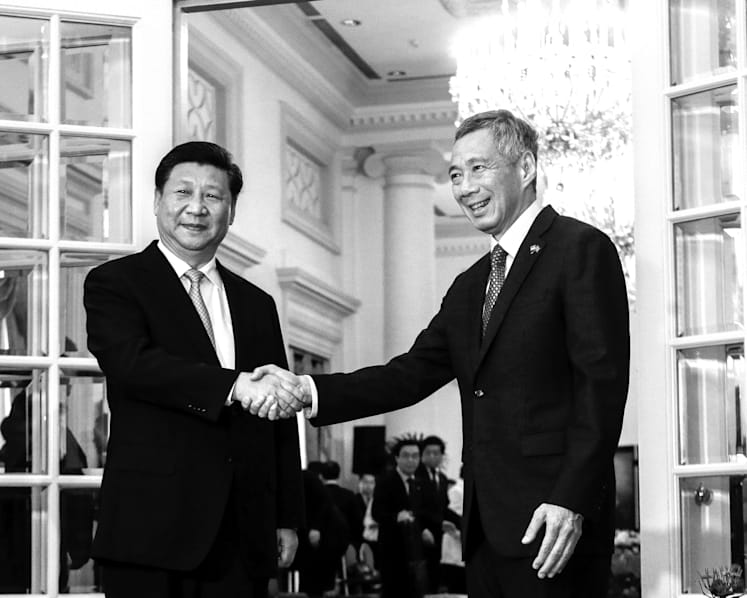
Chinese President Xi Jinping (L) and Singapore Prime Minister Lee Hsien Loong shake hands for the media at the Istana presidential palace in Singapore, November 7, 2015. Photo: Reuters


A major takeaway from the Singapore-China talks that took place during last weekend’s state visit by President Xi Jinping was the third Government-to-Government project in Chongqing, with both countries also announcing that they will establish an “All-Round Cooperative Partnership Progressing with the Times”.
This new Chongqing project is befitting of the elevated G-to-G bilateral relations because it is no secret that the Western regions are the main targets of China’s next phase of development under Mr Xi’s ambitious One Belt One Road (OBOR) project.
The Chongqing project has opened a new era of bilateral cooperation between Singapore and China, one that reflects the economic priorities of both countries – Singapore’s continued engagement in China’s economic rise that is complementary to China’s priority in developing its interior.
Chongqing, together with Chengdu and Xi’an, were the three major cities in that area considered for the project. As the most populous city in that region, Chongqing is well-placed to become a major hub for Sino-Central Asian economic and commercial exchanges.





Already, Central Asian countries such as Kazakhstan enjoys Chinese OBOR financial aid and soft loans – distributed by the likes of the Asian Infrastructure Investment Bank (AIIB) and Silk Road Fund.
For China, it stands to gain by levelling up the development of its Western region and funnelling its surplus stocks of manufactured products and commodities to a newly-developing region.
In other words, Chongqing has the potential to play an approximate role of a new Suzhou Industrial Park (SIP) in Western China and serve as a reference model for economic development in that region, just as SIP became a useful reference in the Eastern Chinese region.
The main challenge is for Singaporean companies to find their niche in this new project and the region. Market forces will determine the success of the project.
If both countries can capitalise on their comparative strengths for the region, the G-to-G Chongqing project may become another centerpiece in economic cooperation between the two countries, just like the Suzhou Industrial Park and Tianjin Eco-City.
Away from the overland regions, China will continue to cooperate with Singapore in the maritime Southeast Asian region.
In an essay he penned to coincide with the state visit, Mr Xi noted that both countries have “fully leveraged” China-ASEAN cooperation, referring to the 10-member Association of Southeast Asian Nations.
As a well-developed financial hub, Singapore is well placed to be a springboard for Chinese investments into the region. In the article that Mr Xi wrote, he listed the broad areas in which the two countries can cooperate and I categorise them into the hardware and software aspects.
The hardware consists of scientific cooperation and technology development while the software components are culture, education, social governance, finance, environmental protection and legal enforcement.
Both sides are also working on several new areas, including food safety and “connectivity” – a word that is now increasingly associated with the OBOR policy.
A more concrete proposal for cooperation with Singapore put forth by Mr Xi in his essay is to sync China’s 13th five-year plan for development with Singapore’s Research Innovation and Enterprise five year plan to enhance cooperation between both countries. If this proposal is accepted by the Singapore government, we may see the emergence of a new phase in relationship between the two countries.
Outside economic cooperation, Singapore has provided a neutral platform for the historic Xi-Ma talks between the leaders of China and Taiwan. As a close economic partner and “youhao (friendly)” country with both China and Taiwan, promoting conversations in East Asia is in line with the pragmatic foreign policy and diplomacy of Singapore.
Of course, in any relationship, there will always be challenges. While China is Singapore’s largest trading partner and Singapore is China’s largest foreign investor, China’s GDP is 30 times bigger than Singapore’s. Singapore will need to navigate its course in partnering with a much larger Chinese economy in the future.
Already, Chinese companies are increasingly setting up its own production networks and business operations in Southeast Asia and globally, mitigating Singapore’s middleman role as an operational headquarters.
But, the Chongqing G-to-G project as well as the SIP and Tianjin Eco-City projects show that there are always niche areas like industrial and urban planning in which Singapore remains world-class and highly relevant to Chinese development.
ABOUT THE AUTHOR:
Lim Tai Wei is a Senior Lecturer at SIM University and Research Fellow Adjunct at the National University of Singapore’s East Asian Institute




