A tribute to a rare breed of government spokespersons
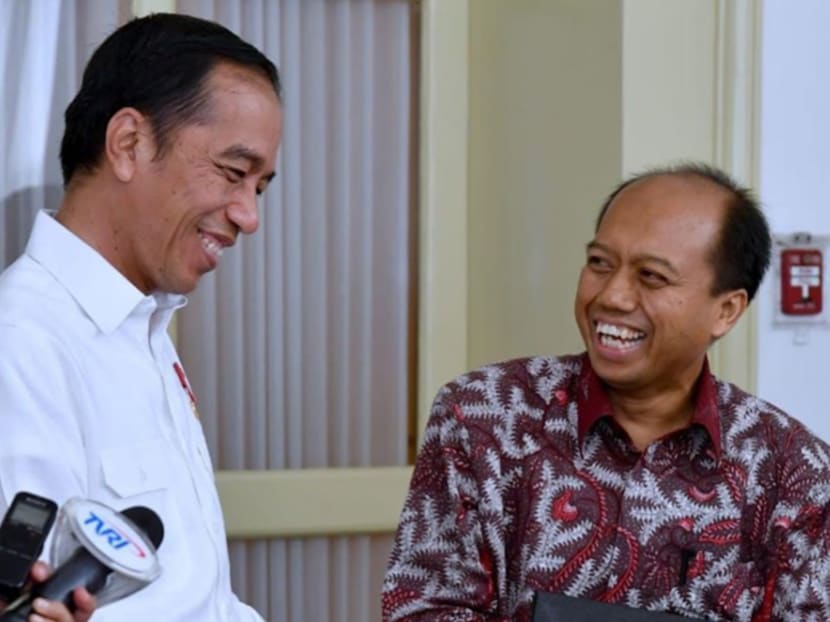
President Joko Widodo called the late Sutopo Purwo Nugroho, who was spokesman for Indonesia’s disaster agency, "a person who dedicated his life for other people”.


The death of a government agency spokesman from an illness is hardly the kind of news that will make global headlines.
But this was indeed what happened when Sutopo Purwo Nugroho, spokesman for Indonesia’s disaster agency since 2010, died on July 7 at the age of 49 after battling lung cancer.
The death of Pak Topo, as he was affectionately known across Indonesia, was reported by The New York Times, The Guardian and Australian Broadcasting Corporation, among others.
Why is this so? More importantly, what can we learn about public communication from Pak Topo?





You see, Indonesia has its fair share of natural disasters and Pak Topo had become the trusted source of the latest information on the country’s floods, earthquakes, tsunamis and volcanic eruptions.
He was known for his indefatigable commitment to his job, delivering clear and regular updates on the country’s natural disasters to hundreds of thousands of followers on Twitter and Instagram as well as via press statements, even when he was on his hospital bed receiving chemotherapy.
He was a gift not only to Indonesians but also to the international media which had to report on the major natural disasters that hit Indonesia.
Upon his death, many Indonesian netizens hailed him as a “true servant of the nation” and the hashtag #ripsutopo began trending on social media.
Calling him “a person who dedicated his life for other people”, President Joko Widodo added: “As he once said, ‘life is not about how long or short it is, it is about how much we help others.’ And he applied that sentence well.”
Pak Topo earned the trust of Indonesians by putting public interest ahead of his own, and by being forthcoming and not sugar coating things.
“The disaster early warning system in Indonesia is still far from satisfactory,” he said bluntly on the lack of an alert for a tsunami which struck the Sunda Strait on Dec 22 last year.
Interestingly, Pak Topo, who was a government researcher for 16 years previously, said he never received training for the job.
“I don’t have a background in communications,” he told the New York Times. “I just do it. And I just have to have the guts to criticise the government, not using bureaucratic language but in my own style.”
Pak Topo’s story reminded me of someone who held a similar communications job in Singapore in a slightly different era.
Mr Goh Shih Yong was handling media relations for the Primary Production Department when I started my journalism career in 1998.
I later found out that he had joined the department in 1968 as an animal health inspector before taking up the communications portfolio in 1990. It later became the Agri-Food and Veterinary Authority (AVA), which recently had its roles taken over by the Singapore Food Agency and National Parks Board.
So like Pak Topo, Mr Goh’s background was not in communications or media relations. And like Pak Topo, he believed in timely communications and being responsive to the media.
Reporters could reach him any time of the day if they had urgent queries as he slept with his mobile devices by his side. It did not matter if you were a veteran reporter or a rookie like me.
He would return your pages (yes, we used pagers in those days), pick up your calls and give you the soundbite or crucial background information you needed.
If he needed to check on a piece of information that you asked for, you could be sure that he would come back to you in a timely manner.
If the information was not available or he was not in a position to release it, he would calmly and patiently explain to you why that was the case. And you would believe him, because he had earned your trust and respect by being forthcoming.
In short, Mr Goh was a darling to reporters long used to having to fax in their queries to government agencies and companies and wait for days for the answers to come via the fax machine.
At a time when email was not widely used and social media almost non-existent, he was a stark contrast to other media relations officers, some of whom were evasive or had no qualms about slamming down the phones on journalists.
Clearly, Mr Goh could be responsive to the media because he had his bosses’ blessings to do so.
And clearly, his bosses did so because they trusted him and also understood the importance of timely public communication.
“We wanted to tell people more so that they’d have a good idea of any given situation and could make informed decisions, rather than worry or speculate,” said Mr Goh in a 2015 issue of Heart of Public Service, a Public Service Division publication.
“So if I received a call from reporters at 11pm, I always made sure that they got what they needed by 11.45pm, before the newspapers went to print. We have to be quick, certain and consistent.”
In the interview, he also recounted one of his proudest moments after the bird flu scare of 2004 when he saw long queues at a chicken rice stall at Maxwell Food Centre following the lifting of a ban on poultry imports from Malaysia.
“I knew then that we’d done well,” he said. “The queues showed the trust Singaporeans had in AVA keeping our food secure; in keeping us safe.”
I dealt with Mr Goh for about four years before leaving journalism in 2002 and we soon lost touch after I went overseas to work.
He retired as AVA’s Deputy Director of Corporate Communications in 2010. I recall the media reporting his retirement then.
Since I returned to journalism in early 2014, I have not met another media relations or communications executive quite like Mr Goh.
Though there are certainly some who are friendly, professional and try to be helpful, none is as open and forthcoming as Mr Goh.
In fact, it is quite common now for legitimate media queries to go unanswered, often with a message that simply says: “We won’t be responding.”
Perhaps the likes of Pak Topo and Mr Goh are a rare breed who are hard to come by these days.
And that is a pity.
For public communication can be open and successful at the same time.