

The Big Read in short: Can cyclists and drivers ever get along?
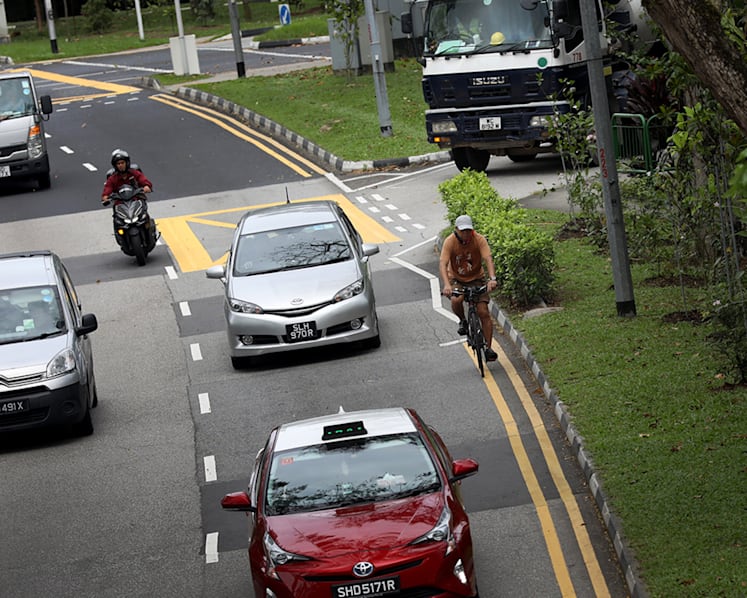
While most cyclists interviewed said they practise safe cycling, some also admitted that they do not stick to the rules all the time, such as ignoring red lights, or filtering over to the right-most lane when executing a right turn.


Each week, TODAY’s long-running Big Read series delves into the trends and issues that matter. This week, we looks at the perennial conflict between motorists and cyclists and what can be done to resolve it. This is a shortened version of the full feature, which can be found here.
- Over the years, many videos of accidents between cyclists and motorists have gone viral on social media
- Discussions about such incidents have been heated, with both sides often sticking to their guns till the end
- Cyclists feel like they are the more vulnerable group, while motorists think that cyclists often get away with errant riding
- There are rules and guidelines in place to guard against errant cyclists, but more needs to be done, experts say
- Apart from more rules and better infrastructure, basic understanding of road safety is the key to minimising accidents, they add





SINGAPORE — Retiree Ng Choon Peng cycles almost daily, sometimes for as long as 80km to 100km at a time from his home in Jurong East to places as far as Seletar and Changi.
Though there are cycling paths and park connectors along the way, the 65-year-old prefers the roads.
“I will still use the roads to cycle, because some pedestrians tend to block the paths, the paths are not seamless and they are sometimes too narrow,” he said.
Like Mr Ng, cyclists whom TODAY spoke to gave other reasons why cycling on the roads is preferred. They can go faster than the 25 kmh limit on Park Connectors, and do not need to contend with uneven or cracked surfaces which they say often appear on cycling paths and park connectors, among other reasons.
But taking the road is not a breeze either for cyclists since it means interacting with motorists — which creates its own set of problems given that there is no love lost between the two groups when it comes to road sharing.
Some drivers told TODAY that they have had bad experiences with cyclists who do not follow traffic rules applicable to them, adding that the latter often get away with reckless behaviour.
While most cyclists interviewed said they practise safe cycling, some also admitted that they do not stick to the rules all the time, such as ignoring red lights, or filtering over to the right-most lane when executing a right turn.
But the cyclists also bemoaned that some motorists tend to be unnecessarily aggressive towards them, intentionally driving too close and not slowing down when overtaking. Some cyclists have even sworn off the roads after several unpleasant encounters.
Amid the Covid-19 pandemic and a ban on personal mobility devices (PMDs) on footpaths, more Singaporeans have been taking up cycling, going by the rise in sales of personal bicycles and an increase in ridership reported by bike-sharing companies.
In tandem, there have been more complaints about bad drivers and errant cyclists making their rounds on social media, along with a flurry of letters to TODAY.
Nevertheless, the conflict between drivers and cyclists is a perennial issue, with incidents flaring up from time to time. Over the years, videos or pictures of similar road incidents have sparked heated debates online, with motorists and cyclists offering contrasting points of view. Some have even called for cyclists to be banned from riding on the roads.
WHAT CYCLISTS SAY
Cyclist Chales Tay said Singaporean motorists are “generally reasonable”, but he recalled an incident where a vehicle intentionally veered close to him and a friend.
“The road was empty, and yet the lorry wanted to go close to me and my friend,” said the 44-year-old, who works in education. “Honestly I don’t know why, there have been a few such instances.”
Most cyclists who ride on the roads acknowledged that safety is a personal responsibility, and they are fully aware that accidents can happen anytime.
Other than having the right equipment, such as always wearing a helmet and donning bright clothing, route planning is also important, said some cyclists.
“Visualise the route and expected traffic conditions before going and stay alert on the road — no phone, no music,” said Mr Martyn Tan, 45. He said he also avoids riding on busy roads during peak hours, and steers clear of industrial areas where heavy vehicles may be present.
“The key is to know what to expect,” the business owner added.
However, even when they follow all the rules and take ample precautions, some cyclists said they can still sense the animosity on the part of motorists when they are on the road.
Road cyclist Dexter Tan, 47, said that the antagonistic attitude towards cyclists is often exacerbated by social media posts.
“Some drivers think they need to punish or bully cyclists for reasons unknown,” said the regional sales head. “I drive too, but I don’t see the point of doing such things to cyclists, and hate messages promoted by (traffic accident) Facebook pages don’t help.”
WHAT MOTORISTS SAY
A manager in the automotive industry, who wanted to be known only as Norman, said that in the event of an accident between a cyclist and a motorist, the former seems to be the less accountable party.
“In any situation, it's the qualified road user that gets the blame most of the time,” said the 30-year-old. “If a car knocks down a cyclist, the car driver loses. If a cyclist knocks (into) a car, its driver cannot do anything but pay for his own repairs through his own pocket or insurance.”
“I don't think there are many people willing to go through a civil suit just to get back at the cyclist, hence the cyclist is seemingly untouchable.”
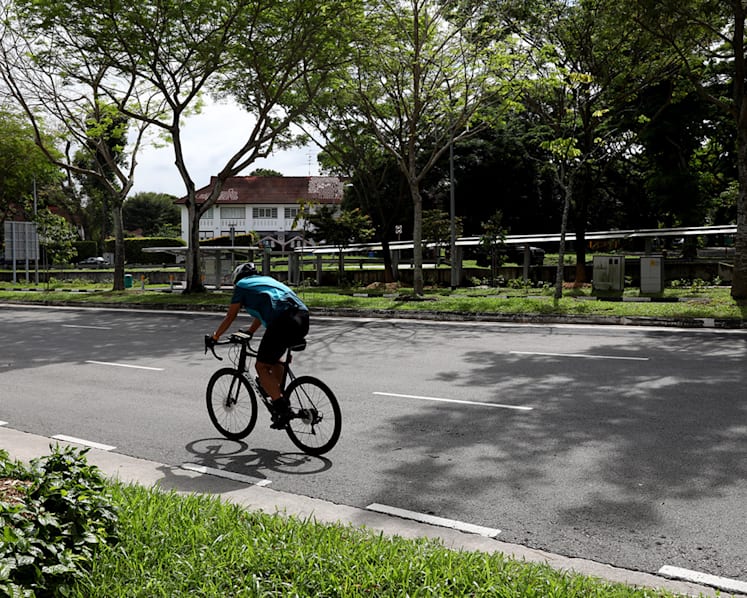
To make cyclists accountable for breaking traffic rules, Mr Jeffrey Sin, who has had an unpleasant encounter with a cyclist, said that there should be a registration process for cyclists who choose to ride on the roads, so that they are aware of the traffic rules. There should also be regulations on the hours that bicycles can ride on certain busy roads, he added.
The rules should also be in black and white, so that there is no room for ambiguity. Right now, it seems to be “the cyclists’ own prerogative” to be a gracious rider, the 41-year-old sales specialist said.
“There are rules saying that cyclists have to keep to the left, but how much left? First lane? Second lane? This gives cyclists the impression that they have the right, and if they see some motorists have endangered them, they will get frustrated and will scold the driver,” he added.
RULES, GUIDELINES FOR CYCLISTS ON ROADS
According to the Land Transport Authority (LTA) website, those who use bicycles or power-assisted bicycles (PABs) on roads must observe these rules:
-
Obey all traffic signals and travel in the same direction as the flow of traffic
-
Wear a helmet when cycling on roads
-
Cycle in a single file on single-lane roads and during bus lane operational hours
-
Switch on the front white and rear red light in the dark
-
Do not use a mobile communication device while riding
-
Those who are below 16 may not ride — or be carried as a passenger — on PABs on roads
-
Do not cycle on expressways and in road tunnels
The authorities had raised the fines for cycling offences in 2019, from S$20 to S$75.
There are also guidelines for cycling, which cyclists and PAB riders are “encouraged to adopt”, the LTA website said. These include:
-
Always riding as close as practicable to the left-hand edge of roads, and allow traffic to overtake the cyclist safely
-
Keeping to a straight course, do not weave through traffic and avoid sudden swerves.
-
Always using bicycle lanes when available
-
Keeping a safe distance behind moving vehicles and not holding on to the back or side of motor vehicles and maintaining awareness of traffic when riding
-
No squeezing between the kerb and a bus that has stopped at a bus stop, or a turning vehicle and a kerb
-
Slowing down and looking out for other road users when approaching bends, junctions, bus stops and pedestrian crossings or when passing a parked car
Under the Road Traffic Act, the police will investigate if reckless cyclists endanger pedestrians or other road users, and physical injury is involved, the Ministry of Transport (MOT) said on its website.
First-time offenders may be fined up to S$1,000 or jailed up to three months for riding in a disorderly manner and without due regard for the safety of others. Those who commit a second or subsequent offence may be fined S$2,000 or jailed up to six months.
WHAT CAN BE DONE?
In a Facebook post in January last year, LTA said there were 417 road accidents involving cyclists and PAB users from January to November 2019, down from 465 in the same period in 2018. This works out to more than one accident a day, on average, in 2018 and 2019. The statistics for 2020 have not yet been released.
Responding to queries from TODAY, LTA and the Singapore Police Force said in a joint statement that they adopt a “combination of regulations, enforcement and public education to keep roads and public paths safe for all users”.
“The authorities patrol the roads daily to keep the roads safe and conduct enforcement against errant road users including cyclists,” they added. “We have taken errant cyclists to task for flouting these rules, and for committing other rash and dangerous acts.”
Transport economist Walter Theseira said that whether enforcement against errant cyclists here should be enhanced must be determined by their safety record. However, such data might not be recorded accurately, unlike for motor accidents.
While enforcement data may not be reliable, National University of Singapore transport infrastructure expert Raymond Ong said that enforcement will be necessary to protect the vulnerable, such as those on slower moving modes like pedestrians.
“However, we have to think about passive enforcement using technology (such as) video cameras with imaging and facial recognition technologies to protect the vulnerable especially in grey areas, where it is simply not possible to deploy manual enforcement, which is time consuming and costly.”
The issue of improving cycling infrastructure, raised by some cyclists, is also one that Singapore has to deal with.
“In general, having an off-road or dedicated cycling lane will be the most effective in encouraging cycle commuting and travel because it eliminates the risk of dangerous bicycle-motor vehicle conflict,” said Dr Theseira.

However, he noted that this also requires the most land use, since “you have to provide for high-speed bicycle travel as well as pedestrian travel”, something that Singapore can ill afford.
“The existing road reserve may not be sufficient to build such a cycling lane,” he added.
Agreeing, Dr Ong said that Singapore is different from other cities such as Taipei, Copenhagen and Vancouver in terms of public transport ridership, private transport mode choice, land use policy, sidewalk ownership, among other factors.
“As such, there is no “one-size-fit-all” approach for Singapore to follow suit,” he stressed.
Still, the authorities are aiming to build more than 1,300km of cycling paths by 2030 as part of a plan to promote cycling as a convenient transport option for Singaporeans and make the island car-lite.
Even with the expansion of cycling paths, Dr Theseira said that many cyclists would continue to ride on the roads, just as drivers would prefer to use an expressway.
He noted that Singapore’s road infrastructure had evolved over the years into “different types of roads purposely designed to accommodate different types and speeds of traffic flows”.
“Yet we expect that the cycling infrastructure will magically fit all types of cyclists and active mobility users,” said Dr Theseira. “We may need some time to work out more efficient arrangements, and we may have to actively discourage pedestrians and slower traffic from using cycling paths, just as we don't think pedestrians should walk on the road if there is an alternative.”
While cyclists have for years been pining for better infrastructure, and motorists have been vocal about increasing enforcement on cyclists, Mr Steven Lim, president of the Safe Cycling Task Force, said that these measures will be redundant if both parties continue using the roads in a selfish manner.
To complement their regulatory efforts, LTA and the police said they conduct public educational campaigns, community and school outreach to raise awareness of safe riding.
Mr Lim, who is also a car dealer, reiterated that cyclists and motorists alike should adhere to the rules and at the same time, be more considerate to each other.
He added that the widespread use of social media exacerbates feelings of hatred and ill-will between parties, when viral clips of errant cyclists are regularly uploaded online.
Cyclists and drivers both do this, instead of reporting the incident to the authorities, he said, and harsh words are often exchanged between both parties.
“It becomes a vicious circle, nothing gets sorted out, and nothing changes,” he said. “It just breeds more hatred, and creates more divisions.”




