The Big Read in short: Covid-19’s devastating impact on lives and livelihoods
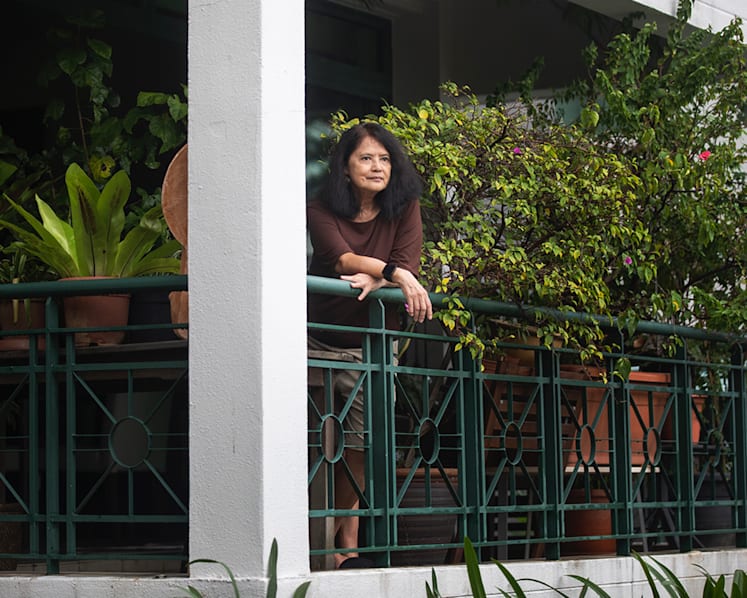
Dr Teresita Cruz del Rosario contracted Covid-19 in April and has since recovered. She did a total of 11 swab tests before finally getting her double-negative results.


Each week, TODAY’s long-running Big Read series delves into the trends and issues that matter. This week, we look at how the Covid-19 pandemic has left a trail of despair for some, even as many Singaporeans pine for a return to normalcy. This is a shortened version of the full feature, which can be found here.
SINGAPORE — Singaporeans are keeping their fingers crossed that some semblance of normalcy will return soon, with the circuit breaker slated to be eased further after June 1.
But for some individuals here, Covid-19 has been much more than an inconvenience and a matter of adjustment to their daily routines.
It has taken away the lives of their loved ones who were infected, caused mental anguish for those who survived, and robbed many others of their livelihoods.





TODAY spoke with several of them who have had to wrestle with the coronavirus’ deleterious impact, and emerge from it with their lives drastically altered.
Some of them, in fact, told this reporter that they were prompted by the easing of the circuit breaker to accept media interview requests — they want to caution Singaporeans against being complacent in the long drawn-out fight against Covid-19.
‘THE LOSS IS IRREPLACEABLE’
Mother’s Day would usually be a grand family affair for Ms Siti Noraisah Ali’s family every year.
Her mother would whip up plenty of dishes for the whole extended family as they get together to observe that special day, as it is also the day they celebrate the “birthday” of her grandmother — who is 82 this year — since she has no records of the date when she was born.
Unfortunately, when Mother’s Day on May 10 came and went this year, all they felt was the huge void left behind with the passing of Ms Noraisah’s mother.
Madam Salha Mesbee, 58, died due to complications from the coronavirus on April 30. She is the youngest Covid-19 fatality in Singapore to date. While she was declared free of the virus which she had contracted during a trip to Turkey, her vital organs took such a beating from it that her body was not able to hold out any longer.
“That sense of loss is irreplaceable. To think she won the battle against Covid, but she still passed away. We still cannot accept that,” said Ms Noraisah, who runs a home-based business.
Adding to the pain is the fact that they were not able to have the usual funeral and burial arrangements due to safe-distancing requirements.
But Ms Noraisah, 37, was thankful that she could watch the proceedings via live streaming, a service provided by the funeral company.
“It eased the worry and the sadness of not being able to follow your mum to the grave,” said the eldest of three children.
The one-month period when her family members were in hospital also left a psychological imprint on Ms Noraisah.
Her father and two younger brothers were also infected with Covid-19, but they had all recovered before her mother died.
She would be receiving calls from the doctors daily to get updates on the health conditions of her family members, and later her mother. Until today, she still gets the shivers when her phone rings at night.
“Because of that one month, you are anticipating calls, waiting anxiously, wondering if the call is going to be good or... bad. Everytime my phone rings now, I’m like, ‘What’s happening?’” Ms Noraisah said.
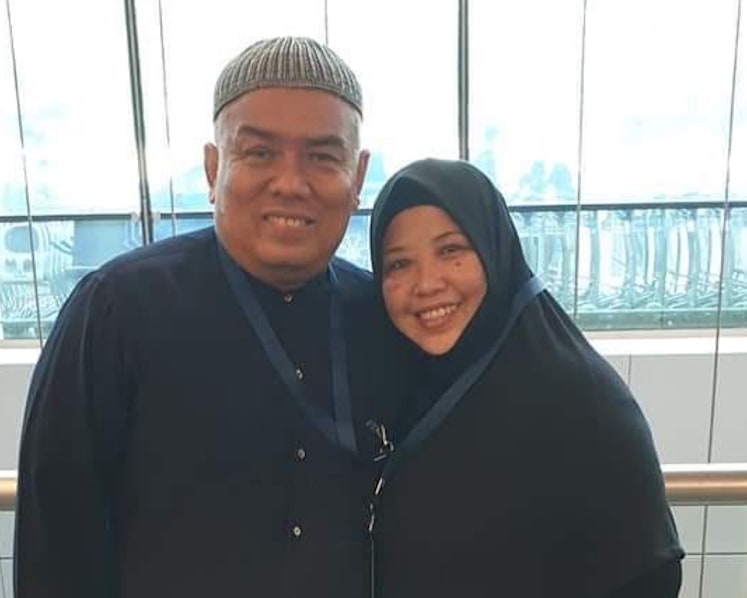
In the absence of her mother, Ms Noraisah said she sent Mother’s Day gifts to her aunt and grandmother.
She also plans to be the main chef on Hari Raya Puasa, which falls on May 24 this year and marks the end of the fasting month, by cooking the dishes which her mother used to make, such as nasi briyani and ayam merah.
“I have to be strong, like how my mother had been strong for everybody. Once I break, I think (my family) will break,” Ms Noraisah said.
COVID-19 SURVIVORS: LIVING WITH EMOTIONAL, MENTAL SCARS
A consistently high fever of above 39°C, hallucinations of loved ones who had died, and having four litres of oxygen pumped into his body through a nasal cannula.
These were far from the experience of some Covid-19 patients that Mr Bambang Sugeng Kajairi had read about, but it was what he went through when he was hospitalised at the National Centre for Infectious Diseases (NCID) after testing positive for the virus at the end of March.
“I had the full-blown version. That caused me to question a lot, ‘Why me?’” said the 55-year-old business owner.
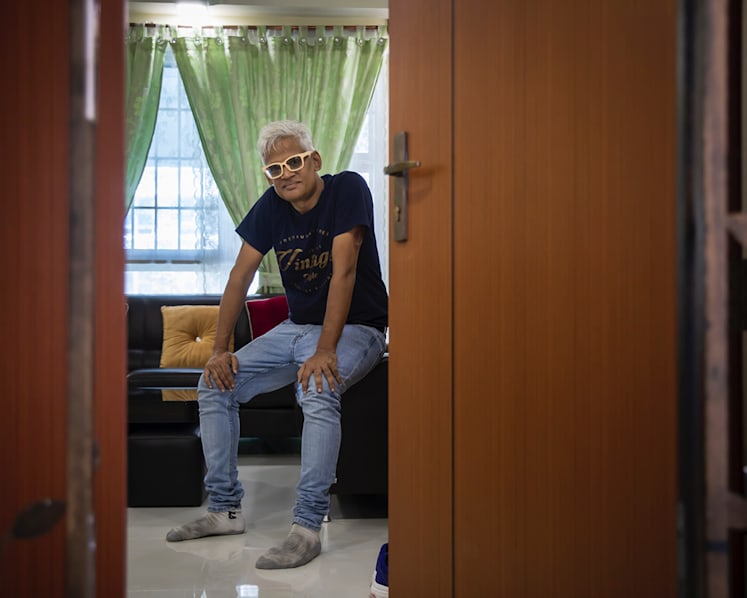
For Mr Simon Neo, who was hospitalised at NCID in mid-March after testing positive, it was the chills he felt at his fingertips and toes that were the “most terrifying”.
At one point, the 50-year-old psychotherapist had four blankets piled on him as nothing could be done about it.
“I never want to go through that again… It made you feel so helpless,” said Mr Neo.
Apart from the physical pain, Covid-19 patients also have to go through the mental anguish of struggling with their mortality. And this is true even for those who have mild symptoms.
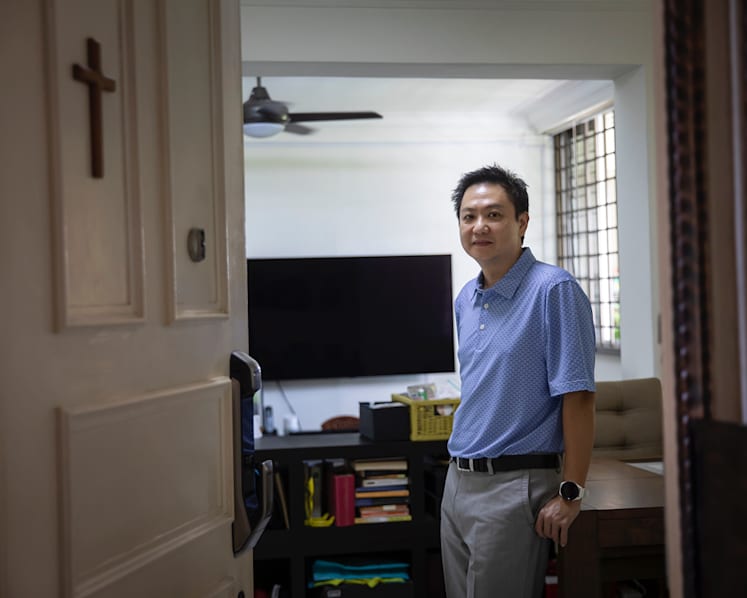
When Mr Andrew Phay was hospitalised at Changi General Hospital for the virus in mid-March, the 56-year-old retiree was not too concerned initially.
Despite the lack of severe symptoms during his initial stay in hospital, apart from having an adverse reaction to a malaria drug he was taking, he was told by the doctor on the 15th day that his lungs were not showing any signs of improvement and he might have to be put on the ventilator in the intensive care unit.
“She asked, ‘Is there anybody in your family you would like me to call?’ … That’s when you realise that things might not turn out well,” recounted Mr Phay.
Thankfully for all three patients, their conditions improved soon after.
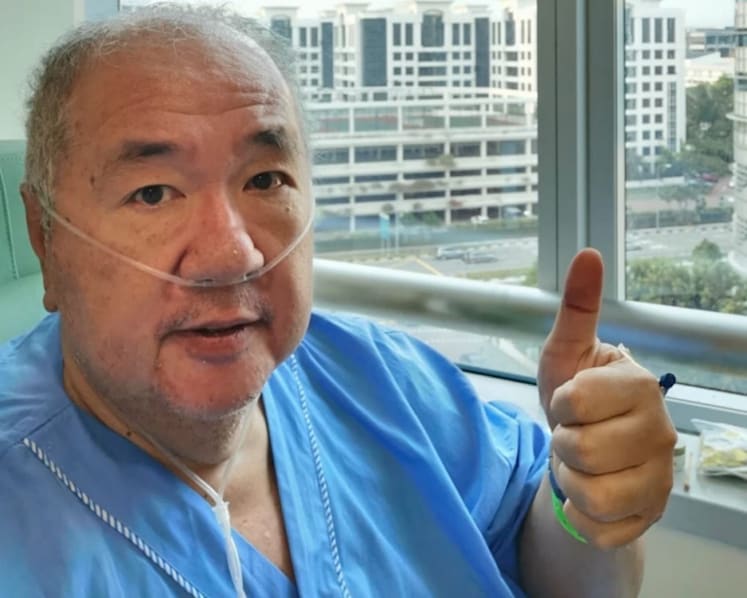
While Mr Bambang was discharged upon testing negative twice over two consecutive days after 16 days in NCID, both Mr Neo and Mr Phay were sent to community isolation facilities as they were certified to be clinically well but not yet cleared of the virus.
But even after the battle for their physical health was more or less won, they soon found that they had to grapple with continuing mental and emotional strain.
For Mr Neo, besides struggling with feelings of guilt for having to be away from his wife and mother, his 32-day stay in NCID and the community isolation facility was a “roller-coaster ride”.
Seeing two older roommates getting discharged earlier even led him to wonder about his self-worth.
“I began to question myself, ‘Have I not been taking care of myself? What’s wrong with me? Maybe I’m not a good person that’s why all this is happening,'” he said.
Adding to the mental struggle was the fact that Mr Neo had a false negative test three times, where a negative test result was followed by a positive outcome the next day, hence failing to meet the criteria before one could get discharged.
During her 25-day stay at Tan Tock Seng Hospital from April 2, Dr Teresita Cruz del Rosario — a 67-year-old independent scholar — said she did a total of 11 swab tests before finally getting her double-negative results.
The wait between the first and second negative test result was also very agonising, with some survivors telling TODAY that it was the longest 24 hours they ever had.
Both Mr Neo and Dr Cruz del Rosario said they had difficulty sleeping at night as they waited for the results to arrive the next day.
Some Covid-19 survivors said they are still feeling the lingering effects of the disease despite being given the all-clear.
Beyond the physical after-effects, Mr Neo admitted that he gets emotional when recounting his battle with Covid-19, something which he believes will stay with him for a while.
“There were days I woke up crying. The tears, the hopes, and the despair as well. Looking at the entire situation, it encapsulates everything including the joy of being discharged,” he said.
WHEN DREAMS COME CRASHING DOWN
Mr Derrick Yip, 30, had clearly laid out his plans for 2020.
He was planning to expand his events company, which he had officially set up last year after spending a decade in the industry, and was due to marry his fiancee.
But the Covid-19 outbreak threw everything into disarray in just two months.
The former emcee was forced to close his company and scrap his wedding plans, as the economic fallout from the pandemic depleted his savings and robbed him of the only livelihood he had known.
“That final moment when I closed the doors to my company, it felt as if all the passion and the dreams I had, everything (was) just shattered,” said Mr Yip, who is now temporarily making ends meet as a safe-distancing ambassador.
Even after the circuit breaker is eased, Mr Yip said he does not expect the events industry to recover, at least not until the end of next year.
It is a sentiment shared by Mr Laurence Wong, also an emcee whose source of income has been obliterated.
The 48-year-old said he has “one leg out” of the industry which he has been in for the past three decades and is now focusing on how he can contribute to society by working as a safe-distancing ambassador and being a full-time father to his seven-year-old son.
“I work so hard all these years to achieve something. Covid-19 has levelled everything to the ground. I have to start all over again… But it has given me an opportunity to be who I have always wanted to be,” he said.
If the industry does eventually recover, Mr Wong said he would still take up job offers even though they would not be as lucrative as before.
Mr Yip, however, doubts that he will return to the industry on a full-time basis even if things return to normal eventually.
“(The events industry is) not sustainable when a situation like (a pandemic) hits. We are the first to go. What can I do so that I do not have to go through this again? The answer is to get a corporate job,” he said.
He hopes that he would be able to work for as long as possible as a safe-distancing ambassador, while completing a programme under the Workforce Skills Qualifications — a national education and training system for working adults — to eventually become a qualified trainer.
Making plans in case another Covid-19-like pandemic strikes is also in the works for Mr Edward Malcolm, a director of an events company whose operations have been suspended.
He is planning to take up a security guard licence through a SkillsFuture course, in case he needs to look for another job. However, he believes that the industry will eventually recover.
The 50-year-old emcee, who has been running his business since 1995 and now works as a safe-distancing ambassador, was initially embarrassed at having to find new employment with what he considered "lowly" jobs.
“Last time, I was very lazy, a relaxed kind of person. Now I’m a go-getter already. Everything must chiong (strive),” he said.
He added: “When the tough gets going, you just got to go with it. I’m not going to be shy anymore. You need to survive man. That’s the main thing, it’s about survival and nothing else.”