

The Big Read in Short: Hard truths about retirement
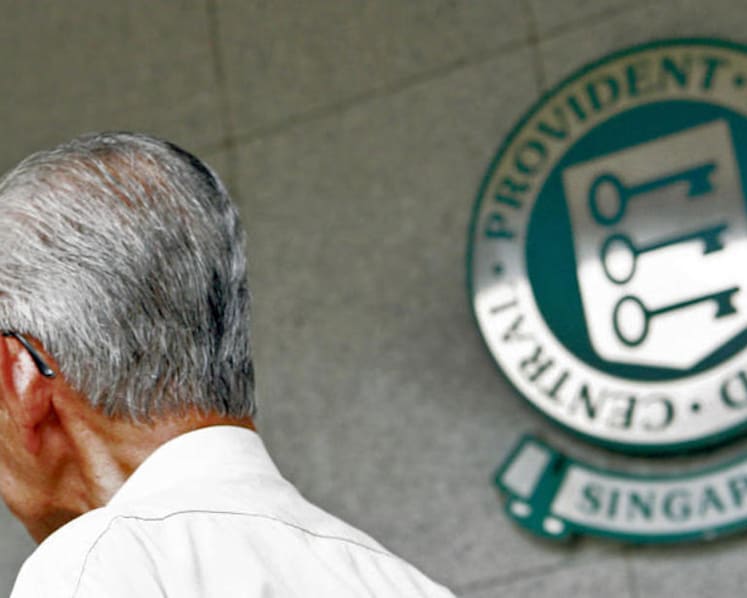
In the coming years, Singapore will have to grapple with mounting, multifaceted challenges that have already put a strain on the financial security of today’s retirees — and will create greater uncertainties for tomorrow’s silver generation.


Each week, TODAY’s long-running Big Read series delves into the trends and issues that matter. This week, we look at how a myriad of challenges shaping retirement today means that younger Singaporeans will have to think differently about their golden years when their turn comes. This is a shortened version of the full feature, which can be found here.
SINGAPORE — Published last month, the latest Household Expenditure Survey — conducted every five years — found that retiree households living in public flats here receive an average of S$1,522 each month for their retirement needs, with the bulk of it coming from their children or relatives.
This is the breakdown: S$280 from Central Provident Fund (CPF) payouts; S$485 from familial transfers; S$180 from personal investments; S$178 from rental income including proceeds from subletting or Lease Buyback Scheme for example; and S$399 from other sources, including pensions and government aid.
Amid growing concerns among experts and policymakers over retirement adequacy in Singapore, the statistics provide a snapshot of how today’s retirees are meeting their needs.





The current reality, however, is quite different from what some young Singaporeans have in mind — at least the rare few who have started thinking about retirement adequacy — when their turn comes to enjoy their golden years.
Retirement will be a key topic during the National Day Rally on Sunday, Prime Minister Lee Hsien Loong had said earlier. Among other things, Mr Lee will be speaking on the raising of the re-employment and retirement ages — currently at 62 and 67 respectively — for those who wish to work longer.
Indeed, in the coming years, Singapore will have to grapple with mounting, multifaceted challenges that have already put a strain on the financial security of today’s retirees, and will create greater uncertainties for tomorrow’s silver generation, a range of experts — economists, sociologists and financial consultants — and union leaders told TODAY.
These include:
- Ageing population, and demographic trends such as rising singlehood, smaller family sizes, dwindling fertility rates and longer life expectancies
- Labour challenges, including possible labour scarcity and technological disruption
- Volatility in the global economy and in the property market, as well as rising costs and standard of living.
- Lack of financial literacy among the general population, and the risk of overburdening the CPF system which has evolved over the years to take on multiple needs in the areas of retirement, education, home ownership as well as healthcare.
EVOLUTION OF CPF SYSTEM
- In 2016, then Deputy Prime Minister Tharman Shanmugaratnam noted the simplicity of the CPF system in the early years. “People were by and large poor, didn’t own their homes, and the CPF was really a very simple scheme,” said Mr Tharman, who is now Senior Minister. “It was in fact not really a retirement savings scheme. It was a savings scheme for home ownership first and foremost, with very modest amounts being set aside for retirement.”
- When the CPF system came into effect in 1955, the average Singaporean lifespan was 60 — just five years more than the retirement and CPF withdrawal age of 55 at the time.
- In the mid-’90s, the Government began tweaking the system as Singaporeans’ incomes grew. With most people owning their homes, CPF’s focus moved to boosting cash savings for retirement — limits were imposed on withdrawals for housing and the interest rates of CPF savings were raised.
- Against a backdrop of increasing life expectancy, CPF Life was introduced in 2009. This annuity scheme that gives lifelong payouts from the payout eligibility age — currently set at 65 for those born after 1954 — accounts for longevity risks by pooling together the funds of members’ Retirement Accounts, and sharing the interests earned among all members, including those who live longer than the average lifespan.
- Currently, the CPF Investment Scheme (CPFIS) allows members to invest their CPF Ordinary Account savings into a wide range of investment products, but they bear the risks of the investment. Another lower risk investment scheme that taps CPF monies, the Lifetime Retirement Investment Scheme, was announced in 2016 to simplify choices for CPF members, though it has yet to be rolled out.
LIMITATIONS AND THE ‘KEY RISK’
Based purely on contributions from its members, the CPF initially could not address retirement adequacy of segments of the population such as workers in low-wage and casual jobs, non-working mothers as well as elderly CPF members, National University of Singapore Associate Professor Chia Ngee-Choon wrote in a 2015 paper calling for a new pillar of retirement for these workers.
Some economists argue that these issues affecting the vulnerable groups continue today — for example, the growing gig economy consists of casual workers who do not contribute to CPF.
Compared with the past, the CPF, as well as the entire retirement security system, now faces greater labour market risks that affect all members, instead of particular segments, the experts said.
Nevertheless, some experts noted that the key risk to retirement adequacy and the CPF system is longevity risk whereby a retiree outlives his or her income stream.
Based on the latest national data, the average life expectancy of a newborn Singaporean is 83.2, which means that half of the population will live beyond 83. For Singaporeans aged 65, their average life expectancy is 21.1 years, with women living longer than men by more than three years, based on national data. A third of Singaporeans will live beyond 90 years old.
DWINDLING FAMILY SUPPORT
- Underpinning the Government’s social policies — including the CPF system — are individual effort and responsibility for the family.
- The latest Household Expenditure Survey showed that out of the total income of retiree households living in Housing and Development Board (HDB) flats, contributions from children, relatives as well as friends residing elsewhere make up 32 per cent of their retirement income on average.
- This is the largest component of retirement income among HDB residents, compared with the 18 per cent from CPF annuities and monthly payouts.
- However, with total fertility rates falling steadily since the turn of the century, leading to smaller household sizes, as well as a growing number of Singaporeans who remain single, experts point out that family financial support would decline as a source of retirement funding.
HOME OWNERSHIP AS A SECURITY BLANKET
- The Government has encouraged home ownership as one of four pillars of social security — alongside CPF, healthcare assurance and additional support for older low-wage Singaporeans through Workfare.
- Noting that the policy has led to asset-rich and cash-poor seniors,Institute of Policy Studies senior research fellow Christopher Gee pointed out that the Government has introduced property monetisation options such as the Lease Buyback Scheme.
- For HDB flats which are sold on 99-year leases, Singaporeans aged 65 or older can choose to sell back to HDB the remaining lease on their homes through the scheme, monetising their flats for retirement purposes.
- The scheme, launched in 2009 and enhanced twice in 2015 and at the start of this year, provides a stream of income during retirement years while allowing eligible Singaporeans to continue living in their flats.
- The scheme has been lauded by property analysts and provides for income security, even as home values fall towards the tail-end of the lease, at which point the flat has zero monetary value and the land it sits on is returned to the HDB.
- Other schemes, such as the HDB’s Voluntary Early Redevelopment Scheme and the Home Improvement Programme, aim to preserve the value of older flats.
- But some analysts also warned of pitfalls when people over-rely on rental income and property windfalls for retirement, given the vagaries of the property market in recent years.
INVESTMENT INCOME AND FINANCIAL LITERACY
- While having a diversified portfolio for retirement is ideal, studies have shown that most Singaporeans do not take active ownership of their retirement plans.
- OCBC’s inaugural Financial Wellness Index this year showed that 34 per cent of Singaporeans do not invest at all. Nearly half of Singaporeans also have zero passive income.
- The latest Household Expenditure Survey found that on average, investment income make up around 12 per cent of HDB retiree household income. In sharp contrast, it comprises more than half of the retirement income of families living in private property.
- Yet, just like property, investments can be a double-edged sword as a source of retirement income, since it is also subject to market fluctuations.
- Urging for more outreach and awareness in schools and workplaces, Ms K Thanaletchimi, the president of the Healthcare Services Employees' Union (HSEU) and a former Nominated Member of Parliament (NMP), said even simple lessons by parents to their children, such as the importance of saving and how to grow their savings prudently, would help.
ELDERLY EMPLOYMENT
- For older Singaporeans who have “missed out” on these lessons on retirement planning, there is a “dire need” to ensure that they are able to continue working in order to build up their savings for retirement, Ms Thanaletchimi added.
- Nevertheless, she noted that in a recent survey by the HSEU, a majority of those above 55 polled preferred early retirement despite knowing the difficulties in funding their retirement over a longer time.
- Assoc Prof Walter Theseira, an NMP and economist from the Singapore University of Social Sciences, said with the demographic and economic challenges today, as well as with the rising standard of living, working till an older age is one way to increase an individual’s financial resources for retirement. Otherwise, the rest of the country would have to bear the financial burden through taxes or the use of reserves, he noted.




