

The Big Read in short: How streaming got outdated
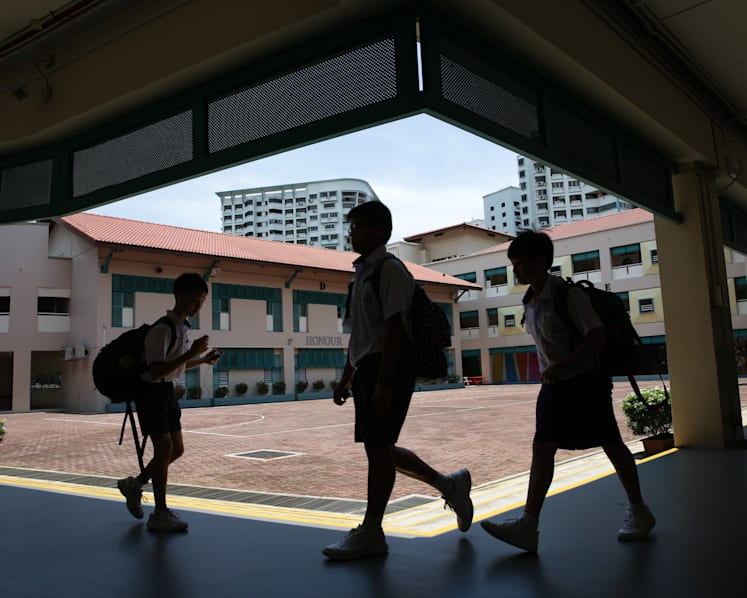
Factors such as the widening inequality gap, rigidity of the streaming, coupled with the growth of educational pathways and students’ changing aspirations made streaming outdated.


Each week, TODAY’s long-running Big Read series delves into trends and issues that matter. This week, we look at how streaming has become outdated. This is a shortened version of the full feature, which can be found here.
SINGAPORE — The Express students would "make snarky remarks that Normal stream students are not as smart as them or we’re slow learners”, recalled 23-year-old Fathul Hanif Ariffin.
Like many who went through the Normal stream, he experienced the stigma of being a Normal (Academic) student at Hougang Secondary School, where he studied from 2008 to 2012.
He felt even more demoralised when his teachers made similar cutting remarks, such as asking him and his classmates: “Don’t you want to go to Express?”





While his teachers perhaps intended to motivate students, they ended up demoralising them. Their comments also came across as “condescending”, said Mr Fathul, who received a bond-free scholarship from his previous school Temasek Polytechnic to study communications and media studies at the University of Western Australia. He is currently a first-year student there.
The jury is still out, however, on whether the streaming policy is a success or failure, said education experts, past and present Members of Parliament (MPs) as well as former students.
For a while, streaming did serve its purpose in cutting down drop-out rates and kept students in schools, they added.
But factors such as the widening inequality gap, rigidity of the streaming, coupled with the growth of educational pathways and students’ changing aspirations made streaming outdated.
Read also
- No more streaming at sec schools: Some cheer, but concerns remain
- Timeline: How secondary school streaming evolved over the decades
“It was well-intentioned and did show results,” said Dr Intan Azura Mokhtar, an MP for Ang Mo Kio Group Representation Constituency.
“But ultimately, when society becomes more well-educated and more affluent, we aspire for an education system and landscape that can cater to differences and which can be customised to our diverse needs and expectations,” added Dr Intan, who is the deputy chair of the government parliamentary committee for education and an Assistant Professor at the Singapore Institute of Technology.
“Streaming is not able to provide that.”
The perennial debate on streaming took a decisive turn on Tuesday when Education Minister Ong Ye Kung announced that the system would be scrapped by 2024, and replaced by subject-based banding.
NO CLEAR CUT ANSWER
Some called it a success, others a failure. While there is no clear-cut answer on whether streaming has worked or not, most experts pointed out that it succeeded at a time when it was needed. Over time, though, it became outdated due to several factors.
-
Rigidity of streaming: Associate Professor Jason Tan, from the National Institute of Education’s policy and leadership studies department, said the system was “overly rigid” and did not allow much inter-stream mobility. Not many subject options were given to students, he added, citing for instance that Normal (Technical) students are given vocational-type subjects, indicating that they could only go to certain post-secondary institutions and perform certain types of jobs.
-
Changing aspirations: Such rigidity does not help amid changing aspirations, said those interviewed. And students wanting to break out of the paths dictated for them to pursue growing job opportunities made streaming outdated, they added.
-
More educational pathways: One other factor that made streaming “redundant” is the recognition that students have diverse strengths, as well as the opening up of educational pathways.
Education experts pointed out that this was reflected in the scrapping of primary school streaming. In addition, the Ministry of Education has ramped up efforts to open up routes for Normal stream students to polytechnics and place more emphasis on aptitude admissions.
Read also
- Problem of social divide extends beyond the school
- How I deal with the label of being from the Normal stream
STREAMING NOT A PANACEA
Former Nominated Member of Parliament Calvin Cheng stressed that removing streaming will not solve the issue of social divide.
On the point that streaming has contributed to, or exacerbated, a class divide, he said critics had got the “cause and effect wrong”.
Children’s socioeconomic backgrounds contribute to their different academic abilities. It is not the other way around, he said. As such, whether streaming exists or not, the solution should be to help children of poorer families perform in school.
While there is a need to ensure students achieve success, the solution is not to scrap streaming or dumb down examinations. There is still a need to pursue excellence, said Mr Cheng.
Elite schools are unaffected by the move as they only have a single stream, said Assoc Prof Tan. There could be a situation where the divide between elite and non-elite schools will be more pronounced, he added.
Mr Cheng quipped: “It’s now the top 10 per cent and the rest… You cannot un-stream away differences. Policy cannot make equal what nature has made unequal.”
Implementation of the subject-based banding also raises questions on how students will be assessed when it comes to post-secondary institutions or even when they enter the workforce. Assoc Prof Tan pointed out that though the new system sort of provides “equal opportunities”, it “does not promise everyone equal outcomes”.
Entry into junior colleges, he pointed out, should remain rigorous as their sole purpose is to prepare students for university education, and colleges are not at all vocationally oriented.
When it comes to the workforce though, experts said the new system would not have much of an impact since students would receive similar certifications albeit with different subject combinations.




