The Big Read in short: Stemming child abuse — when being a ‘kaypoh’ can help protect young lives
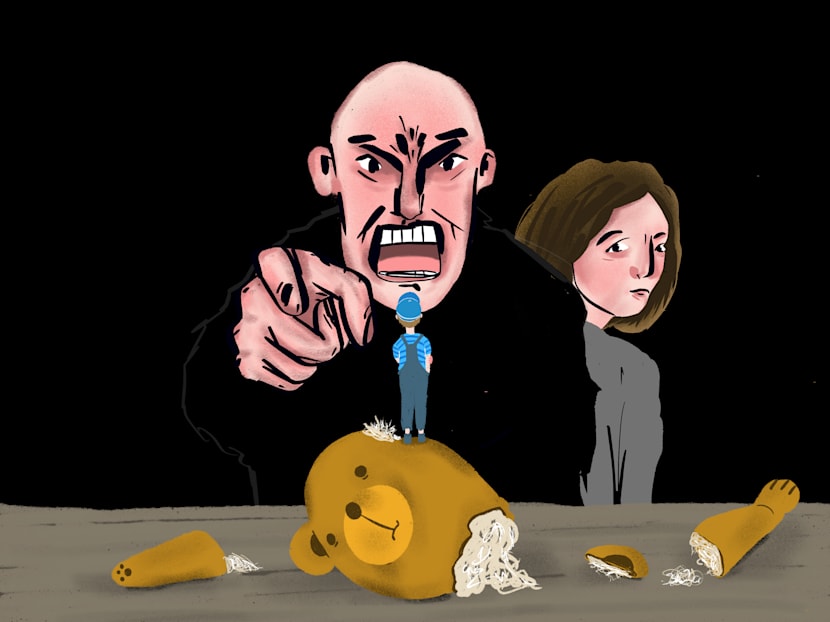
In 2018, the ministry’s Child Protective Service (CPS) investigated 1,163 cases of child abuse, a surge from the 894 cases it looked at in 2017.


Each week, TODAY’s long-running Big Read series delves into the trends and issues that matter. This week, we look at the issue of child abuse and the community’s role in tackling the problem. This is a shortened version of the feature, which can be found here.
SINGAPORE — In recent weeks, Singaporeans have been gripped by a spate of alleged child abuse cases that have led to the loss of innocent young lives.
While these cases remain before the courts, statistics from the Ministry of Social and Family Development (MSF) show that the number of child abuse cases has jumped threefold over the past five years: In 2014, there was a total of 381 cases investigated by MSF’s Child Protective Service. The figure went up to 551 in 2015, and 873 in 2016. The number edged up to 894 in 2017, before jumping to 1,163 last year. For this year, it is estimated that the number of cases would reach over 1,000, similar to 2018.
MSF said that the number of cases has increased since 2015, when it “introduced more rigorous screening tools and training for professionals including social workers, educators, counsellors and health professionals over the years”.
The rising number of cases could also be partly due to greater awareness generated by community outreach and public education efforts on child protection and family violence, said Ms Ng Sook Wai, principal counsellor at child protection specialist centre Heart@Fei Yue.
Still, the number of cases reported may be the tip of the iceberg.
Social service workers and former victims interviewed by TODAY said that child abuse could be underreported. Among other reasons, the victims often do not know who they can turn to for help and even when they confide in older family members, there is a tendency to keep it within the family due to the stigma and shame.
FORMER VICTIMS RECOUNT EXPERIENCES
Under MSF’s guidelines, any act that causes deliberate injury to a child which includes actions such as beating, shaking and “excessive discipline”, constitutes physical abuse.
Separately, the Children and Young Persons Act (CYPA) states that physical abuse — and the causing of “unnecessary” physical pain, suffering or injury — amount to ill-treatment.
Retail manager Nur (not her real name) had been physically abused by her stepfather for 11 years, until she moved out of her family’s home at 18.
Now 26, she recounted that her mother, who worked as a hawker stall assistant, was rarely at home.
She recalled one occasion when her stepfather hurled a cup of coffee which she made for him in her face because he did not like the taste of it.
There was another occasion when her stepfather flew into a rage and threw her across the living room of their one-room flat. This was after she accidentally sat on the television remote control and changed the channel which he was watching. She was 7 years old then.
Nur recalled that when she told her mother about the incidents, she did not believe her. Even when she showed her the bruises on her body, her mother defended the stepfather’s actions as acts of discipline.
Two other former victims, June and Ben (not their real names), told TODAY they were also hurt by the very family members they had placed their trust in.
When June’s parents allowed her aunt’s family of 10 into their home amid financial distress, she welcomed them with open arms.
But the project coordinator, now 28, never thought her own cousin would sexually abuse her at the tender age of 7.
In fact, when the actions of her cousin, who was 17 then, reached his mother’s ears, she made June swear on a holy book that she was telling the truth.
His mother also grilled June about the incidents as if to cast doubt on whether they actually happened. In the end, the matter was swept under the carpet by the family — including her parents — and never raised again.
POSSIBLE CAUSES OF CHILD ABUSE
Ben, a 22-year-old undergraduate, also recalled having no one to turn to when he was physically abused by his father, who saw his own actions as corporal punishment to discipline Ben.
As he grew older, he got into altercations with his father who even threatened him with a knife on a few occasions.
“I tried to understand where he was coming from. His parents were absent so my take is that it made him more possessive in trying to (prove that he is not an absentee parent),” said Ben.
He added: “We are not very rich, so a lot of pressure was put on me to get a scholarship… The fact that my mum worked and he didn’t could have added to some sort of inferiority complex too.”
Indeed, a convicted child abuser — who was released from prison about three years ago — told TODAY that about a decade ago, financial distress had led him to abuse his former girlfriend’s two-year-old daughter, who later died of brain injuries.
For his crime, Mohd (not his real name) was sentenced to 12 years’ jail and given 12 strokes of the cane.
Now 39, Mohd is currently working as a head chef at a restaurant. He said that at the time of his offences, he was financially supporting his family as the eldest son out of four siblings, as well as his girlfriend and her two children.
While child abuse may seem to be more prevalent in families struggling to make ends meet, this is not always the case.
A former victim, 26, who wanted to be known only as Chong, came from a middle income family.
He recounted how his father would punish him for misbehaving by punching him in the stomach, making him walk on broken eggshells or locking him up for hours in the dark storeroom of the family’s condominium.
According to experts, child abusers often face stressors such as a history of abuse or neglect as a child, financial difficulties, unemployment, marital woes, mental health issues and substance abuse.
HOW CASES ARE HANDLED
- MSF receives referrals of suspected child abuse from various sources, such as social service agencies, law enforcement agencies, schools, hospitals and even members of the public.
- The ministry’s existing network of welfare centres includes HEART@Fei Yue and Big Love Child Protection Specialist Centre, which see moderate to low-risk child protection cases.
- Heart@Fei Yue introduced its Triage system in 2014, which allows family service centres (FSCs) to refer cases straight to the agency after checking the case against the child abuse reporting guide and the specific screening guide — standard tools to decide the severity of cases.
- Both centres also receive referrals from members of the public through their hotlines.
- When they receive a referral, they ascertain and assess the safety of the child concerned to determine if he or she can remain in the care of the caregivers or parents, as well as the support and services required for the child, said Ms Serene Tan, director of Big Love.
- In cases where the child is deemed to be at risk of abuse, alternative placement may also be recommended if the caregivers or parents are unable to keep the child safe, said Ms Tan. These include situations where the parent or caregiver has serious mental health concerns or there is spousal violence within the family.
- When there is no parent to care for the child, such as when both are arrested and imprisoned, the Child Protective Service will place the child with extended family members who are able to provide adequate care, said the MSF spokesperson.
- If this is not possible, the Child Protective Service will consider placing the child with an MSF-registered foster parent or in residential care, which it checks on regularly.
As of June, there were 542 children in foster care and 607 children in residential care.
For parents who are incarcerated, the Child Protective Service will assess whether it is safe for their child to be returned to them after their release.
In September, an amendment to the CYPA was also passed in Parliament which allows the authorities to intervene in cases of abuse involving young children.
The age limit of what is considered a young person was also raised from 16 to 18.
ROLE OF COMMUNITY
While laws have been tightened and more official resources set aside to deal with the problem, these alone will not be sufficient to stop child abuse.
The community at large, especially neighbours and relatives, have an important role to play in responding to victims’ cries of help — sometimes, literally.
MSF cited a case last year where a family heard a loud commotion from an adjacent block and successfully intervened in a domestic violence incident.
The family managed to protect the victim from physical harm and calmed down the perpetrator while waiting for the police to arrive.
However, some Singaporeans whom TODAY spoke to admitted that it is not in their nature to be “busybodies” and intervene in their neighbours’ domestic affairs.
Pointing out that the reasons for child abuse are often complex, the MSF spokesperson reiterated that child protection is a collective responsibility.
“With the support of the community to stand up for vulnerable individuals and report suspected cases of abuse, networks can be strengthened to prevent child abuse and keep our children safe,” said the spokesperson.
SCARS REMAIN LONG AFTER ABUSE ENDS
Children who suffer abuse are highly likely to develop emotional or mental scars, and most of the abuse victims interviewed said they continue to suffer from anxiety and depression even after the abuse had long ended. Some also had to deal with anger-management issues.
To help victims get back on their feet, MSF said it provides counselling or casework management services by FSCs, as well as targeted counselling or psychotherapy sessions by psychologists or counsellors from the ministry, the Institute of Mental Health and other community agencies.
The scars remain for a long time not only for ex-victims of child abuse — but sometimes, for former abusers themselves.
Mohd said the guilt of killing a child would stick with him forever.
Cusping his face in his hands, he added: “I loved that child. If I could do it all over again, I would have sought help or go nowhere near her.”