

Allowing convicted maid abusers to hire again may facilitate more abuse
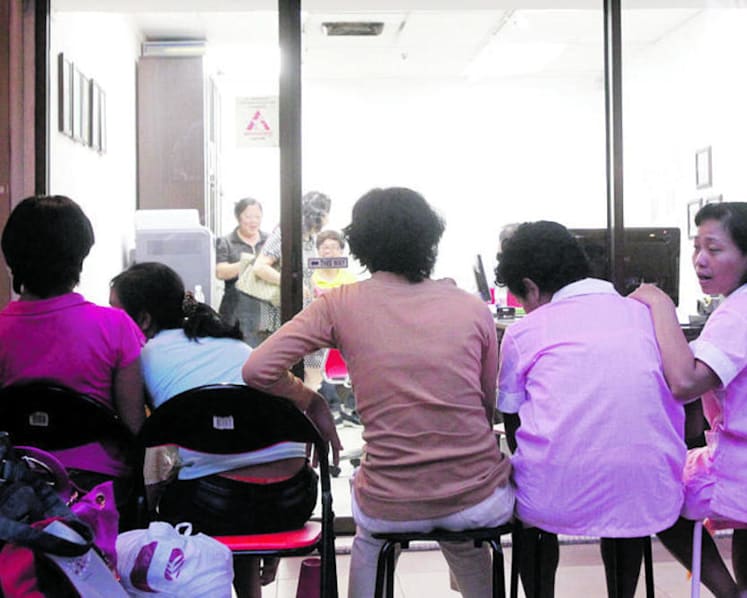
The writer says allowing maid abusers to hire domestic helpers reintegrates them into the situation in which they committed that offence.
I write in response to Assistant Professor Benjamin Joshua Ong’s letter, “Instead of banning maid abusers from rehiring, consider these options” (Aug 13).
Asst Prof Ong rightly points out that our system of criminal justice offers all but the worst offenders an opportunity to demonstrate that their sentence has rehabilitated them. Hence, he believes that even maid abusers, such as Zariah Mohd Ali and Mohamad Dahlan, convicted of abuse in 2001 and 2019, should be allowed to hire maids again, albeit with numerous safeguards.
Rehabilitation is a cause that I strongly support, as humans are certainly capable of changing their behaviour and mindsets if they are willing to.
Nevertheless, the situation of hiring maids is unique. By permitting offenders to hire domestic helpers again, we are allowing them to be reintegrated into the situation in which they committed that offence.
For instance, after paedophiles have served their sentence, we do not allow them to interact unsupervised with children for prolonged periods.
Asst Prof Ong’s suggestions to safeguard prospective domestic workers are thought-provoking, but may not offer concrete protection.
First, he suggests making a prospective employer place a large deposit that will be forfeited if the employer reoffends. Money is not the best deterrent. After all, Zariah had been ordered to pay S$56,497 in compensation to the second maid whom she abused. Hence, any deposit would have to exceed that amount. There are also many employers who are likely to be wealthy enough to forfeit such large deposits.
Second, he suggests requiring a prospective employer to disclose his criminal history to a prospective domestic worker, to allow the worker to make an informed decision. This would be ideal if the employer-worker relationship were an equal one. But this is not the case where the worker may be desperate for employment owing to heavy debts incurred in the recruitment process. She may also be pressured by the agency to accept employment.
Third, he suggests having domestic workers undergo regular checkups by professionals trained to spot signs of abuse. Again, this is ideal, but once a maid is contracted with an employer, her movement is strictly monitored. It is highly unlikely that an abusive employer would allow the worker to undergo such checkups.
Have views on this issue or a news topic you care about? Send your letter to voices [at] mediacorp.com.sg with your full name, address and phone number.




