

The ‘amicable’ divorce? Give me a break
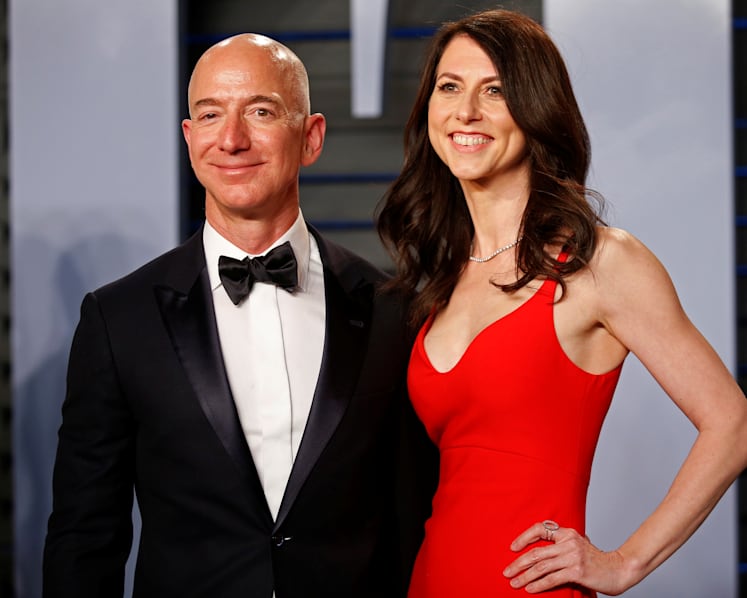
The statement announcing the divorce of Jeff and Mackenzie Bezos was "so hokey in temper that it suggested the Bezos bonds of matrimony had been a boy-scout escapade in which this latest endeavour might just qualify for some sort of merit award".
Despite being a nasty cynic in most areas of my life, I always feel quite crestfallen by celebrity break-ups. I was genuinely crushed by the failure of Ben Affleck and Jennifer Garner’s marriage. And let’s not even get started on that other Jennifer — and Brad.
The news that Adele had separated from her husband Simon Konecki after three years of marriage was announced with a clinically efficient press release of the type that now typically accompanies the celebrity split.
“Adele and her partner have separated. They are committed to raising their son together lovingly. As always, they ask for privacy. There will be no further comment.”
The statement was as clean and businesslike in the telling as that regarding any other liquidation — although I suspect the dissolution of the bakery chain Patisserie Valerie was announced with more passion than expressed here.





Then again, marital break-up announcements have taken on the tone of robotic corporate-speak ever since the fabled “conscious uncoupling” of singer Chris Martin and his Hollywood idol wife Gwyneth Paltrow in 2014.
Where once upon a time the failure of a marriage involved recriminatory accusations, slander and rage, the language of divorce today is a strangely calm idiom in which even the most dramatic of splits is spelt out in neutral platitudes.
Consider the strange transactional patter that accompanied the dissolution of the 25-year marriage of Jeff and Mackenzie Bezos.
“After a long period of loving exploration and trial separation, we have decided to divorce and continue our shared lives as friends,” read the January statement in which the Bezos bust-up was first addressed.
“We’ve had such a great life together as a married couple, and we also see wonderful futures ahead, as parents, friends, partners in ventures and projects, and as individuals pursuing ventures and adventures.”
The statement was so hokey in temper that it suggested the Bezos bonds of matrimony had been a boy-scout escapade in which this latest endeavour might just qualify for some sort of merit award.
The couple’s “heartfelt” appreciation was further amplified a couple of months later, following the “world’s biggest divorce settlement” in which Mackenzie was given an estimated US$35 billion.
“Grateful to have finished the process of dissolving my marriage with Jeff,” she wrote in a tweet so perky, you could feel the jaw ache in its grin.
“Looking forward to the next phase as co-parents and friends, happy to be giving him all of my interests in the Washington Post and Blue Origin, and 75 per cent of our Amazon stock plus voting control of my shares.”
Happy, really?
Frankly, I find the “amicable divorce” even more depressing than a really, really ugly one.
At least in the histrionic antics indulged by divorcing couples of yesteryear there was no pretending that people didn’t care.
I find the passion and pain of divorce more heartening when you get to see how raw and raggedy it is — a kind of reassurance that the marriage might at least have meant something, at some point, to someone.
And I say this as the child of parents who were unhappily married for at least 12 years before announcing they would be separating and then embarking on a break-up of such lunacy that I realised they must be quite fond of each other after all.
Certainly, there were no pledges about “loving commitment” when they finally severed ties. Nor did they express any gratitude about their past happinesses, nor excitement about being “partners” in a future “venture”.
Are you kidding? The whole thing was horrible. How we laughed about it all when we spent a very merry Christmas together a few months later.
Divorce is bloody awful. And we should only do it if we absolutely have to. It’s why I am suspicious of the new “no blame” divorce laws that will soon come into force in the United Kingdom.
These will allow couples to split more hastily, while citing the catch-all cause of “irretrievable breakdown” rather than the trio of spousal evils — adultery, unreasonable behaviour or desertion — that have previously served as grounds for separation.
Of course, I understand that for the good of the children, it might be wise to conduct one’s marital breakdown with some modicum of grace. And this might keep things dignified.
But the idea that we might be able to leave a legally binding relationship just because things have become a bit meh, smacks of basic laziness. Man up, people!
To quote a great truism, often attributed to Paul Newman, who was married to his second wife Joanne Newman for more than 50 years: “What’s the secret to a long, successful marriage? Staying married.”
Weddings are ridiculous enough — with all their ludicrous pageantry and expense and mind-numbingly predictable readings — even before knowing that many will end in calamity.
So if we’re going to tolerate this new vogue for the desultory marriage, we might as well encourage a similarly blasé attitude with which to mark it in the first place.
The “amicable wedding”, where guests are limited to a few really “great individuals” and the bride should go to no bother with a gown. And where there is absolutely no mention of gifts.
Instead friends can tweet the happy couple a few lines about their gratitude, and our “loving commitment” to their union, and then we can all get on with our lives. FINANCIAL TIMES
ABOUT THE AUTHOR:
Jo Ellison is the Financial Times’ fashion editor.




