Are all hand-sanitiser formulations effective against Covid-19? Pay attention to contact time
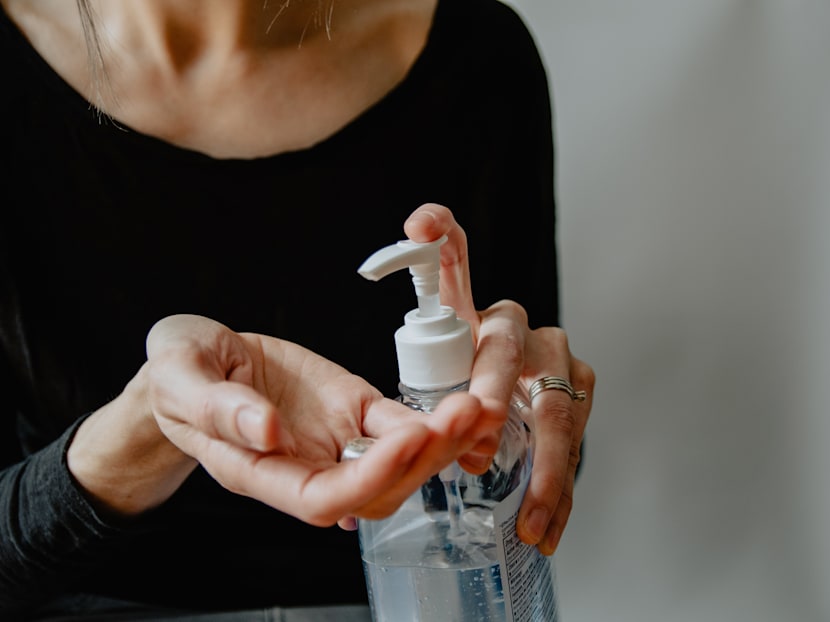
The writer says the public needs to pay attention to the “contact time” needed for various formulations of hand sanitiser to inactivate coronaviruses.
Hand sanitiser is a hot commodity in the age of Covid-19.
There are formulations with different active ingredients — alcohol, benzalkonium chloride (BKC), triclosan and chlorhexidine among them — but not every mixture offers effective protection against Covid-19.
We need to pay attention to the “contact time” needed to inactivate coronaviruses. A formulation that inactivates the virus in 10 minutes may work fine as a surface disinfectant, but will be less effective as a hand sanitiser.
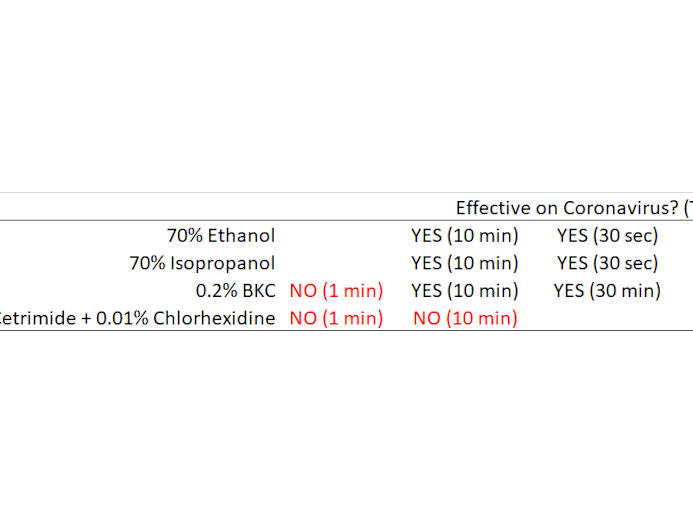
Research has shown that alcohol-based hand sanitiser can inactivate coronaviruses in as little as 30 seconds. Alcohol-free formulations are often ineffective with a one-minute contact time and often require at least 10 minutes to show significant effect.
Below is a table I put together that summarises the results from six groups of researchers — including one from the United States' Centers for Disease Control and Prevention (CDC) — who investigated the effectiveness of active ingredients commonly found in hand sanitiser.
The US Food and Drug Administration advises against the use of quaternary ammonium, such as BKC, as a hand sanitiser. The administration noted that it is intended for use on surfaces and may not be formulated for skin.
The CDC recommends only alcohol-based sanitiser for healthcare professionals. Likewise, the World Health Organization recommends only alcohol-based sanitiser for pandemic control.
Singapore’s National Environment Agency (NEA) has an interim list of active ingredients that are effective against coronaviruses. The list, however, does not distinguish between surface disinfectants and hand sanitiser.
Among the list of active ingredients, 0.05 per cent of BKC was listed as effective against coronaviruses after 10 minutes of contact. The list also states that 70 per cent of ethyl alcohol, a common ingredient in hand sanitiser, is effective against coronaviruses after 10 minutes.
While other studies have shown that alcohol-based sanitiser can inactivate coronaviruses in 30 seconds, I was wondering if the NEA could clarify why it still states a 10-minute contact time for alcohol on its list and if this should be revised.
When using alcohol-free hand sanitiser, we should be mindful of the contact time needed to inactivate coronaviruses. If no alcohol-based option is available, a BKC formulation is probably better than nothing at all. But if both options are available, please choose one that contains at least 60 per cent alcohol.
ABOUT THE WRITER:
Dr Liang Jing is a biomedical scientist at a public research institute.
Have views on this issue or a news topic you care about? Send your letter to voices [at] mediacorp.com.sg with your full name, address and phone number.