

Avoiding the pitfalls of telemedicine
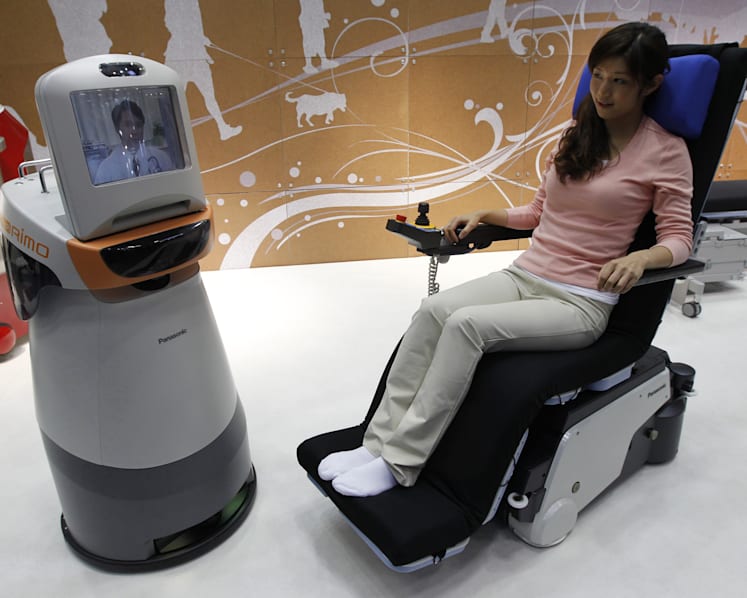
While telemedicine can be useful if used correctly, there are still many questions that have to be addressed, says the author. Photo: Reuters
Public consultation has begun on the proposed new Healthcare Services Bill. Of note is that telemedicine will be regulated by the Ministry of Health for the first time.
In launching the public consultation this month, MOH said that with the new Bill, the regulatory basis will be shifted from “premises-based” licensing to “services-based” licensing.
“This is in recognition of new and emerging healthcare service models and businesses that are not based out of physical locations, such as telemedicine and mobile medical services,” it said.
By all accounts, such a move is long overdue.





Consider the statement on Jan 26 by two industry bodies warning medical practitioners of the “potential pitfalls of telemedicine”.
Doctors who sign on with businesses offering telemedicine services should ensure their clinical decisions are “always…justifiable and defensible”, the College of Family Physicians Singapore and Singapore Medical Association said in a memo to members.
With advances in technology and telecommunication, telemedicine has been touted as the future of medicine. But misperceptions abound about it. Beyond correcting such myths, it is also important to understand the implications of telemedicine and to address some of these issues early for the benefit of patients and doctors alike.
DEBUNKING MYTHS
The most common myths of telemedicine are that it is new, requires expensive, cutting edge technology, can help patients save cost and reach their doctors any time and will ultimately replace traditional face-to-face consultations one day.
To put it simply, telemedicine entails the exchanges of information between doctors and patients/caregivers or among doctors using any form of ICT, such as a telephone, SMS or WhatsApp message, etc.
So telemedicine has, in fact, been around since the invention of the telephone more than 100 years ago.
Of course, the difference is that today, with better technology, telemedicine can be done with greater accuracy and precision, even for complicated procedures or treatment.
Basic communication devices such as mobile phones, tablets and personal computers are good enough to transmit radiology images, endoscopic videos, laboratory reports etc via email, WhatsApp messages and Skype chats.
Of course, if we are talking about providing virtual consultation with overseas patients or getting foreign expert surgeons to operate on local patients remotely via robotics surgery, then the cost will increase significantly.
Ultimately, telemedicine does not allow doctors to physically examine patients nor conduct investigations. So when patients require blood pressure measurements, visual acuity checks, or investigations such as blood tests, imaging, or endoscopy, they still have to present themselves physically at their doctors’ clinics.
Face-to-face consultation will still be the main mode of consultation for most medical disciplines. Telemedicine, which currently works best for medical disciplines such as psychiatry, or routine post discharge follow up, would augment, but not replace, traditional in-person consultation.
While telemedicine can be useful if used correctly, there are still many questions that have to be addressed.
The first relates to virtual platforms offering health consultations, which are the subject of the medical bodies’ warning last week.
These platforms employ full-time medical doctors or locum doctors, who then advertise their services on social media.
An app is used, and it matches patients to available doctors in real time for consultations via a video conference - a cut is taken from the doctor’s fees as payment for the matching and other services.
Some developers put up satisfied patients’ testimony on their websites. Others even openly advertise that they can provide “cheap” medical certificates.
How should such platforms be regulated by MOH? Would MOH impose the same rules and regulations for a physical medical clinic on telemedicine apps?
As a telemedical consultation cannot be comprehensive, should pharmacies accept a prescription based on teleconsultation alone? Would controlled drugs like sleeping pills, painkillers, narcotics, cough mixtures etc be excluded from prescription via telemedical consultation?
Should employers accept medical certificates from telemedical consultation? Would telemedicine be abused and become a convenient way to obtain medical leave?
Another area of concern relates to the transboundary nature of telemedicine.
MOH has said that for telemedicine providers based overseas who wish to provide services to patients in Singapore, requirements for them to tie up with a local licensed doctor or provider will be explored.
But what about Singapore-registered doctors who want to practice telemedicine internationally, even though they are not allowed to do so legally?
This also raises the issue of medical indemnity.
My profession indemnity insurance covers my work as a gastroenterologist in the traditional manner in Singapore. My medical indemnity does not cover my work if I am performing procedures or consultations overseas.
When doctors start to give teleconsultations to patients in Singapore and in other countries, would medical indemnity cover such consultations?
Damages and compensation for medical negligence lawsuits are notoriously expensive in some countries like America. Indemnity premiums would rise sharply should Singaporean doctors engage in teleconsultations with overseas patients.
There are also issues related to data security.
MOH mandates that all clinics must keep medical records in a locked cabinet. But how about telemedicine data?
Patients do send me their lab reports, photos, and even videos via email and WhatsApp. After I read them, should I routinely save them on a secure hard disk, and then delete them on my device? What if a doctor accidentally forwards sensitive materials to his friends or another patient? Would MOH mandate that medical staff use a separate, dedicated handphone for all telemedicine communications? Would MOH mandate a 2-factor authentication to verify users’ identity?
Telemedicine has many advantages, as mentioned. But there are many issues that all stakeholders - patients, caregivers, medical personnel, insurance industries, healthcare providers and regulators - must resolve before bigger problems crop up.
MOH said last week that it is working with providers to “better understand their business models and will work with them to develop appropriate regulations for telemedicine”.
The faster this is done, the better it would be for the community.
ABOUT THE AUTHOR:
Dr Desmond Wai is a gastroenterologist and hepatologist in private practice.




