

Bottling water from glaciers is not the way to quench China’s thirst
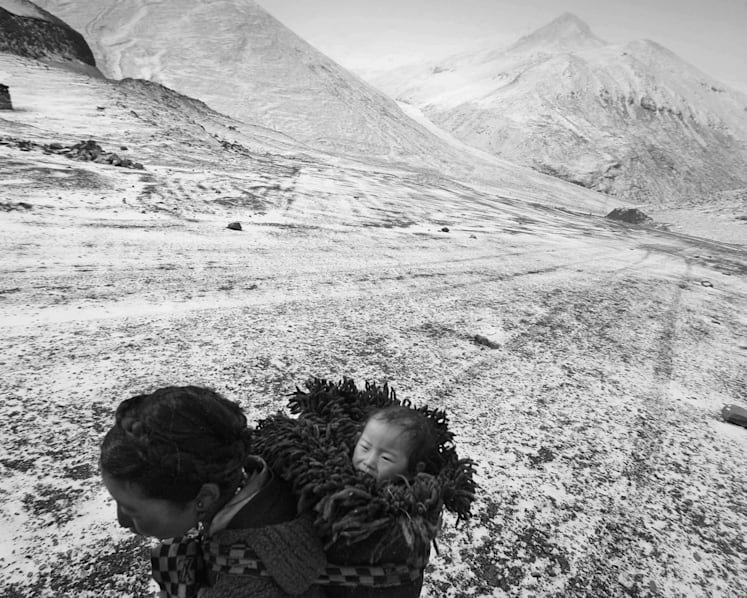
The Tibetan glaciers, along with numerous mountain springs and lakes, supply water to Asia’s great rivers, from the Mekong and the Yangtze to the Indus and the Yellow. Photo: AFP
When identifying threats to Himalayan ecosystems, China stands out. For years, the country has engaged in frenzied damming of rivers and the unbridled exploitation of mineral wealth on the resource-rich Tibetan Plateau. Now it is ramping up efforts to spur its bottled-water industry — the world’s largest and fastest-growing — to siphon off glacier water in the region.
Nearly three-quarters of the 18,000 high-altitude glaciers in the Great Himalayas are in Tibet, with the rest in India and its immediate neighbourhood. The Tibetan glaciers, along with numerous mountain springs and lakes, supply water to Asia’s great rivers, from the Mekong and the Yangtze to the Indus and the Yellow. In fact, the Tibetan Plateau is the starting point of almost all of Asia’s major river systems.
By annexing Tibet, China thus changed Asia’s water map. And it is aiming to change it further, as it builds dams that redirect transboundary riparian flows, thereby acquiring significant leverage over downriver countries. But China is not motivated purely by strategic considerations. With much of the water in its rivers, lakes and aquifers unfit for human consumption, pristine water has become the new oil for China — a precious and vital resource, the overexploitation of which risks wrecking the natural environment.
By encouraging its companies to tap Himalayan glaciers for premium drinking water that can satisfy a public sceptical about the safety of tap water, China is raising the environmental stakes throughout Asia.





Though much of the bottled water currently sold in China comes from other sources — chemically treated tap water or mineral water from other provinces — China seems to think that the bottling of Himalayan glacier water can serve as a new engine of growth, powered by government subsidies.
As part of the official Share Tibet’s Good Water with the World campaign, China is offering bottlers incentives such as tax breaks, low-interest loans and a tiny extraction fee of only 3 yuan (S$0.65) per cubic metre (or 1,000 litres). According to a 10-year plan unveiled by the Chinese authorities in Tibet last autumn, extraction of glacier water will increase more than 50-fold in just the next four years, including for export.
About 30 companies have already been awarded licences to bottle water from Tibet’s ice-capped peaks. Two popular brands in China are Qomolangma Glacier, sourced from a supposedly protected reserve linked to Mount Everest, on the border with Nepal, and 9000 Years, named after the assumed age of its glacial source. A third, Tibet 5100, is so named because it is bottled at a 5,100-metre-high glacial spring in the Nyenchen Tanglha range that feeds the Yarlung Tsangpo (or Brahmaputra River) — the lifeblood of north-eastern India and Bangladesh.
GLACIER-SIPHONING BOOM
Ominously, the Chinese bottled-water industry is sourcing its glacier water mainly from the eastern Himalayas, where accelerated melting of snow and ice fields is already raising concerns in the international scientific community. Glaciers in the western Himalayas, by contrast, are more stable and could be growing. Even the Chinese Academy of Sciences has documented a sharp decrease in the area and mass of eastern Himalayan glaciers.
One of the world’s most biodiverse but ecologically fragile regions, the Tibetan Plateau is now warming at more than twice the average global rate. Beyond undermining the pivotal role Tibet plays in Asian hydrology and climate, this trend endangers the Tibetan Plateau’s unique bird, mammal, amphibian, reptile, fish and medicinal-plant species.
Nonetheless, China is not reconsidering its unbridled extraction of Tibet’s resources. On the contrary, since building railways to Tibet — the first was completed in 2006, with an extension opened in 2014 — China’s efforts have gone into overdrive.
Beyond water, Tibet is the world’s top lithium producer; home to China’s largest reserves of several metals, including copper and chromite (used in steel production); and an important source of diamonds, gold and uranium. In recent years, Chinese-controlled companies have launched a mining frenzy on the plateau that not only damages landscapes sacred to Tibetans, but is also eroding Tibet’s ecology further — including by polluting its precious water.
These are precisely the kinds of actions that caused China’s water crisis in the first place. Instead of learning the lessons of its past mistakes, China is compounding them, forcing a growing number of people and ecosystems to pay the price for its imprudent approach to economic growth.
Indeed, China has implemented no effective safeguards against adverse impacts from intensive water mining. Bottled water is being sourced even from protected reserves where glaciers are already in retreat. Meanwhile, the glacier-siphoning boom is attracting highly polluting ancillary industries, including manufacturers of plastic water bottles.
Make no mistake: Glacier-water mining has major environmental costs in terms of biodiversity loss, impairment of some ecosystem services because of insufficient run-off water, and potential depletion or degradation of glacial springs. Moreover, the process of sourcing, processing, bottling and transporting glacial water from the Himalayas to Chinese cities thousands of miles away has a very large carbon footprint.
Bottling glacier water is not the right way to quench China’s thirst. A better alternative, both environmentally and economically, would be to boost investment in treatment facilities to make tap water safe in cities. Unfortunately, China seems determined to remain on its current course – an approach that could do irreparable and severe damage to Asia’s environment, economy, and political stability. PROJECT SYNDICATE
ABOUT THE AUTHOR:
Brahma Chellaney, professor of Strategic Studies at the New Delhi-based Center for Policy Research and fellow at the Robert Bosch Academy in Berlin, is the author of nine books, including Asian Juggernaut, Water: Asia’s New Battleground, and Water, Peace, and War: Confronting the Global Water Crisis.




