

Building an informed citizenry in the battle against disinformation
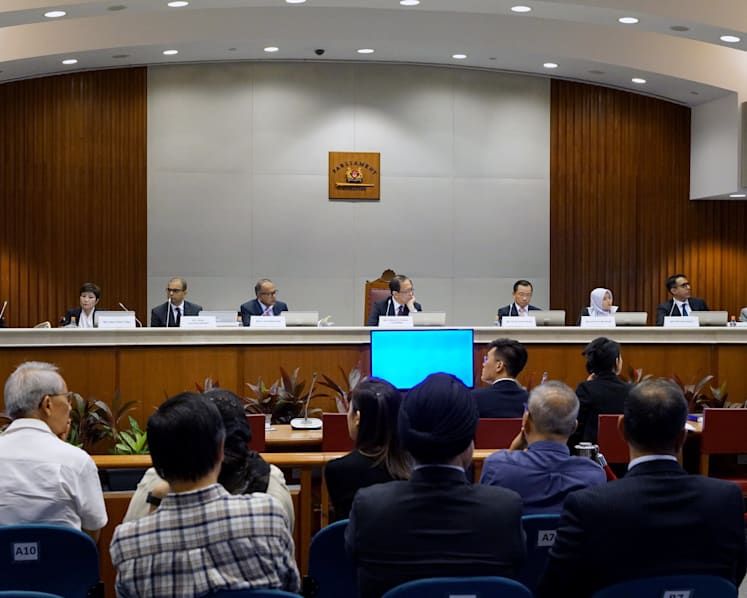
The Select Committee on Deliberate Online Falsehoods at a hearing in March 2018. The author says that while new legislation is an important counter-measure against disinformation, there cannot be too much faith in legislation alone.


Released last week, the report of Select Committee on Deliberate Online Falsehoods affirms a veritable truth: That the best antidote against weaponised falsehoods is an informed citizenry.
The Select Committee’s 22 recommendations propose a comprehensive multi-stakeholder and multi-pronged framework on what should be done to tackle deliberate online falsehoods (DOFs).
The first recommendation on nurturing an informed public stood out. While it is a self-evident truth, it is often undervalued.
It is the public–the average Singaporean–that is the ultimate target of disinformation campaigns. But it is also the public that forms the bulwark and the first line of defence against disinformation.





This recommendation is also likely to be the most challenging to realise the desired outcomes. What does it mean to be an informed citizen? What is an informed citizen informed about and informed by whom?
An informed public will take a substantial period of time to evolve. Given the largely depoliticised environment and the lack of a culture of robust debate here, developing Singaporeans’ nous and sensitivity to DOFs will take extra effort.
To effectively disrupt the spread and influence of DOFs, the committee said that carefully calibrated legislation is necessary.
Such legislation can empower the blocking of access or the removal of offending material as well as prevent people from making financial gains from such nefarious activities.
Yet, legislation, if it is too blunt, can have a chilling effect on public discourse, working against an informed public. As such, the calibration has to be sensitive and balanced.
It is also important that we avoid narrowly focusing on the freedom of speech and expression but instead promote responsible speech and expression so that bad speech and falsehoods are decisively exposed for what they are.
The need for judicial oversight whenever a severe power is exercised is crucial and must constitute a key plank of any proposed law. Further, intended swift counter-measures must be proportionate to the threat level and should be withdrawn promptly once the threat has been neutered.
Unfettered power to clamp down on DOFs poses as grave a threat as deliberate disinformation.
The legislation must also recognise that a government of the day may also be a purveyor of disinformation. So the entire mechanism of refereeing charges of disinformation must not only be impartial but be seen to be impartial.
In this regard, the committee noted that that it is worth considering an independent body to oversee complaints of DOFs.
While new legislation is an important counter-measure, too much faith in legislation is imprudent.
Legislation often deals with “after the fact” situations, that is, remedial action after the unlawful act has been committed. Legislation cannot, for example, engender social cohesion and trust by fiat.
Context is important in understanding how disinformation works in any society - it does not have the same effect and impact globally.
We will need to acquire a better understanding of the disinformation “eco-system” in Singapore.
Gaining a holistic understanding of our strengths and weaknesses in dealing with disinformation and what has enabled us not to be harmed in any significant way is crucial if we are to nurture what has worked for us.
Delving deeper into the news consumption habits by Singaporeans, especially younger Singaporeans, will be a useful starting point. Efforts at having trusted sources of news and information must take into account how news is consumed and understood.
On the threats posed by state-sponsored disinformation operations, the committee noted that “the visible hand of the state” is needed.
A resolute national defence strategy against such unconventional threats has to decisively counter the invisible hand of the enemy.
As an asymmetric form of warfare, disinformation degrades society from within and can happen in a surreptitiously slow manner and during important events like elections.
Clearly, governments alone cannot defeat DOFs without the help of other stakeholders such as tech companies, media organisations, citizen journalists and educational institutions.
While it is foolish to underestimate the threat of DOFs, Singaporeans should also not be unduly alarmed.
Recognise and know the threat for what it is, inoculate ourselves against it, but do not let fear cripple us. Otherwise those who seek to do us harm would have succeeded.
The Government has accepted in-principle the Select Committee’s recommendations. The stage is now set for the development of national action plan and counter-DOF framework to ensure that Singapore is ready and able to thwart the multifaceted threat of DOFs and be resilient as a society.
Given the urgency of the DOF threat, we can expect non-legislative and legislative measures recommended by the committee to be promptly rolled out in five key areas: Nurturing an informed public, reinforcing social cohesion and trust, promoting fact-checking, disrupting online falsehoods, and dealing with threats to national security and sovereignty.
Ultimately, to succeed against the scourge of disinformation, trust in and the resilience of public discourse, public institutions, and the democratic process is a prerequisite.
And at the heart of it all is the informed citizen.
ABOUT THE AUTHOR:
Eugene K B Tan is associate professor at the Singapore Management University School of Law. He made written representations and provided oral evidence before the Select Committee in March 2018.




