Can China continue its economic recovery from Covid-19?
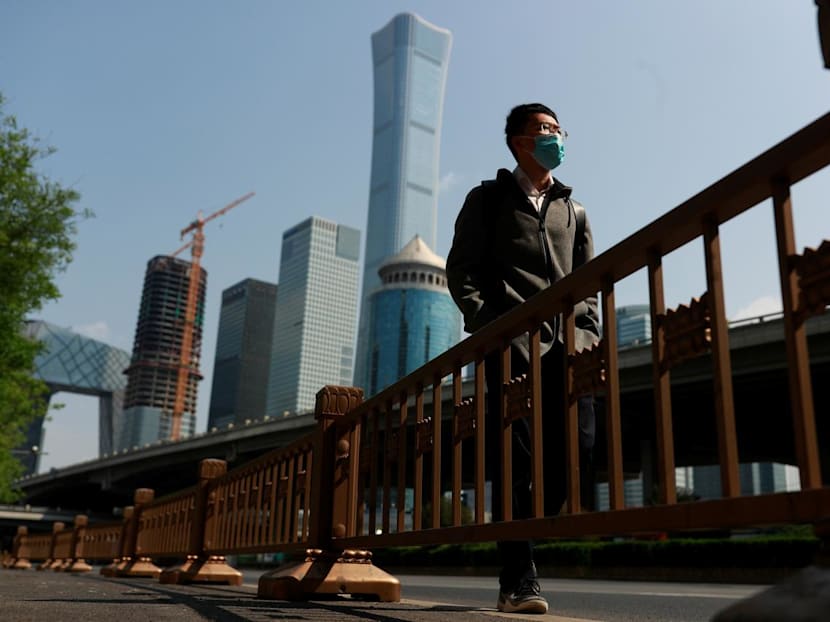
A man walks by Beijing's Central Business District during morning rush hour in China on April 17, 2020.


China continued economic recovery from Covid-19 in the third quarter of 2020 with year-on-year growth of 4.9 per cent.
Though the headline number fell short of expectations, the broadening of growth on both the demand and supply sides bodes well for the rest of the year.
The consensus forecast for growth this year is now 2.2 per cent and China remains the only major economy for which gross domestic product (GDP) is expected to grow.
Investment and net exports led China’s recovery in demand but, as noted by a Deutsche Bank analysis, increasing migrant worker employment numbers and household income suggest consumption will gain strength in the last quarter of the year.





Industrial production growth remained strong at almost 7 per cent year on year, whereas services remain below pre-Covid-19 levels due to capacity limitations in some sub-sectors, including entertainment.
Some of the numbers presented by China’s National Bureau of Statistics are hard to reconcile.
The reported turnaround in consumption in the third quarter seems to be at odds with what was reported over the first three quarters and with reported household expenditures.
Government consumption could explain some of the uptick, but a more likely explanation is a revision of the historical numbers that is yet to be reported.
To what extent China’s recovery is sustainable remains to be seen. Investment in infrastructure, a driver of the recovery in the second quarter, showed a modest 4.7 per cent growth in the third quarter.
Underlying this is weak revenue development at the local level, and despite a generous allocation of local government bonds, a lack of budget funding may further slow growth in infrastructure investment.
Leverage in China’s economy is rapidly increasing, which may force the People’s Bank of China to shift its accommodative stance in the coming months.
On the other hand, the drop in urban unemployment and the return to work of most migrants bode well for consumption.
The recovery in consumer demand is helpful in another respect. China was criticised for focusing support on the production side of the economy during the Covid-19 crisis while only sparingly supporting household incomes, notably of migrant workers.
This contrasted with other economies affected by the pandemic, notably high-income ones, which focused on supporting households.
The result was that China’s recovery was driven by net exports, and indeed, the country’s share of global exports jumped. With a broadening of the recovery, this critique may abate over time.
The fifth plenum of the 19th Central Committee of the Chinese Communist Party discussed a shift in the economic growth model for the coming 14th Five Year Plan 2021–2025.
The country’s external environment is expected to be clouded by a weak recovery in exports after Covid-19 and a shift of some production in pursuit of supply chain resilience, notably in medicine, medical equipment and other essential goods.
China’s leadership expects that, irrespective of the outcome of the United States election, economic competition between the US and China will continue, if not intensify.
The consequence would be that the rapidly increasing restrictions on access to foreign technology are likely to stay.
China’s answer to this environment of lacklustre demand and geopolitical tensions is the "dual circulation" framework, first announced in a May 2020 Politburo Standing Committee meeting.
The concept is still somewhat vague, but it seems to imply greater reliance on the domestic economy rather than on overseas demand and technology (also known as ‘international circulation’), which had been a focus since the mid-1980s as a means to create growth and employment.
For China, this means greater reliance on domestic supply chains, indigenous innovation and domestic demand.
Rebalancing demand towards consumption requires major policy changes. Expansion of the social safety net could help reduce household savings, but both the functional and the interpersonal income distribution also need to change.
Chinese households still receive less than half of what the country produces, so even if the household savings rate falls, consumption would not rise to the level seen in the Organisation for Economic Co-operation and Development countries.
Fiscal reforms — more progressive taxation and a stronger safety net — have the potential to increase consumption. Accelerating urbanisation through reforming, or indeed abolishing, the household registration system (hukou) could also help.
A second plank of the dual circulation framework is innovation, which has taken on new urgency in light of US moves against China.
In response, China is doubling down on efforts to promote "indigenous innovation" by Chinese nationals and companies.
The policy emphasis seems to have shifted towards more fundamental research to reduce dependence on imported foundational technology such as integrated circuits.
Chinese President Xi Jinping’s speech at the Chinese Academy of Sciences emphasised science as a basis for innovation and the need for Chinese science to deliver in the current context "in the face of intense international competition".
No doubt China will set a higher target for R&D spending in the 14th Five Year Plan — perhaps in the order of 3 per cent of GDP, up from the 2.5 per cent for the 13th plan. EAST ASIA FORUM
ABOUT THE AUTHOR:
Bert Hofman is Professor of Practice and Director of the East Asian Institute, National University of Singapore. He previously worked with the World Bank for 27 years, including as country director for China from 2014 to 2019.