The changing world of arts management in Singapore
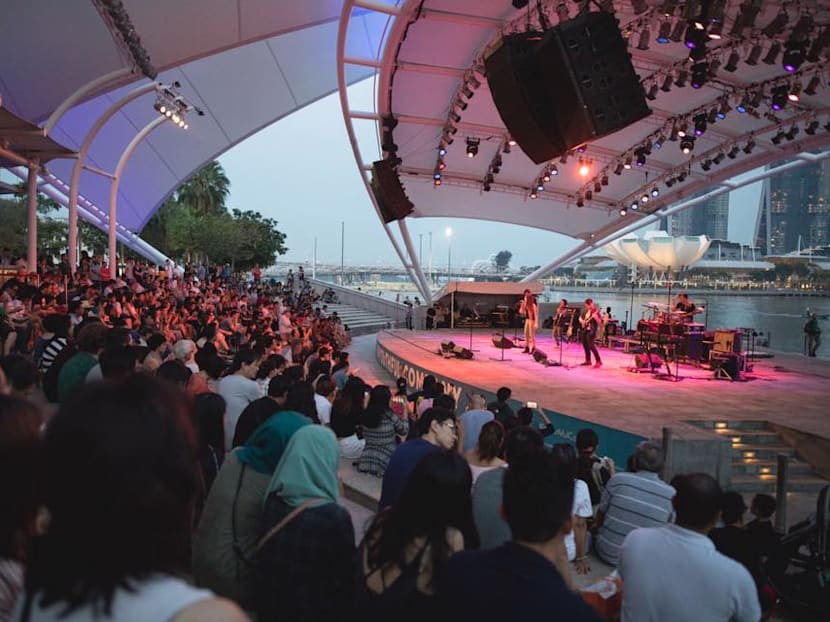
Arts managers who believe in the integrity of the arts need to strike a balancing act between serving the artistic project and communicating the artistic message while satisfying the public, the patron, the sponsor and the government.

What do arts managers do? Twenty years ago, or even 10, many people would have expressed surprise that such a job such as "arts manager" exists.
Today though, it elicits more curiosity than incredulity.
Even taxi drivers these days no longer express shock when I tell them I teach arts management. They are more accepting of the fact that it’s possible for artists to make a living in pragmatic Singapore.
This can be attributed to the increased visibility of the arts in Singapore — just as in many other cities.





Although the mainstream media could still give more coverage to the arts, you can’t escape it particularly if you spend a great deal of time in the city centre.
Banners on street lamps advertise upcoming arts festivals, major exhibitions, and theatre and dance productions.
Local arts groups get this precious advertising space thanks to government support through the National Arts Council.
Like other governments around the world, the Singapore Government has deliberately leveraged the arts to attract investment and talent — the globally mobile professionals.
The economic imperative behind these efforts is obvious: A dynamic city attracts investment, creates jobs and raises the quality of life.
The value of being known as a "creative city" is appealing to governments, and the proliferation of "creative city" strategies around the world has changed the landscape for artists and those who manage the arts.
For one thing, these government plans have created more opportunities for artists and more jobs, and sometimes helps artists with sustainability (a perennial issue).
With the rising demand for shows and exhibitions, artists have a chance to sustain careers and artistic output.
Consequently, the people who put these events together behind the scenes — the arts managers — also have better career prospects whether it be in museums, venues, commercial or non-profit companies.
To some, however, using the arts to serve an economic agenda is problematic: The argument here is that arts and culture become instrumentalised, and their intrinsic value and benefit to humanity is ignored or downplayed.
Governments that see the arts as an instrument to other ends do not necessarily understand the artistic impulse and therefore the needs of artists.
When it comes to choosing between economic gains or artistic integrity, it’s clear which side the powers-that-be will take.
So while the arts manager may be happy producing or presenting arts projects for national institutions, many are mindful that the arts are being exploited to generate other kinds of value beyond the artistic.
Certain types of art forms that are perceived to project a better image for the city may be privileged, which may produce inequalities in the arts, giving more opportunities to favoured artists and less to those who are less mainstream or whose work is perceived to be "difficult".
Resources in the arts are never distributed equitably and, it seems, never sufficient.
Hence, the arts manager who believes in the integrity of the arts needs to strike a balancing act between serving the artistic project and communicating the artistic message while satisfying the public, the patron, the sponsor, the government.
The messages in artistic work may be complex, not easily marketed and communicated to the general public or patrons.
Another recent trend is the rise of "creative placemaking" and governments increasingly are interested in how the arts make a neighbourhood or precinct better, or how arts and culture can regenerate a neighbourhood (again, there are underlying economic imperatives here).
It is arguable whether more arts events in the community is merely cosmetic, or whether it truly deepens citizens’ appreciation of, and participation in, the arts.
In recent years, governments have also taken notice of the potential usefulness of the arts to alleviate social problems. Governments and private foundations are involved in supporting such work.
This may be a more benign instrumentalisation of the arts, and certainly there are many artists who have dedicated their lives to making art with under-served communities, or "doing art" in non-art settings such as in hospitals with patients, in homes with senior citizens, with youth at risk, or children from low-income families.
These have expanded the possibilities for artists and arts managers, especially those with a passion for serving those in need.
So, what exactly do arts managers do today in this changed landscape?
The definition of arts management that we use at Lasalle College of the Arts, where I teach, is that the arts manager is the "connector" between the arts and audiences or the public; they serve the arts, the artist and the public.
At the heart of the work is an understanding and empathy for the art form, and the art maker and art’s potential to transform lives.
The arts manager makes things happen — he/she facilitates an event; sources and secures the financial resources needed; handles the logistics and contracts and takes care of the marketing and communications as well as relationships with different stakeholders.
The expanded world of artistic opportunities in Singapore, particularly the expanded commercial dimension, the rise of "lifestyle" events (festivals that incorporate the arts and cooking, for example) and the increasing involvement of governments in producing festivals and events have impacted the autonomy of the artist and arts manager and transformed their job scopes.
Our arts management graduates are working in non-traditional or new areas.
Examples include organising flea markets, producing events for commercial companies, working as "intermediaries" between the arts and social sectors, and collaborating with government agencies that were not traditionally involved in the arts sector — the Urban Redevelopment Authority of Singapore, for instance.
Some find niches to initiate new projects or launch new companies, taking advantage of opportunities brought about by new media.
It is certainly an interesting time to be an arts manager. I, for one, do not know what other new kinds of work will open up for my students in the future.
We can only try to be open, inquisitive, analytical and reflective, observe and interpret the world as it changes around us, and respond to developments while respecting artistic integrity and ideals.
ABOUT THE AUTHOR:
Audrey Wong, a former Nominated Member of Parliament, is head of the School of Creative Industries at Lasalle College of the Arts.