

Covid-19: Why the workplace will prevail
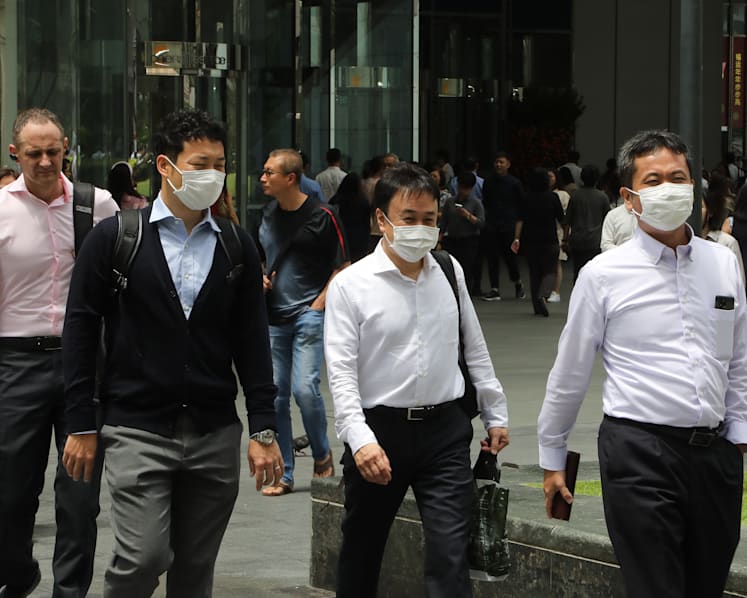
Businesses and the general workforce will face a few difficult months ahead due to the Covid-19 outbreak.
With the Covid-19 outbreak, businesses are bracing for what is turning out to be a bumpy start to the new decade.
On Monday (Feb 17), the Ministry of Trade and Industry slashed Singapore's economic growth forecast for 2020, with a possible full-year recession on the cards.
To be sure, we are better placed to deal with the impact of viral outbreaks today.
Learning from the painful lessons of the severe acute respiratory syndrome (Sars) outbreak in 2002-2003, we have already seen strong measures to contain the spread of the contagion.





These include 14-day quarantines for those who had close contact with infected persons and leave of absences for Singapore residents and long-term pass holders who have been to China. The latter measure will be enhanced to a stay-home notice, which means those served with the notice can no longer leave their homes briefly, such as to have their meals or buy household supplies.
Many companies are also starting to inculcate a stronger culture of personal hygiene in the office such as by providing hand sanitisers or face masks, mandating temperature monitoring and even encouraging employees to stay home or see a doctor if they are unwell.
Singapore has upgraded its Disease Outbreak Response System Condition (Dorscon) to Orange and introduced additional measures to combat further spread at the workplace. Some of these include allowing employees to telecommute or dividing the workforce into segregated teams.
Businesses and the general workforce will face a few difficult months ahead. The coronavirus has demonstrated that it is far more insidious than first thought, with reports of an incubation period of up to 24 days and an infection rate of around 1.5-3.5 per individual.
The high number of Covid-19 cases, which already far exceed Sars, means that there inevitably will be some disruption.
The outbreak is especially damaging to large-scale corporate events in the region, many of which have been planned for months in advance and are vital for marketing and business development purposes.
Organisers of the Singapore Airshow, which attracted some 80,000 people in 2018, have said that ticket sales are “significantly less than half” for 2020, with 70 exhibitors having pulled out.
Credit Suisse has also cancelled its Asian Investment Conference slated for March, arguably the largest business event casualty thus far.
Smaller businesses, without the financial or technological resources of larger companies, also face unique challenges in how they manage the outbreak. For instance, many small businesses use co-working spaces and are unable to directly control the flow of people or moderate hygiene practices in their workplaces.
Along with sole proprietors and freelancers, small businesses usually have lower manpower, and may find it difficult to manage business continuity well should key team members be compelled to work from home or observe quarantine/leave orders.
Certain industries will feel the brunt of the outbreak more severely than others, with tourism, hospitality and retail expected to be more significantly impacted. Companies that employ many front-office or customer-facing staff may also find it difficult to segregate their workforce or have them work remotely.
There are also implications for companies that mainly employ rota-based workers, who will have to adapt to prolonged periods of uncertainty. Hoteliers and flight attendants may find their workload reduced, but healthcare and security professionals may have longer and busier shifts.
The picture at the workplace, however, is not all gloomy.
The workplace today has changed significantly from 2003. Many of the preventive measures outlined are designed to minimise direct contact between individuals as well as to isolate the infected to reduce spread of the contagion.
While this was a big problem for businesses during Sars, the rapid digitalisation of our economy has meant that the workforce today is more interconnected than ever before.
Taking a leaf from the digitalisation of financial services and the subsequent growth of internet banking, many businesses have followed suit and have transformed their brick-and-mortar operations to online-only platforms.
Business functions such as information technology, human resources and customer service can all be carried out through externalised and outsourced operations.
This has helped to insulate both employees and customers from convening at stores, branches or offices and further increasing the risk of infection. Electronic applications and mobile-based support also help in maintaining business as usual.
Growth in e-commerce and telecommunications infrastructure has enabled the workplace to have more control in mitigating disruption.
Clients, customers and colleagues can seamlessly communicate and connect from anywhere in the world thanks to the prevalence of smartphones, the invention of 4G/5G internet and digital tools and services such as cloud storage, videoconferencing and instant messaging platforms.
Alternative channels of communications and project management for the workplace (such as WhatsApp, Teams and Skype) have meant that team meetings can be easily transferred into conference calls. Many companies have rightly advised their employees to work from home and have found little-to-no disruption to productivity.
Businesses can take the lead from DBS, which recently had to evacuate employees in the middle of a workday from their Marina Bay premises after an employee was confirmed to have Covid-19.
While this would normally have been quite disruptive for the operations of Southeast Asia’s largest bank, DBS seamlessly activated business continuity plans, directing under 200 employees to work from home or from split sites and placing 20 employees with close contact with the infected under leave of absence.
Amid disinfecting their office space, DBS also stated that it will provide a personal hygiene and protection pack for all of its employees.
On corporate event continuity, while it has been in the public interest to cancel or postpone large-scale events with high number of attendees, companies can consider digitally streaming future events or producing an accompanying webinar instead
Even travelling to work has also changed significantly since the Sars days, with better transport infrastructure in place and more avenues available to commuters, helping to manage congestion on public transport.
The proliferation of the sharing economy has also somewhat helped in spread prevention efforts. Ridehailing operator Grab announced a new GrabCare service dedicated to providing 24-hour service for healthcare professionals, who can face increased difficulties in travelling to work.
Other ways for employees to manage in the workplace include making use of food couriers to deliver lunch instead of congregating near usually crowded public eateries.
There is certainly a very real sense of fear for now, however we’re in a much better place than we were in 2003.
The steely domestic resolve, business resilience and technological innovation that got Singapore through Sars will prevail and undoubtedly get us through this outbreak too.
ABOUT THE AUTHOR:
Andrew McNeilis is the Managing Director, APAC at Selby Jennings, a specialist recruitment firm for the financial services industry.




