

How should we honour our pioneers properly?
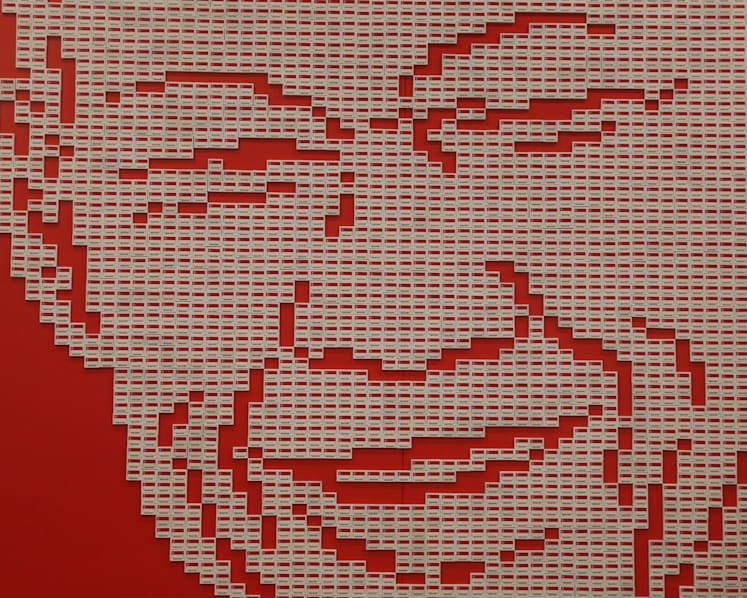
A portrait of the late Mr Lee Kuan Yew that is made up of 4,877 Singapore flag erasers at The Red Box on 20 March 2016. Photo: Ooi Boon Keong/TODAY

Last Wednesday’s commemoration of the passing of Singapore’s first Prime Minister Lee Kuan Yew revealed a nation-state coming to terms with the fact that the first among equals in the founding generation of leaders is no longer with us.
There was perhaps “nostalgia novelty” at play — nostalgia of a bygone era and novelty in our seeking to connect with that pivotal period of our national consciousness that had hitherto received insufficient attention.
That many activities and events were organised to mark the first anniversary of Mr Lee’s passing prompted his daughter, Dr Lee Wei Ling, to pen a lengthy Facebook post last Friday, remarking that her late father “would have cringed at the hero worship just one year after his death”.
Dr Lee winced when she read a newspaper report on Our Father, Our Country, Our Flag, an installation of Mr Lee’s smiling face made of 4,877 erasers. She appreciated the “well-meaning effort” and “sincere gesture” of 110 young Singaporeans in putting together the installation.





However, in looking at acts of commemoration in general, she asked “how the time, effort and resources used to prepare these would benefit Singapore and Singaporeans”.
Nevertheless, she recognised that “perhaps we should allow some space for sentiment for those who feel last year’s events that took place immediately after Papa’s death were not enough to honour Papa”.
We probably would not see such a public outpouring of sadness, like those poignant few weeks in March last year, for a long time to come. That occasion is imprinted in our collective consciousness. It also brought Singaporeans together in a show of national unity.
I suppose the first anniversary of Mr Lee’s passing would be prone to “over commemoration” and sentimentality. Many of us who had participated in the various events last week did so as a mark of respect, a gesture of appreciation and a sign of unity. Subsequent anniversaries, save for the milestone ones, would naturally become more muted in their commemoration.
At another level, the many events islandwide and in our schools reflected an inchoate yearning for our own pantheon of national greats, a society that seeks a better understanding of our past, a desire to reconnect with the ethos of the Pioneer Generation. Their lives, their contributions and their legacies inspire, which we tend to take for granted, and remind and reinforce in us our collective identity and destiny, and the timeless values we should hold fast and dear.
After all, in the midst of relative abundance and quotidian rush for progress and success, we fall, all too easily, into the blind spot of thinking that the past does not matter. But as Winston Churchill once said: “The longer you look back, the farther you can look forward.”
We perhaps intuitively know that.
REMEMBERING THEIR VALUES
Commemorations, however, cannot be just about sentimentality. To be relevant and not be consigned as a museum artefact or a must-see tourist destination, they are not only things that we think of, but are also things that we think with. Even as we remember, we also have invaluable lessons to learn from them, of them, and to act on them.
The Singapore greats are by no means perfect. Like all of us, they had their flaws, frailties and foibles. With the passage of time and with the benefit of hindsight, we will grow as we acquire a balanced appraisal, develop a nuanced and deeper understanding of the contextual realities of our past, by no means a perfect one.
But our past should inspire us and challenge us to do better.
Our national consciousness, history textbooks and National Education programme in our schools will resonate more with young Singaporeans if they present competing and contrasting perspectives, a nuanced and vivid understanding of Singapore.
The past is a pathfinder to the present and future. The concern of a collective amnesia of our past is palpable. Thus far, we tend to remember our greats in generic ways mainly through buildings, lectureships, scholarships, or professorships named in their honour. But more can be done so that we can continue to draw sustenance and benefit from their values, ideals and experience.
Tasked with conceptualising a memorial to honour Singapore’s founders, the Founders’ Memorial Committee has identified two possible sites for its location: Fort Canning Park and Gardens by the Bay’s Bay East Garden. The Committee recommends the latter, as it can “better bring out a forward-looking narrative, offer a more open and welcoming atmosphere, provide better accessibility and hold stronger potential for programming”. The Government is seeking the views of Singaporeans on both options.
The Founders’ memorial has to capture the essence of the ideas, values and spirit of our founding generation. The memorial will have to be subtle, simple and measured; there must be no personality cults. The focus should be on what the founders stood for, rather than of the founders themselves.
A purposeful commemoration should elicit a response in which Singaporeans not only think of who are and what are being commemorated, but also inspires us to think with and to act on the ideals and values they stood for.
Besides the “how to honour” question, who should be honoured is a pertinent question. What about the Pioneer Generation of ordinary Singaporeans, whom the greats partnered and led in contributed to the birth and growth of this nation?
Tributes are always aplenty when an illustrious Singaporean passes on. That was evocatively demonstrated when Mr Lee passed away last year. Let us ensure that the legacy of our pioneers lives on, not only to inspire us but to also provide us with new pathways to critically understand and interpret our nation, our challenges and our evolving destiny. This self-knowledge is our collective intelligence that provides valuable guidance as we navigate uncharted waters.
Our nation’s life story is about our greats and pioneers, who steadfastly believed in our right to be a sovereign nation-state, and who went against the odds to breathe life into and build this little red dot to what it is today. It is to our collective peril if this life-giving belief is not nurtured and sustained.
ABOUT THE AUTHOR:
Eugene K B Tan is associate professor of law at the Singapore Management University School of Law




