Improving students' proficiency in mother tongues and other languages, for life
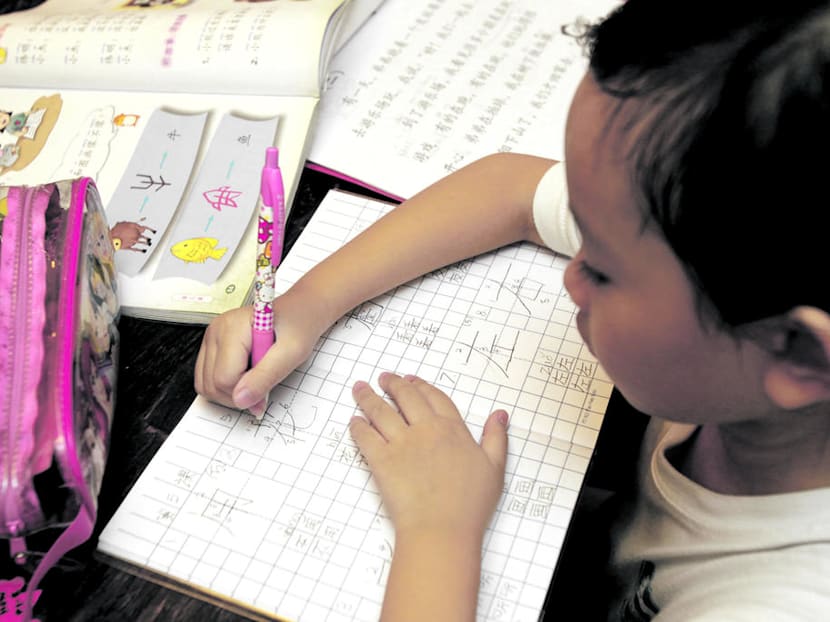
We need a bolder vision that transcends how we think about bilingualism here, the author says.

It is no secret that English is, by far, the dominant home language for most young Singaporean families today.
At the same time, the teaching/learning of prescribed official mother tongues has become a perennial bugbear for the Ministry of Education (MOE), because of the perception that the use and standards of mother tongues have declined amongst students.
The Ministry has therefore often reviewed its mother tongue programmes in schools, the latest of which was announced by Education Minister Ong Ye Kung at a teachers’ conference on May 28. His speech was aptly titled ‘Learning Languages for Life’.
In sum, the latest initiatives aim to encourage the use of mother tongues throughout one’s life. The most apparent changes include:





- Expanding the Language Elective Programme (LEP, previously only available at junior college level) to additional junior colleges and to secondary schools, so as to allow more students with the interest and ability to pursue mother tongue languages in greater depth.
- Allowing more students with the interest and aptitude to take on a third language at any point in their school life, not necessarily as an examinable subject, and even at conversational levels. The third language of choice can be official mother tongues, or other languages of regional or international importance such as Thai and German.
Two questions might be asked of these new changes.
First, does an expansion of the LEP help our students better master their mother tongues?
Expanding LEP to a wider range of students, and to more academic levels, is laudable. However, this still restricts the learning of mother tongues to the domain of schools, rather than encouraging the use of the language in other aspects of life.
It is unlikely that expanding the programme will have much effect on a student whose family does not use the particular mother tongue, or who has no social incentive to use the language amongst family and friends.
This is especially pertinent for an increasing number of students who feel compelled to learn their mother tongues, instead of learning it because of an intrinsic interest in its cultural/social value.
We must remember that one’s DNA has no bearing on one’s proclivity for any language.
Moreover, recent statistics show increasing numbers of students who are choosing mother tongues on the basis of their economic value, aligned with the Government's own rhetoric, no less.
For example, local linguists Dr Ritu Jain and Professor Lionel Wee found that more Indian students in our schools are opting for Hindi as their mother tongue, rather than their actual home language such as Tamil, Urdu and Bengali.
This is largely because of the perceived value of Hindi on the international stage, as well as within India. This phenomenon poses an awkward challenge to the supposed association of ethnic heritage and mother tongues that underpins our bilingual policy.
The second more pertinent question is what more can be done to help students learn mother tongues and third languages?
One way out of the conundrum of this link between ethnicities and particular languages might be to allow greater individual autonomy in terms of language matters currently decided by the state.
This is advocated by some linguists such as Professor Wee.
In my view, such liberalisation can mean allowing students to choose for themselves the second language besides English they wish to learn in school (amongst the same set of official mother tongues available today).
It can also involve reframing mother tongues as heritage languages of Singapore.
This gives students more ownership and responsibility for their own heritage language tied to Singapore’s history as a whole, rather than ideologically imposing an unfamiliar language on them and forcing the language to be representative of their culture.
Along these lines of liberalisation, MOE’s endeavour to promote the uptake of third languages at any point of education, especially at conversational levels, is highly encouraging.
Nonetheless, as aforementioned, the overarching aim ought to be increasing the opportunities and abilities of students to be able to use their mother tongues and foreign languages, instead of just learning them in the classroom.
This can mean re-thinking the proficiency levels that we want students to attain for their second and third languages.
Academic writing in second/third languages may not be that important for the majority of students who may never require strong writing competencies in their adult lives.
I would suggest increasing the oral/aural component of the current mother tongue curriculum, with more of an emphasis on oral communicative practices and cross-cultural communication with our regional neighbours.
We can also consider making conversational Malay (our de jure national language) compulsory for all.
These initiatives can be complemented by increasing the diversity of mandatory programmes in all schools where multilingual skills are required outside the classroom, such as volunteering in old folks homes or hosting exchange students from India, China, Indonesia and Malaysia.
This is especially when much of these activities seem to be the preserve of independent schools at the moment.
While Singaporeans can now be proud of our English proficiency, our state-sanctioned bilingual policy is not unique. Indeed, the ability to be multilingual is arguably more apparent in places like Switzerland (which has an official trilingual policy) and even amongst some Chinese in Malaysia.
In order to avoid a nightmare scenario where Singaporeans become de facto monolinguals, we need a bolder vision that transcends how we think about bilingualism here.
We must do all we can so that languages are learnt because they are to be used in life, not just learnt throughout one's life.
ABOUT THE AUTHOR:
Dr Luke Lu is a lecturer at the Language and Communication Centre of the School of Humanities and Social Sciences, Nanyang Technological University. He taught General Paper in a Singapore junior college for four years.