It’s time to discuss value of national conversations
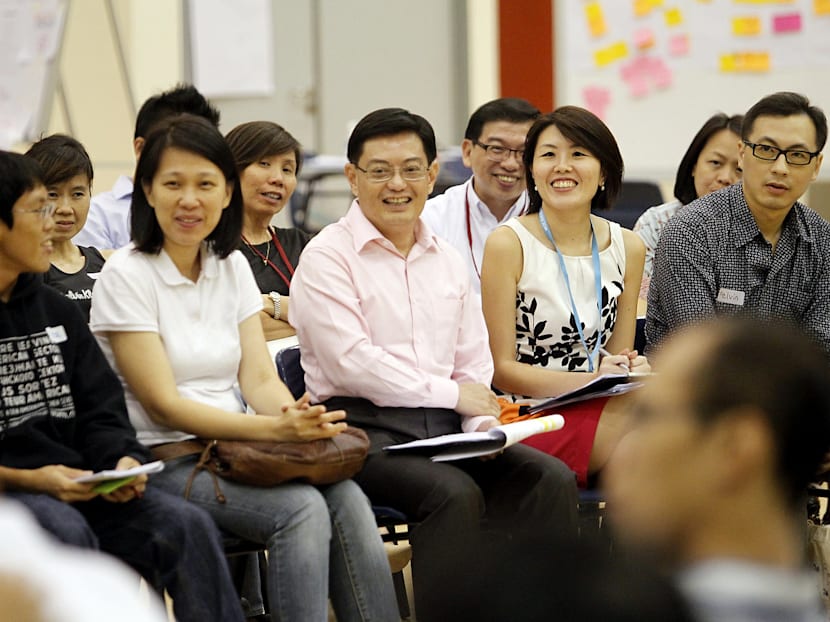
Education Minister Heng Swee Keat at an Our Singapore Conversation session in 2013. Since the conclusion of the initiative, it would app ear that large-scale discourses have been few and far between. TODAY File Photo
I refer to Associate Professor Eugene Tan’s commentary “More Singapore conversations needed to keep this little red dot shiny” (Aug 28).
Diverse perspectives are productive for policymaking, so it is hard to disagree with the suggestion “to have more conversations regularly, rather than one Big Conversation”.
Since the conclusion of Our Singapore Conversation initiative in 2013, as well as complementary endeavours organised by the Defence and Education ministries, it would appear that large-scale discourses have been few and far between.
Some may argue that Singaporeans’ interest levels are not as high, but there have been fewer discussions about aspirations for an ambiguous future.





One wonders also if the aspirations and recommendations mooted during that national conversation were taken into consideration and how the exercise, with significant involvement of and feedback from Singaporeans, may have shaped policymaking processes.
Assoc Prof Tan argues that “Singaporeans need to be able to deal with the variety of tempestuous issues with resilience and a willingness to learn from such stresses to the social fabric”.
In the absence of larger-scale sessions coordinated by the Government, however, spontaneous conversations have emerged, too.
The Internet is a convenient example, with discursive news sites encouraging thoughtful commentaries or balanced viewpoints. Proponents point to the flurry of activity on social media platforms and their users, who do not shy away from a debate.
Schools and youth organisations have also organised settings through which individuals can articulate sentiments on various sociopolitical issues.
Through simulation exercises, they are compelled to be critical and to substantiate positions with research.
What is perhaps more meaningful is how this plethora of feedback could be aggregated to understanding prevailing sentiments.
It is unclear if Singaporeans were indeed galvanised by Our Singapore Conversation to organise their own conversations, though empirical studies could determine the influence the initiative has had on developing a more active citizenry.
The value of these sessions should first be ascertained so that conversations will not be defined by words alone, but also by the deeds they inspire.