London can learn from S’pore’s approach to high-rise living
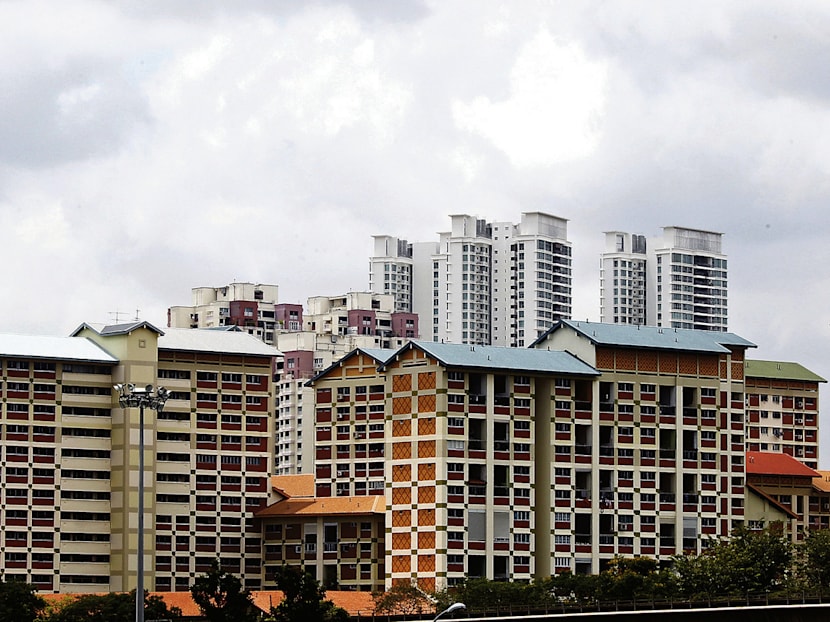
Roughly four in five Singaporeans live in public housing — in high-rise blocks that often have their concrete flanks painted in blues or yellows. TODAY file photo


Hawker centres are the heart of most Singapore neighbourhoods. There is one close to my house, where families sit chatting on brightly coloured benches as dusk falls, ordering from dozens of stalls serving fresh local favourites, from chicken rice to Hokkien prawn noodles.
The nightly scene provides a pleasing community vision in all respects bar one — the centre is ringed with ominous-looking concrete residential tower blocks.
The ubiquity of high-rise living in this small island nation came to mind in the aftermath of London’s Grenfell Tower tragedy last month.
Beyond the immediate horror, the Grenfell blaze reinforced worries about tenement living, and led to calls that new blocks in the United Kingdom be scrapped.





The idea of the residential tower as an emblem of social failure is deeply rooted, not just in Britain, but across the West; “an environment built, not for man, but for man’s absence”, as J G Ballard put it in his 1975 dystopian novel High-Rise. Yet Singapore, now mentioned from time to time as a possible post-Brexit template for the UK, provides a hearteningly different vision, in which tower blocks are not just normal, but popular, too.
Indeed, viewed from Europe or North America, the story of public housing in Singapore can seem almost miraculous. The Housing and Development Board (HDB) was set up in the 1960s first to clear slums.
It then turned into an all-purpose house builder and landlord. Tall towers solved another problem. Singapore is the world’s densest country, if you do not count the tiny enclaves of Monaco and Macau.
To cram almost six million people into an area half the size of Greater London, it helps to build up. Today, roughly four in five Singaporeans live in public housing, almost all of them in high-rise blocks that often have their concrete flanks painted in cheerful blues or yellows.
These estates mostly managed to avoid the problems of crime and social isolation that dog Parisian “banlieues” (French for suburb) or the “projects” of American inner cities. Although built by the state, it helps that almost all are owner-occupied, part of a vision for a “home-owning society” pushed by national patriarch Lee Kuan Yew.
The apartments themselves are cheap and reasonably spacious. Older buildings are regularly refurbished. Most have hawker centres nearby, like the one close to my house, along with play parks and sports halls.
Some recent blocks have fancier additions, such as “sky gardens” and rooftop running tracks. (They also all have bomb shelters with reinforced blast doors, but that is a different story.)
Perhaps the most significant difference is that housing is mixed by income and ethnicity, with the state ensuring that each neighbourhood reflects the population as a whole.
Deputy Prime Minister Tharman Shanmugaratnam is fond of saying that while Singapore still has some poor families, its mixing policy means it no longer has any poor neighbourhoods. It is a remarkable claim, and one that is probably only a very slight exaggeration.
Harvard economist Edward Glaeser describes Singapore as a “close to ideal” form of urban development, mostly because it has made tall buildings work.
As a greater proportion of the world’s population moves to cities, and metropolises like London cram ever more people into old city centres, building high-quality tower blocks is an obvious part of the answer.
Singapore’s model is not perfect, of course. Locals here are, by their own estimation, world-class complainers. HDB residents often grumble about things like broken lifts, while purchasers cannot find flats to buy in their favoured part of town. There were safety worries after Grenfell too, although Singapore has an enviable fire-prevention record.
Either way, the wealthy mostly choose to live in fancier condominiums built by private developers, with gyms and swimming pools. Yet while there are plenty of quibbles, almost no one mentions the anxieties you would hear in the West — that tower blocks are inhospitable, alien monoliths, unsuited to decent human living.
As Britain ponders its own urban prospects after Grenfell, it might reflect that a future built tall in concrete need not be so grim after all. FINANCIAL TIMES
ABOUT THE AUTHOR:
James Crabtree, a visiting fellow at the Lee Kuan Yew School of Public Policy, is on sabbatical from The Financial Times, where he remains a contributing editor.