I survived a major heart attack at 33. This is what it taught me about work-life balance
As an immigrant with no safety net, Mr Ricardo Chacon used to believe he could outwork his problems – and for many years, he did just that, until a major health scare showed him he can't keep overworking himself through life.
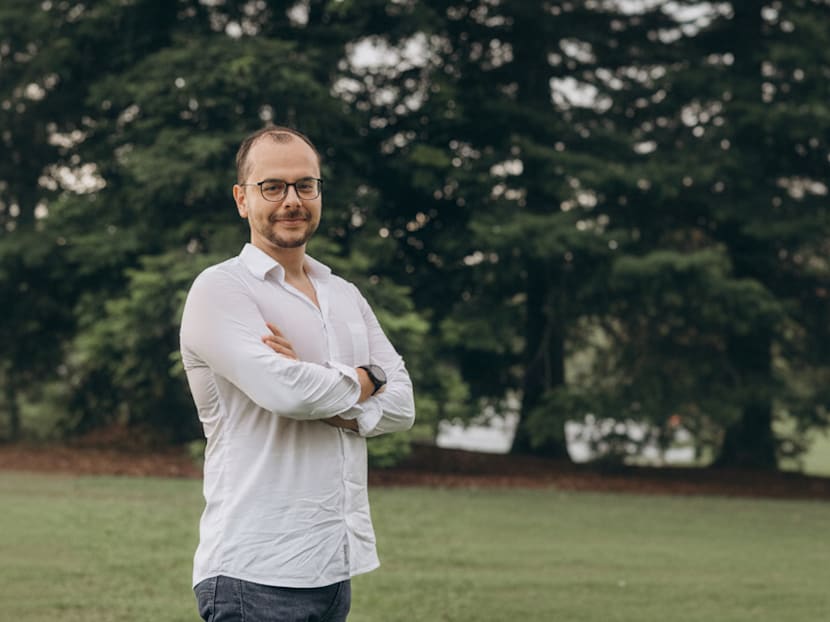
At 33, Mr Ricardo Chacon had a major heart attack that exposed the cost of overwork and poor lifestyle habits. (Photo: Ricardo Chacon)

This audio is generated by an AI tool.
I was 33 years old when my life stopped without warning.
On a warm public holiday, a rare respite from work, I decided to go out for a jog. After all, that was the "right" thing to do - work long days, but pepper in the occasional workout.
Midway through, my chest felt like it was being gripped in a vice. In a split second, the simple act of breathing went from being a subconscious action to a desperate struggle.
Before I knew it, I was lying under the sterile glow of hospital lights, listening to monitors and machines beep and wondering if I would see my family again.





The doctor said I'd had a "major heart attack". It was the last thing I had expected to hear at that age, let alone experience.
When I first arrived in Singapore from Costa Rica in 2017, I had only a few hundred dollars to my name and no connections. I joined a business selling and installing office furniture, and it often required me to work after hours to avoid any interruptions to occupants.
As an immigrant with no safety net, I carried a heavy responsibility every day. I used to run on Will Smith's famous quote: "You might have more talent than me, you might be smarter than me, you might be sexier than me … But if we get on the treadmill together, you're getting off first, or I'm gonna die."
I believed that I could outwork my problems – and for many years, I managed to do just that. Those years were tough, but they taught me resilience. But even that could not keep my heart from failing me later on.
"WILL I SURVIVE THE NEXT HOUR?"
Many ask me: Was it genetic?
But the truth is, what we inherit from those who came before us is not just DNA. We also inherit daily routines, the food that fills our tables, the ways we cope with stress, whether we make time for movement or spend our days chained to our screens.
Modern life does not help. We spend more hours in a day sitting than our parents and grandparents did. We eat more processed food, spend less time outside getting fresh air.
Before the heart attack, I thought I understood work-life balance, with its many-factored equations and calculations.
But lying there in the intensive care unit, the equation became brutally simple: Take away work and life continues. Take away life and nothing continues.
My life, which just hours ago felt so busy and overstuffed with work, now boiled down to two simple questions:
"Will I survive the next hour?"
"If I do survive, what will I change?"
I did not have a single care about the next client meeting or the next project milestone.
Instead, I thought about whether I would get the chance to walk my children to school. I thought about how many years I had left, and whether they would be spent in a body that worked against me instead of for me.
WHEN IT COMES TO HEALTH, THERE ARE NO SMALL CHOICES
Heart disease is the leading cause of death not just in Singapore but worldwide, but it is far from the only worsening health concern of our times. The Ministry of Health's National Population Health Survey 2024 found that one in every three Singaporeans now suffers from hypertension and hyperlipidemia – better known as high blood pressure and high cholesterol respectively.
We talk about these as though they are lanes on a highway, neatly separated by clear lines. However, they often spring from the same root.
Society has wired us to believe that "ultracompetitiveness" should be our highest priority. We often believe – sometimes unconsciously – that career recognition and material goods are worth pursuing even at the expense of our health, both physical and mental.
My heart attack was not just an accident of biology. It was a wake-up call that when it comes to our health, there are no "small" choices.
We normalise and rationalise fatigue, poor nutrition, pre-diabetes, high blood pressure. We reason that these are just inevitable parts of ageing – but the body listens more closely than we think.
Each choice in our day-to-day lives can either compound our health risk, or ease it.
Above all, my heart attack was a violent revelation: I can decide that this ends with me.
I still believe in hard work. After all, it got me to where I am today.
But now I also see that I need to stop betraying my health in pursuit of my goals.
I started taking short daily walks, breaking away from my desk for some necessary exposure to sunlight and nature. I switched to a whole-foods, plant-based diet.
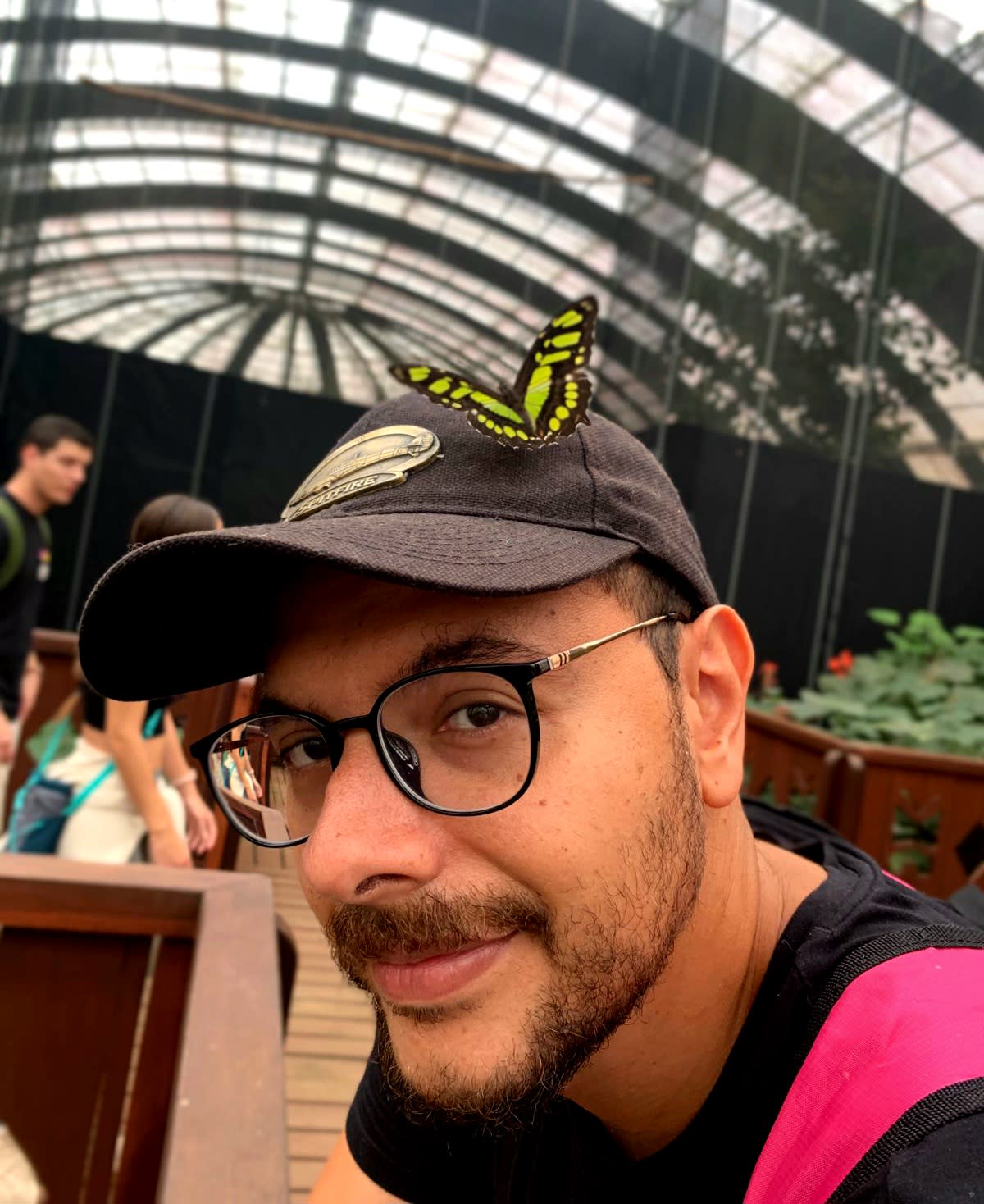
I also put in harder boundaries against late-night calls and screen exposure to make sure I get good sleep.
But disruptive work demands mean that no single worker can achieve a healthy work-life balance on their own. We need the support of our leadership and organisational well-being policies and practices.
REAL WORK-LIFE BALANCE IS ABOUT BEHAVIOUR
Despite what many stories on the internet may suggest, we don't need heroic overhauls that require us to quit our jobs overnight, pack up our lives and move to the remote hills of some exotic countryside.
After healing from my heart attack, I became acutely aware of how our surroundings shape us. I became more outspoken – some might even say activist – about well-being and sustainability in workspaces.
I realised that ergonomic chairs and fresh paint could not be quick fixes for offices where the air was stale, the sound oppressive, the light flat.
Feedback from workers also showed me that no amount of new carpets and furniture could change the fact that they were still leaving the workplace each day drained.


I started recommending less dramatic but more effective changes to clients – small but substantial ways to reduce daily friction on our health: Switching to plant-based milk in the pantry to cut health risks. Setting up micro-gardens in workplaces so people can breathe cleaner air and take a minute or two out of their workday to care for something living. Even shortening the length of meetings, no matter how "conducive" these meeting spaces are.
Changing our square footage is only a start; what matters is changing what we do within these spaces each day.
This is what helped me to refocus on my real priorities: Not just doing work I care about, but also being present as a father and husband.
It's not about working less. It's about making sure that work makes our lives better, not the other way around.
A NEW BALANCE
Some time after my second daughter was born in 2024, my wife and I decided to take a long break from work to bring both children back to Costa Rica to meet their grandparents for the very first time.
For three months, we enjoyed the everyday pleasures most families take for granted – meals together and long afternoons in each other's company. We joked and laughed in both English and Spanish.
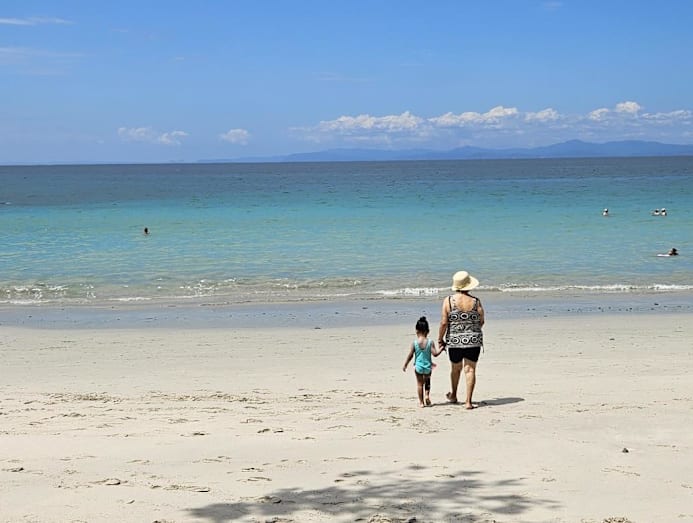
It was a simple reunion, but it felt extraordinary. Watching my parents hold their granddaughters for the first time made me grateful for all the efforts I'd put in over the last few years to build my work in a way that allowed us to pause and share time as a family that cannot be recovered later.
When we returned from Costa Rica earlier this year, I felt something I had not in a long time: completion. My daughters had finally met their grandparents, my parents had finally held the children they had only seen on screens for years.
It was a rare moment I felt like I could bask in the moment, instead of raring up to chase the next project, the next goal.
Maybe that is the crux of what real "balance" is – remembering that life should not be the occasional reward for work, but at the very centre of why we work at all.
Ricardo Chacon is the founder of The Common Blue, a corporate real estate consultancy. He is also a sustainability advocate and a father of two.
If you have an experience to share or know someone who wishes to contribute to this series, write to voices [at] mediacorp.com.sg (voices[at]mediacorp[dot]com[dot]sg) with your full name, address and phone number.