

Minimarts on the wane in Singapore? Not so fast
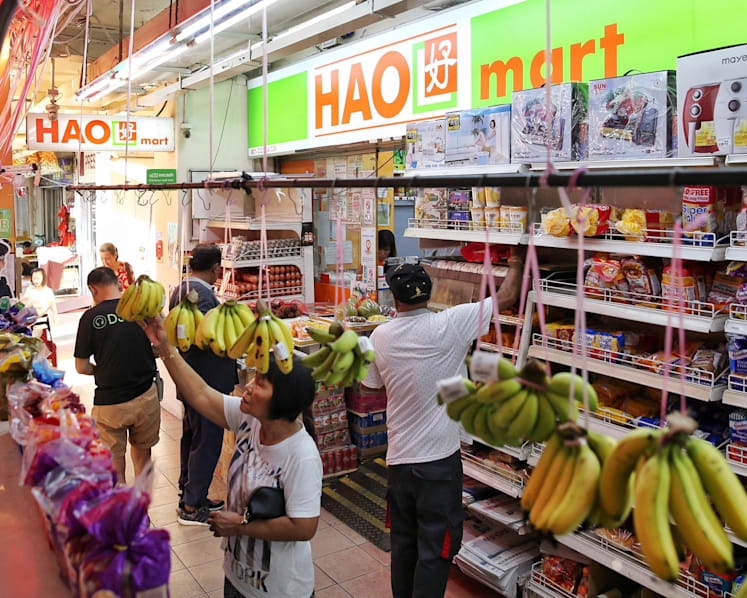
Minimart operators constantly face manpower shortages, says the author, citing how Hao Mart sees some five resignations each month.
For your weekly grocery shopping trips, chances are that you would head to one of the giant supermarket chains — whether it be FairPrice, Cold Storage or Sheng Siong.
It boils down to a simple reason: The big players are now everywhere. In recent years, they have even moved into spaces that were once considered traditional minimart territory – deep in the heart of public housing estates.
Today, Sheng Siong stores are largely found at void decks of Housing and Development Board flats. FairPrice recently launched FairPrice Shop, a no-frills retail outlet that targets budget-conscious consumers. These outlets are likewise springing up in mature residential estates.
The entry of such major players has threatened the existence of minimarts. But there is a silver lining to this — it shows that the space where minimarts traditionally operate is a valuable one.





So while it is virtually impossible to compete head on with these giants because of a lack of resources, minimarts can adapt their game plan to remain competitive.
There is still much potential for the sector to grow by reinventing operations.
This means working smart, and changing habits to keep up with the fast-changing times and demands of the sector. From my experience running a relatively new chain of 47 Hao Mart minimarts across the country, I would say that there are three ways that we can do this.
STRENGTH IN NUMBERS
First, it is essential that minimart operators have the scale to remain competitive against the big players.
Rapid expansion would allow for cheaper prices, as retailers have the scale to push for perks like bulk purchase discounts from suppliers.
Similarly, individual minimart operators can band together for stronger negotiating powers with suppliers, and ensure that their prices remain competitive against the industry giants.
We cannot hope to compete individually, but can rely on our strength in numbers.
LESS IS MORE
Minimart operators constantly face manpower shortages. In fact, the biggest challenge that Hao Mart faces today is the hiring of new workers.
We have 250 workers but our turnover rate on locals is extremely high — we see resignations by an average of five employees each month. Most Singaporean workers leave because they find the work tough or tedious.
With the tightening of the foreign worker quota over the next two years, this is a problem that will not go away any time soon. So operators must learn to cope with fewer workers by boosting productivity.
This is where technology can play a key role to ease the manpower crunch. For instance, self-checkout counters can replace cashiers. Without the heavy responsibility of handling money, store operators can shift their attention to serve the customers better.
Many minimarts may see self-checkout as a luxury which only big players can enjoy. It isn’t. It is a necessity in this environment of tightening labour.
GOING HIGH-TECH
Beyond self-checkout, there needs to be a heavier investment in automation and technology. If not, it will be simply a matter of time before minimarts become obsolete.
Automating manual processes can boost efficiency. The tedious stock-taking process — a bugbear of many minimart owners — is one such example.
Instead of manually counting each product, inventory control can be managed through information technology.
Whenever a product in the stores falls to a minimal amount, the system will automatically alert the central warehouse. This way, products can be replenished before stocks run out. It is a simple example of how to save precious man hours.
Furthermore, digitising the operations allows collection and analysis of sales data.
These data sets provide valuable insights of customers’ purchasing patterns. As minimarts operate within a smaller vicinity compared to supermarkets, such data enables operators to obtain more specific information about their customers.
For instance, newer towns like Punggol and Sengkang – which have a higher proportion of young families — would likely require baby products such as diapers and formula milk. Using data, we will be able to verify whether this is indeed the case for each individual outlet.
Minimart operators need to be responsive to customers’ demands — this personalised service will be what sets us apart from the big players.
With technology, it is also possible for minimarts to even go unmanned to overcome manpower shortages. This is in fact what some operators here are exploring.
However, the cost of implementation is very high and this option will have to be evaluated carefully so that any investment can be justified.
In the case of Hao Mart, alcohol and tobacco contribute almost half of our daily sales revenues in some of our outlets and current regulations prevent us from having these two categories in a unmanned minimart.
CAN THE AUTHORITIES PROVIDE SUPPORT?
The minimart sector still remains profitable, and it can continue to grow if we embrace change. But at the same time, operators will hope that the authorities can take into consideration some of their pain points in introducing new regulations.
For instance, the plain packaging law for cigarettes packs will kick into effect next year. All brands of cigarettes will be sold in a standardised colour, with graphic health warnings covering at least 75 per cent of the pack. Logos, brand images and any promotional information will not be allowed.
This creates more work for minimarts. It will require costly man-hours to train staff to distinguish the wide range of tobacco products. We also expect much longer service times for all our customers, not just those who purchase tobacco products.
Stock-taking and receiving of stocks from suppliers will become even more difficult and time-consuming. With products looking identical, even technology will not be of much help as every pack and carton has to be carefully checked to avoid potentially costly errors of dispensing the wrong products.
As a result of this new measure, our industry estimate is reduced productivity by at least 20 to 30 per cent.
We hope that the authorities can give us more time to adjust to these regulations, and allow for practical measures like coloured price tags with product information which we can use behind closed point of display or in our stock storage areas.
All said, minimarts still have a major role to play in Singapore’s retail landscape. With the right approach, we will not be forced off our turf.
But there needs to be a mindset shift in how minimarts operate. Change must be embraced. If we remain stagnant, there is no way that we can hope to survive the onslaught of big players that are coming in.
ABOUT THE AUTHOR:
Patrick Tan is the group managing director of minimart chain Hao Mart.




