

This is my journey as a migrant worker in Singapore and how I am giving back
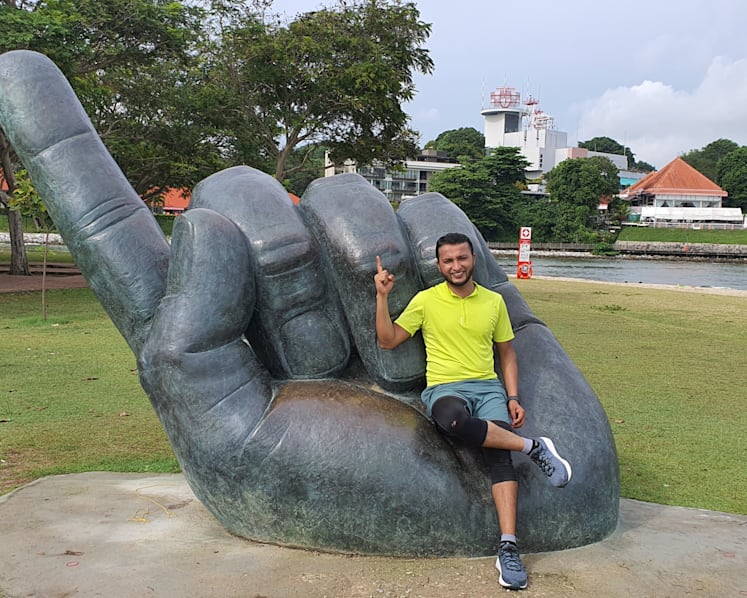
The author (pictured) says he is thankful to Singapore for giving him the opportunity to work here and to grow personally and professionally.
I came to Singapore in 2008 to pursue a career and support my large family in Bangladesh.
Throughout my journey, I have encountered many obstacles: Chicken pox, language barriers, fear of public speaking and a lack of computer skills.
But instead of seeing these obstacles as barriers to my dreams, I see them as an opportunity to learn.
After going through many obstacles, I have learned to never give up when I am down. This attitude has paid off fantastically.





Last year, I graduated from the University of Newcastle with a degree in environmental and occupational health and safety. I previously won a Pearson Outstanding Learner Award 2017 (Gold Medal).
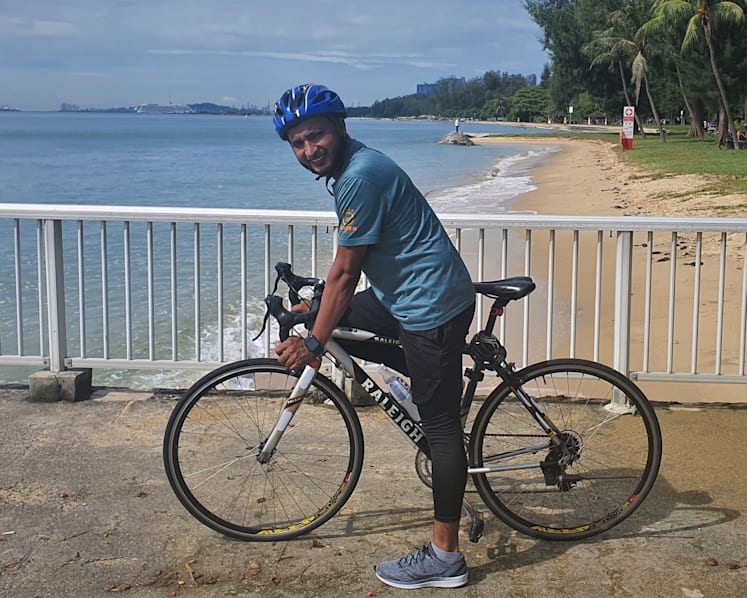
I’m an active marathon runner and also a coach to enthusiastic Bangladeshi runners. I am a regular blood donor for the Singapore Red Cross Society as well.
I love supporting my fellow migrant brothers. I serve as an English teacher at Shaw Lodge Dormitory and volunteer for migrant worker trainer centre SDI Academy as a career consultant.
Recently, I co-founded a non-profit organisation called Help Societies International.
I’m thankful to Singapore for giving me the opportunity to work here and to grow personally and professionally. Social inclusion in this beautiful country has impacted my journey massively.
In this essay, I want to share two key moments in my journey and what I learned from them.
COMING TO SINGAPORE
There are many ways to seek a job in Singapore. After carefully analysing all those options, I decided to work as a steel reinforcement worker in the construction industry.
I had to attend classes at an overseas training centre in Bangladesh where they taught theory and practical lessons.
Only those who go through it know how hard the practical session of the two-and-a-half-month course can be.
Trainees had to work on various projects: Pile caps (thick concrete mats), parapet walls, T-shaped cantilever beams and so on.
A week before the final exam, I fell sick with chicken pox.
I still tried to go to class but my uncle and cousin told me: “Nazrul, listen. If you are healthy, the opportunity will come. Go back home and seek proper treatment.”
I listened to their advice and travelled 300km home by bus.
Two days later, my cousin called and told me he had good news. The training manager said that if I could return to the training centre that night, he would allow me to participate in the simulation test the next day.
I told him I would go back to the training centre that night. My mum did not want me to go back as it was winter.
I showed her my hand. She was very sad to see the bad condition of my hand with blisters caused by constantly using a bar bender to bend and straighten steel members.
Finally, she let me go.
After sleeping for a few hours, I sat for the practical test. When most of the trainees had almost finished their project, I was only halfway done.
The tester started shouting at me. When I couldn’t stop my tears, he was shocked. He apologised and asked me what happened.
Then I showed him my hand, and after seeing my blisters and my chicken pox marks, he guided me through the test.
Finally, I finished my project on time and was selected to sit for the final test that was conducted in Bangladesh by BCA Academy Singapore.
Three days later, I successfully passed the test and with that, my journey as a migrant worker in Singapore began.
PUBLIC SPEAKING
How hard is it to conduct a briefing in front of a large audience of 500, including your boss?
Let me share my first public speaking experience. In 2010, I was working at the Marina Coastal Expressway construction project as a safety supervisor.
For the project, there was a regular mass toolbox meeting every Friday, which all the contractors, workers and management staff members had to attend.
Each Friday, a contractor would select a company representative to speak. By the time I joined the project, it was our company’s turn.
The majority of our staff members were fluent only in speaking Mandarin.
After looking around, the project manager approached me and said: “I know you are new here but I have selected you to represent us.”
I was nervous as I had not spoken before a large audience like this. Then he looked at me and said: "Don’t worry, you can do it."
The next day, when I went on stage and started to deliver my speech, I felt the podium shaking.
Initially, I thought the stage was not stable, but when I looked closely, I saw that it was my whole body shaking, and not the stage. The script was in my hand, but that was how afraid I was.
Over the years, I have overcome my fear of public speaking, by volunteering for various organisations such as SDI Academy and Sama Sama, which seeks to help the public see migrant workers in a different light.
I also took a course in oral presentation conducted by SDI Academy.
Today, I give regular briefings at my job site and various public events.
We are social beings, and my volunteer work with various organisations has helped me connect with others whose knowledge and guidance have greatly benefitted me.
To give back to the migrant worker community, my friends and I co-founded Help Societies International in 2019 with the goal of transforming problems into opportunities with our limited resources.
We aim to raise awareness of issues related to safety, health and the environment among migrant workers.
Some of our programmes so far include:
A series of runs for migrant workers during the weekends. Unfortunately, we had to stop this due to the Covid-19 situation
Virtual workshops to raise awareness of the Covid-19 situations in Singapore and Bangladesh for more than 500 participants. We also distributed the workshop materials to foreign worker dormitories and some companies for free
A virtual mental health workshop for some 100 participants. This was timely given the concern over the impact of the pandemic and isolation measures on migrant workers
A free medical check-up and consultation in Bangladesh involving 11 volunteer doctors and benefitting more than 250 residents in December 2019
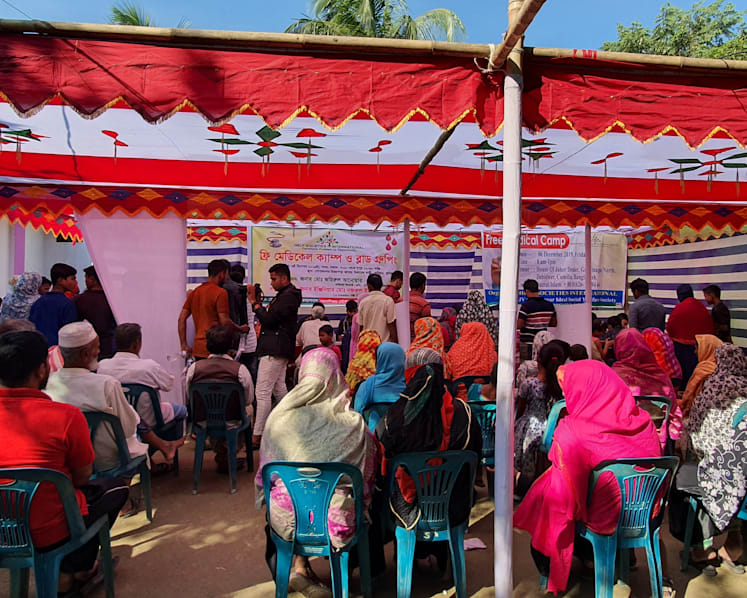
Help Societies International has some 11 executive committee members who also help fund the programmes. They are supported by a pool of about 100 volunteers. Both groups comprise a mix of Singaporeans and migrant workers.
We hope to resume our running activities and hold more mental health awareness programmes.
We also want to launch workshops to help migrant workers improve their English as this is important for them to get by in Singapore.
The last 12 years have been a rough journey for me but it has also been fulfilling as I was fully occupied with my job, part-time study and volunteer work for many organisations.
Going forward, I would like to use my skills and knowledge to advance my career in the environmental, health and safety line.
I also look forward to contributing to both Singapore and the migrant community here.
ABOUT THE AUTHOR:
Nazrul Islam is a co-founder and executive committee member of Help Societies International and secretary of the Marine Parade Toastmaster Club. He has worked in Singapore as an occupational safety, health and environmental professional for the last 10 years. This is adapted from a piece that first appeared in The Birthday Book (2020), a collection of 55 essays on the theme, “Seeing Clearly”.




