

NUS case: Suspended sentence in place of police warning will have added benefit of judicial oversight
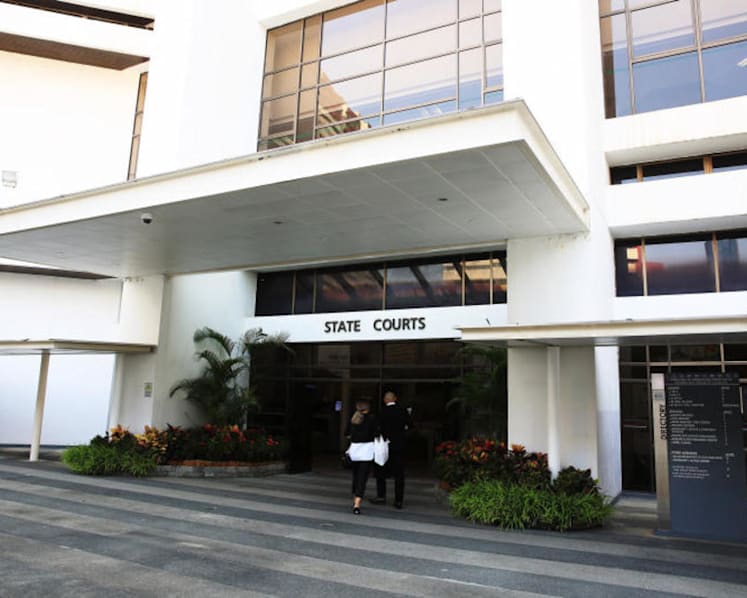
Suspended sentences will warn offenders against further criminal conduct without immediately imposing other consequences, says a reader.
I refer to the recent peeping Tom incident at the National University of Singapore and similar cases.
While the conduct of the culprit Nicholas Lim is reprehensible, his being dealt with by a conditional warning is not necessarily inadequate.
This means that, if he commits another criminal offence in 12 months, he will be charged with the offence against fellow undergraduate Monica Baey and the new offence.
If a formal warning is all it takes to make an offender change his ways, then so be it.
What is more debatable is this: Which organ of state ought to issue this warning? In Mr Lim’s case, the warning came from the police.
But there are at least two arguments that, in certain situations, the courts should issue the warning.
First, judicial processes and decisions are public in nature. By contrast, the police are not obliged to disclose their deliberations.
This can draw speculative criticism that there is a lack of transparency or consistency.
Second, in the eyes of the law, the police and prosecutors do not have constitutional power to pronounce someone guilty of criminal conduct. Only a court can do that.
The law considers a police warning a mere expression of opinion with no legal effect.
Involving the courts will not necessarily inhibit rehabilitation and risk ruining the offender’s future. The courts are accustomed to considering factors such as the offender’s remorse and likelihood of rehabilitation.
How then can the courts issue a formal warning to an offender without imposing immediate consequences, such as a fine, probation or imprisonment?
At present, the law does not allow the courts to do so.
One solution could be to amend the Criminal Procedure Code — which guides criminal investigations and procedures for criminal hearings — to allow the courts to pass suspended sentences.
These include sentences of imprisonment passed by a court that do not take effect if the offender complies with conditions, such as refraining from re-offending, attending counselling sessions, or staying away from certain areas or persons.
The effect of a suspended sentence is to formally warn an offender against further criminal conduct without immediately imposing other consequences on him.
Suspended sentences can be as flexible as police warnings, but will have the added benefit of judicial oversight and the backing of judicial authority.
Unlike a police warning, a suspended sentence will be passed only after the courts have found the offender guilty.
If an offender has been wrongly accused and given a suspended sentence, he can appeal against his conviction in the usual manner. By contrast, there is no formally established process to appeal against a police warning.
This is not to say that police warnings should have no role in our criminal justice system. For example, it is perfectly sensible for the police to issue a warning to somebody who has committed a minor offence, such as petty theft, without getting the courts involved.
Nevertheless, suspended sentences will be a useful addition to Singapore’s law by helping to further balance the need to stop crime with the need to reform criminals.
ABOUT THE WRITER:
Benjamin Joshua Ong is an assistant professor of law at the Singapore Management University.




