People’s Liberation Army and corporate China draw ever closer
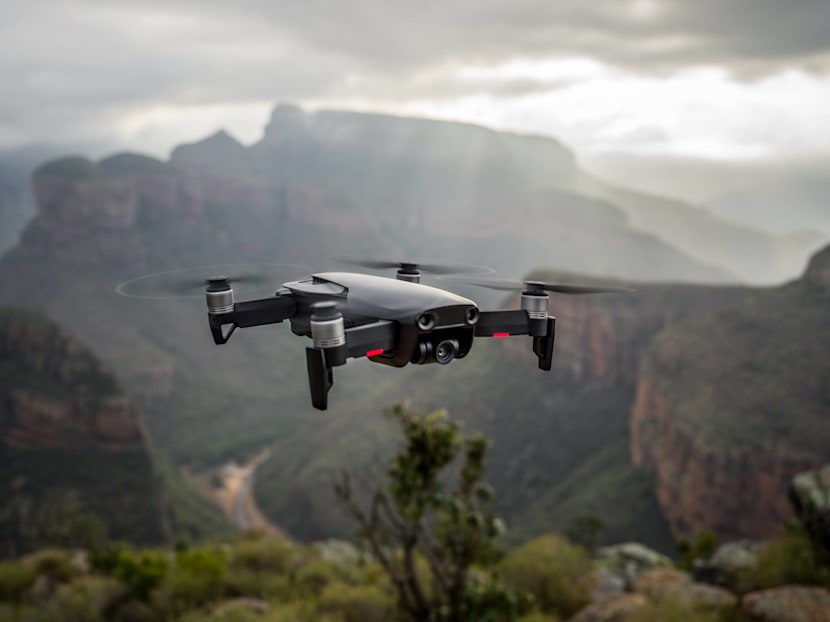
Shenzhen-based Da Jiang Innovations (or DJI) is a worldwide pioneer in civilian drones — but these drones also have military applications.


Early on, Silicon Valley was highly dependent on the United States military.
Even Siri, the voice of Apple’s iPhone, was developed with funding from the Department of Defence research arm, Darpa.
But in recent years, Silicon Valley has tried to keep its distance from the Department of Defence, as the recent controversy at Google over a Pentagon contract linked to the use of artificial intelligence shows.
By contrast, the template of co-operation between the Pentagon and tech companies, which did so much for technological innovation in the US in the 1980s and 1990s, is alive and well in China.





No other country except Israel has made as much progress in developing cutting-edge tech that has both civilian and military applications in areas from artificial intelligence and robotics to virtual reality.
The growing tension between the US and China is ostensibly about trade but it can equally be seen to be about geopolitics.
Many Chinese believe the trade measures that the Trump administration has just adopted reflect the angst of a country that senses its status in the world is being challenged by an ascendant China.
Indeed, China is one of the reasons that James Mattis, defence secretary, states in the latest National Defence Strategy that terrorism has been replaced by rival nations as the largest threat to the security of the US.
The effect will be to drive China ever higher in the value chain, whether in civilian or military technologies, and push China’s military even closer with its companies, whether state-owned or private, recreating the template that has largely been discarded on the other side of the Pacific.
For example Midea, which started life in the mainland as a white goods company (and now has replaced Panasonic as the largest white goods maker globally by revenues), recently bought Kuka, the German robotics company, (although the US forced Kuka to exclude a US unit from the transaction).
Robotics is a priority for China. Indeed, one study cited in the People’s Daily last year suggested that by 2040, robots and other unmanned systems will outnumber people in China’s military.
That closer embrace between the Peoples’ Liberation Army and corporate China comes as Beijing is ramping up its military spending and upgrading the quality of both its personnel and its equipment.
Twenty years ago the country spent US$35 billion (S$46.6 billion) on its defence; today it has budgeted US$230 billion per year, a 700 per cent increase.
There are numerous beneficiaries of this largesse. Some of them are well known; companies such as Baidu, which is working closely with the government on technologies involving artificial intelligence.
Or take Shenzhen-based Da Jiang Innovations (or DJI) which today is a worldwide pioneer in civilian drones — but these drones also have military applications.
Moreover, the (on and off again) US sanctions against telecoms firm ZTE came as a stark demonstration of the dependence of China on high-end semiconductor chips from elsewhere.
That could lead to an influx of government funds to local chipmakers such as Shanghai-based Semiconductor Manufacturing International Corporation.
Meanwhile, other companies that have one foot in the military sphere and the other in the civilian are far less well known.
Take for example, Guangzhou Haige Communications, which is the beneficiary of orders for communications and navigation products from both the government and private sector.
Haige, which is listed in Shenzhen, is expected to see both “civilian applications in new fields of driverless cars, drones, satellite phones and smart city systems and new military orders driven by the demand for new generation products,” according to research from Morgan Stanley.
Dual use technology blurs the line, making it more difficult to determine intentions behind much technology spending: is it ultimately more about the income statement or national security?
That can give rise to what one retired military officer refers to as the defence planners’ dilemma: every player assumes the worst about others’ decision making.
For years, Asia has been the beneficiary of relative peace, which means that it has been able to dedicate its burgeoning reserves to the prosperity of its people.
Now such distinctions have become far less black and white. THE FINANCIAL TIMES
ABOUT THE AUTHOR:
Henny Sender is chief correspondent for international finance at the Financial Times, based in Hong Kong.