

Redefining the Singaporean that we know
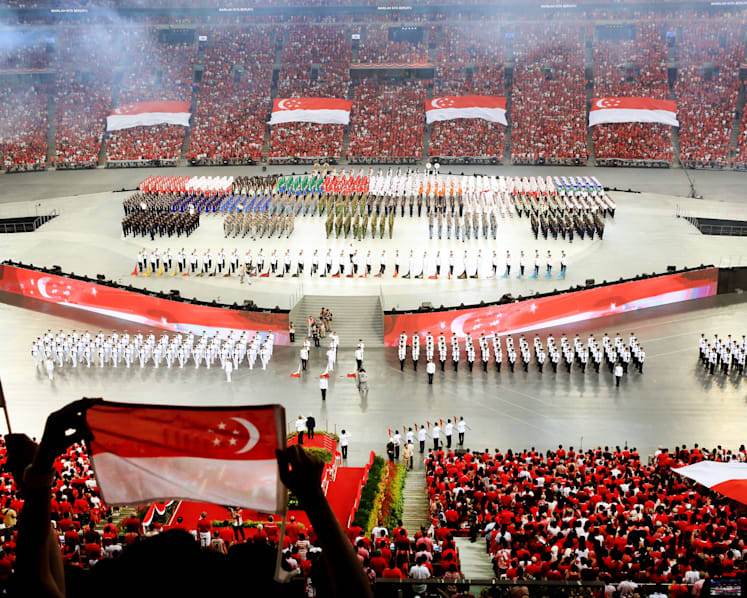
Are Singaporeans being defined only by our achievements, asks the author.


In a parliamentary speech this month, Second Minister for Law, Education and Finance Indranee Rajah spoke at length about what it means to be Singaporean, saying that the issue is particularly pertinent as Singapore heads into its next phase of development.
She noted that Singaporeans are known to be pragmatic, logical and rational but this also prompts the question: “Are we all head and no heart?”
I wonder too, and while Ms Indranee did add that values such as meritocracy, kindness, honesty, integrity and aspiration towards equality are the core of the Singaporean identity, I am not as optimistic about the current state of our national identity.
I recall during my conversations with foreigners overseas, many of them would sing praises about Singapore upon finding out my nationality.





Often they would commend our clean and safe streets, our highly developed and modern city, and our almost-perfectly run country.
Other times they would say with a pinch of envy about how strong the Singapore dollar is, or how powerful our passport is.
Being Singaporean, there is no reason why I should not be happy or proud to hear these positive remarks.
After all, these are indeed commendable achievements for our Little Red Dot – they speak of us as competent and driven people. But something was amiss, I felt.
Are Singaporeans being defined only by our achievements? What about us as a people? How are Singaporeans perceived in the eyes of others?
In a recent study by the National University of Singapore on immigrants’ acculturation experiences in Singapore, researchers asked permanent residents and new citizens what they felt about Singaporeans, through a series of focus group discussions.
The predominant view was that Singaporeans are competitive and results-oriented. This does not seem too far from some of the stereotypes that we would generally perceive ourselves – including being ‘kiasu’, ‘kiasi’, and stressed.
How have such a self-perception and perception by others of Singaporeans come about? One clue lies in our focus on economic development that has always been a national priority since independence, and how our leaders have always emphasized on economic development as key to a successful Singapore.
Understandably so, some would argue, as Singapore as a small nation needs to constantly remain economically competitive and at the forefront of global developments, in order to survive.
Indeed, our successes today are visible to all – Changi Airport is consistently rated as the world’s best airport, we emerged top in the Global Smart City Performance Index, we are able to host the Youth Olympic Games, and serve as a global financial, biomedical sciences, and maritime hub despite our very limited resources.
However, as social psychology research has pointed out, when it comes to what is truly important for one’s evaluation of the group to which he belongs (e.g. our nation), such competence-related traits (e.g. achievements, capabilities) significantly pale in comparison with warmth-related traits (e.g. compassion, kindness).
In other words, being in a group that achieves a lot does not bring about as much pride and belonging than being in a group that cares a lot.
Indeed, in a 2016 YouGov poll where participants were asked the extent to which they believed their country was the best in the world, Singapore was ranked behind Malaysia, Indonesia, Thailand and Philippines, among Southeast Asian countries.
When it comes to national identity, economic development is not everything.
Against such a backdrop, redefining the Singaporean identity is an urgent task.
Such a redefinition needs to focus on shifting self-stereotypes from the competence domain to the warmth domain. We need to know that as a society, we are more than just our standards of living.
There have already been much debate about how we treat the vulnerable, or the ‘voiceless’ in our society, and these point clearly towards the considerable room for improvement we have in becoming a more gracious and kind society – this is something money cannot measure.
Furthermore, the redefinition of the Singaporean identity must come earlier rather than later.
Safeguarding a positive sense of national identity is arguably the most important foundation in ensuring social resilience.
This is not something that should only be done in a reactive fashion, or only in the midst of a crisis, for that would be too late; the ground for social fragmentation would have been laid by then.
In this light, the Youth Conversations is one commendable example of a purposeful effort to engage our young Singaporeans at an early stage, to sit down and think about what it means to be Singaporean.
Finance Minister Heng Swee Keat has also recently announced the government’s intention to engage in a Whole-of-Singapore conversation about the way ahead for Singapore, and this is a very good start.
Coupled with recent attention on class divides in society, the conversations are an opportune time to ensure that the foundations of our future social fabric are set correctly.
Moving forward, redefining the modern Singaporean will entail deliberate effort at the national level in a timely manner.
An influx of foreigners and its impact on infrastructure have been cited as the reason why the People’s Action Party fared poorly in the 2011 General Elections.
The precipitating series of Our SG Conversations sought to address the fundamental concerns that Singaporeans had, and these invariably included our underlying sense of identity as Singaporeans.
With the impending political leadership renewal, the time is again ripe for a national conversation about what it means to be a Singaporean.
About the author:
Mike Hou is a PhD candidate in Psychology at the National University of Singapore.




