

Slower Chinese economy still a business opportunity
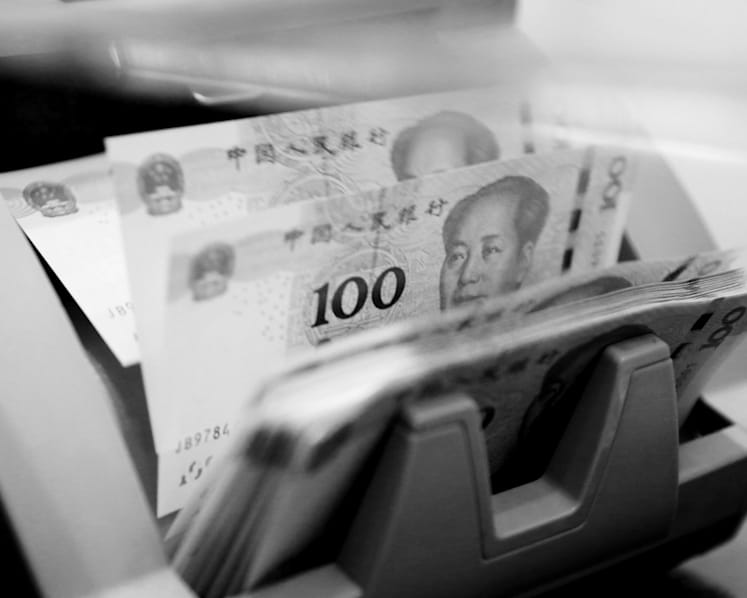
China’s GDP effectively tripled in the first 10 years following the 1992 critical point of economic-political inflexion. Compared with those heady decades,
the growth projection of 6.5 per cent for 2016 seems pedestrian. Photo: Reuters
With the world economy uncertain because of Mr Donald Trump’s victory in the United States, Europe’s Greek crisis and Britain’s exit from the European Union, all eyes are on China to continue to be the global economic engine. Yet after three decades of double-digit growth, Chinese momentum is itself slowing.
With such high expectations, it is no wonder that business analysts agonise over whether it is going to be 6.5 per cent growth this year or a more hopeful 6.7 per cent.
If your work or business deals depend heavily on China’s economy, perhaps it is worth considering how this slower growth may in fact not be as gloomy as the doomsayers suggest.
When I took on my first work assignment in China in 1992, the country’s GDP was US$425 billion (S$606 billion). That was the year Deng Xiaoping declared the 10-year-old Shenzhen Market Economy experiment with capitalism a success. This signalled a new political direction to expand the market economy with “Chinese characteristics” through the creation of several Special Economic Zones.





Over the next 10 years, the economy grew in excess of 12 per cent each year. Multinationals expanded quickly in sectors newly opened to foreign direct investment while local players gained scale and skills quickly.
China’s GDP effectively tripled in the first 10 years following the 1992 critical point of economic-political inflexion. While the Western media tends to report China’s performance with a focus on the Purchasing Managers’ Index, across China, economic progress was highly visible in terms of infrastructure development, urbanisation and the spread of consumer goods from Tier 1 to Tier 5 cities.
With rising income, Chinese consumers began gobbling up packaged goods such as soft drinks, toiletries and snacks and, later, TVs, washing machines and refrigerators, all of which fuelled the rise of local companies such as Haier and Lenovo.
The next decade of domestic consumption was driven by growth in personal computers, mobile phones, automobiles and real estate. As one category matured, another drove the next wave of consumption.
The current wave is characterised by a heightened interest in stocks, derivatives and investment property as well as a proliferation of tech start-ups, with their accompanying ecosystem of venture capitalists, private equities and incubators.
Compared with those heady decades, the growth projection of 6.5 per cent for 2016 seems pedestrian. But it is a worthy reminder that the incremental GDP change from 2014 to 2015 of US$520 billion is almost the size of China’s economy of US$562 billion in 1994. Further, the real incremental dollar value of the high-growth years is way smaller than the dollar value of a 6.5 per cent growth rate in 2016.
There is yet another way of looking at the size of this incremental GDP.
While the collective economic size of Asean is slightly bigger than India’s, it is only one-fifth of China’s GDP.
Among Asean countries, only Indonesia’s GDP (US$862 billion) topped China’s incremental growth.
Data Source: World Bank
Removing the distraction of declining growth rates and focusing squarely on the year-on-year dollar increments, China’s incremental GDP change translates to the size of Singapore’s (US$293 billion) and Vietnam’s (US$194 billion) economies combined.
In the current economic climate, which other single market or region offers this size of year-on-year growth that amounts to the combination of two economies — one developed and another on the forefront of development — per year?
And how well positioned are businesses to capitalise on this half-a-trillion dollars’ worth of economic activity on top of the US$10.8 trillion economic base of China?
The persistent narrative around China’s slowdown is causing many businesses to miss out on the bigger opportunity. Obsessing over a percentage point number is meaningless in terms of its direct impact on most foreign companies.
Covering the entire China market may also be daunting as the top seven Chinese cities (Shanghai, Beijing, Guangzhou, Shenzhen, Tianjin, Suzhou and Chongqing) have GDPs ranging from US$206 billion to US$352 billion in 2013, comparable to most Asean countries. Instead, businesses should aim to expand by province or city.
Finally, while economic growth is frequently used in business parlance, category growth may be more relevant, depending on whether your business is in personal computers, mobile phones, automobiles, e-commerce, consumer durables, fast food restaurants, instant noodles or ice-cream.
Market research companies now offer category-specific product or brand tracking data dissected by geography, features, price points and competitive market share. When businesses are operating at this level of insight, a 6.5 per cent national GDP growth is generally irrelevant. Instead, the more critical information one should be looking at includes category growth rate, competitive market share and price band segments that are outperforming in growth and profitability.
Let us not get distracted by where China’s growth is going to land precisely. Economists and the financial sector taking a position on China’s stock or currency market may experience more direct exposure and impact from exchange, interest and growth rates.
This in turn fuels an industry of professional forecasters, analysts and business media, which brews the business conversation around a few key numbers that affects billions of dollars in financial trading transactions. However, to the average worker, professional or entrepreneur, the more important question is which part of China is relevant to his/her skill set or business and what are the more meaningful growth opportunities to ride this unprecedented scale in market expansion.
ABOUT THE AUTHOR:
Chen Xueliang is an Adjunct Senior Lecturer of Marketing at the National University of Singapore (NUS) Business School. He has two decades of China market experience in leadership roles across sales, marketing and general management with US/European Fortune 500 companies. The views expressed here are his own.




